
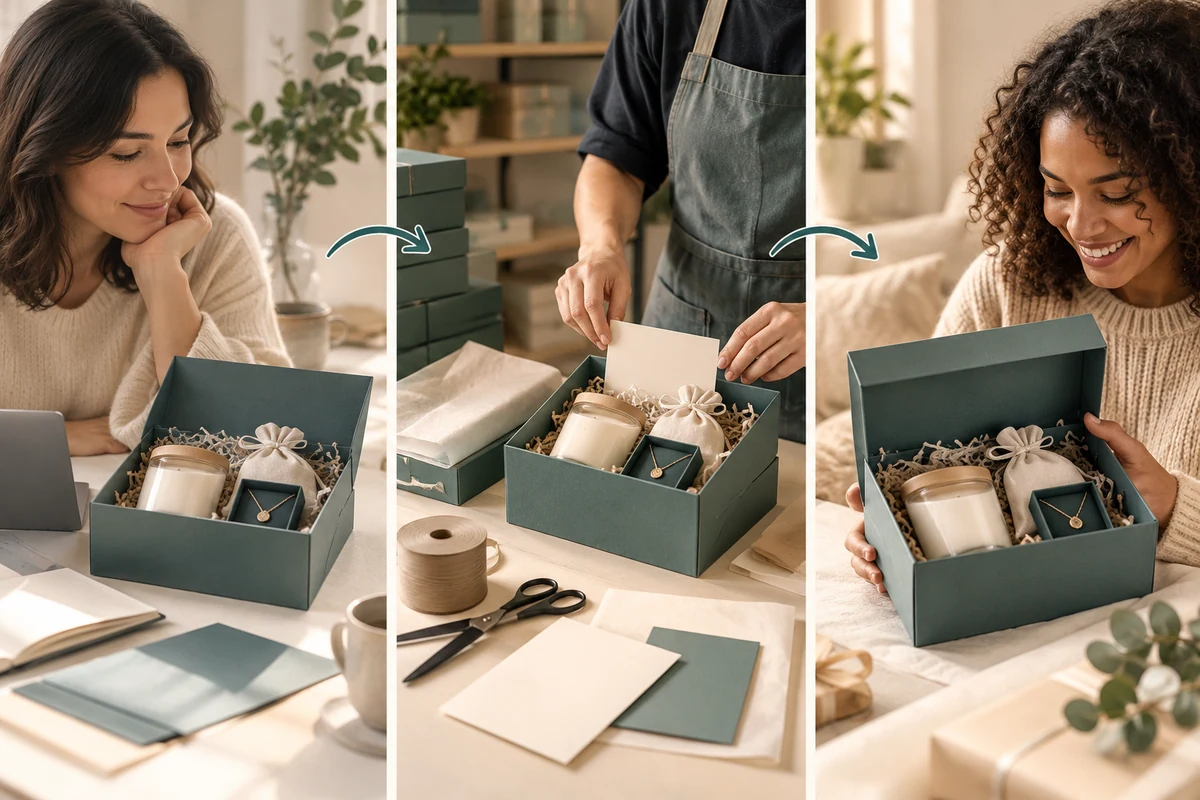
Evaluate gift-pack feedback against the task each person is performing. A buyer judging appearance, a packer assembling the gift and a recipient opening it can identify different requirements in the same configuration. Keep their observations separate before deciding which feature to revise.
An overall satisfaction score can hide a serious unresolved action. Equally, a packer’s preferred shortcut may change the visual arrangement the buyer actually ordered. The decision owner needs those differences visible.

Freeze the configuration before comparing feedback
Identify the complete gift, materials and instructions presented to each reviewer. If the buyer sees a styled concept while the packer uses a different structural sample, their comments do not yet concern one comparable arrangement.
Record whether an observation comes from a picture, a physical task or an explanation supplied by someone else. A favorable comment about a photograph is not evidence of successful assembly or opening.
The sample-revision comparison keeps changes tied to the same product and configuration. Use that record when a proposed response changes a component, rather than replacing earlier feedback with a more favorable new picture.
Locate a hypothetical three-role conflict
Assume a fictional gift has a prominent decorative bow and a separate working drawer pull. No customer study or sample evaluation has been conducted.
Scroll horizontally if columns extend beyond the view.
| Role and task | Hypothetical observation to investigate | Requirement affected |
|---|---|---|
| Buyer evaluates the offered presentation | Wants the visible bow retained | Promised visual arrangement |
| Packer prepares the gift | Knot-forming step remains unclear | Executable packing method |
| Recipient starts opening | Mistakes the decorative bow for the working pull | Discoverable opening action |
These statements are proposed scenarios, not real participant findings. They show why one vote for or against the bow cannot close every requirement.
The designer could explore moving the decoration, clarifying the actual pull, changing the prepared decoration component or revising the service description. Each response should state which problem it addresses and what other requirement it might alter.
Give conflicting observations their own evidence
For the packer, retain the actual preparation step and any missing instruction. For the recipient, preserve the closed starting state and the action first attempted. For the buyer, identify the offered configuration and visible detail they expected.
Microsoft’s inclusive packaging guidance emphasizes learning from people with different abilities and reviewing the complete interaction. This article applies that principle to distinct roles; it does not adopt a voting system or a universal usability score.
A buyer’s design approval cannot replace the recipient’s opening evidence. The recipient’s successful opening cannot establish that the same pack can be assembled within an actual service commitment. Separate the required reviews while keeping them linked to one design.
Decide the requirement governing the feature
The authorized owner should state which agreed requirements must be preserved and which can change. Where there is no accepted trade-off, keep the issue open instead of averaging incompatible scores.
Return a role, task, observation and proposed response for each affected feature. After revision, review the changed tasks and any nearby function it could affect. Unchanged valid evidence can remain applicable within its original scope.
Packrivo can organize the design and supplier questions through a packaging project inquiry. Public guidance was checked on 14 October 2026. No real user study, measured improvement or independent design approval is reported here.
One person can supply several role observations without becoming several participants
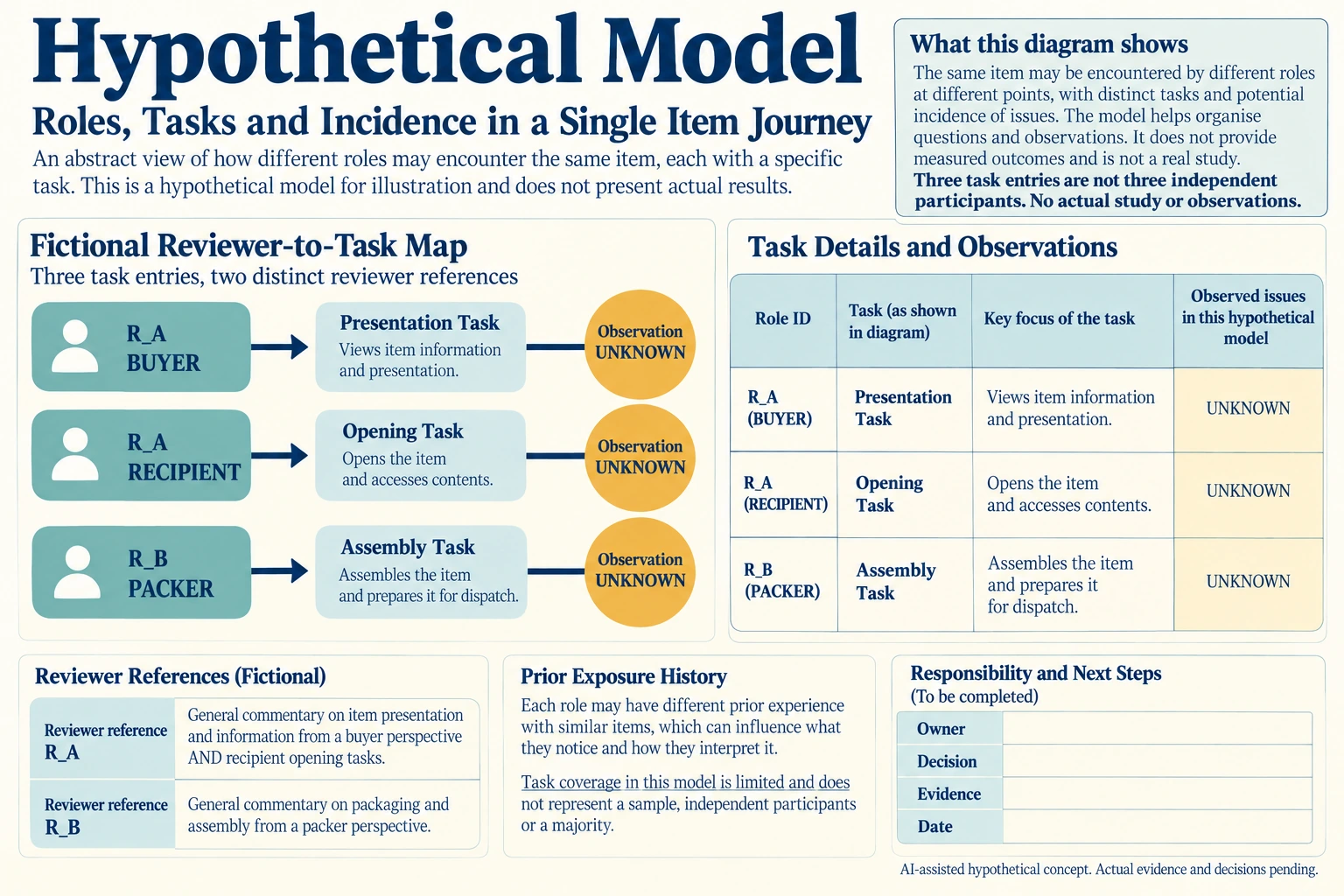
Use a fictional planning map in which reviewer R_A considers the buyer presentation and later performs the recipient-opening task, while R_B performs the packing task. The map contains three role-task entries but only two distinct reviewer references. No people were recruited and no observations have been obtained.
Scroll horizontally if columns extend beyond the view.
| Hypothetical configuration | Named object | Relationship | Input or next scope |
|---|---|---|---|
| ROLE_MODEL | R_A | proposed task | BUYER_PRESENTATION |
| ROLE_MODEL | R_A | proposed task | RECIPIENT_OPENING |
| ROLE_MODEL | R_B | proposed task | PACKER_ASSEMBLY |
| ROLE_MODEL | DECLARED_TASK_ENTRY_COUNT | assumed input | 3 role-task entries |
| ROLE_MODEL | DISTINCT_FICTIONAL_REVIEWER_REFS | assumed input | 2 reviewer references |
| ROLE_MODEL | THREE_TASK_ROWS | not a | THREE_INDEPENDENT_PARTICIPANTS_OR_MAJORITY |
The buyer and recipient tasks must still remain separate even when one person supplies both. Their common reviewer history also matters: prior design knowledge can affect a later opening task. Three task rows are not three independent participants, and a single reviewer’s repeated approval is not a majority vote.
This distinction helps decide what additional evidence is missing. The team may have task coverage on paper while still lacking perspectives from the intended recipients or packers. The responsible research plan must address that gap; this map selects no sample size or statistical independence criterion.
Keep configuration and assistance history beside any permitted actual task record. Microsoft supports learning from different abilities and the complete interaction, not this fictional two-reviewer allocation or a universal three-role score. An appearance comment cannot close the separate assembly and opening questions.
Download the gift packaging feedback roles unique participant count record (.csv). It includes the original table fields and scenarios alongside the added relationships. HYPOTHETICAL rows are editorial examples or required review scopes, not actual records. Actual quantity, configuration, component and file identities, materials, process, specification, copy, method, condition, observation, owner, decision, evidence and dates are blank. ACTUAL_BLANK is a separate empty starting row; enter permitted project evidence before using an actual record. A blank means unknown.
Use the Packaging Sample Revisions: Compare Before Approval for its separate question. Use the Accessible Gift Packaging for Limited Dexterity for its separate question.
Source scope checked 17 October 2026: Microsoft accessible-packaging HTML supports inclusive user involvement, not a mandated three-role voting system or universal score. No actual participant data, representativeness, statistical result or accessibility approval. The added configurations and calculations are hypothetical, with actual evidence and decisions pending.
What this changes in a packaging enquiry
Translate feedback into separate buyer, packer and recipient requirements before revising a supplier brief. Identify which observation changes appearance, assembly work or customer access, and retain the other accepted features. One favourable photo or one fast packing trial cannot approve every task.
Discuss this packaging specification with Packrivo. We coordinate independent suppliers. MOQ: 500 pieces per product/design; illustrative quantities are not production offers. Confirm materials, samples, price and timing for your project.