
Ivory presentation reference
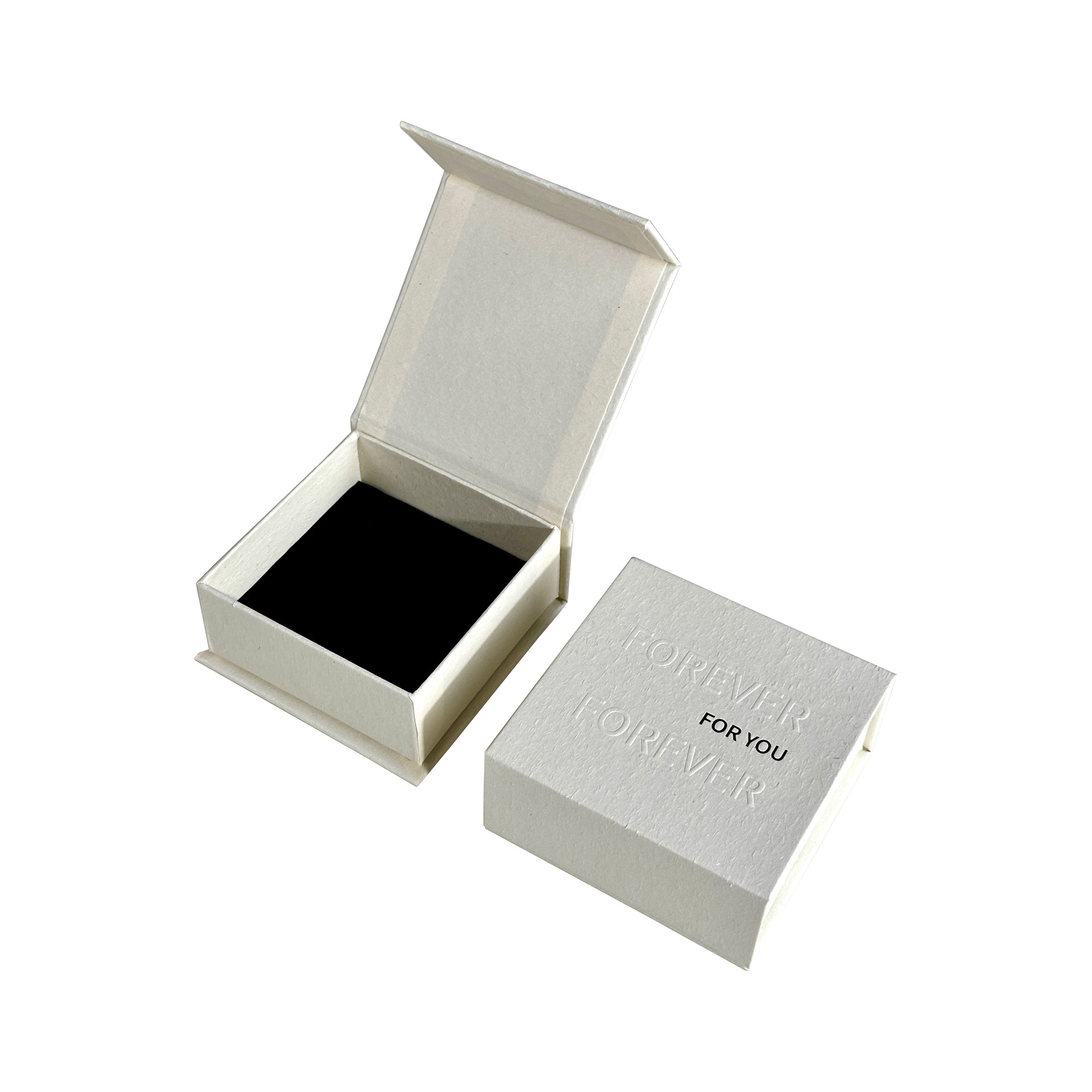
Use the open and closed views to discuss the presentation at first opening. Identify the logo face you want, then request the offered closure, holder and finished dimensions for your own jewelry.
MOQ: 250 pieces per product / design. Plan the quantity for each design in your brief.
Explore custom jewelry boxes with logo for rings, earrings, necklaces and coordinated collections. Choose a box or pouch direction, the opening you prefer and the brand surfaces you want customers to see. Packrivo helps prepare the brief and supplier questions for a project quotation.
Packaging sourcing and project coordination with independent suppliers.
Get a QuoteThese photographs show supplier packaging references, with their original printed designs. Use them to describe an opening or presentation direction. They are not Packrivo customer projects or a stock list; sizes, materials and your own logo treatment need a separate proposal.
Use the open and closed views to discuss the presentation at first opening. Identify the logo face you want, then request the offered closure, holder and finished dimensions for your own jewelry.
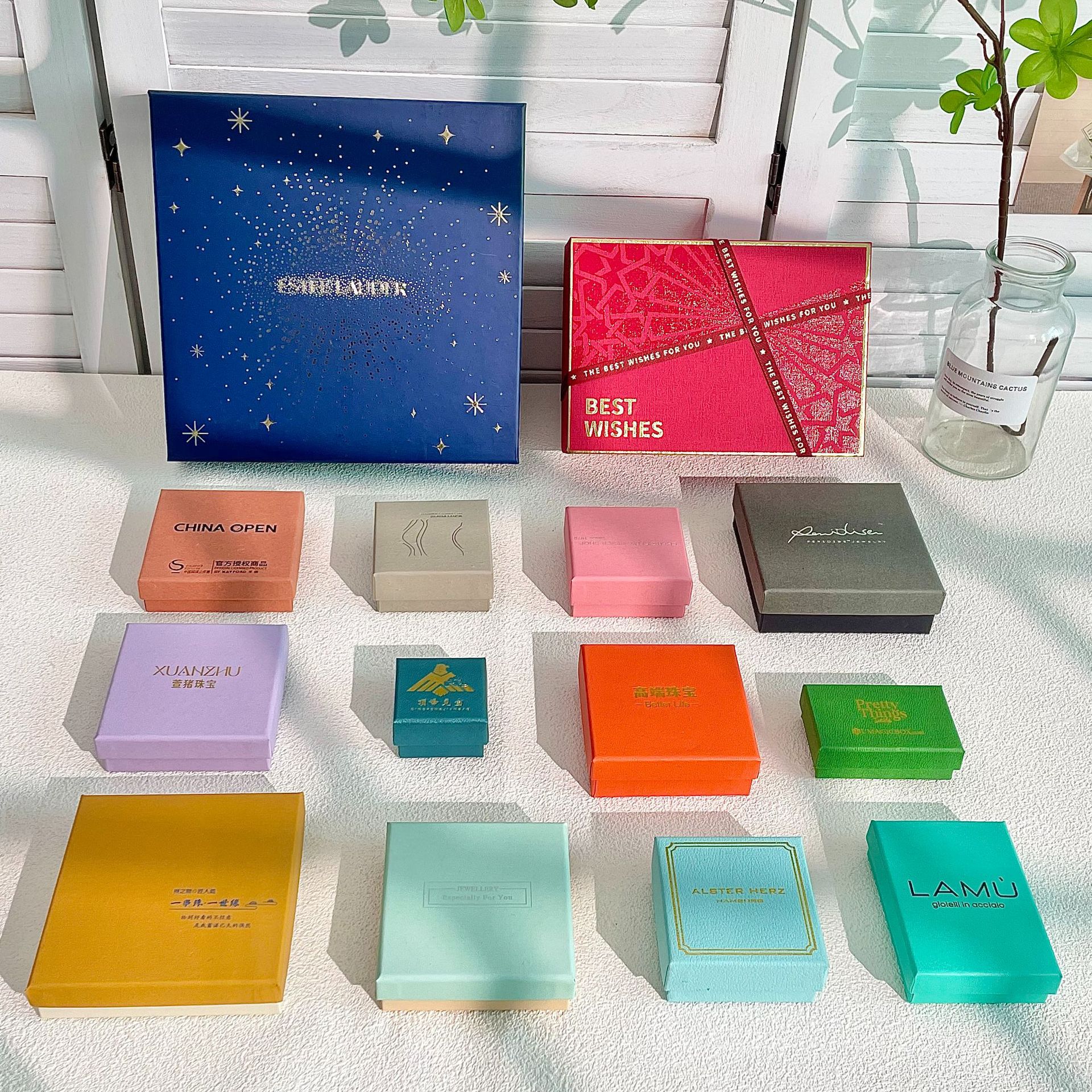
Compare the visible color and artwork placement across these box forms. Choose the presentation you want to discuss; the photographed marks are not available artwork or evidence of a Packrivo brand relationship.
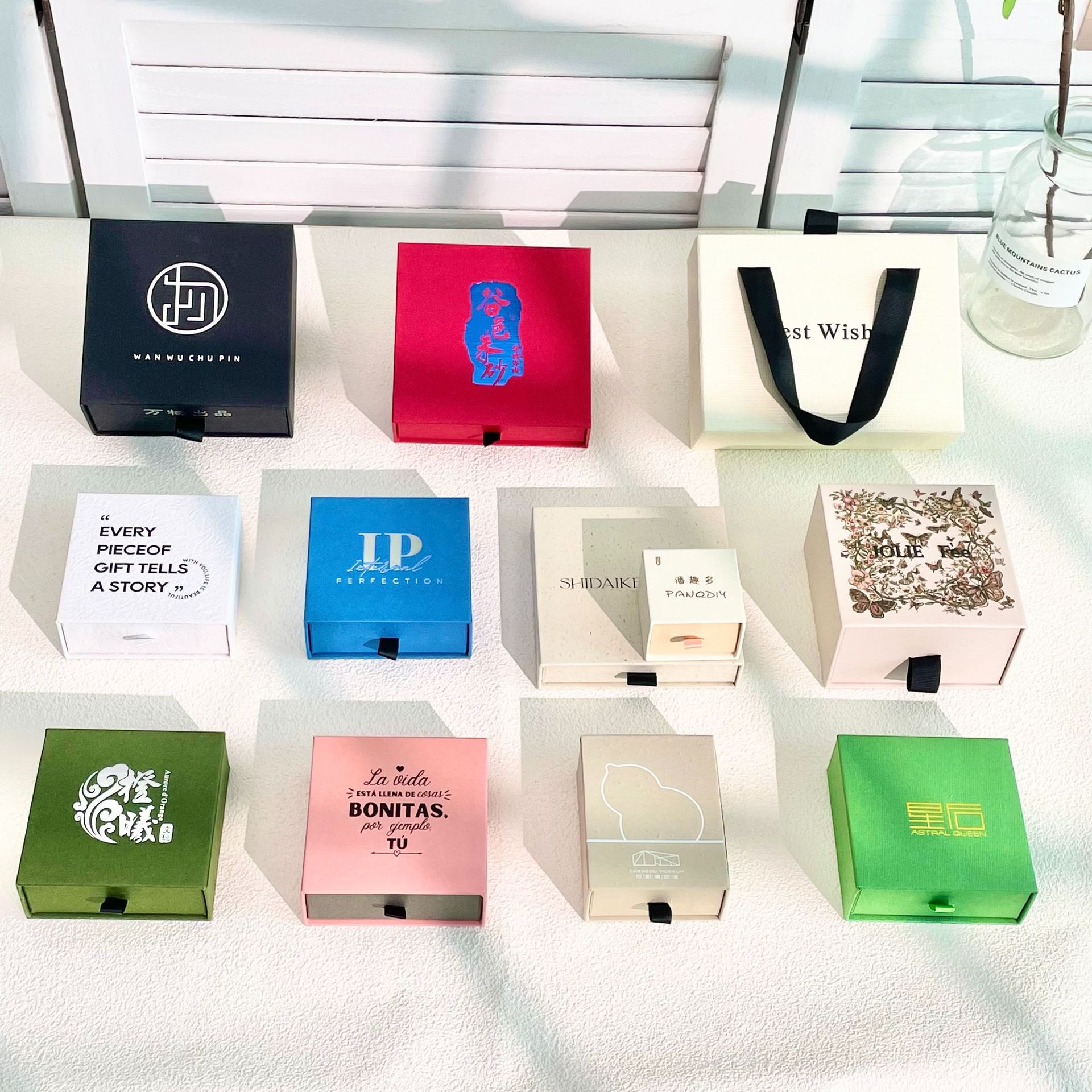
Use the sliding-box direction to discuss the opening detail and main brand face. Request an open, loaded sample around your jewelry before choosing the interior or holder. The photograph does not identify your required size.
All options require supplier feasibility confirmation.
17 packaging directions in this group.
Nothing matches that yet.
A hinged presentation direction for a coordinated jewelry set.
Explore specifications →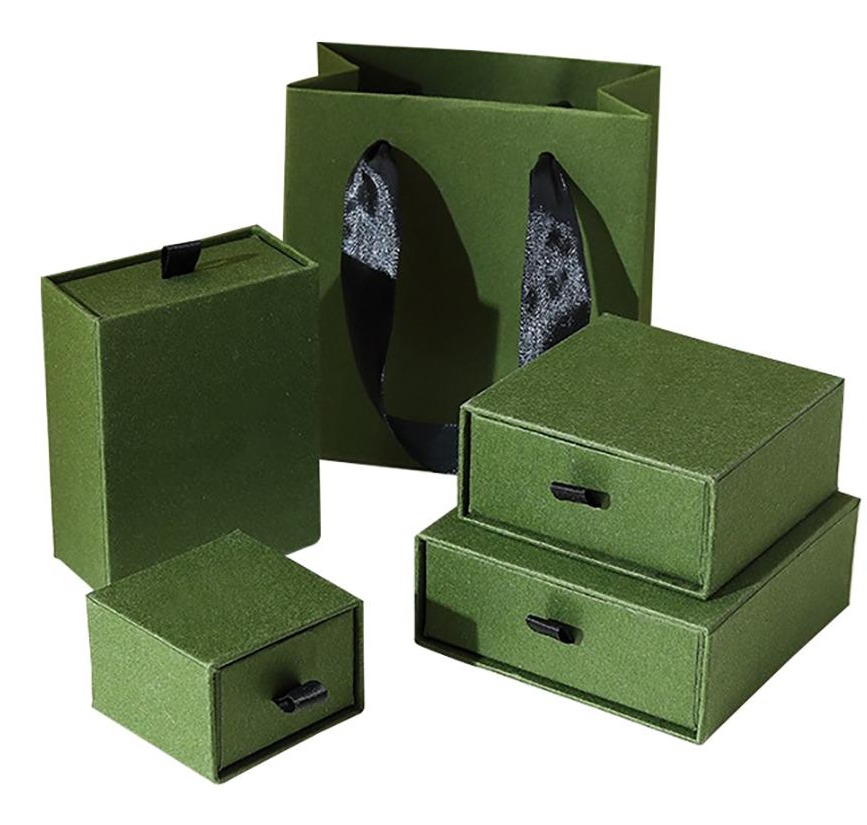
Jewelry boxes
Plan a custom drawer jewelry box around the complete jewelry set. Choose the tray layout, usable interior and opening detail, then compare supplier proposals against the same requirements.
Packaging option · MOQ 250 pieces per product / design
View details →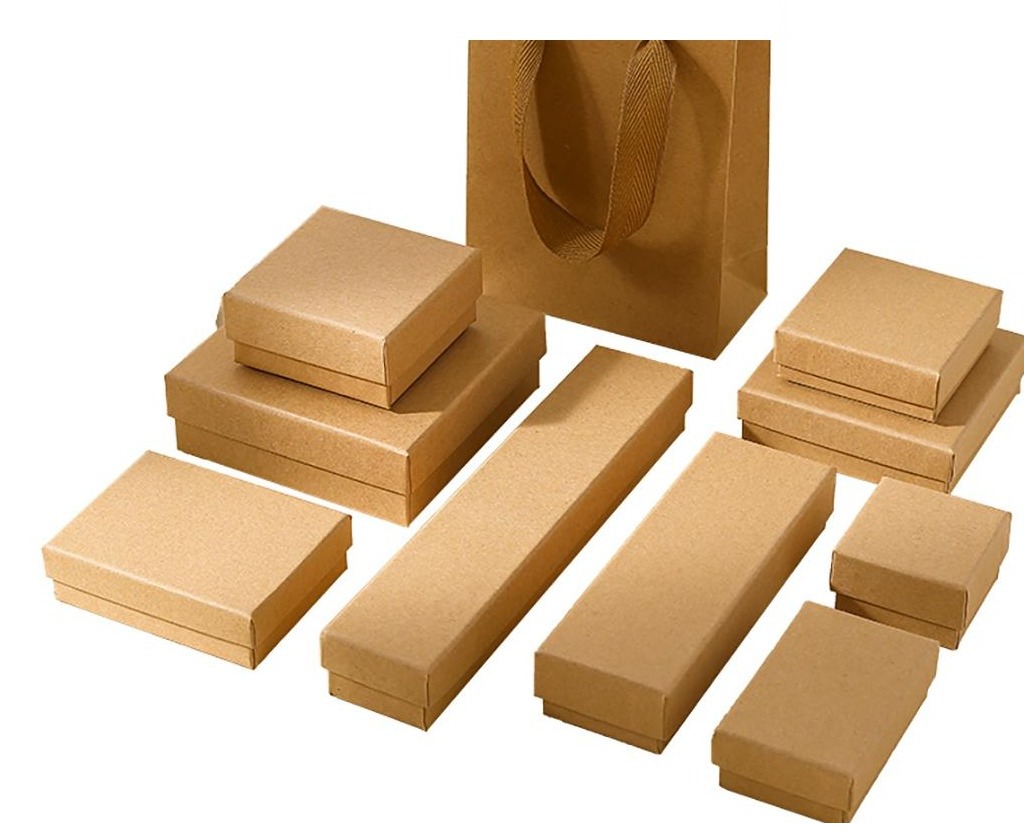
A separate lid for a simple gift presentation.
Explore specifications →A coordinated box and insert brief for holding small jewelry.
Explore specifications →A folding presentation direction for small, lightweight accessories.
Explore specifications →Jewelry boxes
A round cardboard tube box uses a cylindrical body with a lid.
View specification direction →Jewelry boxes
A textile jewelry pouch is a soft packaging direction for presentation or storage.
View specification direction →Match neck exposure, lid overlap and holder height on one loaded section.
Explore this packaging directionAlign the patched rigid-lid window with the holder in the fully seated box.
Explore this packaging directionShow how the ribbon closes the loaded hinged box and releases clear of the gift.
Explore this packaging directionConnect the spine opening arc to the installed tray and product access.
Explore this packaging directionReview both door arcs and their meeting edges around the central product.
Explore this packaging directionReview the hinge sweep and metal edge against the loaded holder.
Explore this packaging directionReview rim engagement and lid removal with the complete gift inside.
Explore this packaging directionReview thread engagement and dry-gift access as separate closure jobs.
Explore this packaging directionKeep the latch release and lid travel clear of the complete inner gift pack.
Explore this packaging directionIdentify the proposed rim engagement before reviewing the loaded press and release action.
Explore this packaging directionCompare your own SKU configurations in the multi-SKU jewelry fit matrix before asking suppliers which box or insert components can be shared.
Start with how the piece will sit, how the customer opens the package and how they remove it. Compare jewelry box structures before choosing decoration.
On a small screen, each direction is grouped with its inputs and sample question.
| Direction | Use and inputs | Sample question |
|---|---|---|
| Magnetic lid | Consider a hinged opening for a displayed piece or set. Bring: Item layout, lid space, insert and closure preference. | Does the lid clear the complete set and close as intended? |
| Drawer | Consider a sliding tray when the opening sequence is part of the presentation. Bring: Tray layout, sleeve clearance, pull detail and any stop. | Can the customer pull the loaded tray and remove the jewelry easily? |
| Lid and base | Consider a lift-off lid when the full set should be visible together. Bring: Usable interior, lid depth and space needed to lift the lid. | Is the lid fit comfortable, with enough room above the piece? |
| Box with fitted insert | Plan the box and holder together when position and removal need review. Bring: Each item, clasp or post, contact surfaces and removal route. | Does the actual jewelry stay in position without obstructing removal or closure? |
| Textile pouch | Consider a pouch for a handoff or as a separate part of a larger pack. Bring: Item envelope, opening, closure, seams and intended use. | Can the complete item enter and leave the pouch without unwanted contact? |
Share the logo file you have, your brand colors and a marked view showing the face to decorate. An outer-lid mark and an inside message are separate surfaces. If you are choosing printing, foil or relief, describe the intended effect using the packaging finish comparison. The proposed material and actual-size artwork determine the physical evidence needed next.
Measure the jewelry and box interior before sending a size. For a holder that must work inside a box, use the insert material comparison to describe the job first.
The structure follows the piece and the moment it is opened: a rigid magnetic box for a set that is presented, a drawer box for a piece that is pulled out, a lid and base for a separate lid, and a fitted insert to assess positioning in a physical sample.
Pick one direction first and let the insert and wrap answer the rest; comparing structures is easier when their quantities and specifications are stated on the same basis.
On jewelry boxes the comparison that matters is board against wrap against interior: board thickness can affect the feel in the hand, wrap paper can affect foil and emboss detail, and the interior lining or flocked insert can be assessed with the piece in a sample.
Ask for the actual wrap and lining on the sample; a photograph of a finish may not show how it marks or how it wraps a corner.
Jewelry box projects quote from 250 units per design, sampling takes 5 to 10 days and production 7 to 30 days after approval, with the delivery term stated as DDP or FOB in the same document that carries the dieline.
Some constructions start at 500 units and the quote says so. A set counted as box plus pouch is priced as two items.
A magnetic jewelry box can be described using inputs such as: outer size, board thickness, magnet count and position, wrap paper, and the intended insert, as these choices can affect construction details and the physical sample you review before production.
Request the dieline with the quote and judge lid clearance and wrap alignment on a physical sample.
Include the complete jewelry measurements, quantity per design and destination country. List the box, holder, pouch or cards you want included. Add any target date as a requirement for review. Packrivo coordinates the sourcing questions; construction, sample scope, price and timing will be confirmed for the proposed project.
Supplier listings we recorded in October 2026 — historical reference prices, grouped by structure; confirm current prices and minimum quantities. Each group has its own specification pages.