
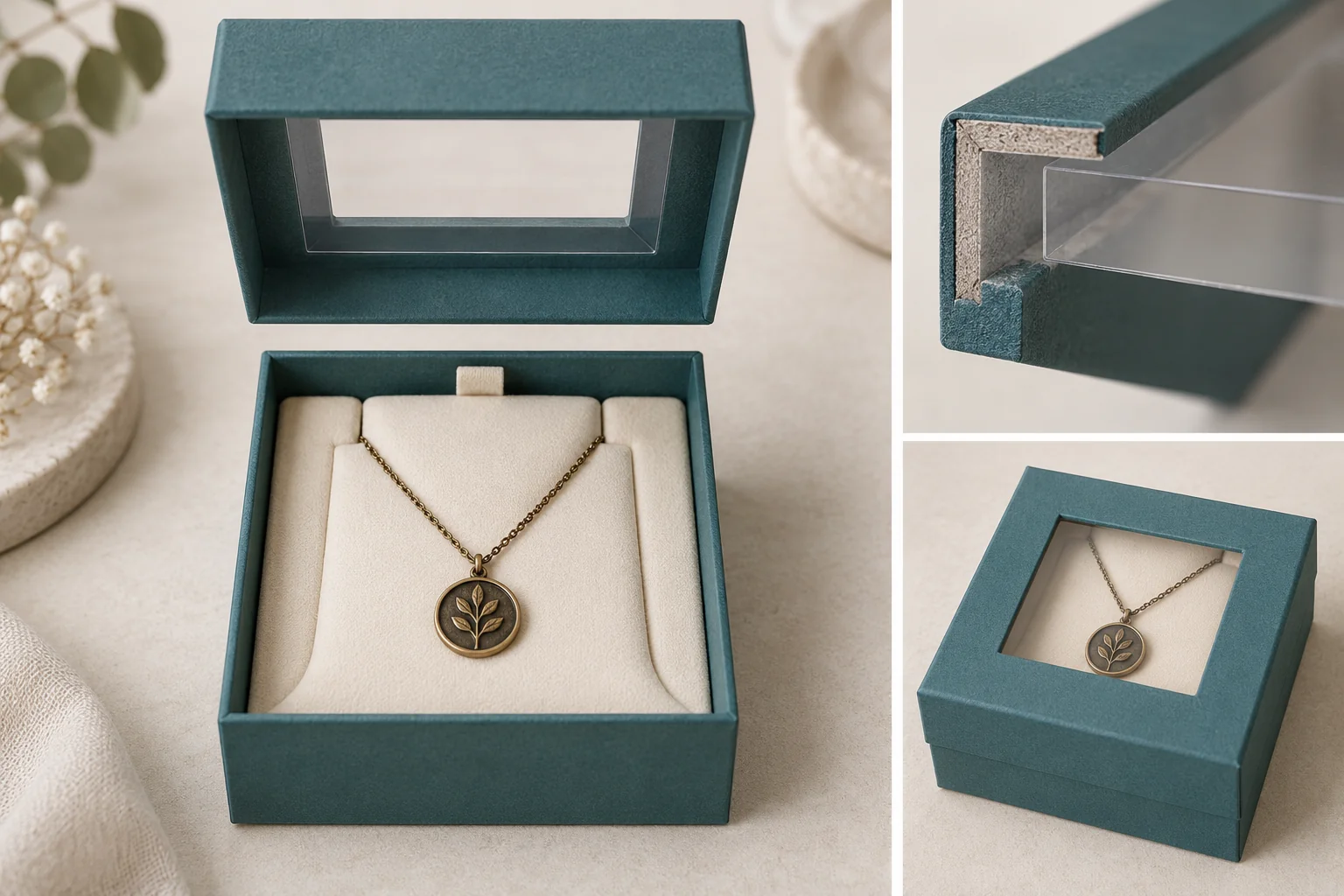
The visual is a concept of a rigid lid with a patched window. The offered core, wrap, patch and holder geometry are confirmed for the project.
Identify the window as part of the rigid lid
The original rigid window-lid reference describes its RP005 Partial Cover style as a gift box with window patching on the lid. Its body identifies a die-cut viewing window, clear patch and wrapped chipboard construction. It does not describe a shortened lid exposing the box body.
Ask for the offered lid drawing with the aperture, core, wrapping edge and patch boundary named. Mark where the wrap is cut or turned around the opening. Keep the patch material and attachment proposal as actual supplier fields rather than inferring them from a transparent concept image.
Give the holder its own cavity and position reference. Supply the actual gift in its final primary packaging and identify which part should be visible. A centered window on the lid may still show the wrong part if the holder positions the product elsewhere.
Review the closed view and the seated-lid fit
Load the holder and actual contents, then seat the lid fully on the base. Inspect the aperture-to-product alignment and the clearance beneath the lid/patch. Record whether a care card, product projection or holder edge occupies the intended viewing area.
Compare the existing windowed folding carton through its own folding-panel/window arrangement. This rigid option adds a separately seated lid, wrapped core cut edge and holder viewing alignment. The existing solid lid-and-base jewelry box provides a second comparison for the full lid overlap and removal route.
Lift the lid using the intended grip and remove the gift. Keep any moved card or changed holder position in the sample record. A window appearance approval should remain linked to the same closed fit and contents arrangement.
Use a window, patch and holder map
This hypothetical jewelry-gift record is an original planning aid, not a completed sample.
| Interface | Example input | Review evidence |
|---|---|---|
| Aperture A1 | Outline on offered rigid lid L1 | Window position and current drawing |
| Wrapped edge E1 | Core/wrap cut or turned construction | Opening-edge detail |
| Patch P1 | Grade and offered attachment boundary | Actual patch proposal and clearance |
| Holder I1 | Cavity position and visible product feature | Loaded view through fully seated lid |
| Lid/base | Complete overlap and removal grip | Closed fit plus opened access view |
Ask for the view and holder as one proposal
The rigid-box converter identifies the aperture, wrap and patch construction. The holder converter identifies the cavity and seating position. The packing owner returns the complete closed and open states, and the buyer decides the viewing/access arrangement or requests a located change.
Use the jewelry structure brief to keep opening, presentation and holder decisions together. Retain the offered aperture and seated-lid drawings alongside that broader structure choice.
Bring the aperture map, actual product, holder position and seated-lid question to Get a Quote. MOQ is 500 pieces per design; offered materials, sampling and commercial conditions are confirmed for the project.