

Update packaging allowances from defined material uses and a stated completed-gift count. Boxes issued to a bench can include photography, trials, known packing damage and unexplained differences. Combining all of those into one “waste percentage” can create a misleading input for the next purchase.
Identify the component and period first. A box, seal and length of tape need their own units. Keep changes in product mix or packing method visible when deciding whether an earlier period informs the next plan.

Reconcile known uses before calculating a rate
Assume a hypothetical period issues 220 boxes and produces 200 completed gifts, each requiring one box. Six additional boxes are used for photography, four for authorized trials and eight have known packing damage. Two issued boxes remain unexplained. No actual operations or data support the example.
Scroll horizontally if columns extend beyond the view.
| Use or unresolved quantity | Boxes |
|---|---|
| Completed gifts | 200 |
| Photography | 6 |
| Authorized trials | 4 |
| Known packing damage | 8 |
| Unexplained difference | 2 |
| Total issued quantity accounted for by the record | 220 |
The two unexplained boxes stay visible. Calling them damage would add a cause the record does not establish. Likewise, the six photo boxes did not fail merely because they were not used for sales.
The assembly-resource unit map distinguishes supplied components, consumables and reusable tools. Use its unit definitions before comparing material quantities across a period.
Choose the denominator that answers the question
In this example, eight known damaged boxes divided by 200 completed gifts equals four damaged boxes per hundred completed gifts for the recorded period. That result describes the stated operation and count.
It does not establish a future 4% loss rate. Nor should photography and trial use quietly become an ongoing production percentage if those activities will not repeat at the same frequency.
If the question instead concerns damage among boxes processed, the denominator may differ. State that question and its actual processing count rather than changing denominators to obtain a smaller figure.
Translate observations into separate planning lines
For a future plan, identify expected completed gifts, named one-off uses and any repeat-use allowance supported by relevant observations. Retain the observation period, configuration and limits behind the estimate.
The launch quantity worksheet assigns surplus to named uses before purchase. This consumption review provides later evidence that can revise those lines, rather than repeat the initial assumptions indefinitely.
Official inventory guidance supports current records and reviewing stocktake results. Its general recommendations establish no universal packaging-loss percentage. Actual future demand and component suitability remain separate planning inputs.
Resolve the unexplained quantity separately
Compare the physical count and movements at a consistent cutoff. Unposted issues, moved stock or a different counting unit could create a discrepancy. Keep those possibilities as questions until the responsible owner resolves the evidence.
One short period can be affected by training, a new structure or unusual orders. Use additional relevant observations where needed rather than declaring the first result stable.
Bring the component unit, completed-gift denominator, known-use categories and unresolved difference to a packaging project inquiry. Packrivo can coordinate quantity questions; this hypothetical record proves no real consumption rate or waste reduction. Public guidance was checked on 14 October 2026.
Hold the job mix fixed before claiming a lower consumption rate
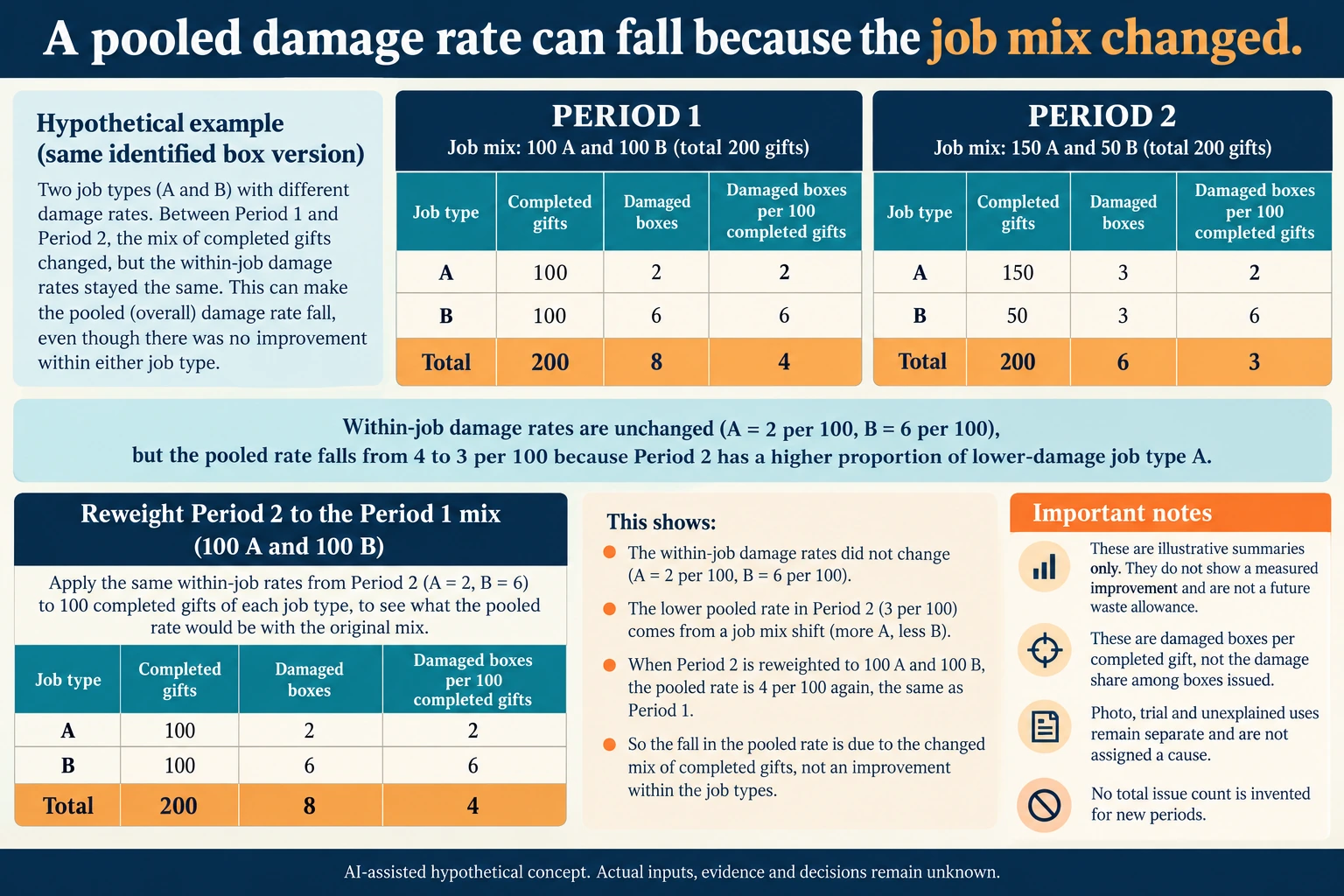
Use a separate two-period teaching summary for the same identified box version, with one box per completed gift. In period one, job type A completes 100 gifts with two damaged boxes and B completes 100 with six. The pooled result is eight damaged boxes per 200 completed gifts, or four per hundred. All counts are invented.
Scroll horizontally if columns extend beyond the view.
| Hypothetical scenario | Item or operation | Planning relationship | Assumed input or calculation |
|---|---|---|---|
| PERIOD1_35 | A_WITHIN_JOB | calculated from | PERIOD1_35_A_DAMAGE/PERIOD1_35_A_GIFTS*100; 2 damaged_boxes/100_completed_gifts |
| PERIOD1_35 | B_WITHIN_JOB | calculated from | PERIOD1_35_B_DAMAGE/PERIOD1_35_B_GIFTS*100; 6 damaged_boxes/100_completed_gifts |
| PERIOD1_35 | TOTAL_COMPLETED | calculated from | PERIOD1_35_A_GIFTS+PERIOD1_35_B_GIFTS; 200 gifts |
| PERIOD1_35 | TOTAL_DAMAGE | calculated from | PERIOD1_35_A_DAMAGE+PERIOD1_35_B_DAMAGE; 8 boxes |
| PERIOD1_35 | POOLED_RATE | calculated from | PERIOD1_35_DAMAGE/PERIOD1_35_GIFTS*100; 4 damaged_boxes/100_completed_gifts |
| PERIOD2_35 | A_WITHIN_JOB | calculated from | PERIOD2_35_A_DAMAGE/PERIOD2_35_A_GIFTS*100; 2 damaged_boxes/100_completed_gifts |
| PERIOD2_35 | B_WITHIN_JOB | calculated from | PERIOD2_35_B_DAMAGE/PERIOD2_35_B_GIFTS*100; 6 damaged_boxes/100_completed_gifts |
| PERIOD2_35 | TOTAL_COMPLETED | calculated from | PERIOD2_35_A_GIFTS+PERIOD2_35_B_GIFTS; 200 gifts |
| PERIOD2_35 | TOTAL_DAMAGE | calculated from | PERIOD2_35_A_DAMAGE+PERIOD2_35_B_DAMAGE; 6 boxes |
| PERIOD2_35 | POOLED_RATE | calculated from | PERIOD2_35_DAMAGE/PERIOD2_35_GIFTS*100; 3 damaged_boxes/100_completed_gifts |
| REWEIGHTED2_35 | A_CONSTRUCTED_REWEIGHTED_DAMAGE | calculated from | PERIOD2_35_A_RATE*REWEIGHTED2_35_A_GIFTS/100; 2 boxes |
| REWEIGHTED2_35 | A_WITHIN_JOB | calculated from | REWEIGHTED2_35_A_DAMAGE/REWEIGHTED2_35_A_GIFTS*100; 2 damaged_boxes/100_completed_gifts |
| REWEIGHTED2_35 | B_CONSTRUCTED_REWEIGHTED_DAMAGE | calculated from | PERIOD2_35_B_RATE*REWEIGHTED2_35_B_GIFTS/100; 6 boxes |
| REWEIGHTED2_35 | B_WITHIN_JOB | calculated from | REWEIGHTED2_35_B_DAMAGE/REWEIGHTED2_35_B_GIFTS*100; 6 damaged_boxes/100_completed_gifts |
| REWEIGHTED2_35 | TOTAL_COMPLETED | calculated from | REWEIGHTED2_35_A_GIFTS+REWEIGHTED2_35_B_GIFTS; 200 gifts |
| REWEIGHTED2_35 | TOTAL_DAMAGE | calculated from | REWEIGHTED2_35_A_DAMAGE+REWEIGHTED2_35_B_DAMAGE; 8 boxes |
In period two, A completes 150 gifts with three damaged boxes and B completes fifty with three. The pooled result is six per 200, or three damaged boxes per hundred completed gifts. Within A, the rate remains two per hundred; within B, six per hundred. Only the mix weights have changed in this constructed example.
Reweight the second period to the first period’s 100 A and 100 B gifts. The same within-job rates imply two plus six damaged boxes, restoring four per hundred overall. A lower pooled figure alone therefore cannot identify improvement within either job type.
These are damaged boxes per completed gift, not the share damaged among boxes issued or a future waste allowance. Photography, trials and unexplained use remain separate categories in the original 220-box record; the new summaries invent no total issued quantity. Keep the component, job definition, denominator and mix beside an actual comparison before revising a purchasing allowance.
Download the packaging damaged boxes job mix denominator comparison record (.csv). It includes the original table fields and scenarios alongside the added relationships. HYPOTHETICAL rows are editorial examples or required review scopes, not actual records. Actual quantity, configuration, component and file identities, materials, process, specification, copy, method, condition, observation, owner, decision, evidence and dates are blank. ACTUAL_BLANK is a separate empty starting row; enter permitted project evidence before using an actual record. A blank means unknown.
Use the Assembly Tools and Per-Pack Consumables Need Separate Planning Units for its separate question. Use the Record a Packing Trial Without Promising a Universal Speed for its separate question.
Source scope checked 17 October 2026: Public inventory guidance does not establish a universal loss allowance. The rate unit is damaged boxes per hundred completed gifts, not damage fraction among issued material; job-mix arithmetic is not observed improvement. The added configurations and calculations are hypothetical, with actual evidence and decisions pending.
What this changes in a packaging enquiry
Use observed material consumption to prepare a clearly labelled purchasing allowance only after the finished-gift denominator and exceptional uses are identified. Quote boxes, cards and other components separately. A historical usage ratio is not an agreed production tolerance or evidence that every future run will use the same amount.
Discuss this packaging specification with Packrivo. We coordinate independent suppliers. MOQ: 500 pieces per product/design; illustrative quantities are not production offers. Confirm materials, samples, price and timing for your project.