
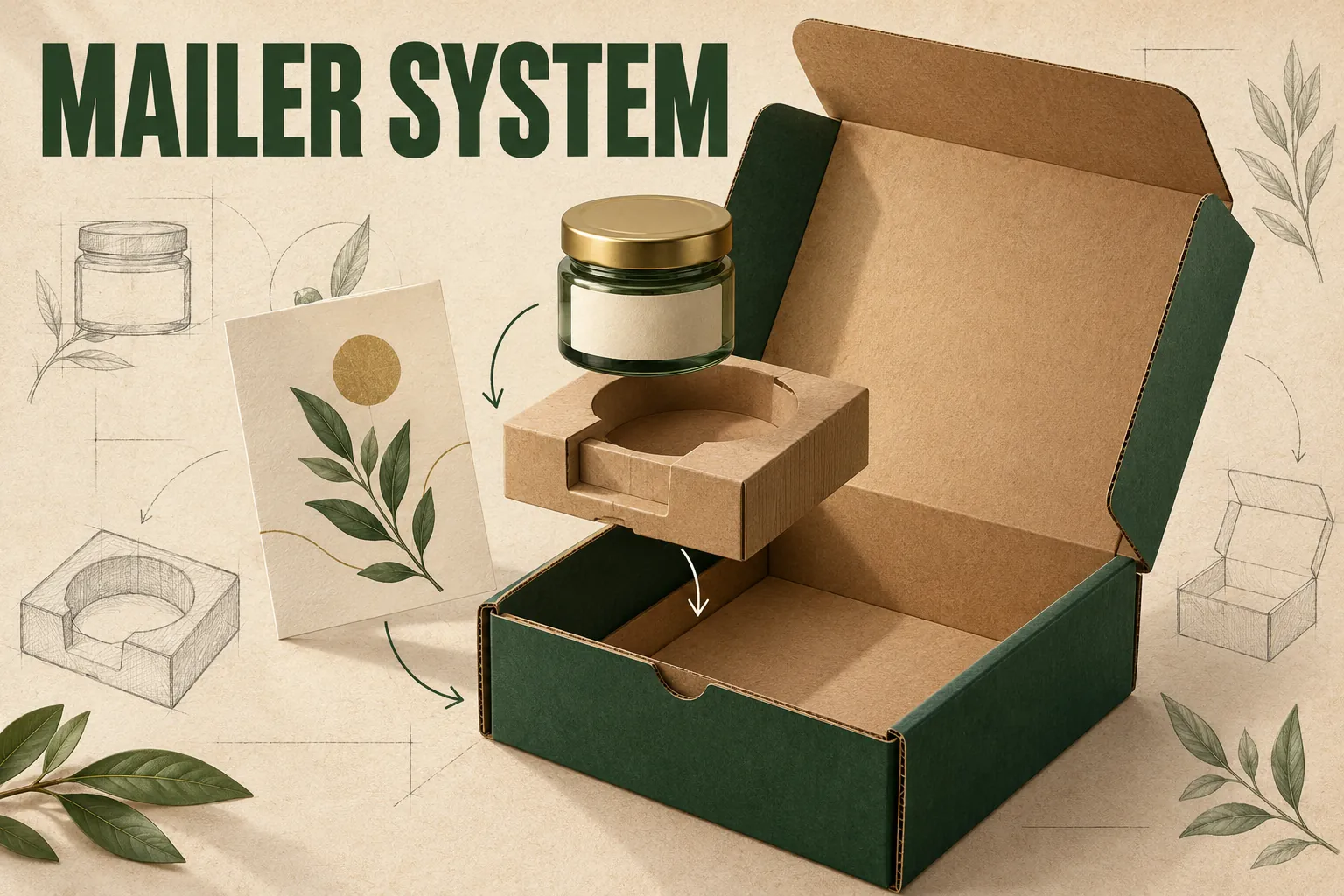
Review mailer protection as a complete arrangement of product, retail pack, insert, outer box and closure. Identify the route and the question each review must answer. A sample can reveal fit, contact and packing problems; evidence for distribution performance needs a separately defined evaluation.
View the full-size planning illustration
Begin with the configuration that will actually leave the packing bench. A beautiful open-box image can omit the card, seal or accessory that changes the closed pack. List those parts before asking for stronger board or extra cushioning.
Describe one complete shipping configuration
Give the product and each packaging component a reference. Record the product's version, dimensions, packed weight, fragile projections and surfaces that need care. Include lids, cards and accessories in the intended positions rather than laying them outside the photograph.
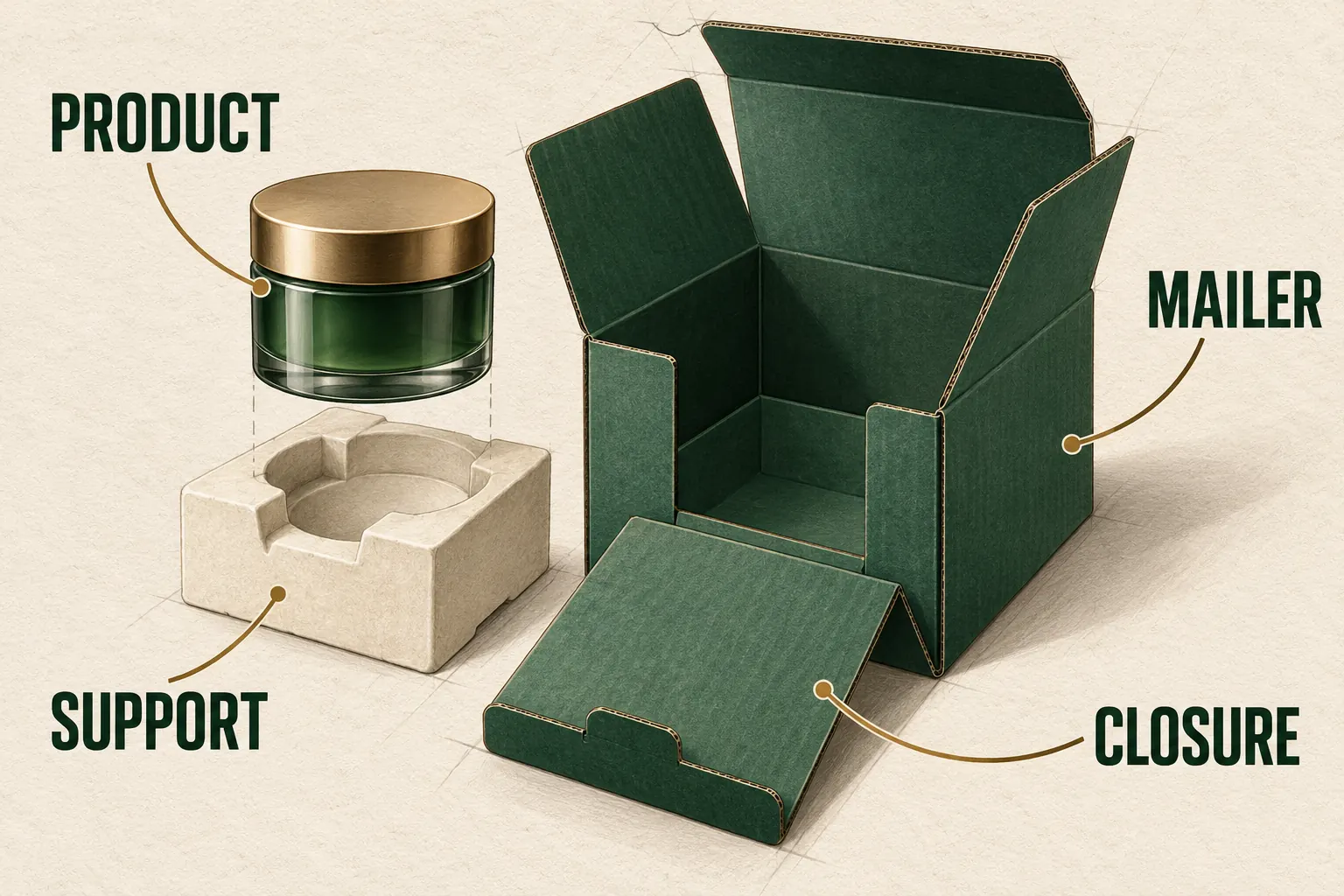
State the role of the mailer. It may be the shipping container or may sit within another outer carton. A presentation box and a parcel outer can have different requirements even when their printed appearances match. Draw the complete layers so the supplier can see which object it is proposing.
For a mailer with fitted insert, keep the box and holder drawing linked. If a supplier changes one component, record the resulting packed configuration before using an earlier fit decision. The actual shipping weight includes everything traveling together, not just the bare product.
Also describe the expected delivery service and route as far as you know them. Keep an unknown carrier or handling stage visible. That uncertainty affects the later evaluation request; it shouldn't disappear behind a generic instruction to make the box protective.
Locate contact before requesting a material change
Review how the actual contents enter the sample. Identify intended supports and surfaces that should stay clear. A cavity can restrain movement while pressing against a decorated edge or delicate part. Record the action and location before choosing a repair.
Close and reopen the complete pack using the proposed method. Observe the insert seating, upper clearance, loose accessories and removal route. Keep an empty-box closure check separate from the loaded check, since the contents may change how the panels meet.
FedEx's breakables guidance considers the box, cushioning and movement control together. Its carrier recommendations provide context for that service; they aren't a universal clearance or a certification of a custom mailer.
Describe an actual finding in terms another person can locate. The care card touching a jar shoulder during closing is a more useful observation than poor protection. A supplier may propose changes to the card, holder or enclosure. Compare those proposals against the same required functions.
Keep a risk and evidence table with the pack
Use this table to separate what can be observed during a packing review from what needs another evidence path. It is a buyer's planning record, not a prescribed transport test.
Scroll horizontally if columns extend beyond the view.
| Question | Configuration detail to record | Evidence to request |
|---|---|---|
| Product movement | Product orientation, holder and remaining space | Loaded review under the stated handling |
| Contact or pressure | The two surfaces and the action that brings them together | Located views and an identified correction proposal |
| Closure | Flaps, seams, tape or other closing components | Complete closing and opening sequence |
| Accessory position | Cards, lids, tools and wraps inside the closed pack | Revised layout with all items present |
| Distribution performance | Complete system, route, hazards and objective | Suitable evaluation plan and report scope |
Keep a result beside the specific row it answers. A successful closing observation doesn't establish a distribution result. Conversely, a report concerning a previous arrangement needs its specimen and scope checked before you apply it to a changed holder or product.
The mailer-and-insert fit guide covers the dimensional relationship in greater detail. Use the risk record here to decide which question that fit proposal must resolve.
Turn a planning concern into a bounded request
Planning example: a proposed gift contains one lidded jar, one care card and two support parts inside a front-tuck mailer. The team has a drawing but no packed sample. The numbers identify the proposed component recipe; they describe no customer order, stock or test result.
The drawing shows the card above the jar. Instead of reporting that the card has damaged glass, record a question: does the card stay clear of the jar and lid in the complete closed configuration? Ask for a proposed location and a sample that permits that relationship to be reviewed.
Consider an alternative with the card beside the jar. That changes the layout and potentially the mailer interior. Retain both proposals until the responsible reviewer decides which arrangement to sample. Neither should inherit a result from a picture of the other.
If the supplier changes the support height, revisit the jar's position and upper clearance. If it changes the card, revisit retrieval and visible information. A focused request follows the effects of the proposed change without announcing a solution before evidence exists.
Define the distribution question separately
ISTA's design and testing guidance ties test selection to the distribution environment and the decision being supported. Give a suitable evaluation provider the complete pack, shipping role, route details and protection objective before asking which program applies.
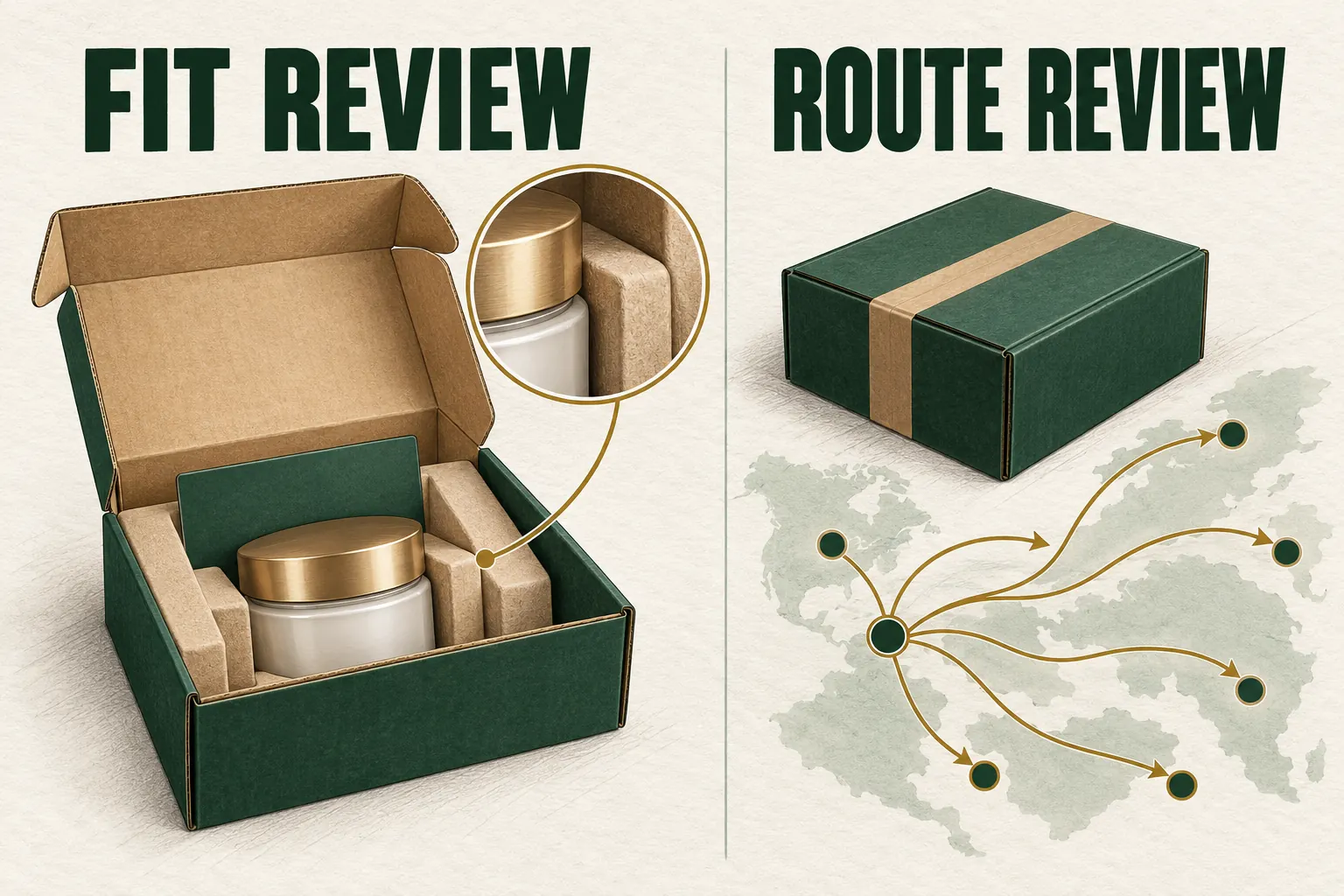
Describe any existing report accurately. Identify the product, package components, method and version it covers. A familiar box name or supplier logo cannot connect a report to a different packed arrangement. Ask which changed features affect the evidence before relying on it.
Avoid making your own drop sequence sound like an ISTA procedure. This guide selects no test method, specimen count or pass threshold. Those choices require the applicable requirements and appropriate technical responsibility. A recorded tabletop review remains useful for its stated fit and contact questions.
If you are investigating a received damaged parcel, retain views of its starting condition before repacking it for a demonstration. Identify which images show receipt and which show a later reconstruction. That distinction helps locate the next question without presenting a staged arrangement as evidence of the original shipment.
Prepare the next pack review
The next request should contain the current component list, drawings, actual packed measurements where available and a few located questions. Keep measured values, drawing proposals and missing inputs distinguishable. Ask who will supply the next drawing, sample or evaluation response.
A front-tuck mailer direction can frame the structural discussion while the complete configuration remains under review. Send the risk table with that discussion so each proposed change has a defined job.
Bring the identified arrangement to a mailer packaging inquiry. The useful next step is evidence for the open relationship, followed by a decision tied to the configuration that was actually reviewed.