
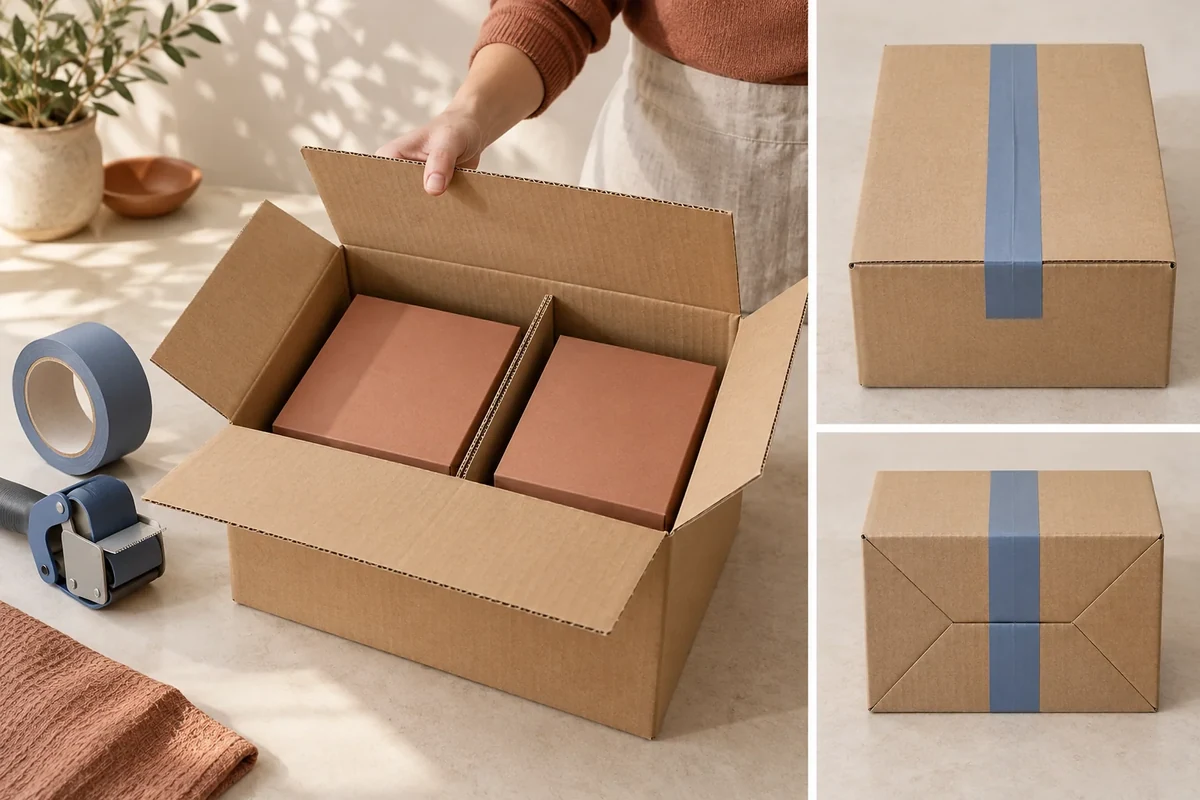
Name the sealing method, tape candidate and application owner in the shipping-carton scope. Link them to the actual loaded carton and applicable carrier context. A quote for a box or a roll of tape does not settle who closes the flaps or how the final pack is prepared.
The useful output is a responsibility sheet with a current instruction reference. It prevents a broad phrase such as seal the carton from hiding different operations in different proposals.
Start from the actual carton and route
Record the carton construction, top and bottom flap proposals and complete contents. Identify the shipping route and carrier where known. Keep any carrier instruction dated and scoped to the relevant service or context.
The FedEx packing page gives its own tape and H-taping guidance. Use current applicable guidance with the responsible packing source; don’t assume one carrier’s instruction approves every tape or route.
For a full-overlap carton, show the actual flap order and sealing surfaces. A familiar outside shape does not identify which flap finishes outside or how the seam is sealed.
Assign the work and consumables
Name who forms the bottom, loads the contents and closes the top. Record the available tool and the identified tape candidate. Unknown tape construction or application conditions should remain an open item.
Keep tape supply and tape application separate. A quotation can include consumables while leaving all sealing labour to another location. The responsibility record should make that difference visible.
| Sealing-scope field | Entry | Confirmation |
|---|---|---|
| Carton | Flap/drawing and loaded version | Actual proposal |
| Tape candidate | Identified construction and source | Supplier specification |
| Method | Top/bottom paths and instruction | Applicable packing/carrier context |
| Application | Tool, surface and location | Responsible operator |
| Included work | Supply versus assembly/sealing | Offer scope |
| Evidence | Sample/trial and acceptance method | Responsible review |
Use the quotation checklist for commercial comparison after those operations are named. An apparent unit-price difference may otherwise cover different work.
Follow a hypothetical two-offer comparison
Suppose one offer includes empty cartons and tape rolls, while another includes an identified top-sealing operation at a packing location. The buyer records both scopes before comparing their labels or totals.
The loaded carton has a particular flap order and print surface. The tape candidate and method are reviewed against that configuration, not a generic unprinted box. The source should identify the evidence appropriate for the stated sealing requirement.
If a carrier or route changes, the relevant instruction is reconfirmed. The earlier responsibility sheet remains useful history but does not automatically approve the new context.
Use a method-specific question
Ask: ‘Please confirm the tape candidate and application method for top seam TS1 on loaded carton C1 at location PL1.’ It gives the source a surface, seam and owner. A tape brand name alone may leave its actual construction open.
Record local seam observations separately from seal-integrity or transport acceptance. A neat photograph can locate the method while leaving performance evidence pending.
If the source changes flap order or tape, update the instruction and linked sample. The sheet is an original coordination aid, not a test standard or a promise that a particular sealing pattern prevents damage.
Send the named operation
Bring the loaded carton, tape proposal, owner and current method through Packrivo’s enquiry. The next response should clarify the operation included and the actual evidence needed to rely on it.
Tape supply does not assign the bottom and top sealing work
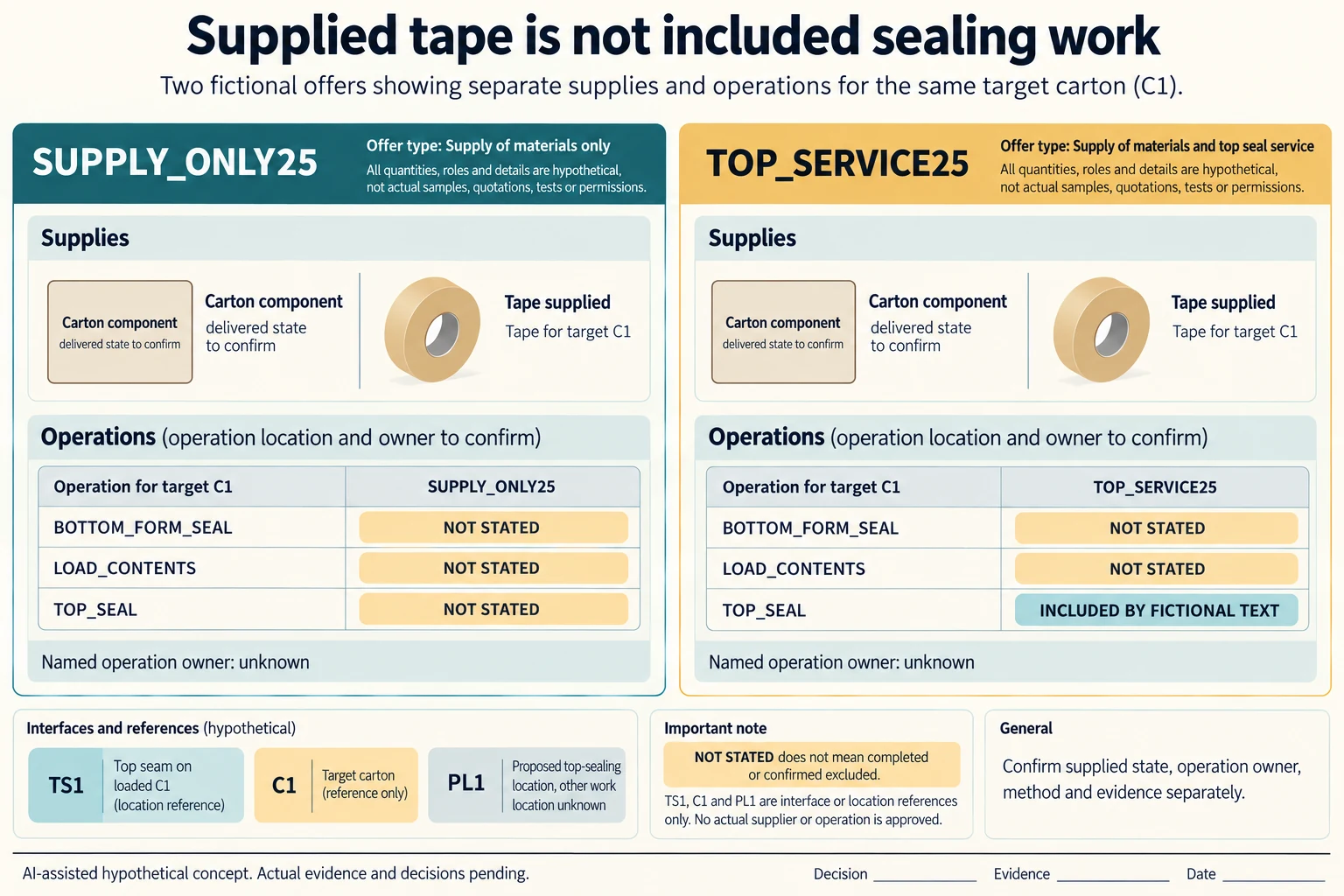
Split the target loaded carton into three work scopes: BOTTOM_FORM_SEAL, LOAD_CONTENTS and TOP_SEAL. In the fictional SUPPLY_ONLY25 offer, cartons and tape are supplied but none of those operations is stated as included. In TOP_SERVICE25, the example text includes top sealing while bottom work and loading remain unstated. These are invented scope descriptions, not Packrivo offers or findings about a supplier.
Scroll horizontally if columns extend beyond the view.
| Hypothetical configuration | Named object | Relationship | Input or next scope |
|---|---|---|---|
| SUPPLY_ONLY25 | BOTTOM_FORM_SEAL | assumed offer scope | NOT_STATED |
| SUPPLY_ONLY25 | LOAD_CONTENTS | assumed offer scope | NOT_STATED |
| SUPPLY_ONLY25 | TOP_SEAL | assumed offer scope | NOT_STATED |
| SUPPLY_ONLY25 | CARTON | assumed supply scope | SUPPLIED_IN_EXAMPLE |
| SUPPLY_ONLY25 | TAPE | assumed supply scope | SUPPLIED_IN_EXAMPLE |
| TOP_SERVICE25 | BOTTOM_FORM_SEAL | assumed offer scope | NOT_STATED |
| TOP_SERVICE25 | LOAD_CONTENTS | assumed offer scope | NOT_STATED |
| TOP_SERVICE25 | TOP_SEAL | assumed offer scope | INCLUDED_BY_FICTIONAL_TEXT |
| TOP_SERVICE25 | CARTON | assumed supply scope | SUPPLIED_IN_EXAMPLE |
| TOP_SERVICE25 | TAPE | assumed supply scope | SUPPLIED_IN_EXAMPLE |
The CSV assigns each operation an independent offer-scope row and an owner question. NOT_STATED is deliberately different from a confirmed exclusion or a task already completed. A top-sealing line does not identify who prepares the bottom, who supplies the complete contents or what state reaches location PL1. Resolve those handoffs before treating the two offers as the same closed-pack requirement.
Keep TS1, loaded C1, tape construction, printed surface and applicable method linked. The named tool still needs compatibility confirmation; supplying a roll or dispenser does not demonstrate its use on that surface. A changed tape, flap order or carrier instruction can change the relevant sample and scope. Use the resource-unit guide for quantities, while this operation map determines included work and responsibility.
FedEx’s US page provides its own top/bottom sealing and H-taping context. That does not establish every carrier’s rule or a qualified seal on C1. The worksheet prescribes no universal tape width or path and supplies no seal-integrity or transport result. The receiving opening task is also separate from dispatch sealing; keep its method with the receiving owner.
Download the carton sealing operation offer scope record (.csv). It includes the original table fields and scenarios alongside the added relationships. HYPOTHETICAL rows are editorial examples or required review scopes, not actual records. Actual quantity, configuration, component and file identities, materials, process, specification, copy, method, condition, observation, owner, decision, evidence and dates are blank. ACTUAL_BLANK is a separate empty starting row; enter permitted project evidence before using an actual record. A blank means unknown.
Use the Assembly Tools and Per-Pack Consumables Need Separate Planning Units for its separate question. Use the Custom Packaging Quote Comparison Checklist for its separate question. Use the Carton Opening Needs a Map of Retail Packs Beneath the Seam for its separate question.
Source scope checked 16 October 2026. References cover only the named materials, processes or guidance. Added configurations and geometry are hypothetical, not supplier specifications, tests or production approval; they set no universal tolerances or machine limits. Confirm the actual material, process, drawing and formed sample for the project.
Discuss this packaging specification with Packrivo. We coordinate independent suppliers. MOQ: 500 pieces per product/design; illustrative quantities are not production offers. Confirm materials, samples, price and timing for your project.