
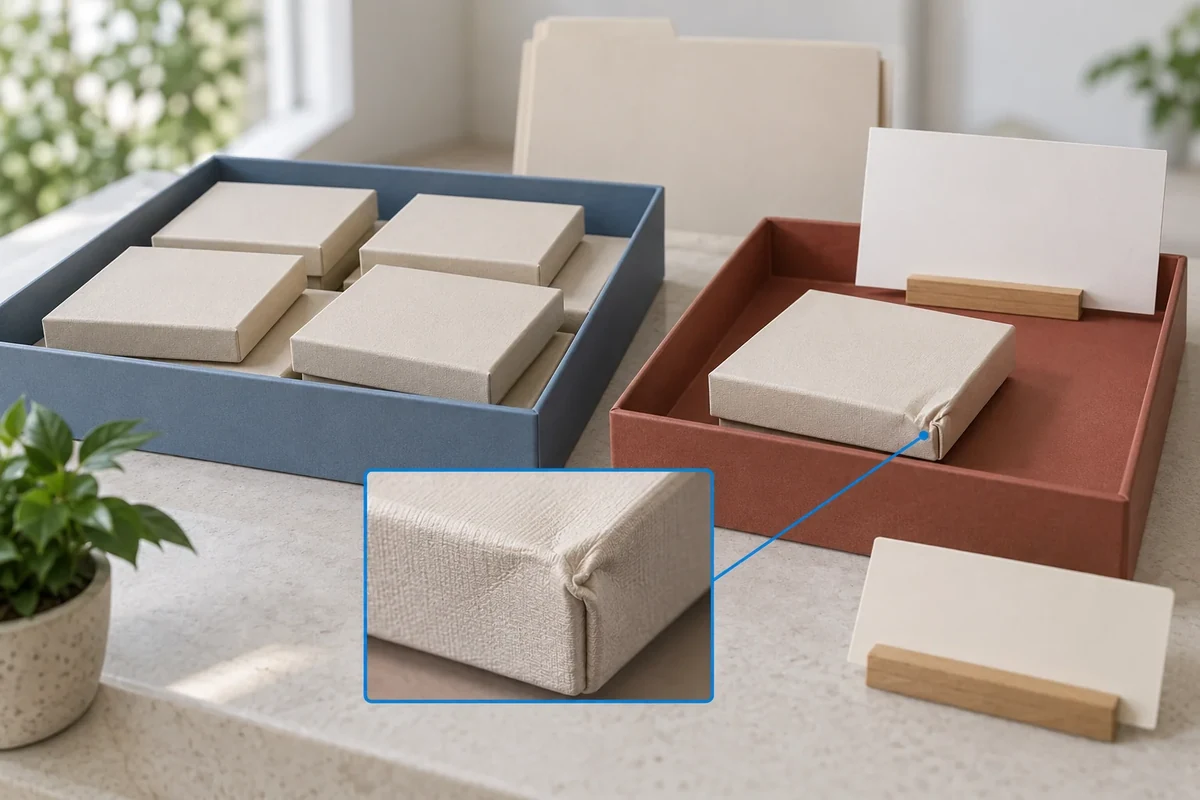
Record visible incoming component damage with its actual lot/version, affected quantity and hold status before packing use is decided. Keep photographs and the named release or rejection owner with that batch. A receipt observation identifies an issue; it does not establish a transport cause or completed test result.
Identify the actual component and observed condition
The official ISTA procedure overview describes purpose-specific packaged-product testing. It supports keeping test evidence distinct from a receipt photograph. It is not a receiving quarantine standard, and this article does not assign a transport cause from visible damage.
Match the incoming batch to its actual component, drawing/artwork revision and available lot. Record the receipt context and location of the observed condition. Preserve what the receiver actually saw instead of extending one image to every component in the delivery.
State the known affected quantity or range and how it was determined. Leave an uncertain extent open with a named next owner. A damaged edge, unclear batch label and wrong version are separate observations, even if they occur in the same delivery.
Keep the held batch identifiable until disposition
The existing packaging acceptance record retains requirement, evidence, action and named decision. This original incoming-damage aid uses that project workflow to identify a held batch and the evidence needed before use.
Record the actual hold location or identification used by the packing team and who controls its status. The agreed project method should make the affected batch distinguishable from normal packing use. This table does not authorize a new factory process or define a universal release rule.
Ask the supplier or responsible component owner for the relevant response, replacement scope or further inspection proposal. Retain received statements as proposals until the named decision owner resolves them with the actual evidence.
Use an incoming-damage hold register
The hypothetical gift-box batch below illustrates a condition record, not a real quality case.
| Receipt/disposition field | Illustrative entry | Next owner or evidence |
|---|---|---|
| Component/lot | Lid L1_r02, actual lot field | Receiver confirms identity |
| Observation | Located edge damage on received pieces | Receipt photos and condition description |
| Affected extent | Known count or unresolved range | Packing owner records inspection basis |
| Hold identity | Batch H1 in the project’s identified review state | Named owner controls use status |
| Supplier action | Actual response/replacement proposal | Retain scope and linked evidence |
| Disposition | Release/reject/continued hold | Authorized owner, decision date and evidence reference |
Resolve an illustrative partly inspected batch
Imagine visible damage is recorded on some lids while the remainder has not yet been reviewed under the agreed method. Keep the observed units and uncertain remainder as different extent fields. Request the next inspection or supplier response before describing the whole batch as either acceptable or defective.
If replacement pieces arrive, identify their lot/version and link them to the original held batch. The decision owner should record which requirement and evidence support their disposition. A replacement message alone should not erase the earlier receipt observation or establish the cause.
Handoff observed damage without inventing cause
Use sample revision records where a replacement changes the proposed configuration. The acceptance record remains the final requirement/action/decision route, while this register identifies the actual incoming batch and use status.
The receiver supplies observations and identity. The packing owner confirms extent and hold identification. The supplier responds about its actual component, and the authorized project owner decides the next use or replacement state. Keep test or transport-cause questions separate from those receipt facts.
Bring the batch record, actual photographs and unresolved disposition fields through your packaging brief. MOQ is 500 pieces per design; offered components, sampling and commercial details are confirmed for the project.
Unreviewed held units are not the undamaged remainder
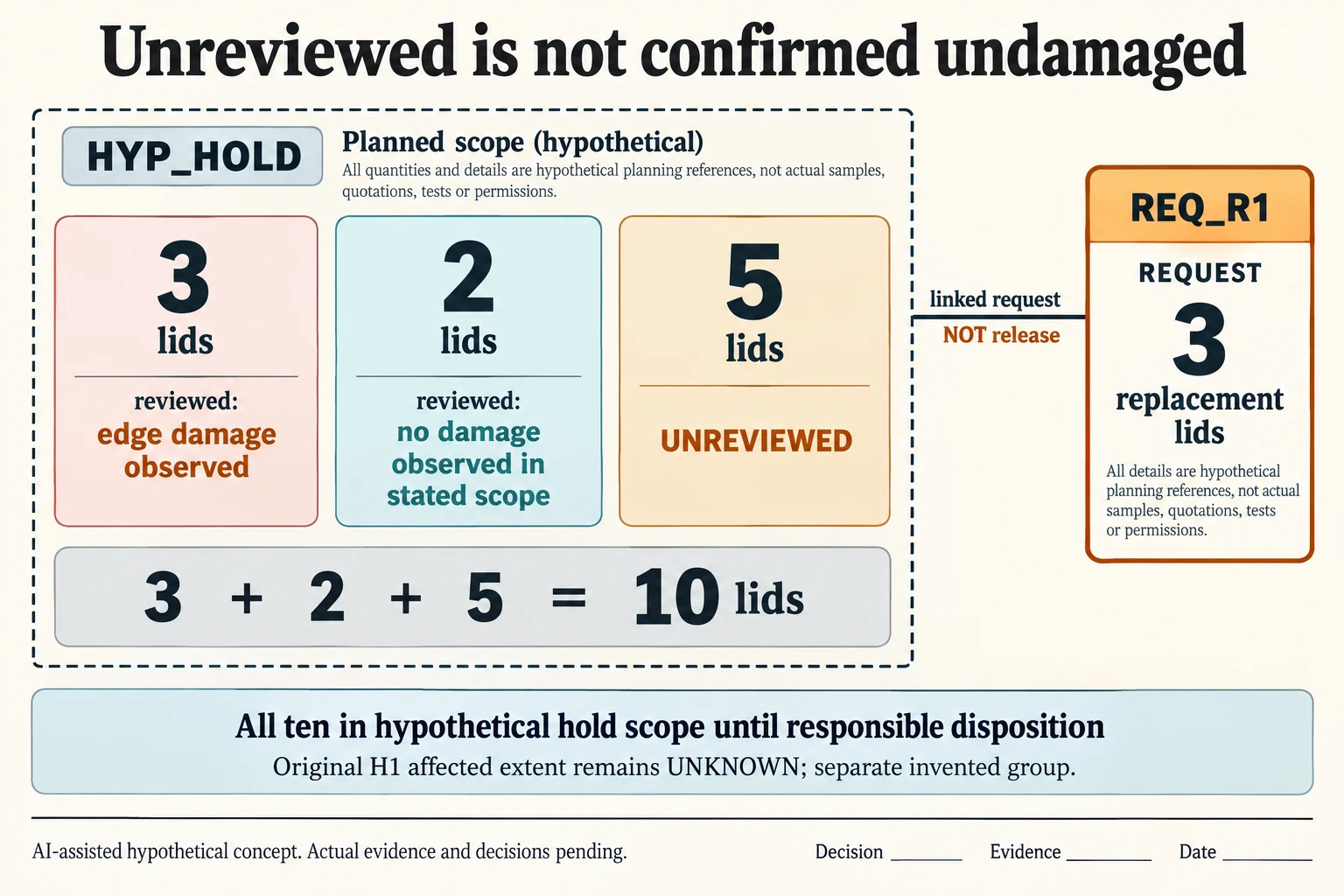
Retain the original H1/L1_r02 example with affected extent still unknown. Then consider a separate invented planning group of ten lids: three reviewed with edge damage, two reviewed with no damage observed within that check’s scope and five not reviewed. The count partition is 3+2+5=10. These are hypothetical planning quantities, not an actual inspection, defect rate or prescribed sample plan.
Scroll horizontally if columns extend beyond the view.
| Hypothetical configuration | Named object | Relationship | Input or next scope |
|---|---|---|---|
| PARTITION26 | HYP_GROUP | assumed quantity | TOTAL_GROUP; 10 lids |
| PARTITION26 | HYP_GROUP | assumed quantity | REVIEWED_WITH_EDGE_DAMAGE; 3 lids |
| PARTITION26 | HYP_GROUP | assumed quantity | REVIEWED_NO_DAMAGE_OBSERVED_IN_SCOPE; 2 lids |
| PARTITION26 | HYP_GROUP | assumed quantity | UNREVIEWED; 5 lids |
| PARTITION26 | HYP_GROUP | calculated from | PLAN_DAMAGE+PLAN_OTHER_REVIEW+PLAN_UNREVIEWED; 10 lids |
| PARTITION26 | HYP_HOLD | assumed covers | ALL_TEN_PLANNING_UNITS; 10 lids |
| PARTITION26 | REQ_R1 | assumed requested quantity | REPLACEMENT_LINKED_TO_HYP_HOLD; 3 lids |
| PARTITION26 | PLAN_UNREVIEWED | is not | FIVE_CONFIRMED_GOOD_LIDS |
| PARTITION26 | REQ_R1 | does not release | HYP_HOLD |
Keep the five unreviewed lids out of the confirmed-undamaged category. Even the two other reviewed lids carry only their stated observation scope, not a blanket quality conclusion. For this planning illustration HYP_HOLD is assumed to cover all ten units until a responsible disposition. That assumed control boundary is independent of how many units display the located finding.
REQ_R1 requests three replacement lids linked to HYP_HOLD. It is not an offer, a delivered quantity or permission to use the held goods. A replacement reply cannot erase the earlier damage record or supply the actual release, rejection or continued-hold decision. Keep the replacement version and its own receiving evidence with the parent finding when real records become available.
Record unclear identity labels and wrong-version findings separately from visible edge damage. ISTA’s public overview describes packaged-product evaluation context; it supplies no quarantine standard or disposition rule for this worksheet. The authorized project process determines locations, controllers, handling and permitted use. All actual quantities, observations, owners, evidence and disposition dates remain blank here.
Download the incoming damage hold extent partition record (.csv). It includes the original table fields and scenarios alongside the added relationships. HYPOTHETICAL rows are editorial examples or required review scopes, not actual records. Actual quantity, configuration, component and file identities, materials, process, specification, copy, method, condition, observation, owner, decision, evidence and dates are blank. ACTUAL_BLANK is a separate empty starting row; enter permitted project evidence before using an actual record. A blank means unknown.
Use the Incoming Packaging Inspection: Check the Batch Before Packing for its separate question. Use the Describe Transit Damage by Location and Pack Version for its separate question. Use the Shipping-Carton IDs Need the Packaging Versions Inside Them for its separate question.
Source scope checked 16 October 2026. References cover only the named materials, processes or guidance. Added configurations and geometry are hypothetical, not supplier specifications, tests or production approval; they set no universal tolerances or machine limits. Confirm the actual material, process, drawing and formed sample for the project.
Discuss this packaging specification with Packrivo. We coordinate independent suppliers. MOQ: 500 pieces per product/design; illustrative quantities are not production offers. Confirm materials, samples, price and timing for your project.