
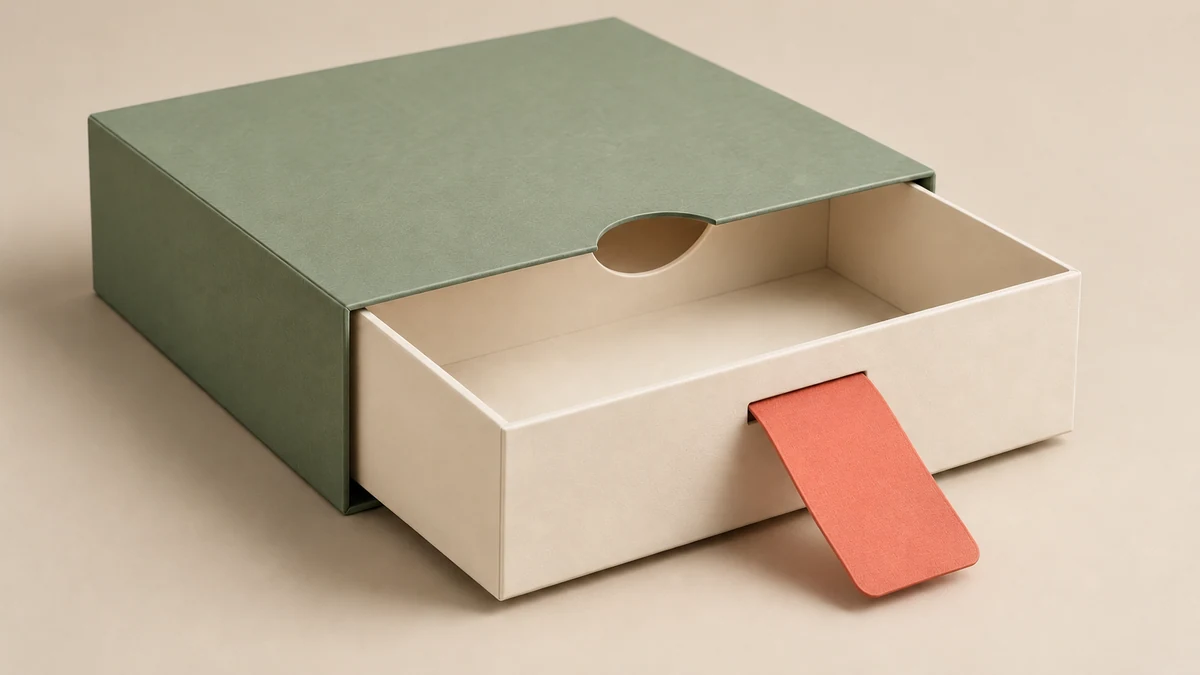
AI-assisted concept cover. Open the cover at full size.
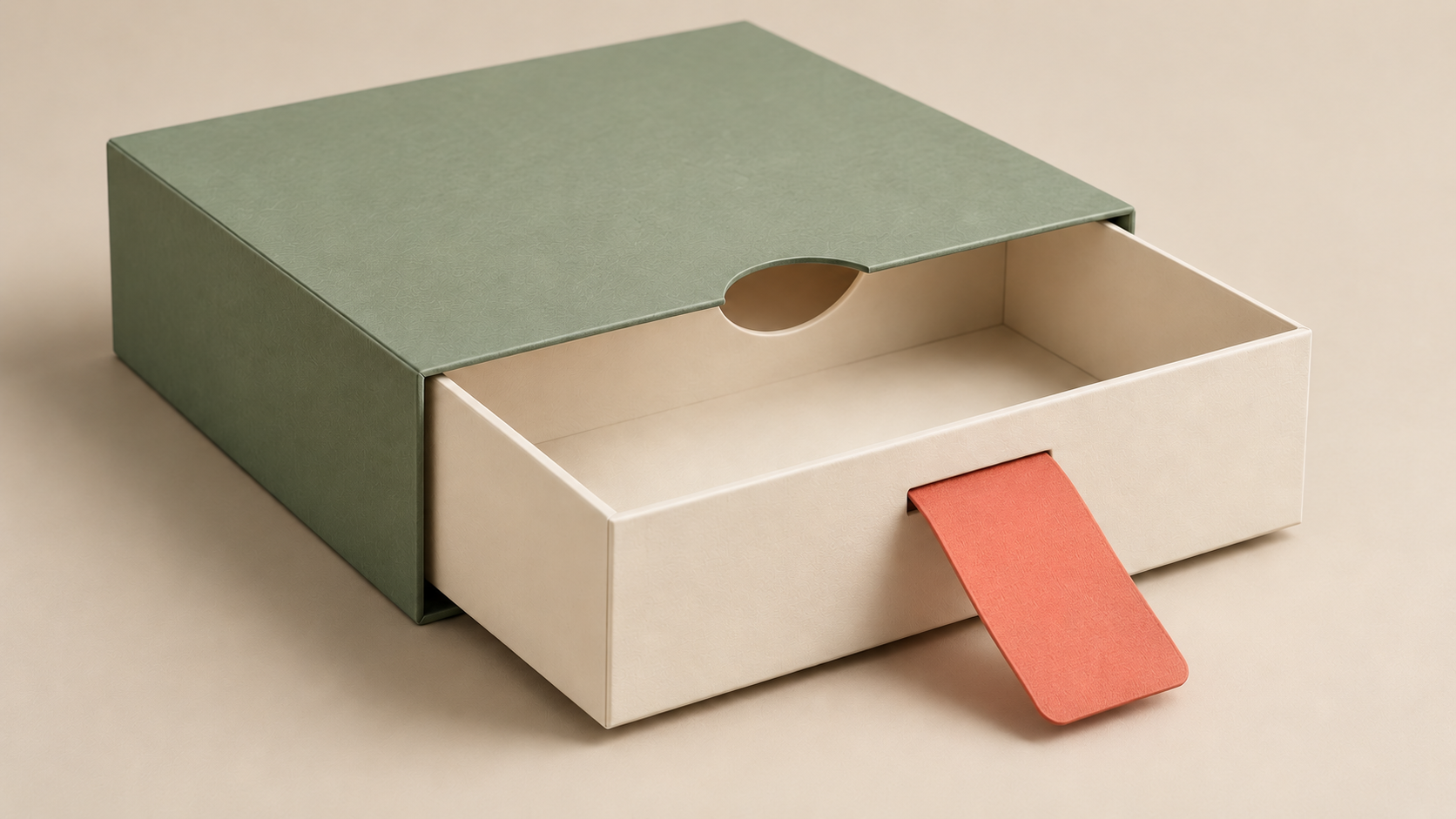
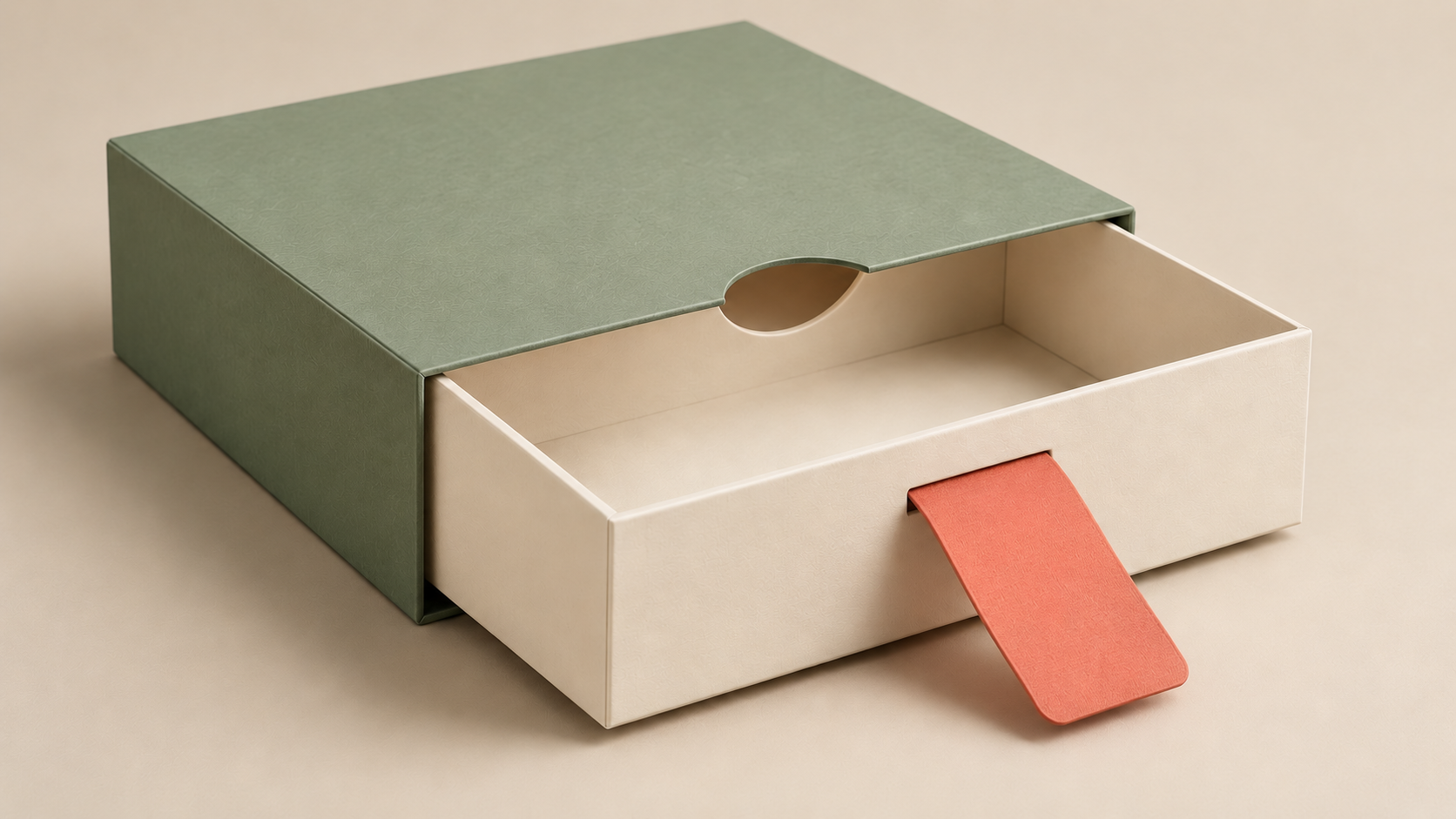
Easier-to-open gift packaging starts with the actions a recipient must perform: finding the opening, getting hold of it, releasing the closure and removing the gift. Review that whole sequence with people who experience the barriers you want to address. A larger pull tab can be useful, but it cannot compensate for a tightly wedged product or a second seal hidden underneath.
For a small gift brand, the practical starting point is one product and one opening journey. Record where precise finger movements, sustained gripping or simultaneous actions are required. Then develop alternatives that can be compared on real packages.
Describe the difficulty before choosing a feature
“Limited dexterity” does not describe a single way of using a package. Someone may find a small pinch difficult while being comfortable pulling a broad loop. Another person may need the box to stay on a table throughout opening. Ask about the interaction rather than assuming that a particular diagnosis or age determines the solution.
A 2024 packaging research case study identified small gripping areas, fine finger movements and closely fitted opening surfaces as recurring difficulties in its evaluated packages. The work used dexterity-simulation gloves and developed a seal-opening prototype. That is useful evidence for investigating these design variables; it does not establish how a gift box will perform for real recipients.
For your project, translate a broad ambition into a specific question: “Can the recipient start opening this seal without picking at a flush edge?” is more useful than “Can we add an accessible tab?” The first question leaves room for several structural answers.
Give the first opening action a clear place
The recipient should be able to distinguish a working opening feature from decoration. A ribbon around the lid, a ribbon attached to the tray and a printed ribbon motif can suggest different actions. If they appear together, observe which one people reach for first.
Microsoft’s accessible packaging guide describes visible grasping features, visual and tactile cues, low-effort interactions and the importance of designing with people with disabilities. Its examples are a starting point for exploration rather than a universal specification for another brand’s materials or products.
In a gift box, consider reserving the clearest contrast for the functional opening. Ask the designer to show where the recipient starts before placing decorative printing there. If a seal must be removed, leave the intended grasping area reachable after the package has been fully assembled. Review the shipping layer too: a recipient encounters that before the gift presentation.
Compare actions rather than box names
Calling a design “drawer,” “magnetic” or “lift-off” says little about its actual opening demands. A drawer may be difficult to restrain while pulling. A lift-off lid may offer too little edge to hold. A magnetic closure can feel different depending on the complete construction.
Use the following questions to compare proposals for the same gift. These are design prompts, not pass criteria or certified test methods.
Scroll horizontally if columns extend beyond the view.
| Opening moment | What to observe | Alternative to explore |
|---|---|---|
| Starting a seal | Fingernail searching or repeated pinching | An exposed, graspable starting area |
| Separating lid and base | The entire box lifts or slips | A different opening direction or a more reachable lid edge |
| Pulling a drawer | Sleeve and tray move together | A structure that can remain supported during the pull |
| Releasing decoration | Small knots must be untied | A removable band or a simpler decorative arrangement |
| Taking out jewelry | The recipient pulls the chain to lift the piece | A way to lift the presentation card before removing the jewelry |
| Removing a jar or candle | The item is gripped only at its rim | Access around the body while retaining the required support |
If a drawer remains under consideration, the Packrivo drawer-pull review guide provides a related component-level discussion to carry into the wider opening review.
The last two rows deserve particular attention. A package can open successfully while still leaving its contents difficult to retrieve. Include the product’s removal and any intended return to the box in your review.
Learn from complete opening journeys
Microsoft’s Xbox Adaptive Controller packaging example extends opening assistance across the shipping box, retail box and internal components. The published example includes loops, a hinged opening and alternative ways to remove the controller.
The useful lesson for gift packaging is to follow the recipient beyond the first successful pull. For example, replacing a tight lid with a hinge still leaves the tissue, card and insert to consider. A ribbon that opens the outer box should not imply that the recipient can safely lift a heavy product with it. Each feature needs a clear job in the complete arrangement.
A hypothetical jewelry gift redesign
Imagine a small jewelry brand developing packaging for a pendant. Its first concept has a tight lift-off lid, a decorative bow and a necklace card seated flush in a tray. No user research or testing has yet been completed.
The team could prepare two alternatives. One retains the lift-off structure but changes the reachable lid edge and adds a card-lifting feature. The other uses a hinged structure and a presentation card that tilts up from an exposed edge. Both keep the pendant supported; neither uses the necklace chain as a lifting point.
The next discussion would compare what the recipient must do, where the box rests and which component moves first. If participants find the card-lifting feature but cannot release the pendant without an awkward pinch, the project still has an unresolved interaction. A pleasing photograph would not resolve it.
Make user research part of the brief
ISO 17480’s public scope covers ease of opening, including opening location, opening methods and both instrumented and user-based evaluation. Referencing the standard is not evidence that a design complies with it. Any formal assessment needs the applicable full requirements and a qualified evaluation plan.
For practical development sessions, agree the intended users, product configuration and questions before recruiting participants. Record hesitation, help requested, unintended movements and participants’ explanations, alongside whether they complete the task. Allow participants to stop or decline an action. Review improvements with them rather than treating a designer’s own successful opening as the conclusion.
Keep any public claim as narrow as the evidence supports. A design intention, a participant observation and a verified performance statement are different things.
Planning a more usable gift presentation? Bring Packrivo your product and opening concerns. We can help organize the packaging brief and supplier questions, including which construction options and physical samples need further investigation.
Sources and scope
All sources accessed 6 October 2026. Recommendations and the jewelry scenario are editorial applications, not reported Packrivo tests.
- ISO 17480:2015 — Packaging — Accessible design — Ease of opening. Official public abstract supports the scope of opening design and instrumented/user-based evaluation. At review, ISO lists the edition as published with revision planned. The full standard was not reviewed; no compliance or numeric threshold is claimed.
- Microsoft — Creating Accessible Packaging. Original manufacturer guidance supports co-design, discoverable opening features and whole-experience consideration. Microsoft-specific metrics and legal statements are not adopted as universal gift-packaging requirements.
- Reese, Hurley and Cavender — Enhancing Package Ergonomics for Arthritis Consumers: A Case Study. Original 2024 research abstract supports the scoped observations about gripping areas, fine finger movements and close-fitting opening surfaces. Its glove-based evaluation and pharmaceutical seal prototype are not represented as gift-box validation or human-participant results for Packrivo.
- Microsoft UK Stories — Even the packaging for the Xbox Adaptive Controller is accessible. Original brand example published 25 July 2018, still available at review. Supports the described loops, hinge and multiple removal routes for that specific product. No image or other asset is reused.
Additional internal link verified against the live public page: Review a Drawer Pull With the Loaded Tray.
Internal CTA verified: Packrivo packaging inquiry. Packrivo is described as a sourcing and project-coordination partner, not a factory or accessibility-certification provider.
Keep assistance and product removal visible in the task record
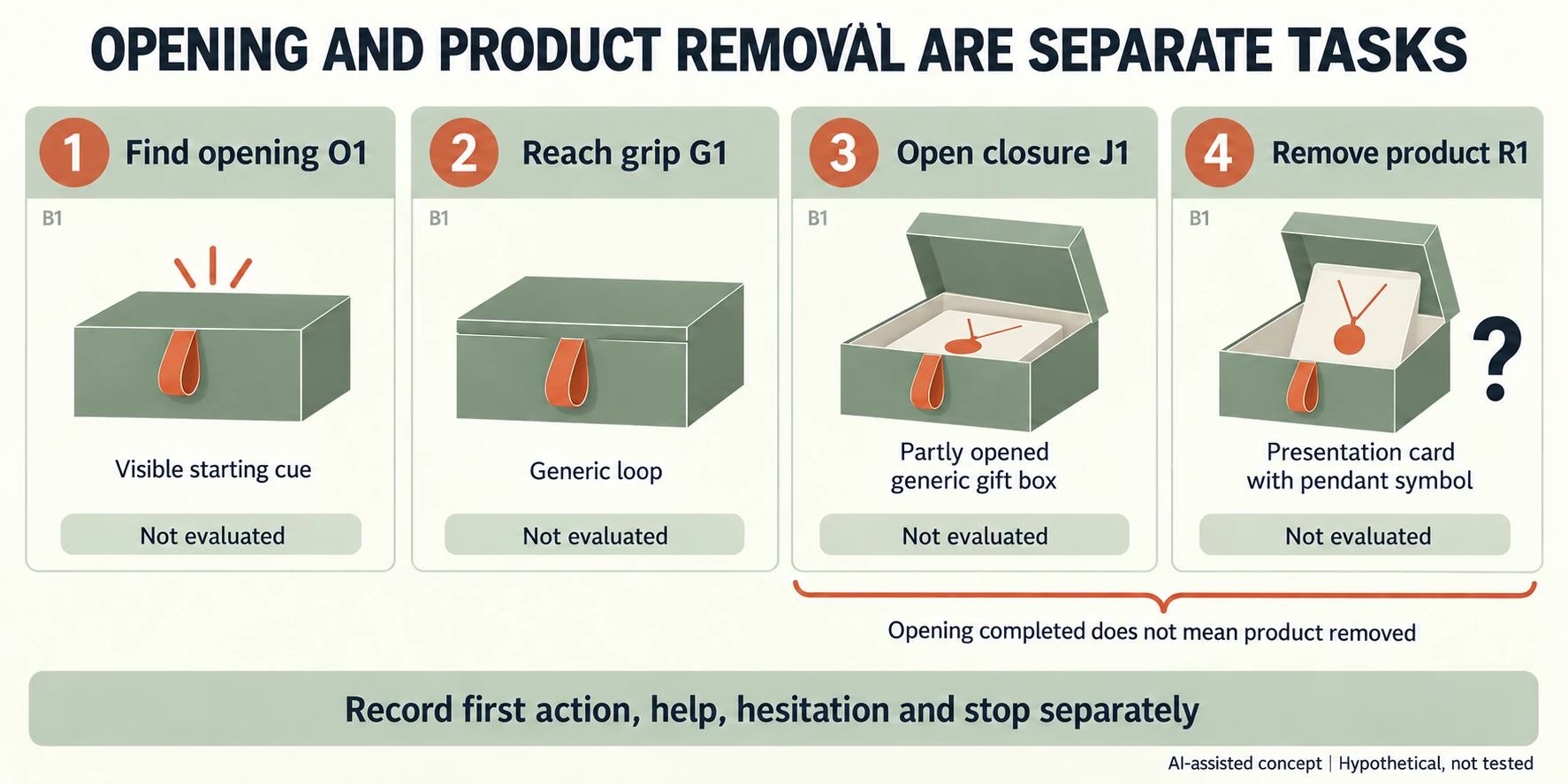
For a fictional B1 candidate, distinguish finding O1, reaching grip G1, opening J1 and removing product R1. Each is unevaluated. The four schematic stages use one generic hinged box and pendant card; they are not participant observations or an approved opening construction.
Scroll horizontally if columns extend beyond the view.
| Task | Question | Record independently |
|---|---|---|
| Find O1 | Is the starting feature recognized? | First unprompted action |
| Reach G1 | Can the intended grip be reached? | Hesitation and changed grip |
| Open J1 | What action/support is used? | Help, extra actions and stop |
| Remove R1 | Can the product/card be released? | Separate removal outcome |
As a purely hypothetical counterexample, someone could open a lid without help yet need assistance at the card. Reporting only that the box opened would erase the unresolved removal task. Keep the stage and exact help separate rather than turning assisted completion into an unassisted result.
The loop is an illustrative grip question: its attachment and transfer of movement to the lid are not established. The raised-card symbol proposes no accepted lifting mechanism. Include people who experience the intended barriers under an appropriate evaluation arrangement, allow stopping, and retain their feedback. ISO's public scope and Microsoft's guidance provide context, not a compliance finding, universal force threshold or substitute for actual evaluation. All observation fields remain blank.
Download the accessible gift packaging record (.csv). HYPOTHETICAL rows are invented examples. Use ACTUAL_BLANK for permitted project inputs; replace that row label only when recording actual facts. Empty evidence, observation and date fields mean unknown or not performed, never acceptance. Keep checkpoints and revisions separate.
Send the complete candidate and intended interaction questions, with stage-specific observations and assistance recorded only after actual permitted evaluation. Packrivo coordinates independent suppliers. These records establish no supplier offer, service availability or MOQ exception; its published baseline is 500 pieces per product/design.