
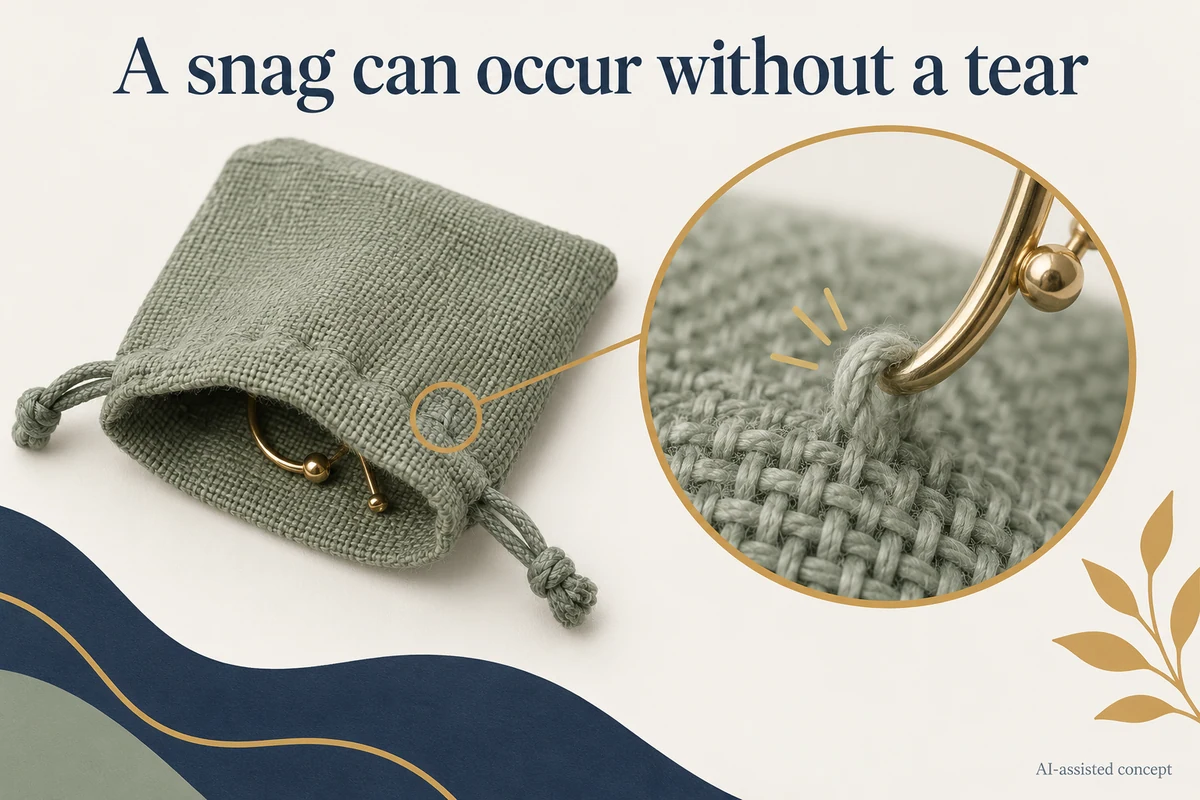
A jewelry finding can catch a yarn or loop in a fabric pouch and displace it without immediately tearing a hole. Snagging, whole-fabric tearing and colour transfer are different interactions, so an intact-looking pouch doesn't establish that the packed hardware releases cleanly.
For a jewelry brand, compare the actual protrusion and textile surface along the loading and removal route. Increasing pouch size alone may leave the same contact mechanism in place.
A projection can engage an individual yarn
A clasp, ear pin or other projecting feature can meet the structure of the fabric at a local point. If it catches a loop or yarn, further movement may pull that part away from its original position. A visible drawn loop can therefore occur before a hole appears.
The relevant pair includes both the textile and the hardware geometry. A generic description such as soft pouch doesn't describe the surface structure or the shape that could engage it. A smooth hand feel also doesn't establish how a particular finding moves past the surface.
The surrounding arrangement matters. The metal feature may contact the opening during loading, the lining during storage or a seam during removal. Those routes can introduce different contact opportunities even with one unchanged pouch.
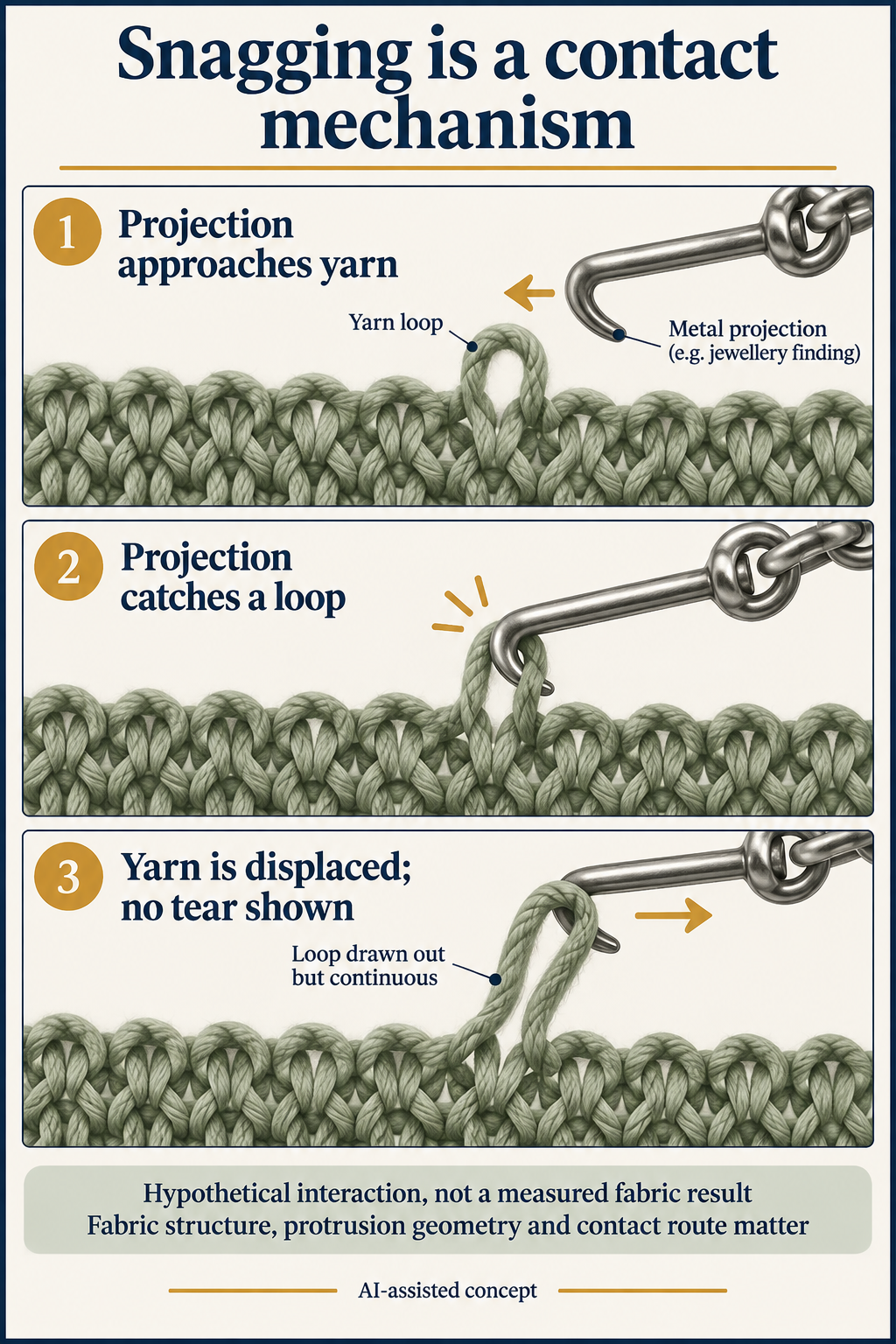
Snagging has its own evaluation scope
The public scope of ASTM D3939/D3939M-26 identifies a fabric snagging-resistance method. It has fabric-construction limitations, so it shouldn't be treated as applicable to every textile or nonwoven pouch. The complete paid method was not obtained here.
A material result under a specified method isn't an actual trial of a jewelry finding in a finished pouch. It may inform a relevant material discussion, while the complete hardware and contact route remain a separate question.
Likewise, an absence of tearing in another evaluation doesn't establish an absence of yarn displacement. Keep the observed feature and the property measured distinct rather than describing all fabric durability through one score.
Follow a hypothetical clasp-contact comparison
Imagine a necklace clasp with a small projecting feature entering a fabric pouch. The pouch body has enough space for the necklace, but the clasp may meet the lining while the item is removed. This is a hypothetical interaction, not a reported customer incident.
The buyer first identifies whether the projection can reach that surface in the intended arrangement. If the jewelry is retained on a presentation card, its packed orientation and release sequence may change that contact. If it is loose, a static photograph may omit the later movement.
A candidate revision could change the jewelry's retained orientation, introduce a suitable separating component or change the offered textile construction. Each changes a different part of the pair or route. None should be called snag-free before relevant evidence exists.
Simply widening the pouch might improve entry space yet leave the clasp touching the same lining. That is why a dimension response and a yarn-contact response need different observations.
Keep a caught loop separate from other marks
A drawn yarn or local distortion differs from a stain, loose fibre or abrasion mark. An actual observation should identify which feature is visible and where it appeared. Appearance alone doesn't establish every preceding action or assign the cause to a particular component.
Packrivo's jewelry pouch specifications guide defines the opening, complete contents and construction. The necklace chain-route guide follows retained chain positions and release actions. The textile-yarn interaction adds a more specific contact question to those arrangements.
If a proposed test or comparison uses a substitute item, keep that limitation visible. Another clasp shape may not engage the surface in the same way. Evidence should remain tied to the actual feature and construction being selected.
Choose a response to the identified contact
For a real concern, locate the feature, surface and stage of movement before selecting a change. The responsible parties can then compare candidates that address that contact while retaining the required presentation, fit and removal function.
Don't bend or modify the jewelry finding to make a packaging trial succeed. If the required route remains unresolved, return the configuration for an appropriate design response.
A useful selection distinguishes adequate space, resistance to tearing and avoidance of relevant snag contacts. The pouch can answer one of those questions while leaving another open.
Locate the finding through each release stage
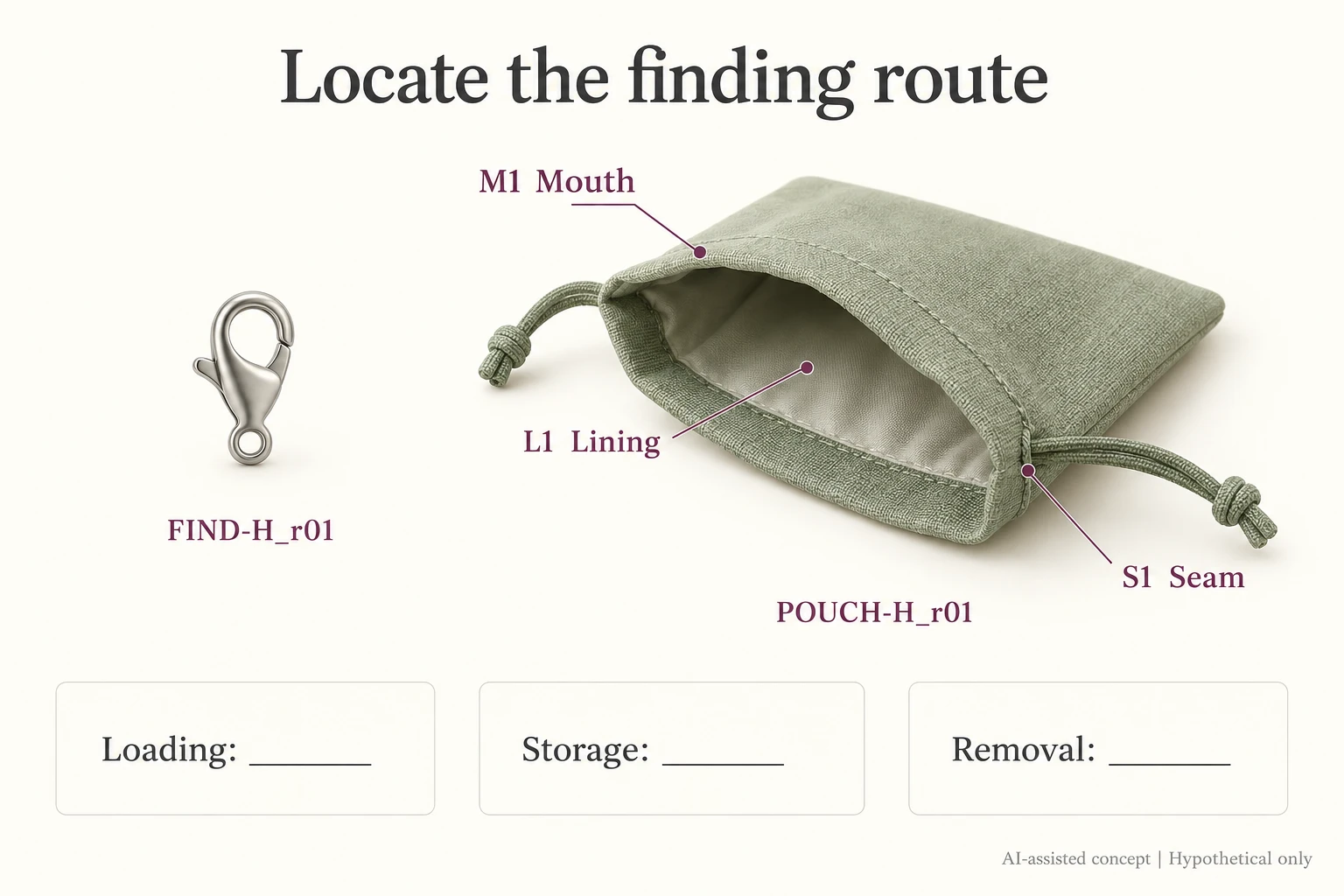
The new hypothetical configuration uses finding FIND-H_r01 and pouch POUCH-H_r01. Mouth M1, lining L1 and seam S1 are distinct contact locations; none is a confirmed snag.
Scroll horizontally if columns extend beyond the view.
| Stage | Located question | Evidence needed |
|---|---|---|
| Loading | Can FIND-H_r01 reach M1? | Packed orientation and actual entry route |
| Storage | Can FIND-H_r01 reach L1? | Retention and possible movement |
| Removal | Can FIND-H_r01 reach S1? | Complete release route and located observation |
| Retained-card alternative | New orientation, same finding | Separate configuration; no assumed snag avoidance |
Keep the finding geometry unchanged when isolating a pouch-route revision. A substitute clasp may fit the same envelope while presenting another local projection. Record that substitution instead of claiming the exact pair was reviewed.
A drawn loop, a hole, colour transfer and loose fibres require separate observations. No tear observed does not mean no snag, and a material snagging result is not a completed trial of FIND-H_r01 inside POUCH-H_r01.
If the route remains unresolved, return it for design review rather than bending the finding or pulling harder to complete the action. The map is for locating the next question; it supplies no test procedure, force, safe edge or snag-free outcome.
Download the jewellery pouch snagging record (.csv). HYPOTHETICAL rows are invented examples. Use ACTUAL_BLANK for permitted project inputs; replace that row label only when recording actual facts. Empty evidence, observation and date fields mean unknown or not performed, never acceptance. Keep checkpoints and revisions separate.
Bring the exact finding, pouch revision and located route question through the packaging enquiry before changing body size or declaring the textile suitable. Packrivo coordinates independent suppliers. These records establish no supplier offer, service availability or MOQ exception; its published baseline is 500 pieces per product/design.