
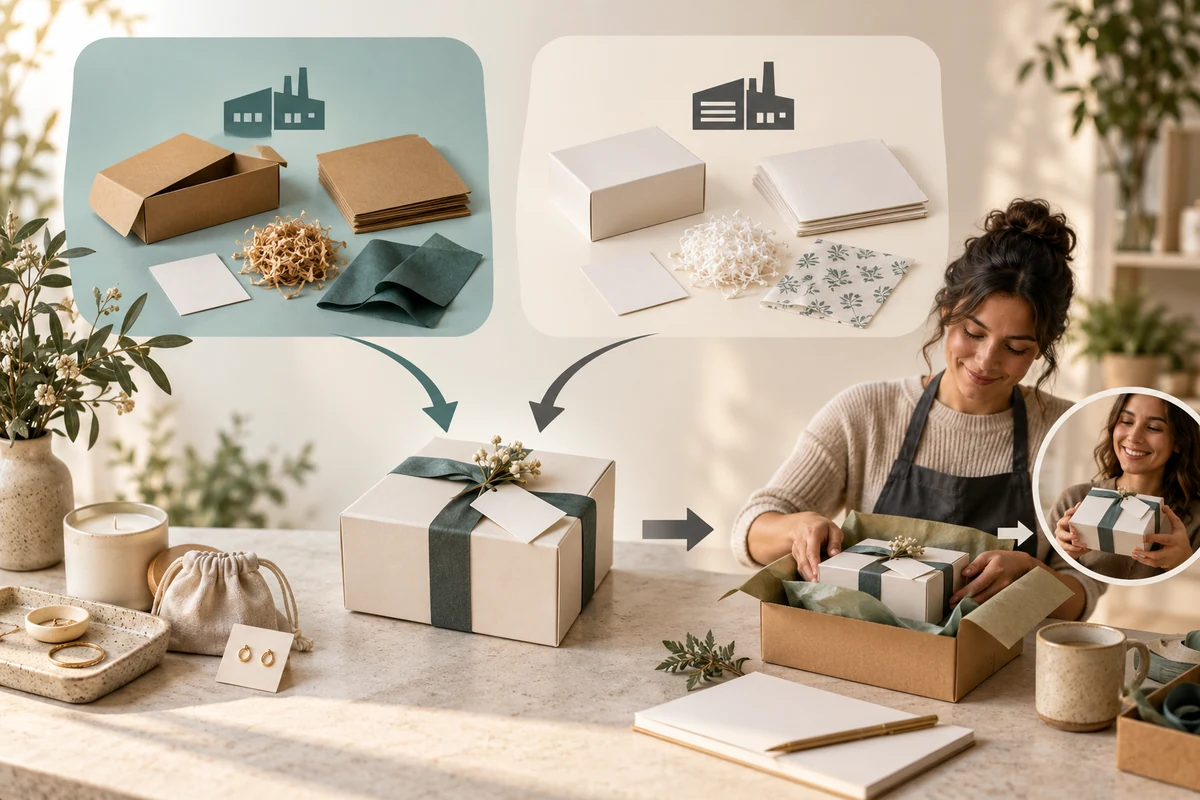
Changing a packaging supplier requires a process comparison for the actual design, not an assumption that existing files reproduce the same result elsewhere. Identify which materials, operations and tools the new route proposes. Keep unchanged geometry separate from changed appearance, assembly and evidence requirements.
In this guide
- Translate the old sample into its controlled features
- Compare two routes without declaring them equivalent
- Assign evidence to the changed feature
- Make the first transfer task answerable
- Build a feature transfer request the new route can answer
- Send the specific open decision with the brief
- Sources and scope
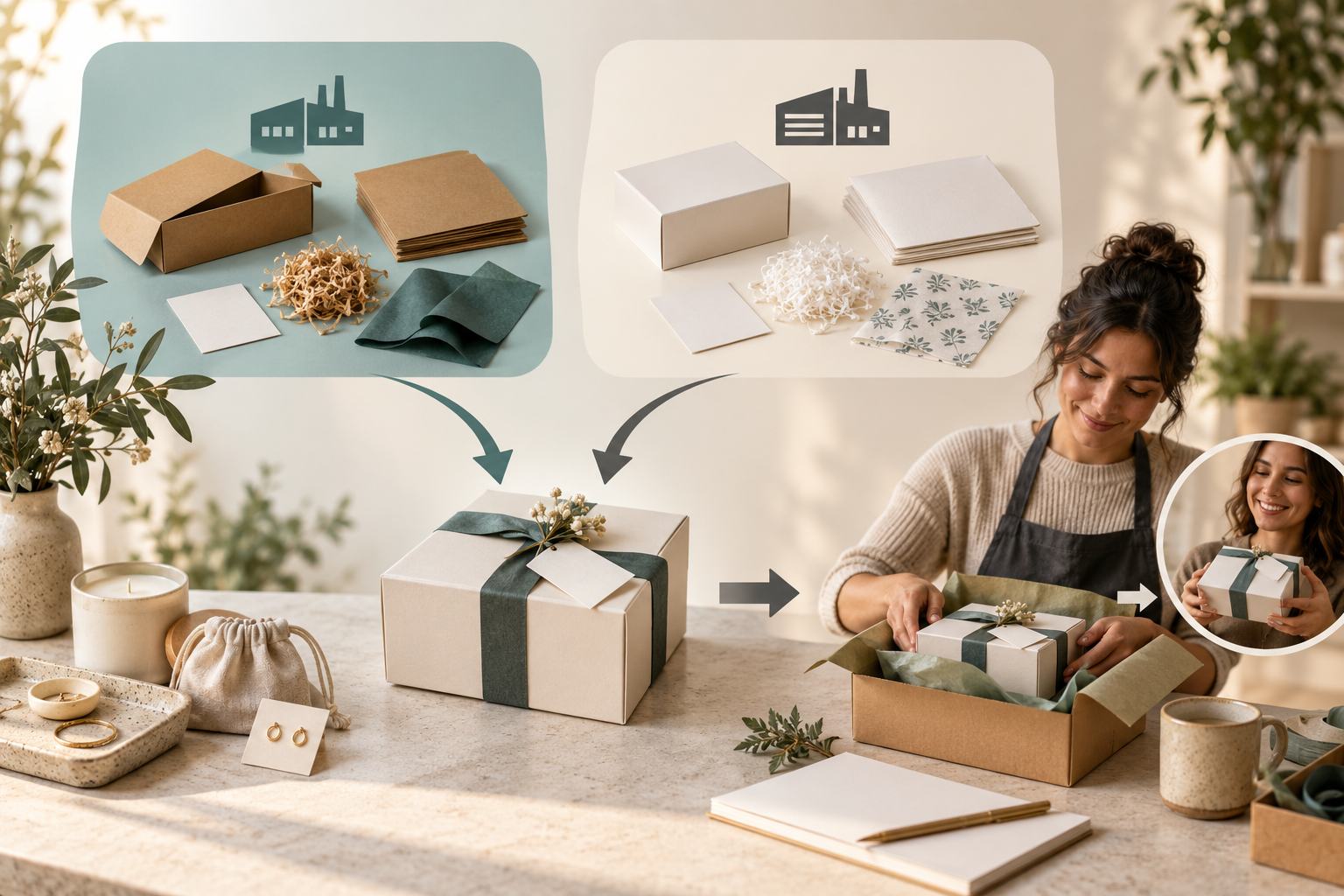
Translate the old sample into its controlled features
Name the approved product, box, insert and artwork versions. Describe the features the sample was accepted for: loaded fit, finish appearance, closure or another scoped decision. A finished sample can be a reference without explaining every operation that created it.
Retrieve known tool identities and their technical scope through the tooling record. Ask separately whether the actual arrangement permits transfer or reuse. Paying a tooling charge does not itself settle those terms.
Compare two routes without declaring them equivalent
Consider a hypothetical gift box. Route A used separate cutting and embossing tools. Route B proposes its own cutting tool and a different print-and-finish sequence. No supplier capability or physical result is verified by this scenario.
Scroll horizontally if columns extend beyond the view.
| Controlled feature | Old reference | New route’s unanswered comparison |
|---|---|---|
| Product and inner arrangement | Named approved geometry | Does the proposed material change the usable interior? |
| Raised decorative mark | Accepted sample location and appearance | Which operation creates it and what representative evidence is offered? |
| Cut and crease geometry | Identified drawing | Which current tool and material create the proposed result? |
| Complete closure | Scoped loaded sample observation | Does the new complete arrangement need another review? |
The table preserves the intended result while exposing manufacturing differences. It doesn’t prescribe a production method or claim that the old route is technically superior.
Assign evidence to the changed feature
A drawing comparison can address geometry while leaving the final surface appearance open. A finish swatch can illustrate a material effect while omitting loaded fit. Request evidence that actually represents the decision being transferred.
Keep substitutions explicit. If the new route changes the insert, board or fastening, record the proposal as a changed configuration rather than carrying the old approval across unchanged.
An apparently identical exterior also leaves commercial questions unresolved. Separate preparation, sample, tool and delivery scope so a new quote is not treated as a repeat of the old supplier’s arrangement.
Make the first transfer task answerable
Send the controlled-feature comparison with available drawings and authorised reference material. The new production contact should identify its proposed operations and the evidence it can supply. Your next output is a matched route with specific open features, not a blanket assurance that the design can be copied exactly.
Build a feature transfer request the new route can answer
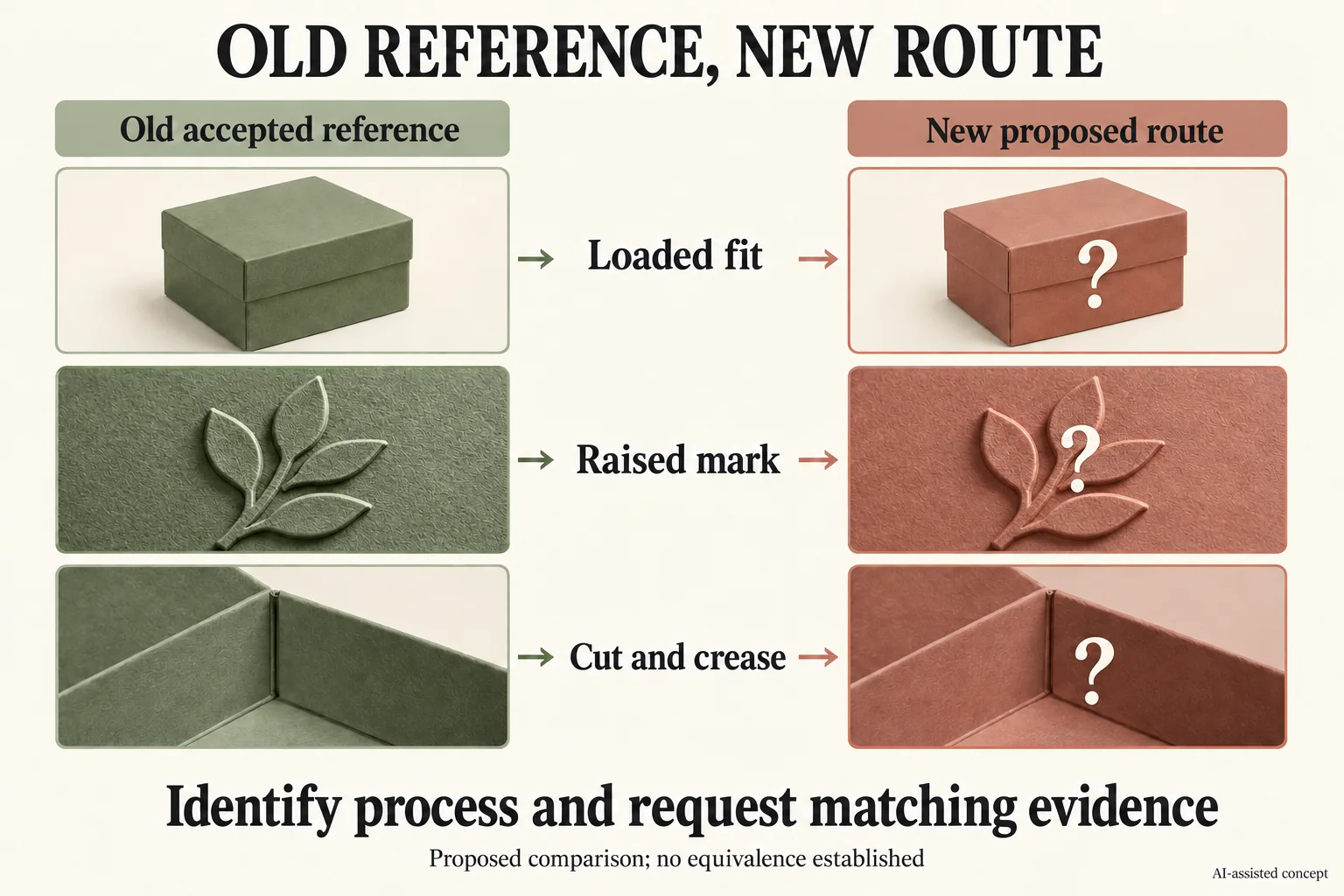
Give the new supplier a separate evidence request for each controlled feature. The old sample records the accepted result, while the new response identifies a proposed way to produce it. Do not ask a single appearance photograph to settle loaded fit, relief and cut geometry together.
Scroll horizontally if columns extend beyond the view.
| Feature | Old reference to send if authorised | New-route response needed | Decision still open |
|---|---|---|---|
| Loaded fit | Product P1, box BX3 and insert IN2; observed closing/removal record | Identify offered board and assembled usable interior; propose a complete sample | Fit with the actual product |
| Raised mark | Artwork A5 and accepted effect reference | Identify relief process, proposed material and representative proof | Physical appearance on the offered construction |
| Cut and crease | Current dimensioned BX3 drawing | Identify its own tool/drawing relationship and formed evidence | Shape and closing on the new material |
All IDs in this table are fictional. A source offering a new cutting tool has answered a tool proposal; it has not established reuse rights for the old tool or shown that the new board folds the same way. Keep technical scope and commercial permission in different fields.
Return a change list when the new route differs. For example, changing the insert face can reopen contact and removal while leaving approved wording unchanged. Ask the responsible reviewer which evidence is still applicable, rather than accepting or rejecting every old decision as one block.
The tooling scope record handles tool identity and agreement questions. The reorder baseline checklist retrieves the versions; it does not qualify this different source. Use a current dated proposal with the feature table so price, sample and delivery questions remain attached to the route actually being evaluated.
Download the changing packaging suppliers record (.csv). It contains field definitions, clearly hypothetical examples and a blank actual-project row. Replace the invented entries; a blank field is unknown, not an approved result.
Send the specific open decision with the brief
Bring the current record, packaging configuration, actual evidence available and the unresolved question to Packrivo’s packaging inquiry. State who must answer and which next step remains on hold. Packrivo coordinates sourcing and project questions with independent suppliers; this record is not a manufacturing or fulfilment service commitment.
Sources and scope
The worked scenario is original editorial analysis with assumed inputs, not a supplier offer, customer record or measured Packrivo result. Commercial feasibility and physical suitability remain project-specific.