
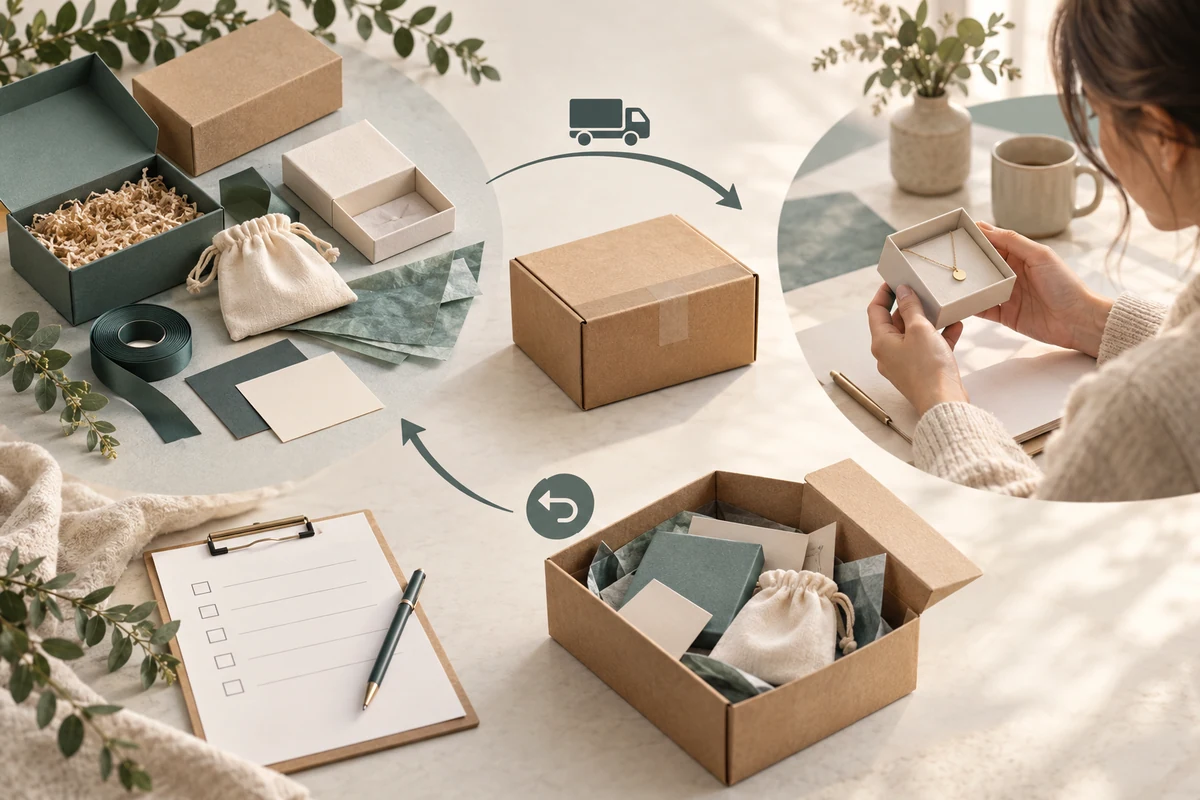
Send products for packaging sampling against a task-specific specimen and custody plan. Identify which work needs the actual product, which substitute can answer a limited question, and how specimens will be received and returned or disposed of. Sample quantities should follow that scope rather than a vague request for “a few items.”
In this guide
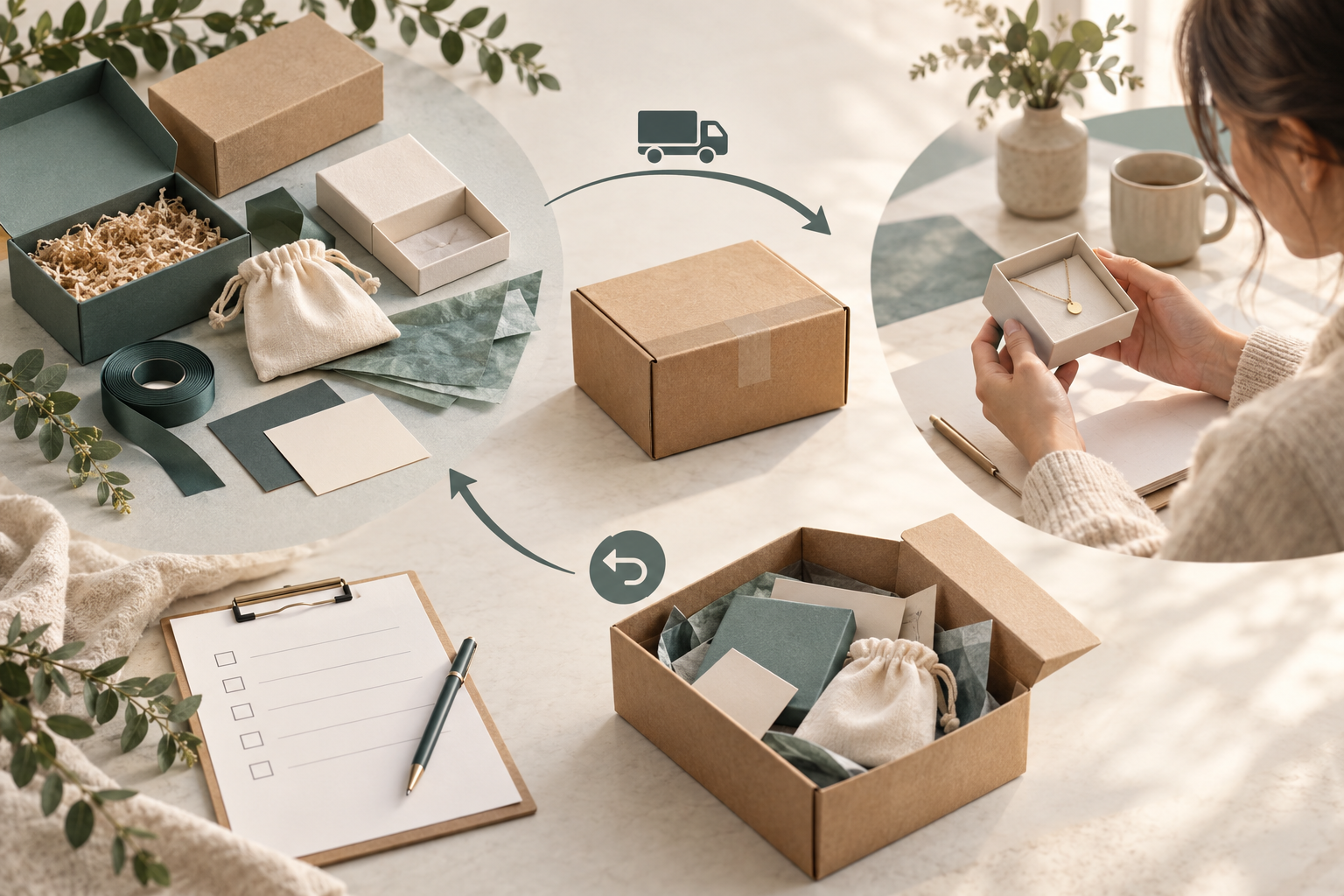
Connect the specimen to its review job
The sampling and production line map separates a holder trial from a complete-pack review. Add the real product version and specimen identity each job needs.
A dimensional substitute might communicate an envelope, but it cannot establish the real item’s contact, removal or protection result. Differences in weight, protrusions, finish or flexibility remain relevant open inputs.
Keep a brand-held reference when feasible. It lets the team relate the returned sample and actual product to the same version rather than relying on an unlabeled photograph.
Build a specimen route for three jewelry variants
Consider hypothetical necklace, earring and ring variants. No actual client goods or destructive test are represented.
Scroll horizontally if columns extend beyond the view.
| Intended task | Specimen planning field | Return or next-use question |
|---|---|---|
| Product identity reference | One identified brand-held reference per version where feasible | Remains with the brand |
| Holder loading and removal review | Actual identified item for each reviewed configuration | Return in recorded condition under agreed scope |
| Limited geometry exploration | Named dimensional substitute with explicit limitations | Keep separate from actual-fit evidence |
| Any destructive evaluation | Separately authorised real specimens and quantity | Agree disposition before work begins |
The table deliberately leaves destructive quantities open. Its method, required repetitions and specimen needs belong to the responsible evaluation plan, not a generic packaging article.
Record handovers without inventing responsibility
List the sender, receiving party, item identity, count and actual condition at each handover. Keep photographs connected to the specimen rather than extending one image to every item.
Agree whether specimens can be retained, altered or sent onward. Shipping a product for a fit review should not be interpreted as approval for unrelated destructive work or third-party access.
Return shipping, replacement value, loss responsibility and insurance are actual commercial questions. This record does not settle them. State missing terms before dispatch rather than discovering different expectations when the product is needed again.
Request the specimen plan before sending goods
Ask the sampling contact to confirm tasks, required product versions and any substitute limitations. Return a custody route with counts and disposition instructions to the sender. The useful outcome is enough identified evidence for the packaging decision, while keeping the real products’ movement and permitted use clear.
Make the return instruction specimen-specific
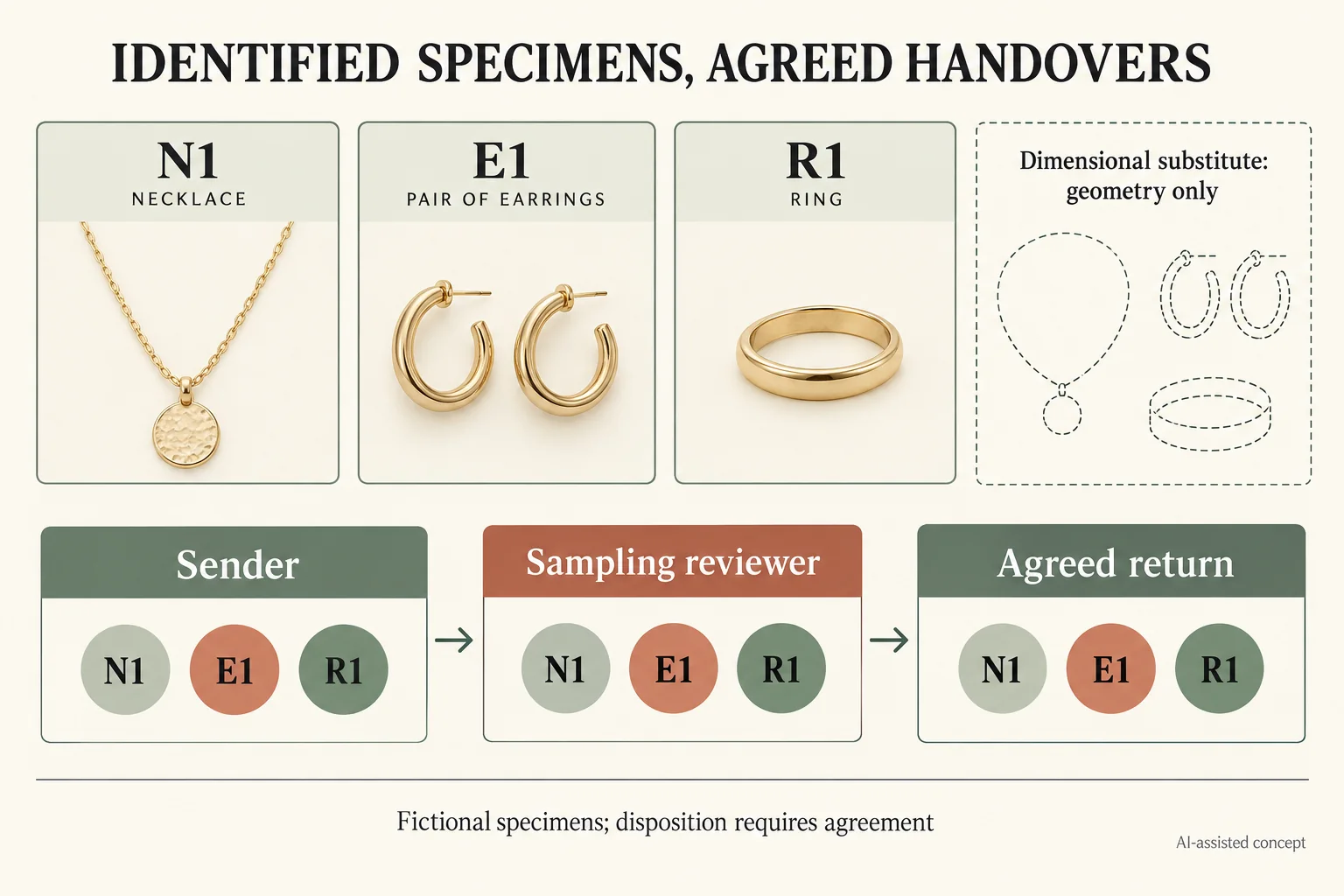
A useful custody sheet follows each identified specimen, not just the carton containing it. Give a pair of earrings both a specimen ID and a stated counting unit. “E1: one pair, two individual earrings” is clearer than “one item” if a later receipt count is made by individual pieces.
Scroll horizontally if columns extend beyond the view.
| Fictional specimen | Counting unit | Permitted review to confirm | Return instruction to agree |
|---|---|---|---|
| N1 necklace | One necklace with named card or clasp configuration | Holder loading, chain route and removal | Return N1 under agreed condition and packing scope |
| E1 earrings | One pair comprising two individual earrings | Post clearance and pair loading/removal | Reconcile both pieces before return |
| R1 ring | One ring; actual finish and projections identified | Seating, highest point and removal | Return same specimen ID; report any condition change |
The drawing’s dimensional substitute is a separate geometry aid. It should have a different identifier and a stated difference from the actual product. A substitute that matches width but omits an earring post leaves that contact question open; a model ring cannot demonstrate the actual finish’s response.
Ask the receiving contact to acknowledge identity, count, condition and authorised task before work begins. If forwarding to another reviewer is proposed, get the required agreement for that route. Mark a requested destructive evaluation separately; an ordinary fit-review dispatch should not silently grant that permission.
On return, compare IDs and counts with the dispatch list, then record condition using the agreed view and terms. Keep unknown responsibility, return cost and timing as actual commercial questions. The sample line and production scope guide defines what is requested from sampling; this custody record explains which real specimens can be used and where they go next.
Download the send products for packaging samples record (.csv). It contains field definitions, clearly hypothetical examples and a blank actual-project row. Replace the invented entries; a blank field is unknown, not an approved result.
Send the specific open decision with the brief
Bring the current record, packaging configuration, actual evidence available and the unresolved question to Packrivo’s packaging inquiry. State who must answer and which next step remains on hold. Packrivo coordinates sourcing and project questions with independent suppliers; this record is not a manufacturing or fulfilment service commitment.
Sources and scope
The worked scenario is original editorial analysis with assumed inputs, not a supplier offer, customer record or measured Packrivo result. Commercial feasibility and physical suitability remain project-specific.