
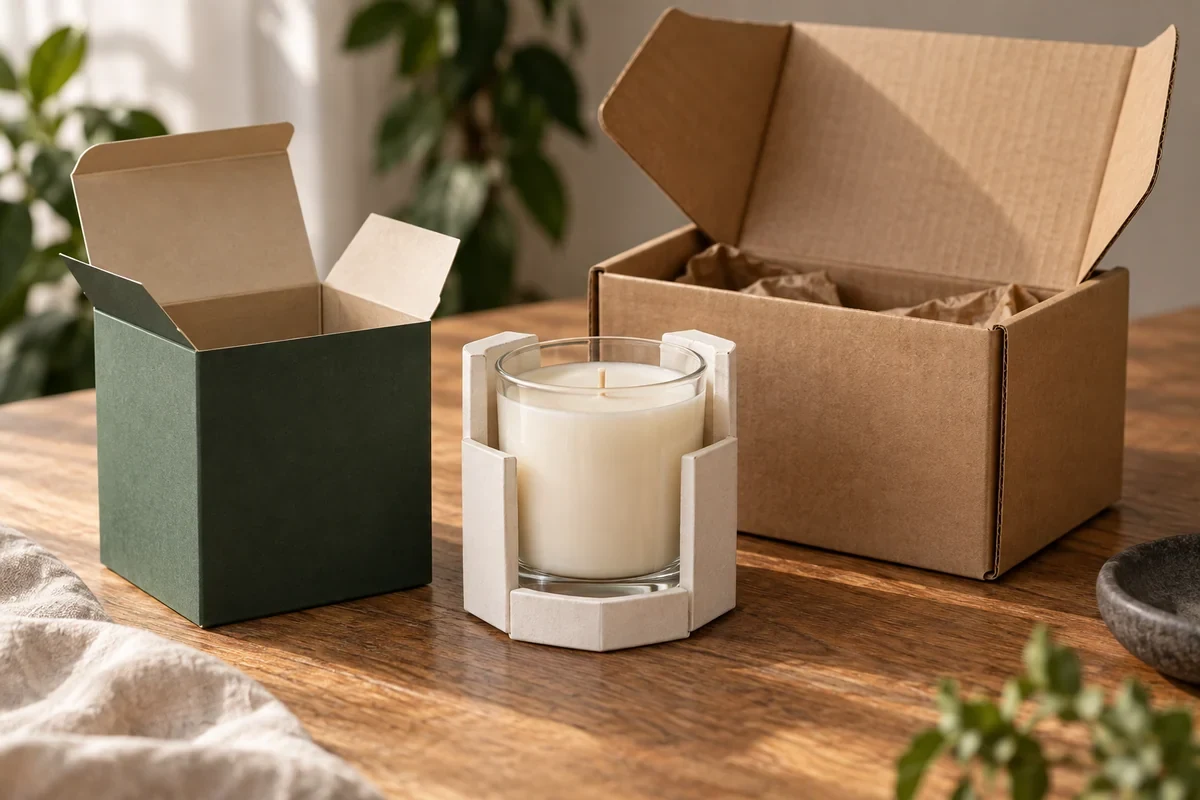
Plan candle box inserts around the complete vessel, its contact surfaces and the customer’s removal action. Brief the presentation box and transport outer separately. A fitted display sample can show where the jar sits and how it comes out; shipping performance needs evidence for the actual packed system and route.
Start with the candle as it will be packed, including its lid and any card or accessory. Then ask for a configuration you can identify, load, close and review.
Measure the complete candle before sizing the insert
Record vessel identity, shape, material and version. Measure overall height with the lid fitted, the widest packed point and actual weight. A jar body measurement can miss a projecting lid or a raised label edge.
Include the card, wrap and accessories in a separate contents list. Note whether they enter beside the jar, over it or elsewhere. A card placed above the candle changes a different interface from one lying in a side compartment.
Describe surfaces that need care: a printed label, coated glass, a lid finish or another feature identified by the product owner. Ask for the proposed contact material and sample method. Do not assume that a soft-looking surface has established compatibility.
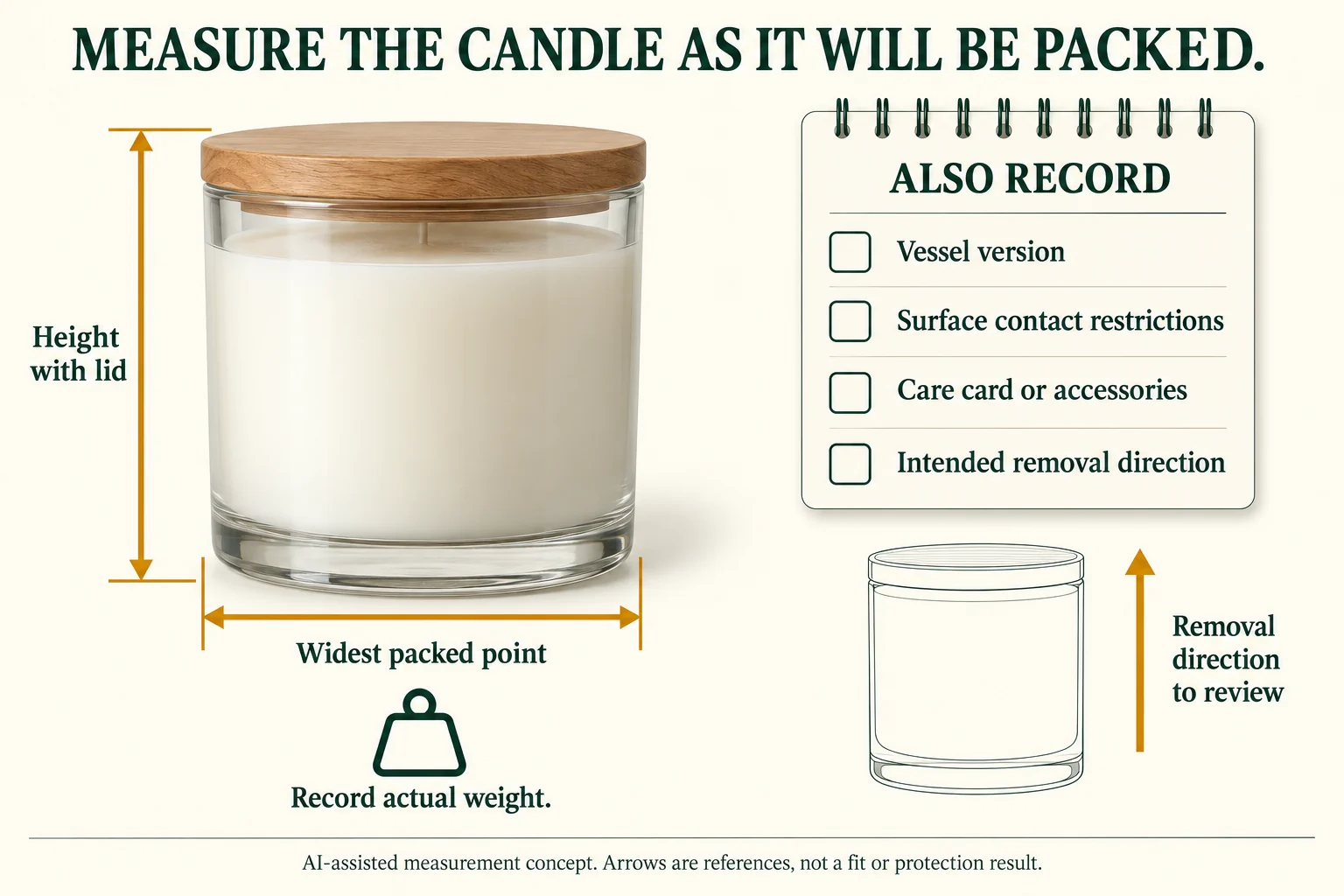
The arrows identify measurement references, not recommended jar dimensions or clearances. Review the removal direction with the actual vessel; a picture of an upright candle does not show whether fingers can reach it.
Give the insert, presentation box and outer pack separate jobs
Scroll horizontally if columns extend beyond the view.
| Layer | What to specify | Question for review |
|---|---|---|
| Insert | Vessel position, proposed contact, cavity and access areas | Can the actual jar load and leave without unintended contact? |
| Presentation box | Finished interior, closure, printed surfaces and card position | Does the complete arrangement close and present as intended? |
| Outer shipping pack | Complete contents, outer carton, support, closure and route | What suitable distribution evidence is required? |
Keep these components in one versioned configuration record while retaining their different requirements. An insert fitting an empty box does not prove that the loaded lid closes. A closed gift carton does not automatically become a parcel shipper.
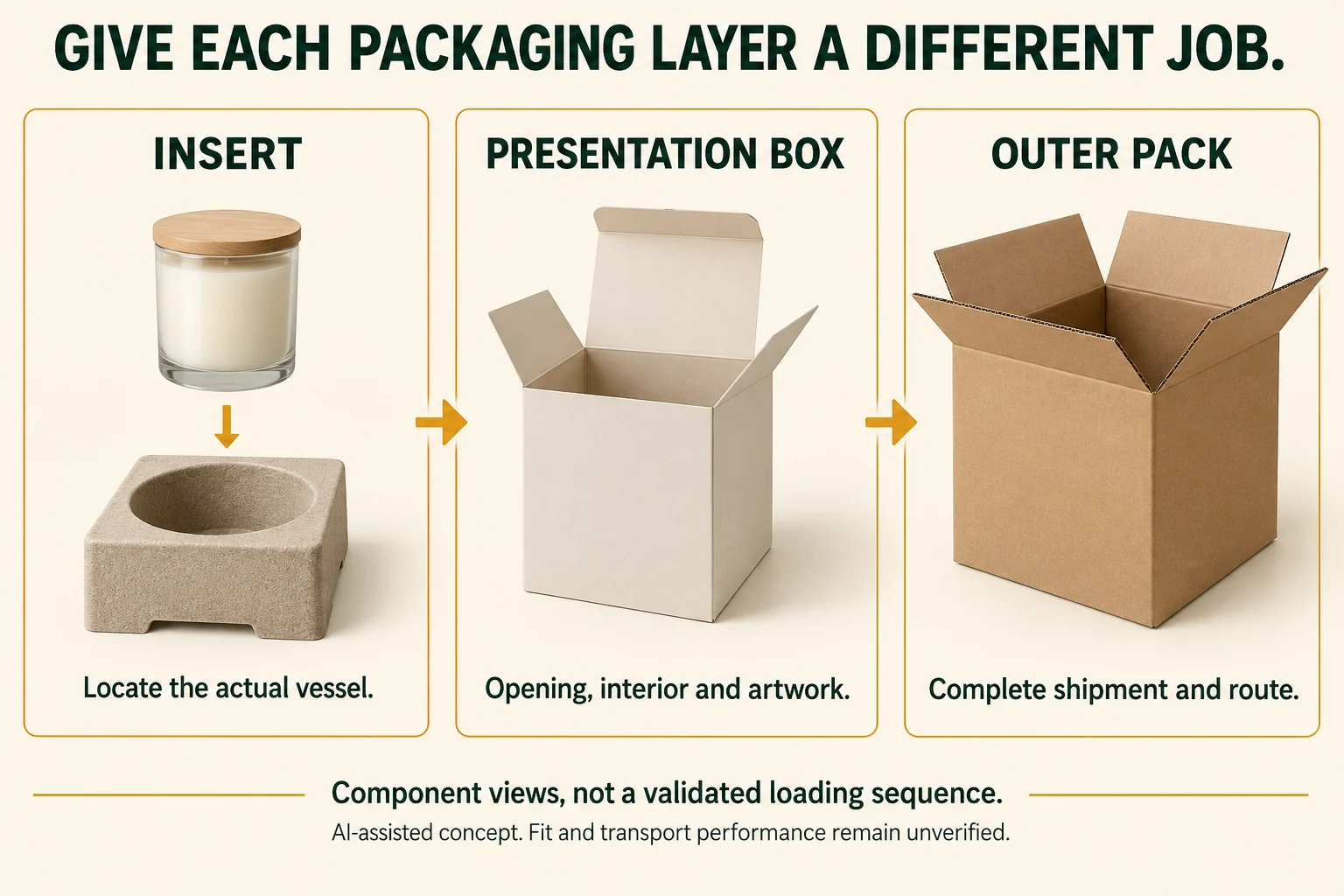
The separate component views explain the brief. They are not a validated packing sequence, a material specification or evidence that the illustrated outer will fit the other parts. Obtain the dimensioned proposal before deciding those relationships.
The existing concept below uses a glass candle, two fiber-support parts, a folding carton and an outer box. It shows a different support proposal from the single-recess teaching sketch above; the alternatives must not be merged into one assumed construction.
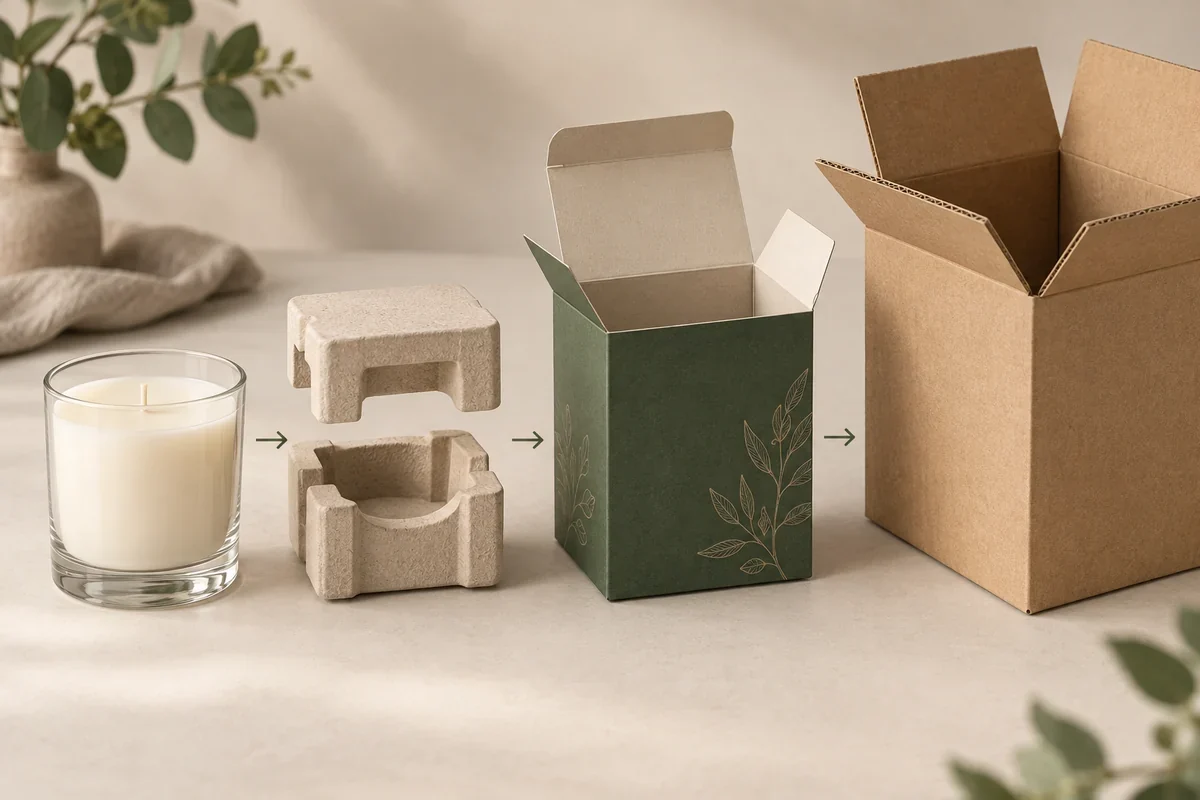
A fictional jar-and-card brief
Assume jar J-01 is a hypothetical lidded glass candle, 100 mm high, 75 mm at its widest point and 320 g in its packed product state. The brand wants one jar and one care card per gift. These numbers are invented inputs, not measured stock, standard jar sizes or a tested configuration.
The buyer records a preferred folding presentation carton. Finished internal dimensions, insert grade and cavity geometry remain supplier-proposal fields. The card is intended beside the jar, with its final size still to confirm; no allowance is inferred from the jar dimensions.
A useful request is: “Please propose a matched box and insert drawing for J-01, identify the contact faces and show how the customer reaches the jar. Include the care-card position. Identify the sample needed to review loading and complete closure; list transport evaluation separately.”
If the supplier proposes a top support instead of a base-only holder, update the component list and review both loading and removal. Adding a support cannot silently inherit an earlier box-only approval.
Review loading, contact, closing and removal
- Identify the jar, box, insert and card versions in the sample.
- Load the contents in the intended order and record any force, snag or contact.
- Close the complete pack and locate interference without guessing its cause.
- Open it again and follow the intended grip and removal route.
- Record observations, proposed changes and unreviewed questions separately.
Photograph the complete arrangement and the located interface. “The label rubs the insert’s front edge during loading” is a question the supplier can locate. It does not establish whether the solution is a material, geometry or handling change.
The glass candle contact guide helps locate those interfaces. For transport questions, the complete packed-system review keeps the presentation layer separate from the wider shipment.
Prepare the next sample and shipment questions
Choose the next sample by the missing decision. A blank structure may address opening and size. A box with the proposed holder and actual candle can address specified contact and removal questions. Print and finishes require a representative proof scope of their own.
For shipment protection, identify the complete pack and intended distribution conditions before agreeing the evaluation. ISTA’s public procedure overview distinguishes screening and distribution-simulation approaches. It does not select a procedure or establish a pass for this candle concept.
Download the candle packaging worksheet (CSV). Add actual vessel dimensions, component references, contact restrictions, card placement and the decision each sample must answer. The clearly fictional row is an example, not a supplied specification.
Compare the folding gift box direction as a presentation option, then bring the complete brief to a candle packaging inquiry. Materials, feasibility, quantity conditions and timing require project-specific confirmation.
Questions candle brands ask
Can a vessel photo replace dimensions?
A photo helps communicate shape and orientation. The proposed holder still needs measured geometry, weight and relevant contact information.
Can different jars share one insert?
List every vessel and proposed position. Review each intended configuration rather than assuming shared artwork means shared fit.
Does a fitted sample establish parcel protection?
It supports the observations made during that fit review. Transport performance is a separate question for the complete system.
Is a folding carton enough for a glass candle?
The structure name cannot decide that. Identify its presentation or shipping role and review the actual contents and route.
Key takeaways
- Measure with the lid and all packed contents identified.
- Review contact, closure and removal as separate actions.
- Keep fit observations distinct from transport evidence.
Source and scope: ISTA’s public overview was checked 16 October 2026; complete paid procedures were not obtained. The layer map, worksheet and jar example are original planning aids. No candle, material or shipment was tested.