
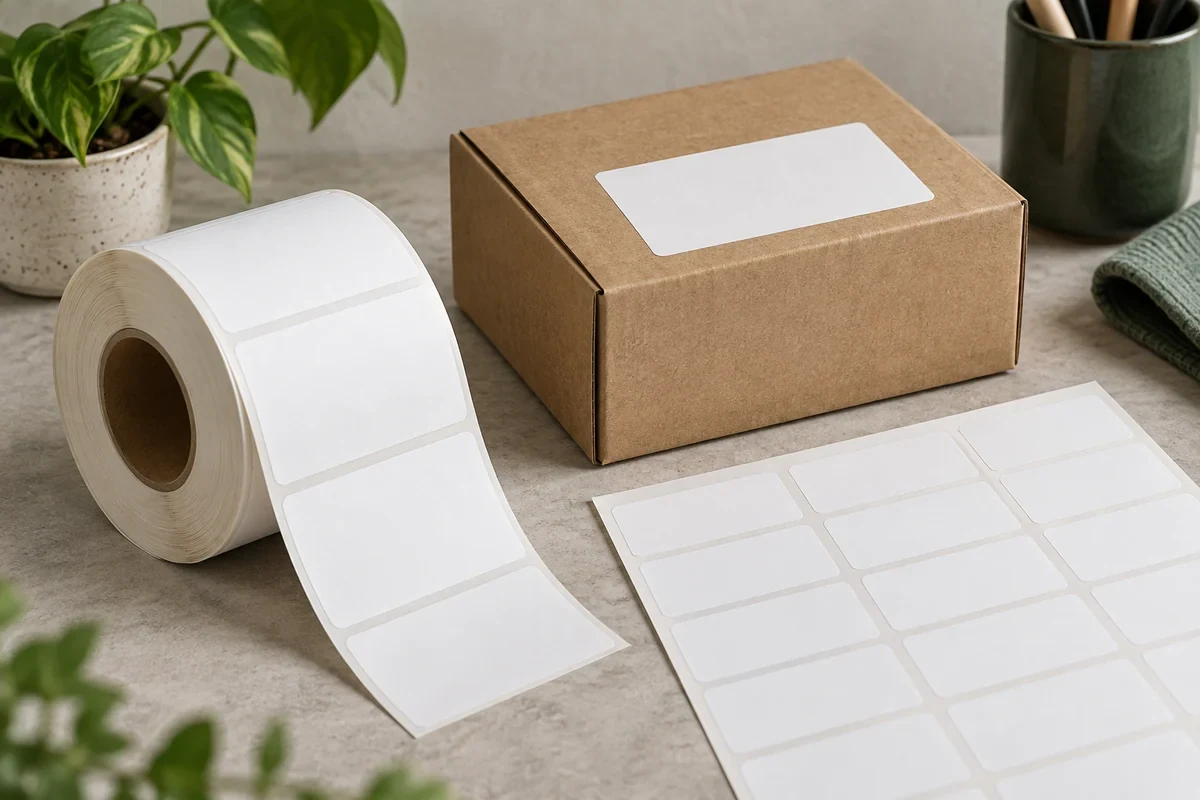
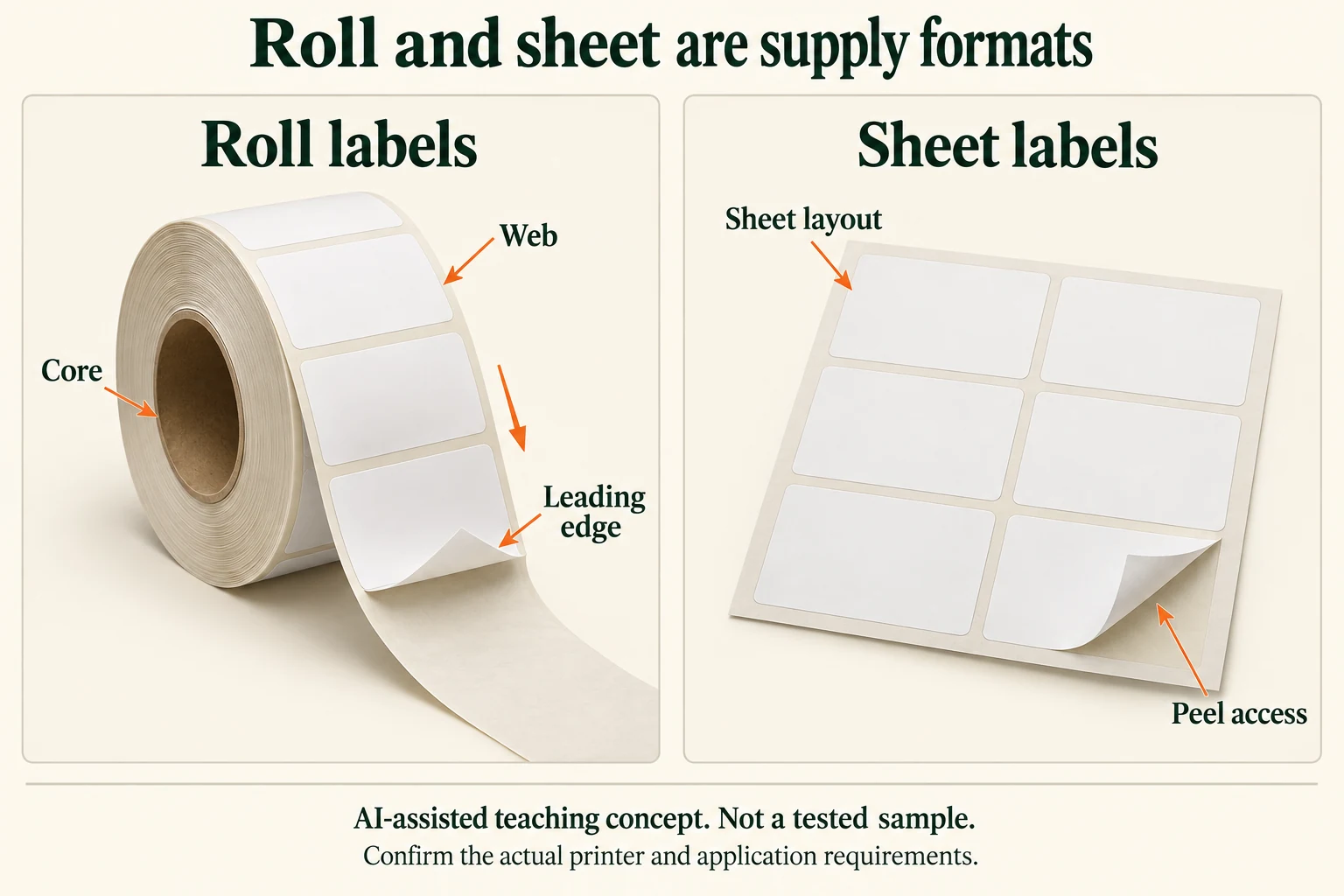
Compare roll labels vs sheet labels through the application task. Identify who applies the label, how it leaves its backing and which finished surface receives it. A roll and a sheet are supply formats; neither format alone establishes speed, adhesive suitability or compatibility with an applicator.
Start with one label on one named package. Once that operation is clear, the converter can propose the face material, adhesive, liner and layout needed for the job. Artwork should follow those confirmed inputs.
Map the application before comparing roll labels vs sheet labels
Write down the receiving component, its material and surface treatment, the label position and the number applied to each pack. Include whether the surface is flat or curved. A label on a coated gift box and one on a glass jar need separate use records even when their graphics match.
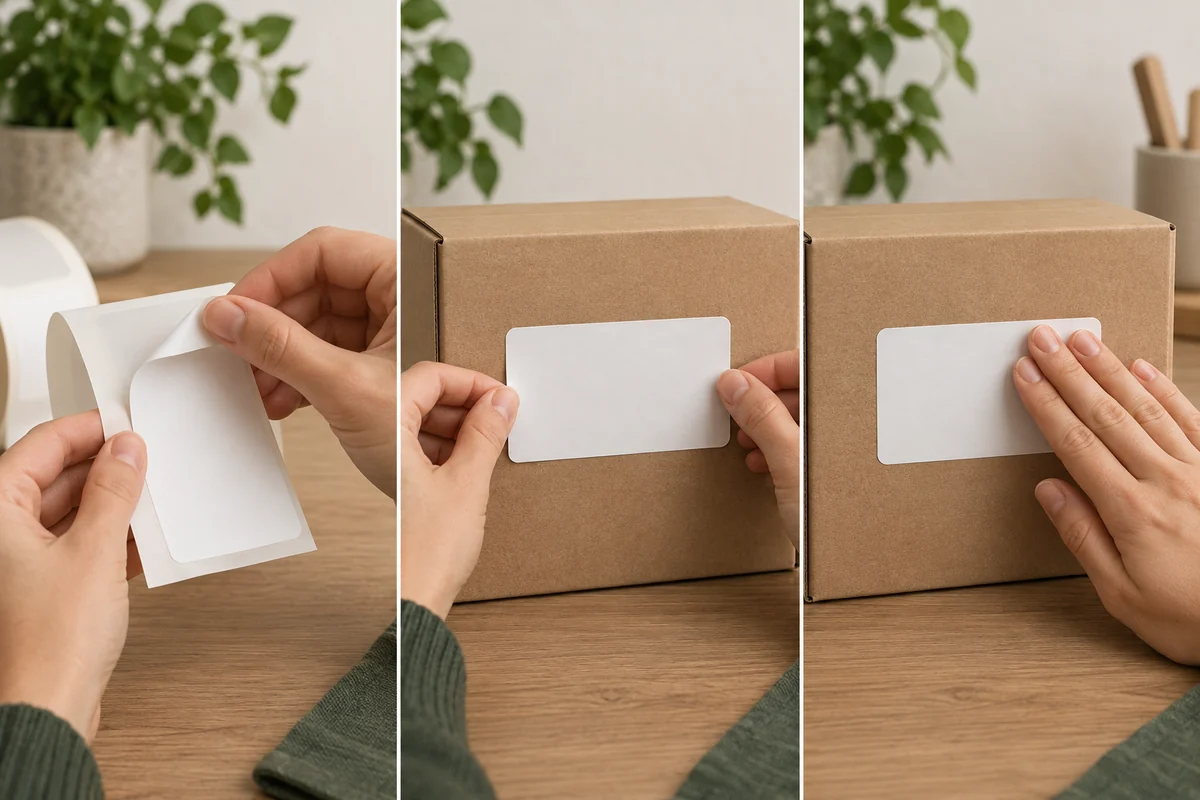
Describe the operator’s route from supplied material to the package. For hand application, consider where the backing rests, how the corner is reached and how the printed label is aligned. For equipment, identify the actual model and obtain its applicable media requirements.
Scroll horizontally if columns extend beyond the view.
| Decision | Roll candidate | Sheet candidate |
|---|---|---|
| Dispensing | Peel by hand or feed through identified equipment | Reach and peel individual die-cut labels |
| Supply data | Core, roll diameter, web, gaps and presentation as required | Sheet dimensions, positions, gaps and peel access |
| Artwork orientation | Which edge reaches the application step first | How the operator sees and aligns the label |
| Evidence | Dispensing and placement under the actual route | Peeling and placement under the actual hand task |
Do not treat a drawing of a feed arrow as the winding instruction for your machine. Record the printer’s and equipment owner’s agreed view of the roll, including whether the printed face winds inward or outward where relevant.
Confirm equipment requirements without borrowing another machine’s settings
Primera’s AP550 applicator manual identifies roll and media requirements for that device, including core and label presentation. It demonstrates why a named machine matters. Its dimensions and permitted winding positions are not universal specifications for every applicator.
Ask the person responsible for the actual equipment to confirm the model, intended stock and current instructions with the converter. A compatible-looking roll photograph cannot close that question. If there is no applicator, do not invent machine constraints for a hand process.
Compare the full operation if time is important. Include retrieval, peeling or loading, alignment, application and the handling of backing. A faster-looking dispense step can leave other work unchanged; this article supplies no production-rate comparison.
Review release and final adhesion separately
The liner carries the label before application. UPM’s release liner explanation describes its role in protecting adhesive and carrying the construction through converting and application. The offered face, adhesive and liner should remain identifiable together.
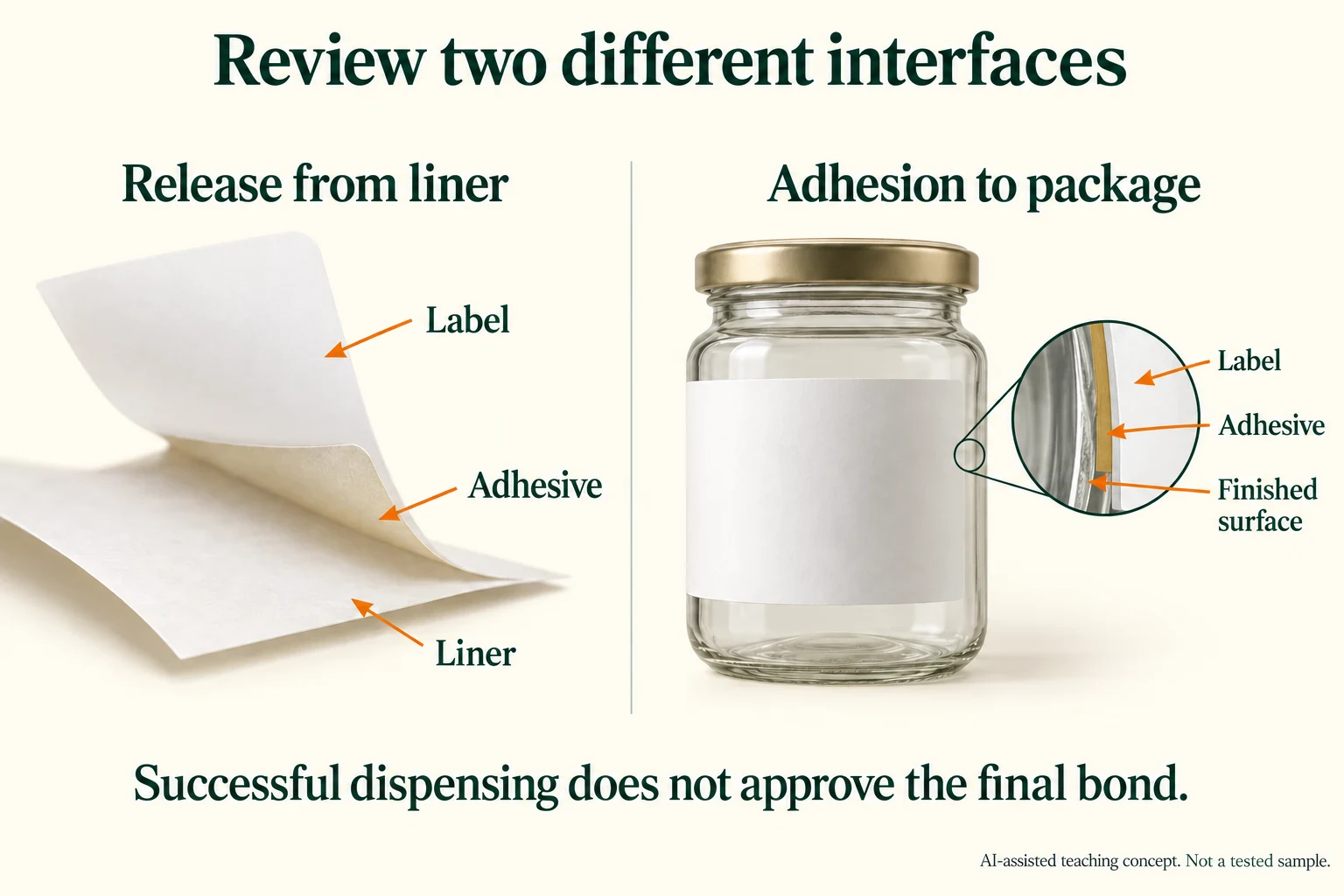
Record a dispensing problem at the liner interface rather than calling every difficulty poor adhesion. Then review the proposed label on the receiving package under the relevant application and later-use conditions. Successful release does not establish that the applied edge will remain attached, or that removal will leave the desired surface.
The label adhesion planning guide develops that applied-surface record. Keep any permanent, removable or water-resistance wording outside the confirmed brief until evidence for the actual construction supports it.
Prepare two hypothetical supply candidates
Assume a fictional brand applies one rectangular identity label to each coated gift box at a hand-packing bench. The label’s size and artwork are intended to stay unchanged. The brand wants to compare roll candidate R-01 with sheet candidate S-01. No material or application result has been verified.
For R-01, record how the operator will support the roll and find the leading label. For S-01, record the sheet layout and whether the operator can reach an edge without damaging the label. Keep the same finished box and intended alignment reference in both comparisons.
Ask whether the converter proposes the same face, adhesive and liner. If any construction changes, identify it as another variable. A difference in later edge behavior cannot automatically be attributed to roll versus sheet format when the adhesive or receiving surface also changed.
Download the application format CSV. It separates supply details, release observations and final-surface observations. The fictional hand-process rows leave material identities and results open, followed by a blank project row.
Send a format-specific printer request
Provide the actual package surface, intended label position, finished label size, artwork revision, quantity and application route. Request the appropriate roll or sheet layout and the selected printer’s cut, bleed and safe-area requirements. Review copy at its intended printed size.
Ask the supplier to identify the offered material construction and a sample plan that covers both dispensing and application. Bring those fields to a label format project inquiry. Packrivo coordinates the requirement and supplier questions; availability, machinery compatibility and commercial terms require actual confirmation.
Questions about roll and sheet labels
Are roll labels always faster?
No general rate follows from the supply format. Compare the complete actual hand or equipment operation before making a time claim.
Can the same graphic be used in both formats?
Its content may carry across, while the layout, cut and production-file requirements differ. Keep the approved format-specific output and its revision identifiable.
Does easy peeling establish removable adhesion?
Peeling from the liner and removing an applied label concern different surfaces. Review the actual bond and desired removal outcome separately.
Does a new label shape require a fresh quote?
Ask for reconfirmation. A changed cut or layout can alter setup and scope even when the graphic content remains the same.
Key takeaways
- Choose the format around the real application task.
- Keep machine requirements specific to the actual equipment.
- Separate liner release from the finished package bond.
Source scope: UPM’s liner page and the identified Primera manual were checked 16 October 2026. They support construction and device-specific questions, not this hypothetical brand’s speed, compatibility or adhesive result. No physical label trial was performed.