
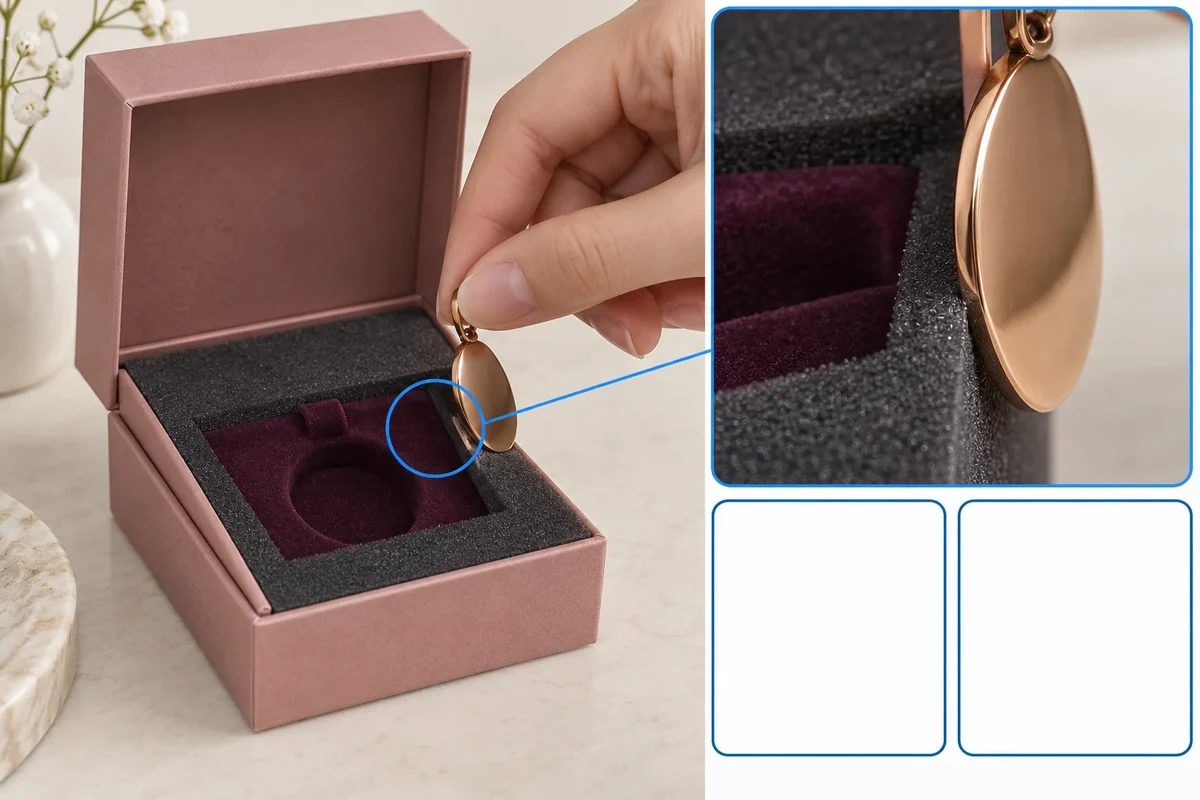
Record visible transfer or scuffing at a packaging-to-product contact point with the actual surface pair and handling conditions named. Keep the sample IDs, photographs and next action together. A visible mark is an observation to resolve; it does not establish a chemical migration result, a transport cause or a universal material performance.
Define both sides of the contact
The coating technical sheet identifies properties and application fields for a named coating grade. Use that reference to request the actual grade on your packaging surface rather than adopting its properties for every finished box.
A proposed holder may have a base, a surface layer and an exposed cut edge that need different identities. Ask the supplier to identify those construction interfaces on the offered holder, then record where they contact the product. The layer description does not prove how your product finish behaves.
Name the actual packaging face or edge and the product surface that touches it. Include primary wrapping or a liner if one sits between them. Record which finish, grade or layer is still a supplier proposal and which physical sample was actually reviewed.
Keep the handling sequence with the observation
Write the loading, closing, opening and removal actions used in the review. Identify where contact occurs during that sequence. A mark after removal should be linked to its observed location and conditions instead of being assigned a cause from the material name.
Retain views before handling, at the contact position and after the observation when available. State the lighting and any relevant known condition, and keep unknowns open. If the observer changes the grip, product orientation or packing arrangement, record the change before comparing another sample.
This tool concerns a packaging surface meeting the product. A record about two packaging faces rubbing against each other has a different contact pair and should remain separately identified. Keep that distinction visible when one gift contains several possible contact locations.
Use a product-contact observation log
The hypothetical jewelry-gift entries below are an original evidence map, not completed test results.
| Record field | Illustrative entry | Next action |
|---|---|---|
| Packaging surface | Holder I1, named surface layer at edge E1 | Converter confirms actual layer/grade |
| Product surface | Finished jewelry primary pack, face P1 | Buyer identifies permitted contact |
| Sample identities | Holder S1 and actual product configuration | Retain both with the observation |
| Handling step | Product removed through grip G1 | Document actual route and conditions |
| Visible observation | Located mark or fibers on P1 after the step | Attach photo, avoid assumed cause |
| Disposition | Review contact or request a revised holder proposal | Named buyer/converter decision and repeat evidence |
Compare an illustrative contact change
Imagine the product’s finished surface approaches an exposed holder edge during removal. The next proposal might change the grip, relocate the contact or alter the offered layer construction. Record exactly which field changes, with the earlier observation still retained.
A new sample should repeat the agreed product and handling state so the buyer can compare the located contact. If the product finish or a protective primary wrap changes too, keep that difference visible. The comparison should show which interface was reviewed rather than promising scratch resistance from a material substitution.
Give the observation a named next owner
The sample revision record ties a revised holder to the earlier evidence. Use the sample approval guide to keep the requirement, proposed action and final decision separate.
The buyer supplies the actual product finish and contact restrictions. The observer returns the sequence and photographs. The converter confirms the offered construction and proposes a located change. Your acceptance should reference the complete revised configuration and any further review still required.
Bring the contact pair, sample identities and unresolved observation through your packaging brief. MOQ is 500 pieces per design; the proposed finish, samples and commercial conditions are confirmed for the project.
Adding a wrap changes the contact map rather than deleting it
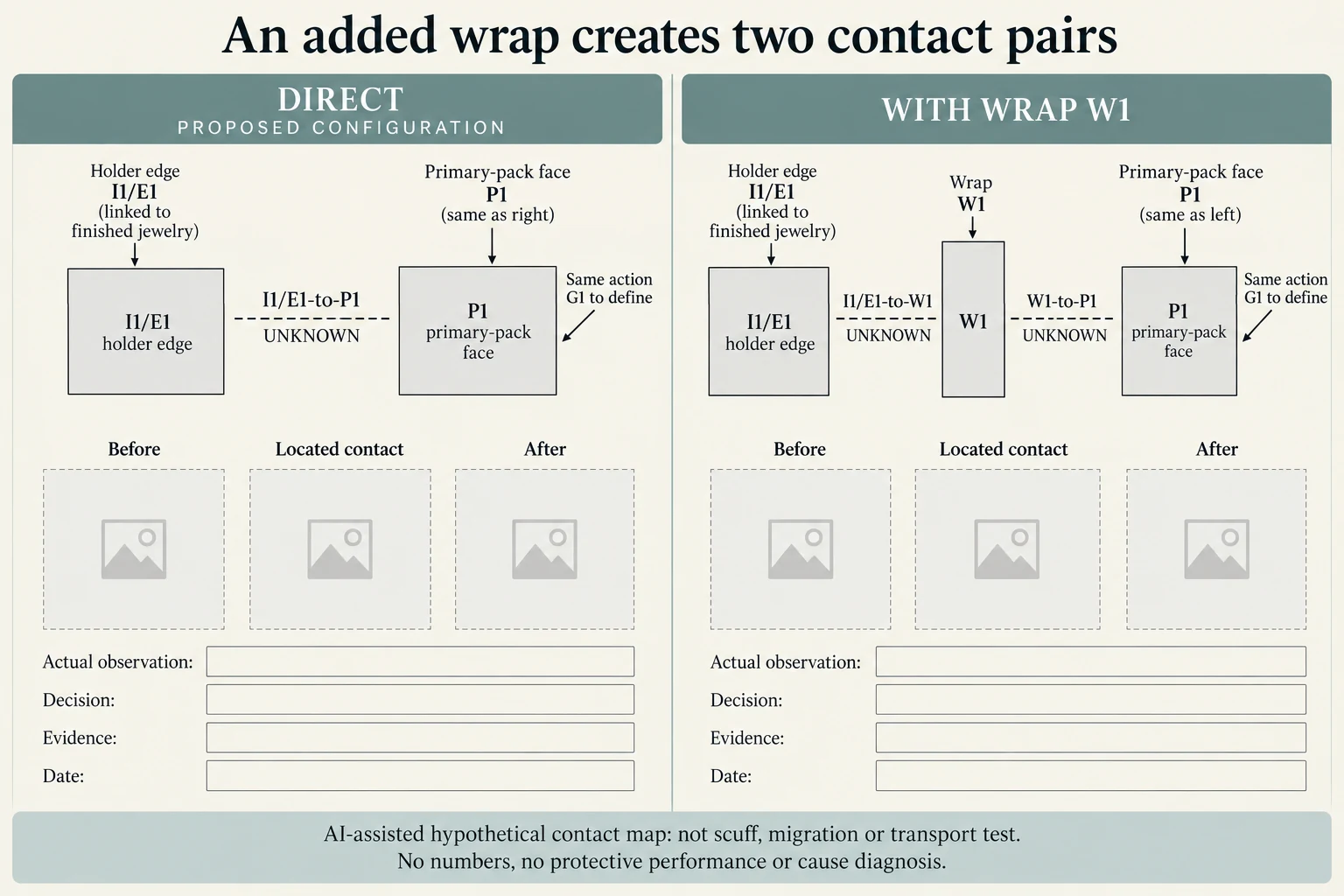
Keep the original P1 identity precise: it is the named face of the jewelry's primary pack, not a substitute claim about bare jewelry. In DIRECT21 the proposed contact pair is I1/E1 to that P1 face. In the separate WRAPPED21 proposal an intermediate W1 creates I1/E1-to-W1 and W1-to-P1 relationships. The added material has no assumed protective or chemical performance.
Scroll horizontally if columns extend beyond the view.
| Hypothetical configuration | Named object | Relationship | Input or next scope |
|---|---|---|---|
| DIRECT21 | I1_E1 | possible contact | P1_PRIMARY_PACK_FACE |
| WRAPPED21 | I1_E1 | possible contact | W1_WRAP |
| WRAPPED21 | W1_WRAP | possible contact | P1_PRIMARY_PACK_FACE |
Record those two pairs independently. A view of the holder-side wrap can leave the product-side contact unseen, and a clean-looking P1 photograph cannot identify what happened at the other face. The worksheet requests before, located-contact and after evidence for each pair. It keeps the same P1 configuration and named G1 action across the proposals, with the actual grip, orientation and conditions still to be defined for the real project.
Ask the converter to identify the holder's base, surface layer and exposed edge, and ask the buyer to identify P1 and its permitted contact. W1 also needs an actual material and construction identity. If a proposal changes the product finish or removal grip as well as introducing W1, add that change explicitly before comparing the observations. Do not describe the result as a wrap-only comparison when several contact inputs moved.
The original fictional mark or fibers after removal remain an illustrative observation, with cause open. Real before/after photographs, conditions and decisions are blank in the download. This map helps request evidence of the new interfaces; it does not establish scratch resistance, migration suitability or transport protection. Packaging-to-packaging rubbing elsewhere belongs to a separately named contact pair rather than the same P1 record.
Download the packaging finish product contact observation record (.csv). It includes the original table fields and scenarios alongside the added relationships. HYPOTHETICAL rows are editorial examples or required review scopes, not actual records. Actual quantity, configuration, component and file identities, materials, process, specification, copy, method, condition, observation, owner, decision, evidence and dates are blank. ACTUAL_BLANK is a separate empty starting row; enter permitted project evidence before using an actual record. A blank means unknown.
Use the Packaging Sample Revisions: Compare Versions Before Approval for its separate question. Use the Custom Packaging Sample: Approval Checks That Matter for its separate question.
Source scope checked 16 October 2026. References cover only the named materials, processes or guidance. Added configurations and geometry are hypothetical, not supplier specifications, tests or production approval; they set no universal tolerances or machine limits. Confirm the actual material, process, drawing and formed sample for the project.
Discuss this packaging specification with Packrivo. We coordinate independent suppliers. MOQ: 500 pieces per product/design; illustrative quantities are not production offers. Confirm materials, samples, price and timing for your project.