
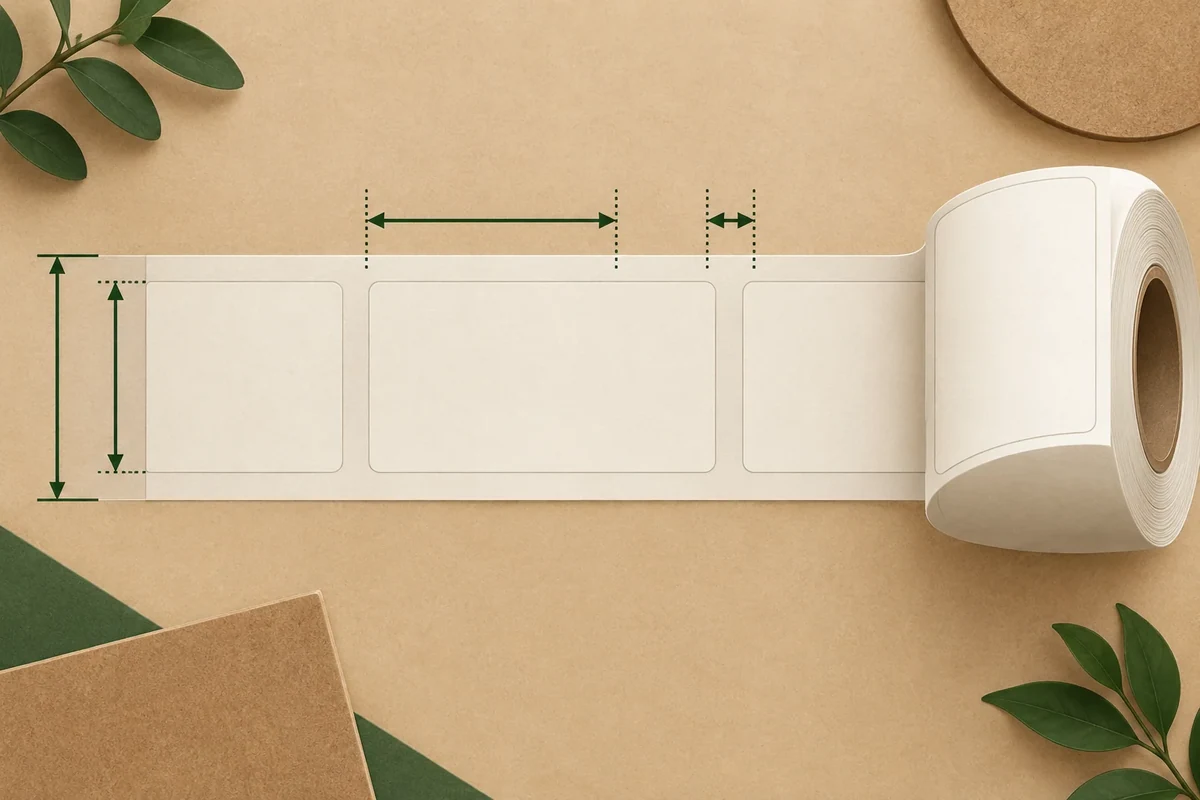
Specify label width, liner width and gap or pitch against the same selected applicator reference. Keep the converter’s roll drawing and the machine owner’s confirmation together before ordering. These dimensions describe different parts of the web, so a label’s visible size alone cannot close the application brief.
A Rectangle roll labels is a format reference, not an applicator specification. Send the actual label outline, liner width, gap or pitch and machine-owner requirements together before confirming the supplied roll.
Name the label and web dimensions separately
The original L200A label/web specification distinguishes machine-related label and backing requirements. The Primera AP550 manual also has label/roll specifications and sensor-related fields. Each source applies to its named machine, not to every label applicator.
Record the selected model, applicable manual/specification version and application route. Give the converter that reference before asking for a roll proposal. If no machine has been selected, keep compatibility open rather than presenting a generic gap as an accepted requirement.
Label the width of the face label, the width of the backing liner and the gap or pitch in the feed direction on one web drawing. Include the edge margins and actual sensing method if supplied by the machine owner. Units and measurement direction should remain visible beside each field.
Compare one web proposal with one machine reference
Ask the converter to return the proposed web layout and the relevant material identities. Ask the qualified machine owner to confirm which dimensions and sensing fields apply to the intended setup. The buyer should receive their responses about the same drawing revision.
If the machine reference and offered layout conflict, locate the exact field. A wider liner, changed gap or different sensor proposal can alter another part of the web. Record the changed scope and obtain a revised drawing or trial plan instead of accepting an isolated dimension by email.
Keep manual or machine-assisted application routes separate. A label that can be peeled by hand still needs its own equipment compatibility review when the plan changes to an applicator.
Use an applicator web-dimension table
This original Packrivo aid leaves numerical requirements to the actual machine reference.
| Field | Hypothetical handoff entry | Who completes it |
|---|---|---|
| Machine reference | Selected model M1 and applicable manual | Equipment owner supplies the reference |
| Label width/length | Face label outline on drawing LP1 | Converter supplies proposed dimensions and units |
| Liner width | Backing edges shown separately from label | Converter identifies margin/layout proposal |
| Gap or pitch | Feed-direction field G1 on LP1 | Machine owner confirms applicable requirement |
| Sensing | Actual sensing method and material question | Qualified operator/converter confirms compatibility |
| Decision | Accept layout or request specific revision/trial | Buyer retains both responses and next owner |
Review a hypothetical roll response
Imagine a supplier confirms the printed label width but leaves the liner width and gap unspecified. The application question remains open even if the artwork is ready. Request the complete web drawing and the selected machine’s applicable fields.
If another supplier uses a different gap or liner, keep those as separate proposals. Compare their equipment responses before deciding the application arrangement. The useful result is a confirmed layout or a named compatibility question, not a table where every missing dimension is filled with an assumed industry default.
Send the web drawing with the application owner
The roll-or-sheet guide sets the broader format choice. Use the adhesion and surface-condition article for the separate question of how the applied label meets the actual product surface.
The equipment owner provides the applicable reference. The converter provides the offered web. The qualified operator confirms the intended setup, while the buyer retains the selected configuration and next trial question. No packing method or machine adjustment is authorized merely by this planning table.
Bring the web layout, selected reference and unresolved dimension/sensing fields to your packaging brief. MOQ is 500 pieces per design; the actual label proposal, sample scope and commercial conditions are confirmed for the project.
Check width and feed arithmetic before asking about the machine
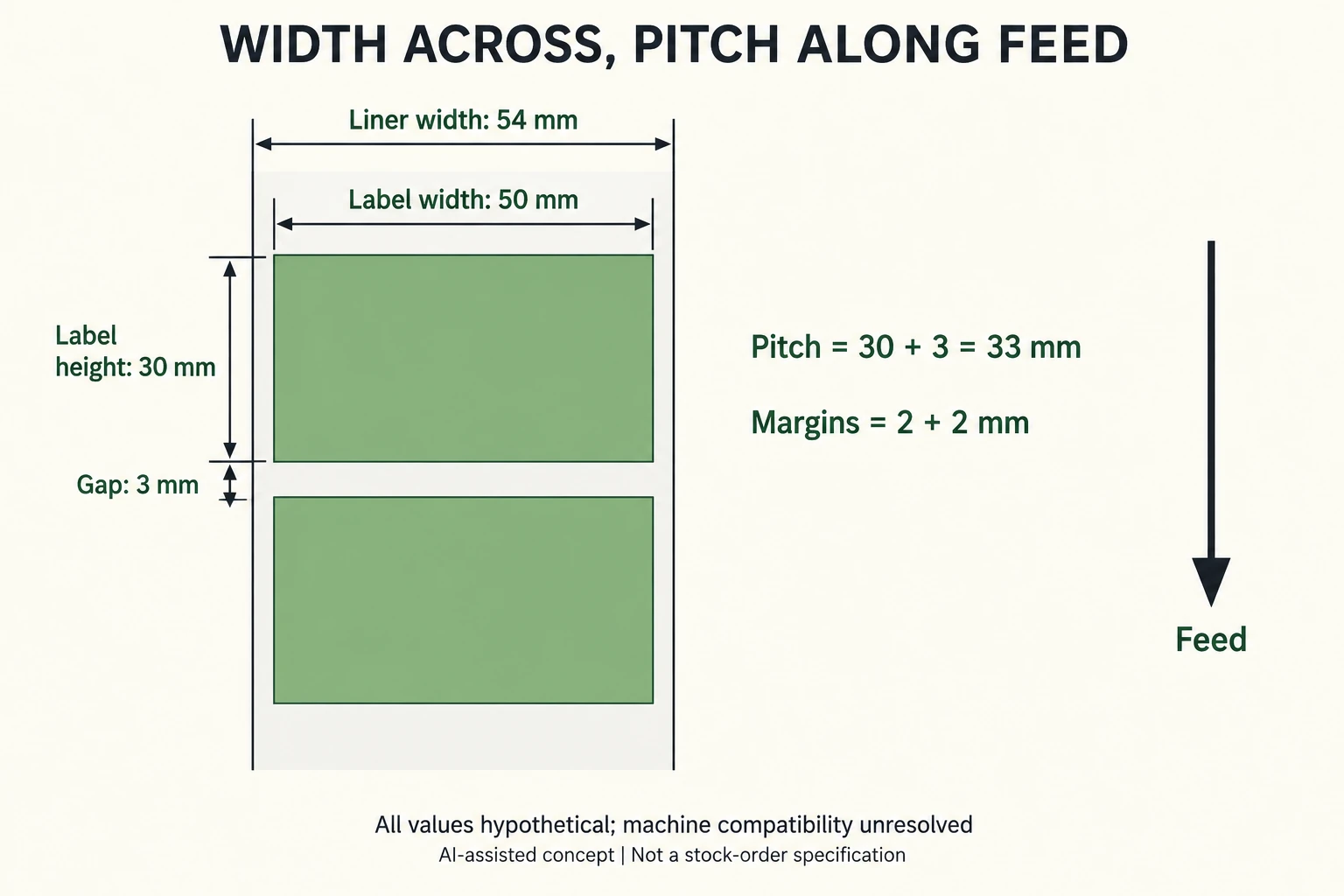
For invented web LP1, assume liner width 54 mm, face-label width 50 mm, and side margins 2 mm each. Along feed, assume label height 30 mm and gap 3 mm, giving pitch 33 mm. These are illustrative geometry inputs, not settings for AP550, L200A or another machine.
Scroll horizontally if columns extend beyond the view.
| Direction | Input | Arithmetic | Still unresolved |
|---|---|---|---|
| Across web | 50 mm label;2 mm each margin | 2 + 50 + 2 =54 mm liner | Machine width and layout acceptance |
| Along feed | 30 mm label height;3 mm gap | 30 +3 =33 mm pitch | Applicable machine/sensor requirements |
| Sensing | Not selected | No default assumed | Material and actual sensing method |
| Trial | Not performed | No rate calculated | Actual proposed setup |
Pitch here means the same leading-edge point on one label to the same point on the next; it includes one label height and one gap. It is not merely the gap. The final diagram shows two complete face labels, with numeric width and feed directions kept separate.
Record the selected machine and applicable manual before ordering stock. The CSV leaves that reference, sensing and compatibility decision blank. Even correct arithmetic does not show whether a stock/liner works with a particular sensor or peel edge. These values must not be adopted as a universal gap or copied into an AP550/L200A stock order; their owner must confirm the actual requirements and proposal.
Download the label liner width gap and pitch record (.csv). HYPOTHETICAL rows are invented examples. Use ACTUAL_BLANK for permitted project inputs; replace that row label only when recording actual facts. Empty evidence, observation and date fields mean unknown or not performed, never acceptance. Keep checkpoints and revisions separate.
Send the complete web drawing and actual machine/manual/sensing references before requesting a confirmed layout or trial. Packrivo coordinates independent suppliers. These records establish no supplier offer, service availability or MOQ exception; its published baseline is 500 pieces per product/design.