
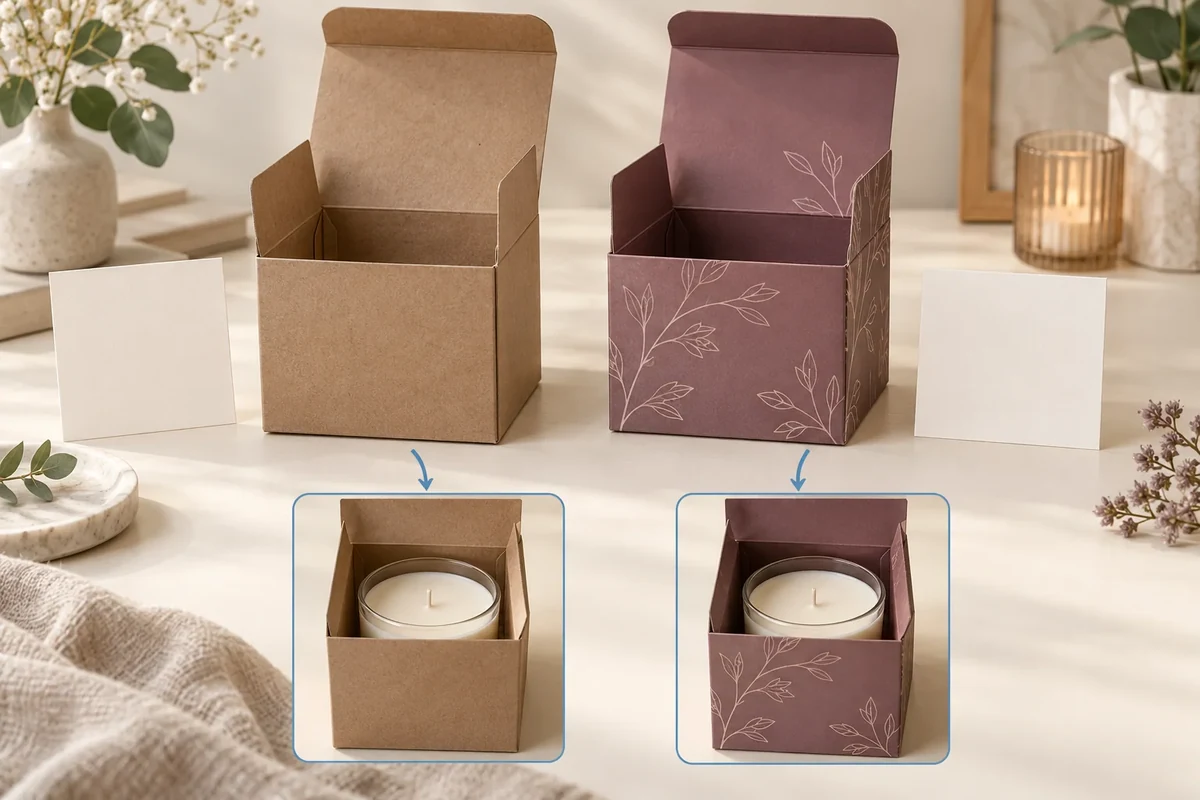
Name the sample version included in each quotation before comparing sample scope. Record its type, configuration, purpose and excluded decisions beside the offer. The word sample can cover different configurations and review jobs; those distinctions need to remain visible beside each offer.
This sample-version map is a Packrivo original comparison aid for actual offer wording. It doesn’t infer a sample commitment, fee or production process from a supplier’s catalogue.
Ask what the offer means by sample
Record the quotation reference and the exact sample description provided through the authorized project process. Ask whether it is a structural model, artwork proof, appearance sample or another identified scope. The source must confirm its own proposal.
List the material, print, finishes and components the sample actually represents. Keep substitute materials and omitted parts visible. A sample with the right outside shape can still leave final-surface or loaded-fit questions open.
Cross-reference sample and decision scope
Give each proposed sample a stable ID. Link it to the quote, drawing and contents revision. Then record which decisions it is intended to answer, and which need other evidence.
Keep quantities, transport and timing as source-confirmed offer fields. Do not invent a free sample or fixed lead time because another vendor offers one.
| Sample cross-reference | Offer A | Offer B | Evidence needed |
|---|---|---|---|
| Quote/sample ID | Actual references | Actual references | Source-confirmed identity |
| Sample type | Named proposal | Named proposal | What work it represents |
| Configuration | Material/print/components | Material/print/components | Drawing and contents link |
| Decisions covered | Stated review jobs | Stated review jobs | Owner agrees scope |
| Excluded decisions | Named limitations | Named limitations | Further evidence plan |
| Commercial scope | Confirmed terms only | Confirmed terms only | Unanswered terms remain open |
Use the wider quotation checklist for the rest of the offer. This table keeps sample evidence from disappearing inside a unit-price comparison.
Follow a hypothetical two-sample offer
Suppose offer A proposes a plain structural model and offer B proposes a printed sample using the intended exterior material. The buyer records their actual descriptions without claiming that either is automatically better.
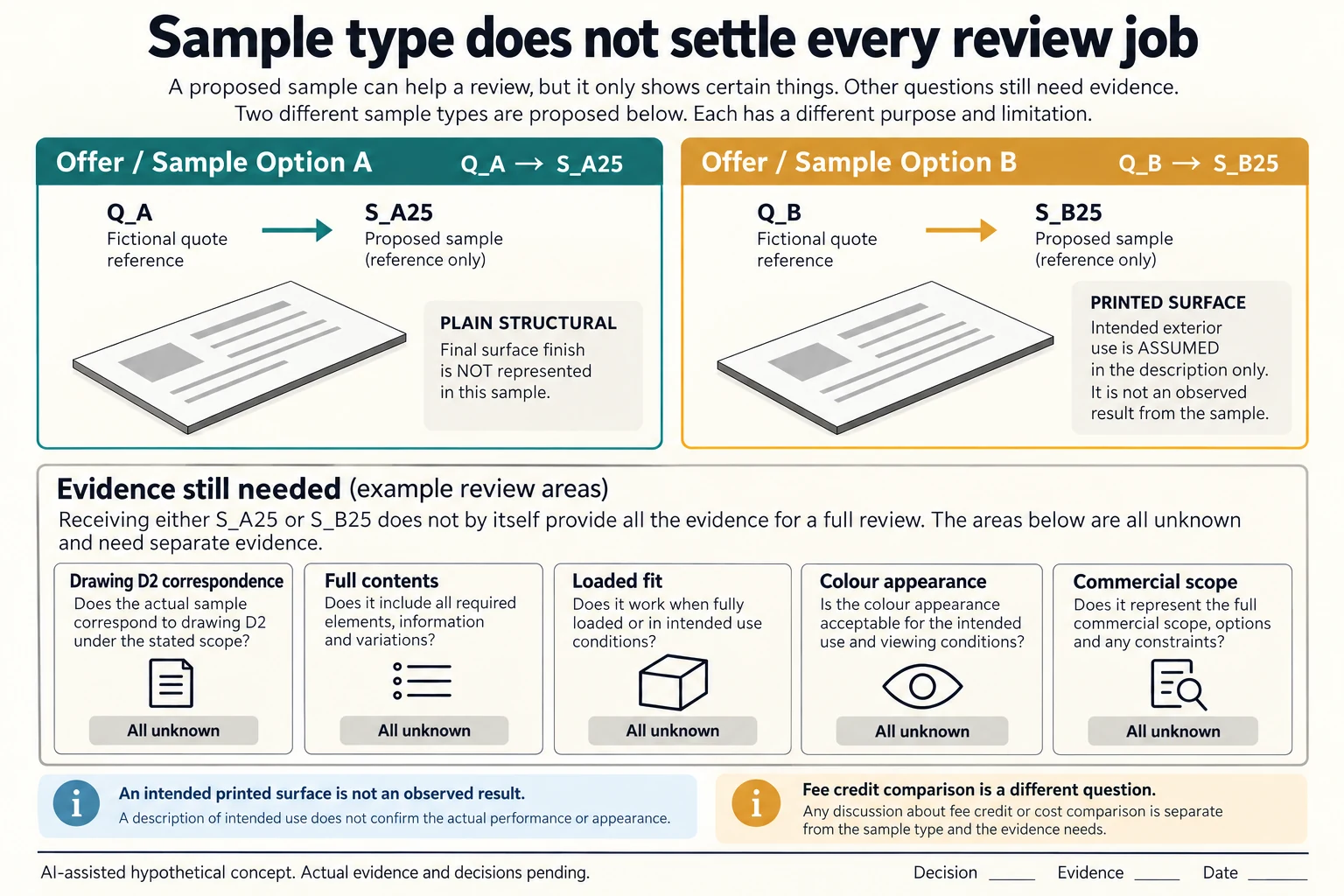
A loaded-fit question may require the relevant full contents in either sample. A colour appearance question remains outside the plain model’s scope unless another agreed reference is provided. The cross-reference assigns those jobs separately.
Use the sample revision record when evidence arrives. The actual delivered sample should match the quote scope or be recorded as a changed proposal.
Ask the missing-scope question
A specific request is: ‘Please confirm whether sample S-A covers the loaded holder and final exterior material on drawing D2.’ It names the decisions. A reply saying sample included can leave both unanswered.
If the offer changes sample type or configuration, preserve the earlier row and identify the new scope. An old proof image should not be reused as evidence for the newly quoted sample.
The table organizes actual facts and open commitments. It is not a contract interpretation or a standard sample taxonomy; responsible commercial and technical confirmation remain separate.
Send the offer-to-evidence gap
Bring quote references, proposed sample IDs and open decision scope through Packrivo’s enquiry. The next response should say what sample is included and what evidence it is intended to provide, without assuming it closes every packaging approval.
Match the quoted sample to the question before comparing its label
Use two invented offer-to-sample links. Q_A proposes S_A25 as a plain structural model whose final surface is not represented. Q_B proposes S_B25 as a printed-surface sample, assuming only that the intended exterior is represented in the example description. Those descriptions identify what the source is proposing; neither is an actual offer, delivered sample or accepted appearance result.
Scroll horizontally if columns extend beyond the view.
| Hypothetical configuration | Named object | Relationship | Input or next scope |
|---|---|---|---|
| S_A25 | S_A25 | linked to quote | Q_A |
| S_A25 | S_A25 | has proposed type | PLAIN_STRUCTURAL |
| S_A25 | S_A25 | has assumed surface scope | FINAL_SURFACE_NOT_REPRESENTED |
| S_A25 | S_A25 | requires | FULL_CONTENTS_PRESENCE |
| S_A25 | S_A25 | requires | LOADED_FIT |
| S_A25 | S_A25 | requires | COLOUR_APPEARANCE |
| S_B25 | S_B25 | linked to quote | Q_B |
| S_B25 | S_B25 | has proposed type | PRINTED_SURFACE |
| S_B25 | S_B25 | has assumed surface scope | INTENDED_EXTERIOR_ASSUMED_ONLY |
| S_B25 | S_B25 | requires | FULL_CONTENTS_PRESENCE |
| S_B25 | S_B25 | requires | LOADED_FIT |
| S_B25 | S_B25 | requires | COLOUR_APPEARANCE |
For both samples, the CSV separately requests D2 drawing correspondence, full contents presence, loaded fit, colour appearance and commercial-scope confirmation. A printed exterior can leave the holder, product or card absent. A plain model can address a structural question while lacking the intended surface. Keep each limitation beside the question rather than ranking sample names or fees.
The original request about S-A, its loaded holder and final material remains a source question. If an actual sample substitutes material or omits a component, identify that configuration and the untested decision. The delivered version must match the quoted scope or become a documented changed proposal. An older proof image does not become evidence for a newly quoted construction.
Sample quantity, cost, transport, timing and availability remain empty source-confirmation fields. The sample-fee guide handles credits and balances; this cross-reference handles what evidence a sample is meant to provide. Ask the source which actual proposed version answers the next required decision, then have the responsible reviewer record its observed scope. No sample taxonomy here creates a manufacturing or free-sample commitment.
Download the quoted sample decision scope record (.csv). It includes the original table fields and scenarios alongside the added relationships. HYPOTHETICAL rows are editorial examples or required review scopes, not actual records. Actual quantity, configuration, component and file identities, materials, process, specification, copy, method, condition, observation, owner, decision, evidence and dates are blank. ACTUAL_BLANK is a separate empty starting row; enter permitted project evidence before using an actual record. A blank means unknown.
Use the Sample Fee Credits Change the Comparison Only When Their Conditions Match for its separate question. Use the Custom Packaging Sample: Approval Checks That Matter for its separate question. Use the Custom Packaging Quote Comparison Checklist for its separate question.
Source scope checked 16 October 2026. References cover only the named materials, processes or guidance. Added configurations and geometry are hypothetical, not supplier specifications, tests or production approval; they set no universal tolerances or machine limits. Confirm the actual material, process, drawing and formed sample for the project.
Discuss this packaging specification with Packrivo. We coordinate independent suppliers. MOQ: 500 pieces per product/design; illustrative quantities are not production offers. Confirm materials, samples, price and timing for your project.