
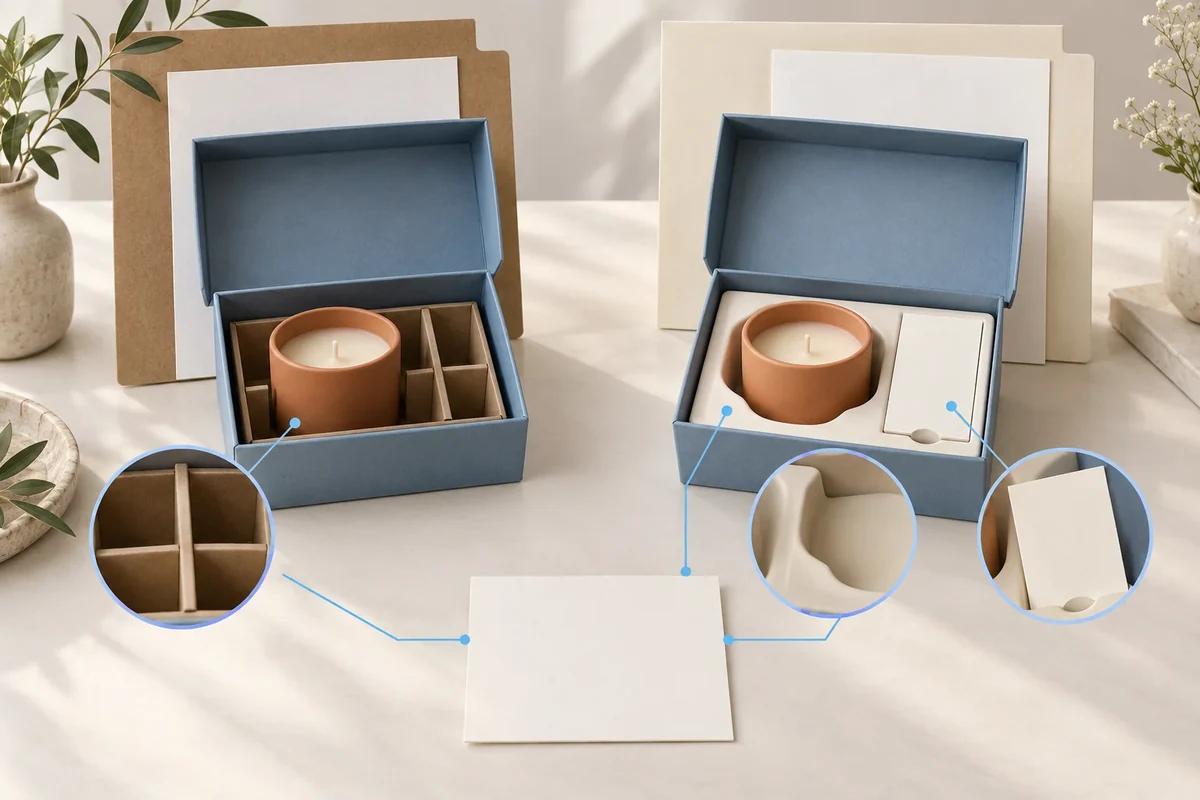
AI-assisted concept cover. Open the cover at full size.
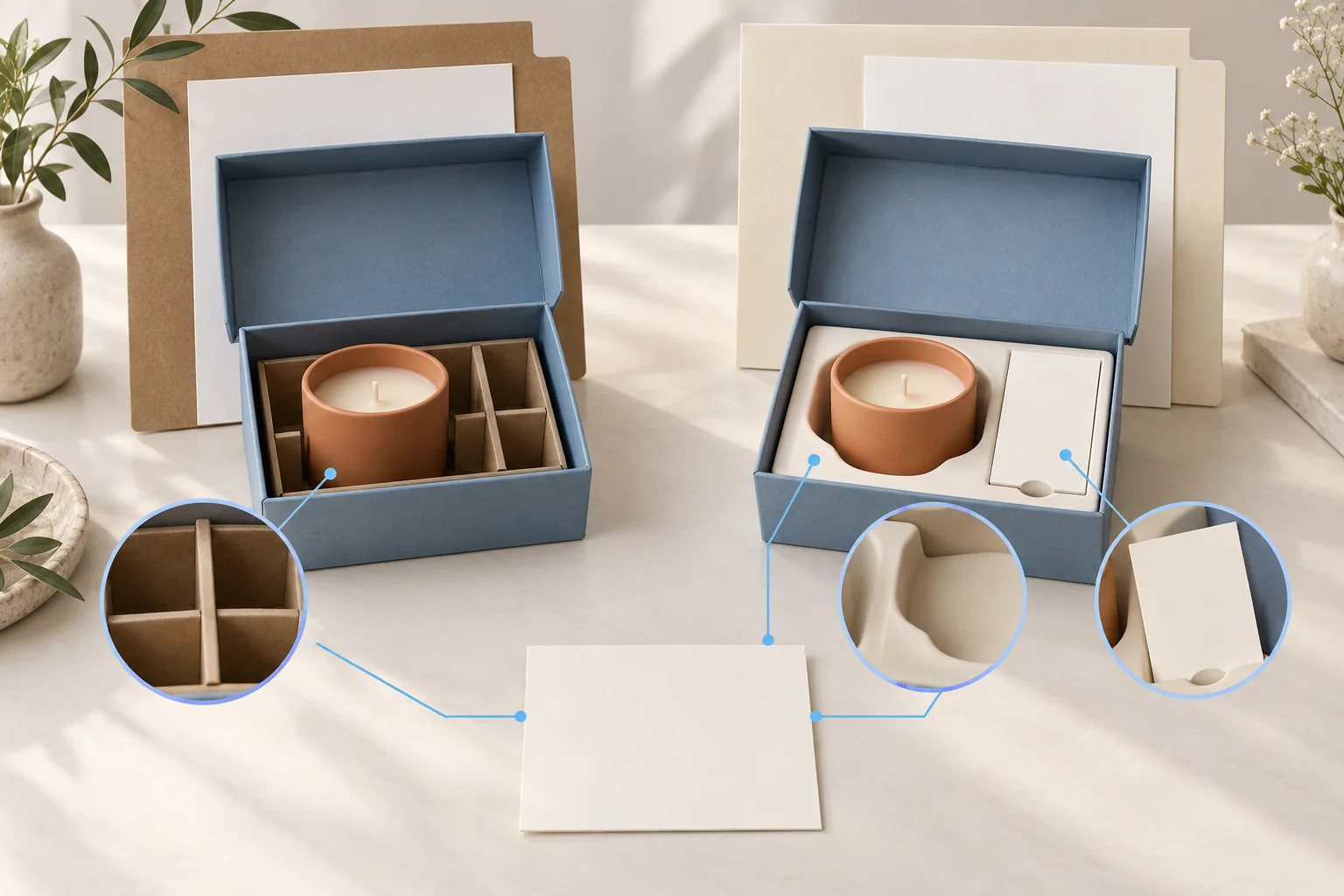
Reconfirm changed scope before reusing an old packaging price. Compare the earlier quotation with the current product, components, quantity and delivery request, then ask the source whether its terms still apply. A retained unit label or shipping term does not establish current price validity.
This sheet records an applicability question. It does not calculate a new supplier price or interpret a binding commitment from historical correspondence.
Identify the old offer and current request
Keep the old quotation reference, date and stated validity. Record unknown or absent validity as a gap rather than inventing an expiry. Preserve its original currency and unit basis.
List the current requested configuration separately. Include materials, print, parts, packing work and quantity by design. An unchanged outside box name can hide a revised holder or assembly scope.
The Incoterms explanation notes that those terms do not list price or every sale condition. Use the actual source response for price validity; this page is not a source for a quotation’s commercial commitment.
Use the quotation checklist for the broad comparison and the reorder record for current product and packaging identities.
Mark changes before asking for reconfirmation
Classify each field as unchanged, changed or unknown with evidence attached. Keep the old and current values visible. Do not overwrite the original quote when a new request is sent.
Ask the source to identify which current scope its response covers. A reply saying same price may still leave component grouping or delivery scope ambiguous if the current request was not explicit.
| Applicability field | Old quotation | Current request | Response/status |
|---|---|---|---|
| Version | Actual quote and configuration | Current identities | Matched or open |
| Quantity/unit | Quoted basis | Requested basis | Difference retained |
| Materials/parts | Original scope | Changed component proposal | Reconfirmation needed |
| Included work | Old assembly/packing scope | Current responsibilities | Same or changed |
| Validity | Stated terms or absent field | Current reliance request | Source response required |
| Price record | Original offer unchanged | No invented new price | New offer/version if issued |
Keep a new quotation as a new version when the source issues one. The applicability sheet should link it rather than making the old document appear rewritten.
Follow a hypothetical holder revision
Suppose a gift brand has an old price for a box and simple holder. The current request adds a different holder and another printed component while keeping the box’s outside name. The buyer lists those changes before asking about the earlier price.
The source’s current response must identify whether it covers the complete new set or only the unchanged box. Until then, the old unit figure remains historical evidence, not a confirmed price for the revised scope.
If quantity or destination also changes, those fields remain separate. A single unchanged statement should not be expanded to every commercial assumption.
Use a current-scope question
Ask: ‘Please confirm whether quote Q1 applies to current set C2, including holder H2 and component P2, or provide a revised offer.’ It gives the source an actual configuration to answer.
Keep the response date, offer version and remaining gaps. Packaging fit acceptance and commercial reconfirmation are different decisions even when both depend on the same change.
The original sheet organizes actual evidence. It does not guarantee a held price, fixed validity period or future cost, and it does not replace the responsible commercial agreement.
Send the change list with the old reference
Bring the old offer, current scope and unresolved applicability fields through Packrivo’s enquiry. The next response should name the current commercial scope instead of leaving a historical price to stand in for a revised proposal.
Limit a box-only reply to the box it names
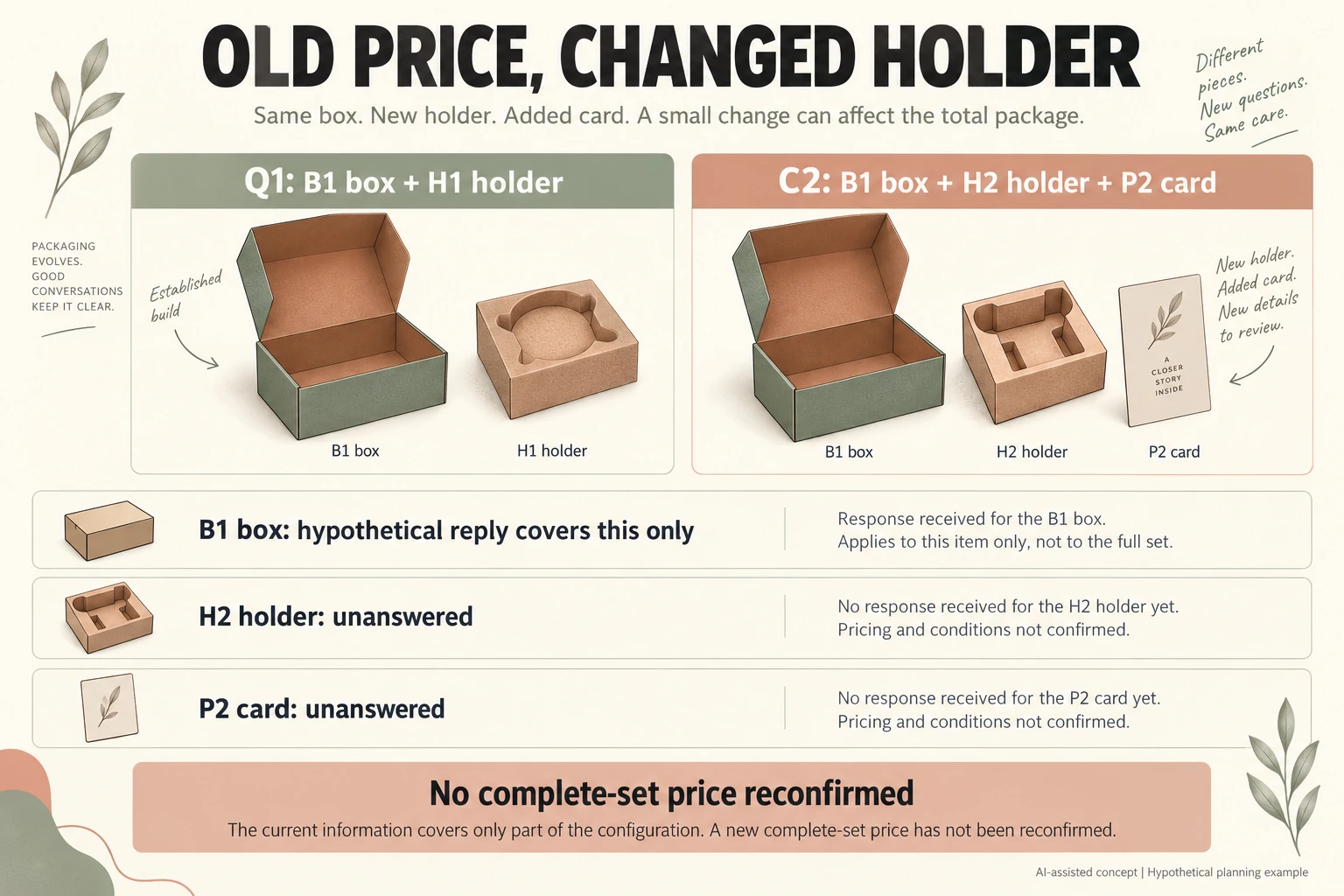
Imagine quote Q1 for B1 box and H1 holder, followed by request C2 for B1, revised holder H2 and added card P2. Demand remains an assumed 500 sets. A fictional reply covers B1 only. No price amount, validity period or complete-set commitment is supplied.
Scroll horizontally if columns extend beyond the view.
| Scope | Old Q1 | Current C2 | Hypothetical reply |
|---|---|---|---|
| Box | B1 | B1 | B1 only |
| Holder | H1 | H2 | Unanswered |
| Card | Not included | P2 | Unanswered |
| Quantity | 500 sets | 500 revised sets | Revised grouping unanswered |
| Complete-set price | Historical scope | Current C2 needed | Not reconfirmed |
Preserve the partial reply without expanding it to H2, P2 or the work needed for the complete set. Ask the source to name those current references in its response. The box-only answer remains useful within its stated scope while the complete-set question stays open.
Response date and validity wording are separate CSV fields, left blank because no real reply exists. A later quote gets its own identity; Q1 stays as history. Keep fit acceptance separate too: H2 might receive a scoped fit decision while its price remains unanswered, or a revised commercial offer might arrive before H2 fits. This record creates neither contractual rights nor supplier consent.
Download the packaging quote validity after changes record (.csv). HYPOTHETICAL rows are invented examples. Use ACTUAL_BLANK for permitted project inputs; replace that row label only when recording actual facts. Empty evidence, observation and date fields mean unknown or not performed, never acceptance. Keep checkpoints and revisions separate.
Send Q1, current request C2 and the exact fields that the partial reply leaves unanswered. Prepare the identified scope for a Packrivo inquiry. Packrivo coordinates independent suppliers. These records establish no supplier offer, service availability or MOQ exception; its published baseline is 500 pieces per product/design.