

Begin a custom packaging supplier brief with the complete product, its intended use, labeled measurements, quantity by design and destination. Separate facts from preferences and open questions. You can request a useful first proposal before the box design is finished, provided the supplier can see what remains undecided.
View the full-size planning illustration
The goal of the first exchange is a reviewable construction and a defined next step. A request containing only a reference picture and a total quantity leaves the supplier to guess which parts, dimensions and work the price should cover.
Describe the product and the job before the box
List every object that enters the finished package. Include the product's fitted lid, backing card, pouch, care information, wrap and accessories. Show the arrangement and orientation in which those parts are intended to travel or be presented.
Give the product a recognizable reference and record its current version. A changed clasp, candle lid or retail label can alter the occupied space. Send views that reveal projections rather than relying on a front photograph that hides them.
State whether the immediate job is retail presentation, gift handover or shipment. A presentation carton can be one layer inside a separate shipping pack. Make that relationship visible so an offer for one component isn't read as a complete transport solution.
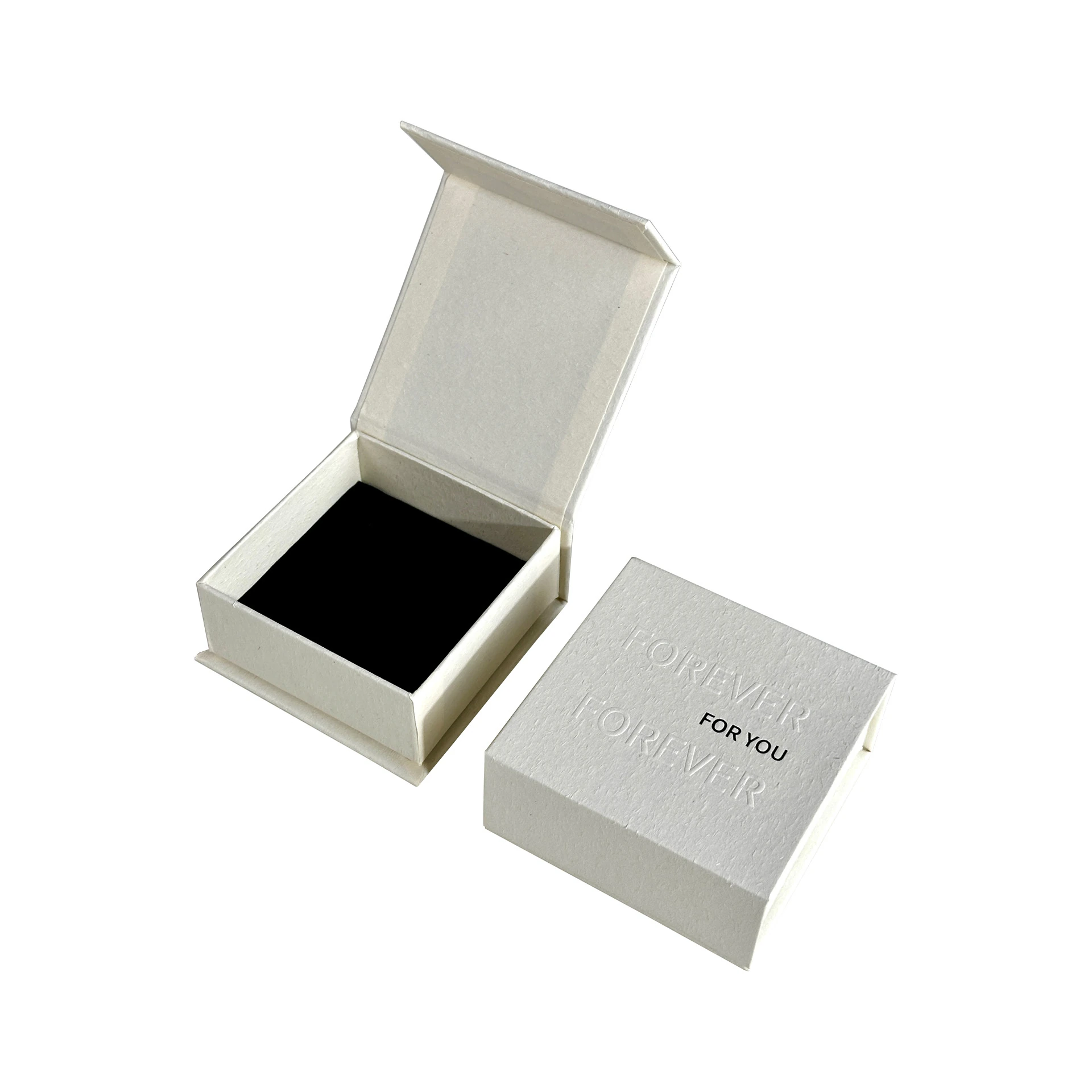
A drawer jewelry box or folding carton can be named as a preferred direction. Identify what you like about it, such as opening action or printed space. Keep the actual construction as a proposal until the drawing and sample scope are defined.
Label the object and reference for each measurement
Product size, occupied contents, finished box interior and shipping-carton exterior belong in separate fields. Give each number a unit and a subject. An unexplained pair of numbers cannot tell the supplier whether it describes a jar, a card or a cavity.
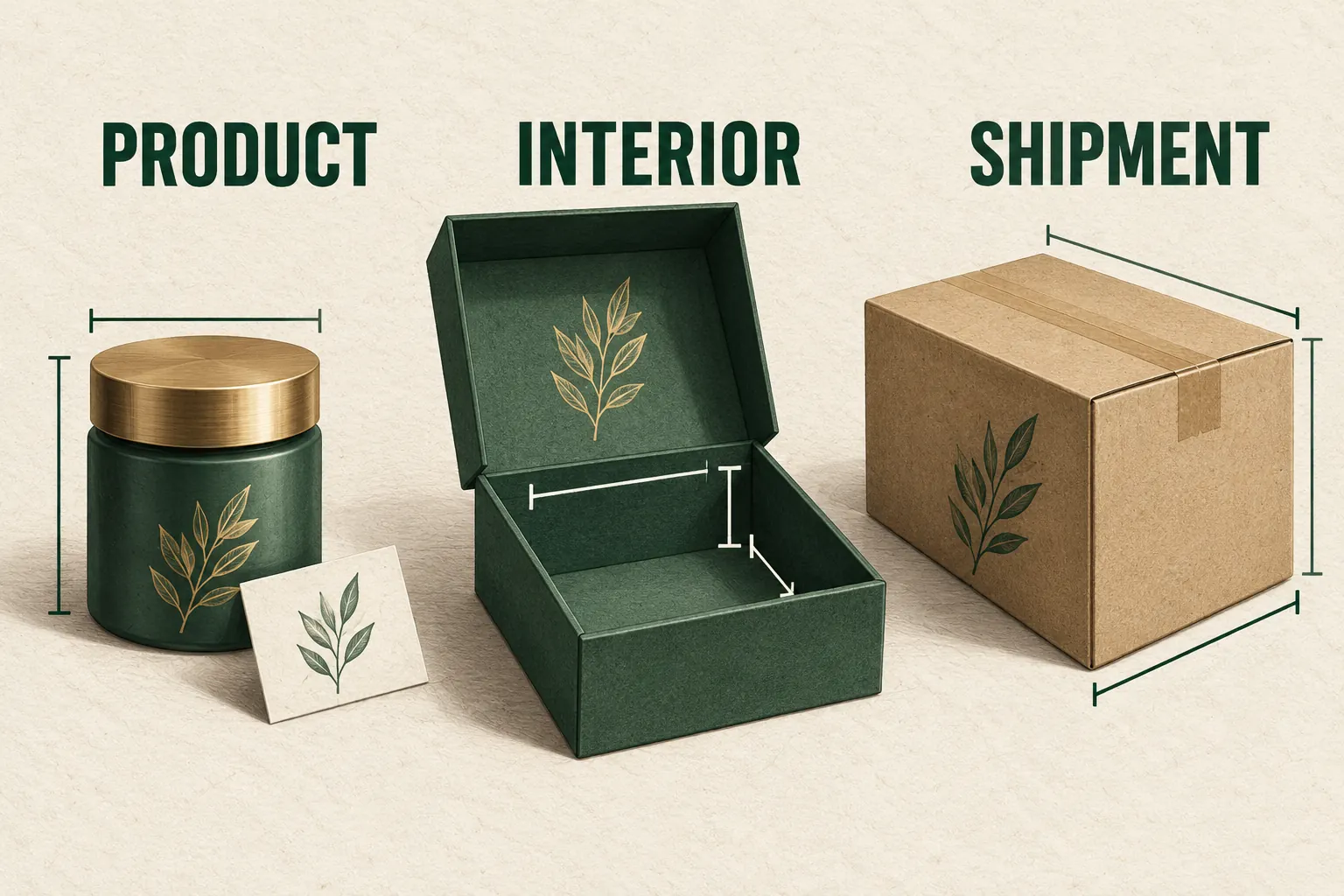
Measure the condition actually being packed. Include the lid, backing and protective layer when they remain with the product. If the finished interior is unknown, request a proposal based on those contents rather than filling it with an assumed allowance.
Record the basis of the value: measured actual item, current drawing or estimate. That distinction lets the supplier identify which input supports a proposal and which needs confirmation. It also prevents an early estimate from silently becoming an acceptance dimension.
Add photographs or a sketch to explain orientation. A picture can help locate a projection, but it doesn't reliably supply depth or weight. The drawing and measurement record should identify the same configuration.
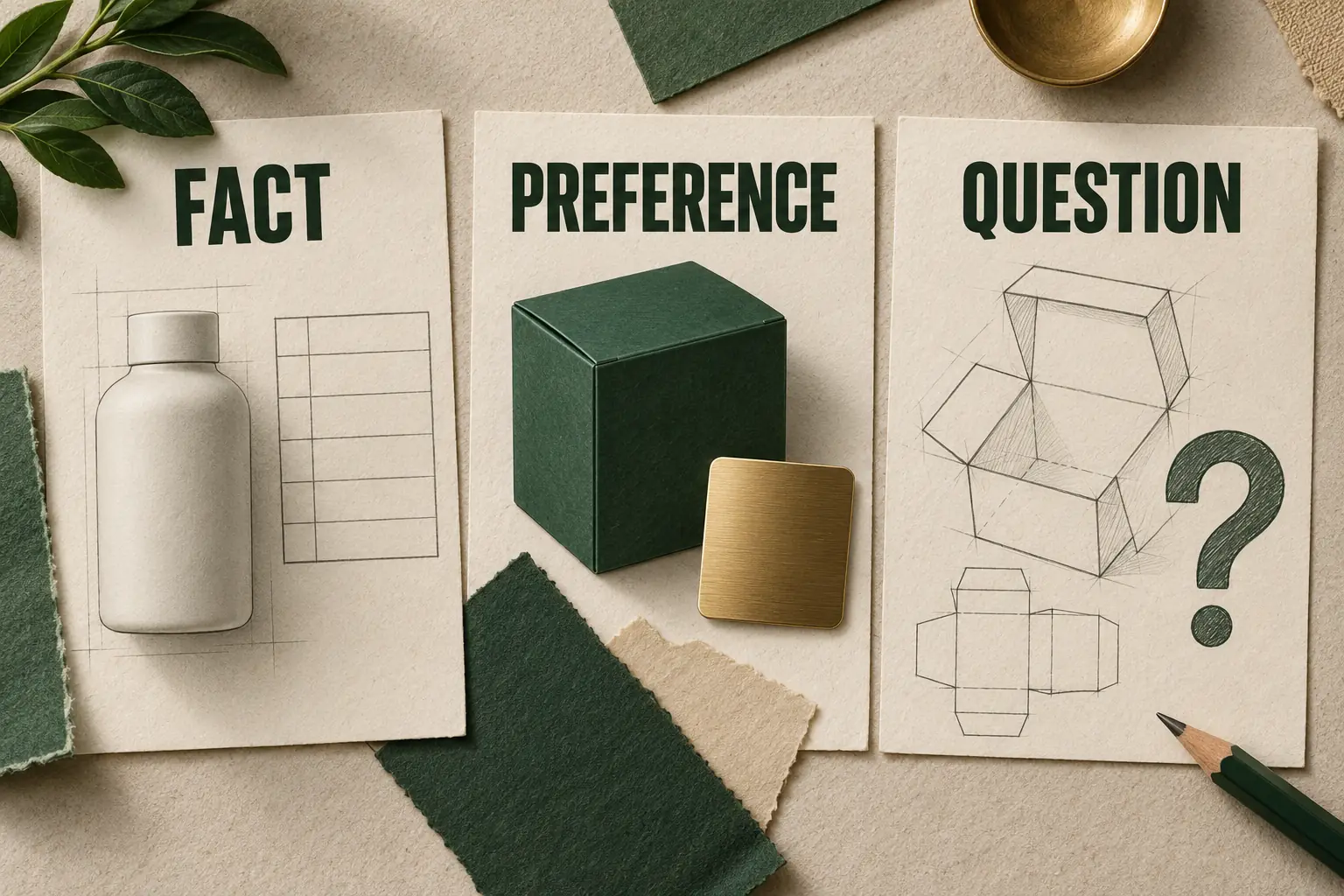
Separate confirmed facts, preferences and missing inputs
A brief becomes useful when the supplier can distinguish requirements from choices. This compact record can travel with the product views and files.
Scroll horizontally if columns extend beyond the view.
| Input | What belongs in the brief | Status or response needed |
|---|---|---|
| Contents | Product and accessory identities, arrangement and measured envelope | Actual, drawing-based or estimated |
| Use | Retail, gifting or shipping role | Required job and separate outer-pack scope |
| Structure | Preferred opening and delivered state | Preference or supplier proposal |
| Artwork | Current files, print surfaces and intended finish | Available, unfinished or missing |
| Quantity | Pieces per design and components per completed set | Named designs and quantity basis |
| Destination | Country and relevant delivery location | Requested scope and exclusions |
| Next evidence | A fit, opening, material or appearance question | Proposed drawing or sample |
Assign the unresolved input to the person who can supply it. The supplier can't measure a product it hasn't received, and a buyer can't confirm a converter's process from a concept picture. Giving each question an owner makes the next exchange shorter.
Australian Government quotation guidance treats a written quote as a description of goods or services, price and terms. Here that supports asking for explicit scope. It doesn't decide the legal effect of a particular cross-border exchange.
Build a planning inquiry without inventing a finished specification
Planning example: the intended gift contains one lidded jar and one care card, with 500 identical presentation boxes under consideration. Assume the planning record gives a 100 mm lid-inclusive height and 75 mm widest diameter. These are exercise inputs, not product measurements or a supplier offer.
The inquiry can identify the jar arrangement and say that the card's final dimensions are still needed. Request a proposed usable interior, holder and opening around the complete contents. Do not label the box itself 100 by 75 mm; those numbers describe the product in this example.
Add the requested destination and say whether the presentation carton will also need a shipping outer. A request for a proposed insert should identify contact restrictions and the intended removal action. Its material or cavity geometry should remain an explicit supplier proposal.
Packrivo's project policy is MOQ 500 pieces per design. That is a project threshold, not confirmation that every proposed structure or process can be supplied at that quantity. Keep supplier-specific feasibility and any different quantity condition attached to its actual response.
Send one file set and request itemized scope
Give the inquiry a revision and date. Use the same baseline when approaching sources you want to compare. Keep alternative constructions as labeled alternatives instead of changing the common requirement each time someone replies.
Name the available drawings and artwork files, their versions and the purpose of reference images. Adobe's file-packaging guidance explains how editable artwork, linked graphics, fonts and a package report can be collected. That file organization doesn't establish a production-ready package or approve supplied copy.
Request component inclusions, assembly work, sample scope and any separate setup or tooling lines. Ask what arrives flat or formed and who completes the remaining work. Leave unanswered charges open rather than treating them as free.
For international delivery, record the proposed trade rule, version and named place. The US trade guidance explains that Incoterms allocate specified delivery responsibilities; they don't identify the goods or list the contract price. Your contents and commercial record still need those separate details.
Ask for the answer that enables the next decision
End the first brief with a small set of questions: which construction is proposed, what does the quoted unit include, and which drawing or sample should come next? That gives the supplier a concrete reply rather than a request to solve every production detail immediately.
When replies arrive, use the supplier clarification matrix to preserve the original wording and resolve gaps. The first brief defines the starting requirement; the matrix handles answers and changes afterward.
Bring the product record, current files and named open decision to a packaging brief inquiry. Share only material you're permitted to send, and retain the resulting proposal with the brief version it answers.