
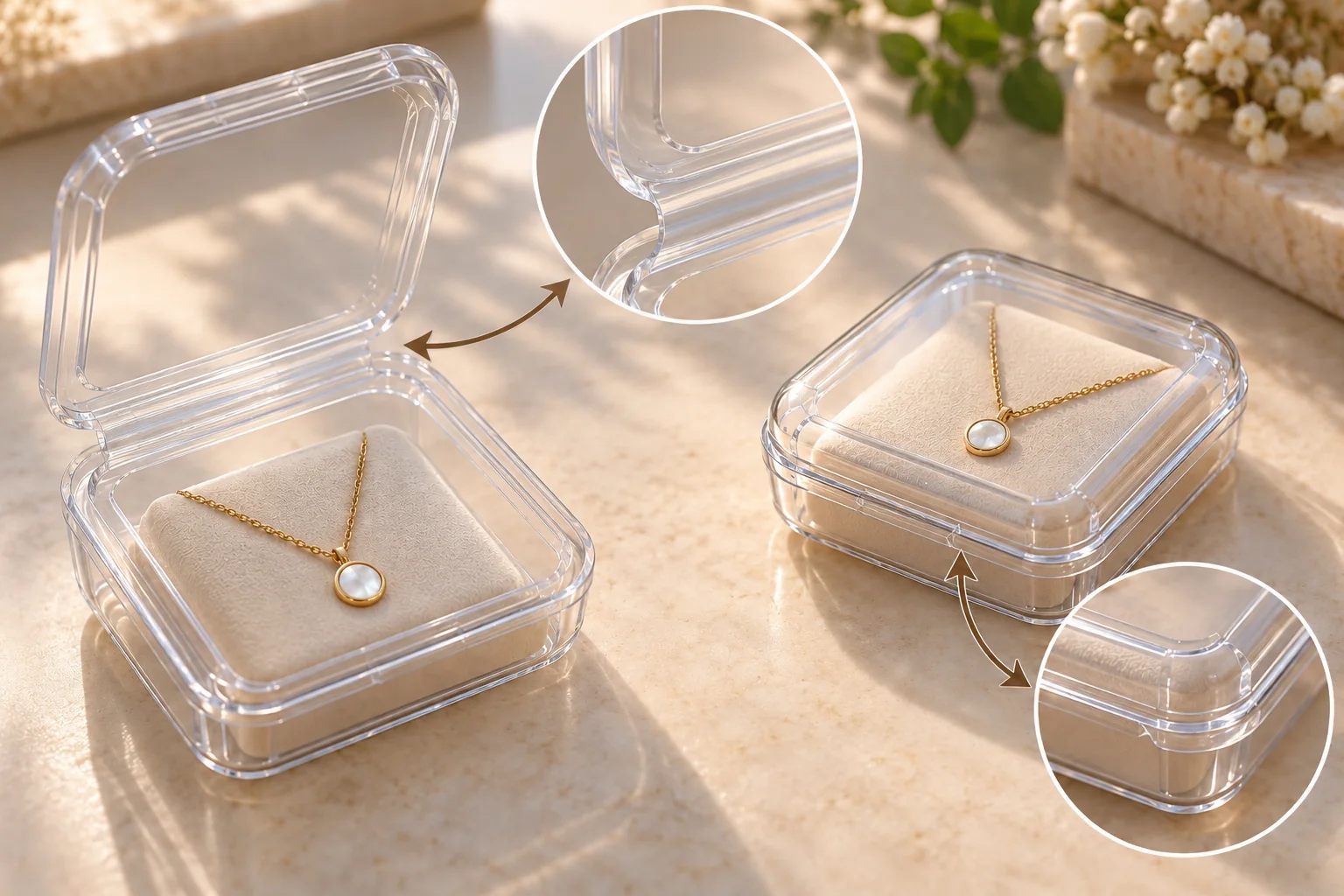
The illustration is a nonfood gift-pack concept. The supplier confirms the actual formed sheet, hinge and rim engagement before sampling.
Separate the hinge from the closing interface
The original clamshell packaging reference distinguishes hinged and two-piece forms and describes several closing interfaces. Use that information to ask which mechanism the offered lid uses. A hinge connects the two halves; the rim or offered closing feature performs a separate action.
Request open and closed views of the same proposed pack. Mark the hinge axis, lid travel, cavity top and intended release grip. Include the actual product, primary wrap and insert card. The closed height must refer to that complete arrangement.
State whether the card sits behind the product, in the lid or against another surface. Locate its edge relative to the rim and hinge. A card can change a closing contact even when the product still sits correctly in the lower cavity.
Close and reopen around the real contents
Load the lower half, move the attached lid through its intended travel and pause before rim engagement. Inspect where the lid, card and product approach each other. Close using the offered method and reopen through the proposed customer grip.
Record any need to press directly on the product or to move a card before closure. Ask the converter for a located revision rather than adding that movement silently to the packing sequence. Retain the observed hinge and rim condition with the sample identity and agreed handling conditions.
Compare the open multi-cavity tray if a separate outer-box lid is preferable. The existing thermoformed insert option is a broader holder choice; this clamshell specifically needs attached-lid travel and closed-rim access decisions.
Use a hinge and rim record
This hypothetical small gift-accessory pack separates the lid connection from its closure.
| Interface | Input to provide | Sample evidence |
|---|---|---|
| Hinge H1 | Offered hinge axis and travel envelope | Open and partly closed views |
| Rim R1 | Named engagement and release feature | Closure detail on drawing |
| Closed cavity | Product plus final card/primary wrap | Loaded closed-height observation |
| Customer grip | Point used to release the rim | Loaded opening action |
| Card edge | Proposed card position at lid travel | Located contact or clearance view |
Give the converter a closed-pack question
The converter should confirm the formed geometry, closing interface and proposed sheet identity. The packing owner should report the actual loading and rim-engagement actions. The buyer should decide whether that customer access route is acceptable or whether a different lid/cavity proposal needs sampling.
Record changes using the sample revision method and retain the card and product state with the lid drawing. Bring those records to Get a Quote. MOQ is 500 pieces per design; material, sample scope and commercial conditions are confirmed for the project.