
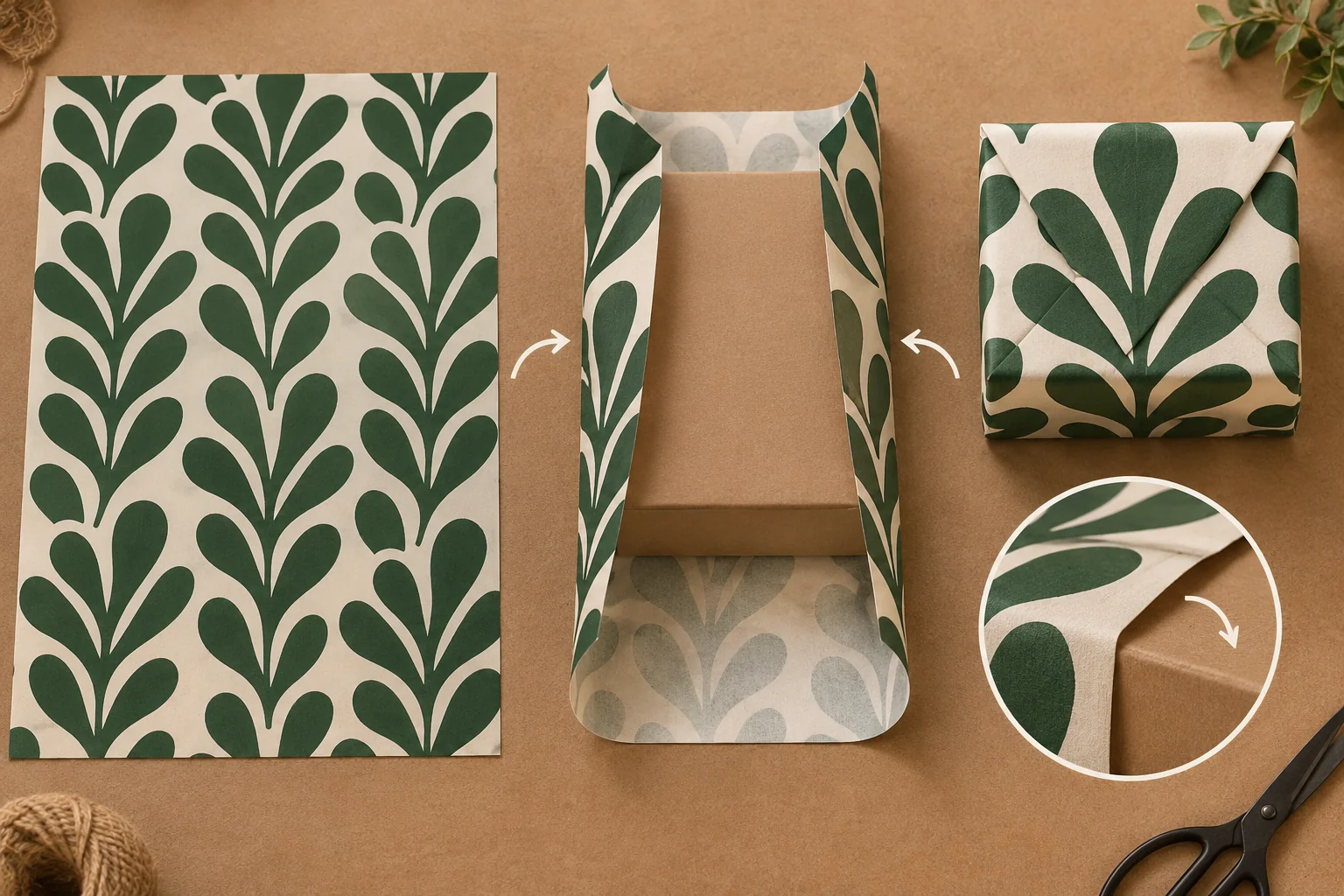
This concept requires confirmation of paper, ink and the intended contact use. Any transfer, compatibility or protective requirement needs its own agreed evidence.
Choose the print-layout job
The printed tissue reference distinguishes position and non-position printing options. Ask the printer which layout is proposed for your sheet. Keep the intended visual result separate from any available supplier process.
A positioned motif needs a relationship to the final fold; a repeating pattern may have another visual job. Show which part the customer should see before the tissue is opened. Don’t use a flat sample to approve that packed view.
Connect the sheet to the complete gift presentation if it sits inside a bag or box. Its folded envelope belongs with the actual product, not as a loose decoration beside it.
Map the fold and contact surfaces
Provide the product or gift-box envelope and the proposed folding sequence. Mark both sides of the sheet if they differ. Show overlaps and corners that become the product-contact areas.
For a hypothetical boxed ornament, tissue may fold across the lid with a green motif visible at the center. Record which fold creates that face and which printed areas meet the box underneath.
Ask the responsible printer or supplier what material and sample review is appropriate for the intended contact. Avoid diagnosing transfer from a concept or claiming every printed tissue can safely touch every surface.
Use a sheet-to-pack record
Keep sheet artwork and folding instruction linked to one complete pack revision. The table separates appearance from contact questions.
| Record | Input | Sample evidence |
|---|---|---|
| Flat sheet | Size, sides and print proposal | Named sheet/artwork revision |
| Fold sequence | Order and product orientation | Partly folded states |
| Visible area | Motif or repeat pattern in packed view | Final gift presentation |
| Contact | Product and printed/unprinted surfaces | Located interface view |
| Removal | Customer opening action | Sheet and product afterwards |
The set checklist covers bag and other components. Keep this record narrow enough to locate the tissue’s own fold and contact decisions.
Review a specific artwork placement
In the hypothetical map, call the desired motif M1 and final upper fold F1. If M1 is hidden after packing, ask whether the fold or artwork position should change. Those are different revisions and should be recorded separately.
If paper or ink changes, retain the new material identity and revisit any relevant contact question. The same outside color in a photograph doesn’t identify the same sheet construction.
Confirm the supplied sheet format and who folds it at the bench. A folded presentation sample and loose delivered sheets describe different work. Record any required material evaluation independently of the appearance approval.
Send the final folded view
Submit sheet and artwork details, the fold map, product-contact request, quantity and destination through Get a Quote. The minimum is 500 pieces per design. Final materials, samples, pricing and timing require project confirmation.