
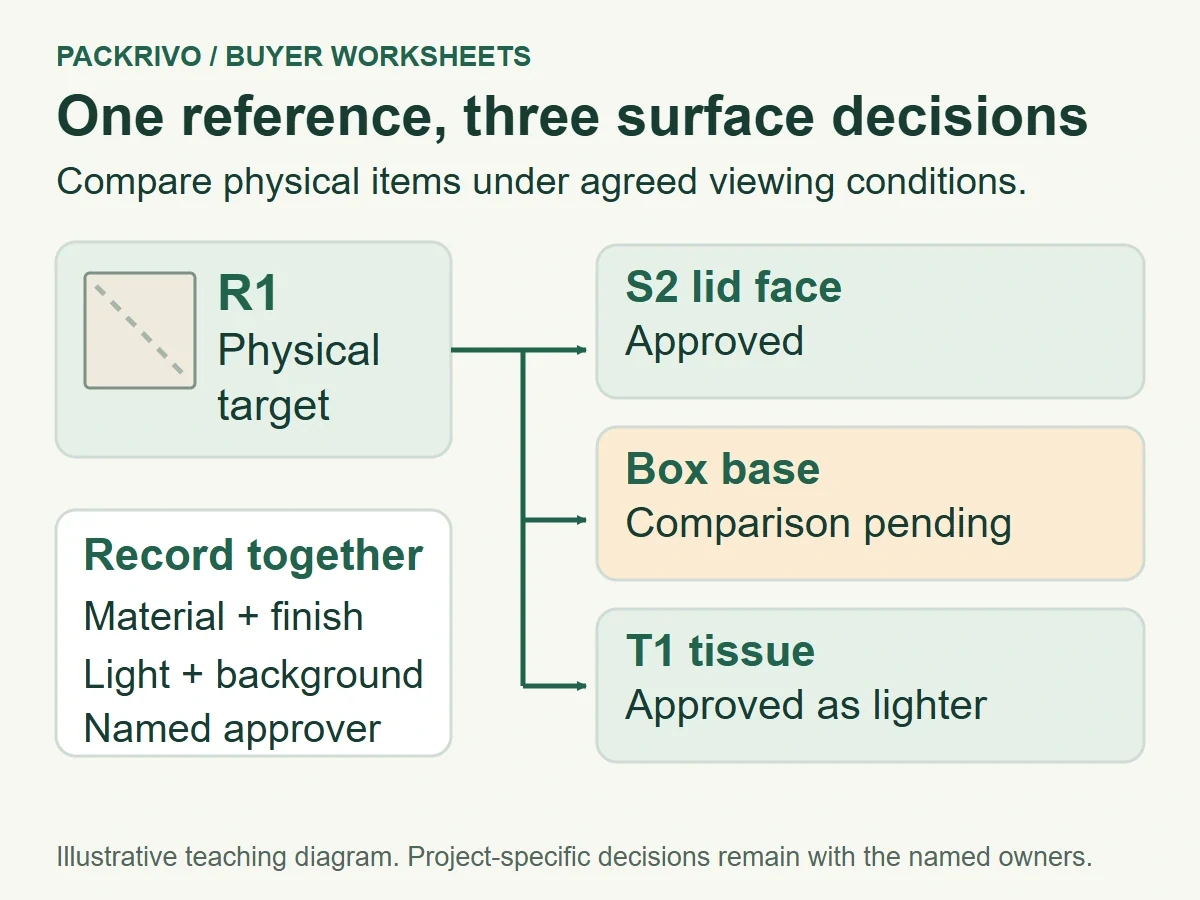
Approve packaging color against a named physical reference on the intended material and surface finish. Record the viewing conditions, the sample version and the person making the final decision. A screen image can communicate direction, while a shared approval record tells the printer which comparison matters and which differences still need a decision.
A pale cream on a glossy label and the same cream on textured paper can create two different visual impressions. If both belong to one gift set, the useful question is how you want them to look together. Start there before requesting a closer match.
Choose the reference that controls the decision
Give the reference an identity that survives the conversation. Record a swatch name or number if available, its physical holder, the date and the part of the package it controls. If you’re using an existing box as the target, identify the exact face and keep that box available for comparison.
A photograph helps someone locate the reference. Its appearance can change with lighting, camera settings and the display used to view it. Describe the target in words as well: for example, a warm off-white with restrained contrast against a dark green logo. That description helps discuss direction, but the physical reference remains the decision point.
Separate the target from a candidate sample. Label the reference R1 and the proposed printed sample S2, rather than calling both files “approved cream.” Keep a small record of who holds each item and which copy the other party received. Two people can agree to compare R1 without realizing their copies differ.
When a package has several surfaces, name each one. A lid wrap, tissue sheet, insert and paper bag may need different approval decisions. Decide whether the aim is close visual coordination or a distinct contrast, then record that intent. This gives the reviewer something more useful than “all parts must match.”
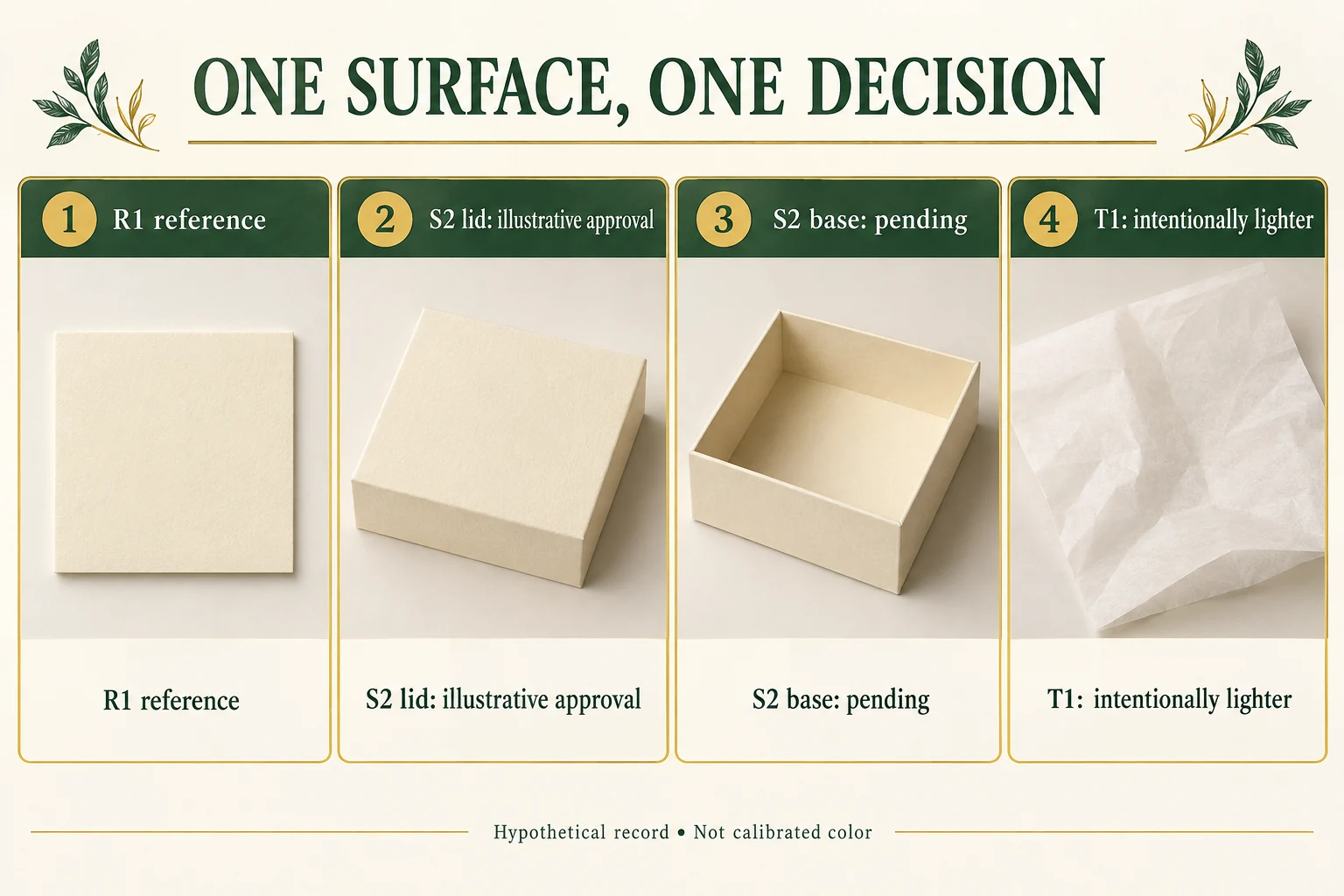
Compare the material and finish you intend to use
Ask for the candidate’s substrate, printed side and surface treatment to be identified. Record whether the sample includes the proposed coating, lamination, varnish or texture. An unfinished print can help select a direction; its approval scope should say that the finished surface still needs review.
View the reference and sample beside each other, in the same orientation and under the agreed lighting. Record the light source or review location, the surrounding background and any second condition that matters to the product’s use. If two reviewers work in different places, arrange a shared comparison before treating their observations as equivalent.
The ICC color management introduction explains how profiles relate device color data to a standard color space. That helps explain why a managed digital workflow matters. Physical approval still needs the actual material, finish and comparison conditions named in the record.
Ask the printer what evidence they can provide for the proposed process. If instrumental measurement is proposed, agree the reference, measurement method and acceptance limits with the responsible parties. A numerical result becomes useful when everyone knows what was measured and what the result is meant to decide.
Finish can also affect how color reads across a folded box. Compare the main display face, edges and joins where they matter to your design. Use the print finishes checklist to describe those treatments before requesting a finished candidate.
Use a color approval worksheet for each surface
Copy this worksheet into your brief. Complete a separate row for every surface with its own target, material or finish. The record is a buyer planning tool; the printer should confirm the production method and proposed approval evidence.
Swipe the table to view all fields.
| Field | Entry to complete |
|---|---|
| Package component and face | Name the lid, base, bag or label and its printed face |
| Target reference | Reference ID, description, holder and shared copy |
| Candidate sample | Sample ID, date and artwork revision |
| Material and surface | Substrate, printed side and finished treatment |
| Review conditions | Light source or location, background and orientation |
| Observation | Describe the visible difference and where it appears |
| Decision and scope | Approve, revise or hold; name the surfaces covered |
| Open action | Requested change, evidence needed and responsible person |
| Final approval | Named approver, decision date and retained reference |
Work through an illustrative gift box decision
In this hypothetical example, a small jewelry brand wants a cream folding box and matching tissue. The buyer holds a physical cream reference R1. The first box candidate S1 uses uncoated stock, while the proposed production box includes a matte surface treatment.
The buyer records S1 as a color-direction review only. A finished box candidate S2 is then compared with R1 in the agreed review area. The tissue candidate T1 is reviewed beside S2 because the brand wants a coordinated set rather than two identical surfaces.
The record says S2’s lid face is approved, the base needs another comparison, and T1 is acceptable as a deliberately lighter component. The artwork owner also confirms that the dark green logo file hasn’t changed. Those decisions can now travel together without turning one lid approval into approval of the whole set.
For the next candidate, the buyer asks for the same box material and treatment, a revised base comparison and clear sample IDs. The sample approval checks help keep color approval alongside the separate fit, closure and packing decisions.
Fill one surface record without approving the whole set
Use separate entries for the hypothetical R1, S2 and T1 example. The table below is an invented editorial record, not an actual Packrivo color review. A real record needs the actual reference holder, reviewer, date and evidence; those identities are deliberately not fabricated here.
Scroll horizontally if columns extend beyond the view.
| Surface | Reference and material basis | Illustrative decision | Open action |
|---|---|---|---|
| S2 lid face | R1 physical reference; intended matte-treated box stock | Lid-face appearance accepted in the fictional scenario only | Enter real reviewer/date/viewing condition before actual release |
| S2 base | Same intended stock and treatment; own comparison needed | Pending | Return base-specific comparison; lid decision does not transfer |
| T1 tissue | Reviewed beside S2; intentionally lighter target | Lighter coordination accepted in the fictional scenario | Retain distinct tissue intent; do not force identical color |
Keep the target and the result in different columns. “T1 intentionally lighter” describes a chosen relationship, while “T1 matches R1” would describe a different target. If the base later changes coating, reopen that surface’s comparison rather than rewriting the lid’s historical result. Any instrumental agreement needs its own method and project-specific limits; none are supplied by these screen colors.
Give the final decision a clear home
Retain the approved physical reference with the matching record, and tell each party which version controls the next step. Keep a dated note of any surface still awaiting approval. When a material or finish changes, ask the responsible reviewer which color comparisons need to reopen.
If you’re preparing a coordinated packaging set, bring the reference IDs, material preferences and open color decisions into a Packrivo packaging brief. That gives the human review a clear target and a practical next question.
Keep the current record with the project brief
Download the surface color decision CSV. It contains field definitions, clearly hypothetical examples and a blank actual-project row. Replace invented values with your own supported records; keep unknown fields open.
Packrivo coordinates packaging sourcing and project questions with independent suppliers. The worksheet is a discussion aid, not a confirmed quotation, manufacturing promise or sample approval. The published starting MOQ is 500 pieces per product/design; actual component, design and commercial scope require confirmation.
Source scope: ICC supports color-workflow context; all surface decisions are hypothetical and no screen swatch is a measured reference. Public references checked 16 October 2026. All new illustrations are AI-assisted concepts. No real customer, test, shipment, stock, savings or production outcome is represented.