Get a Quote
Review label-led branding, materials and finishing preferences.

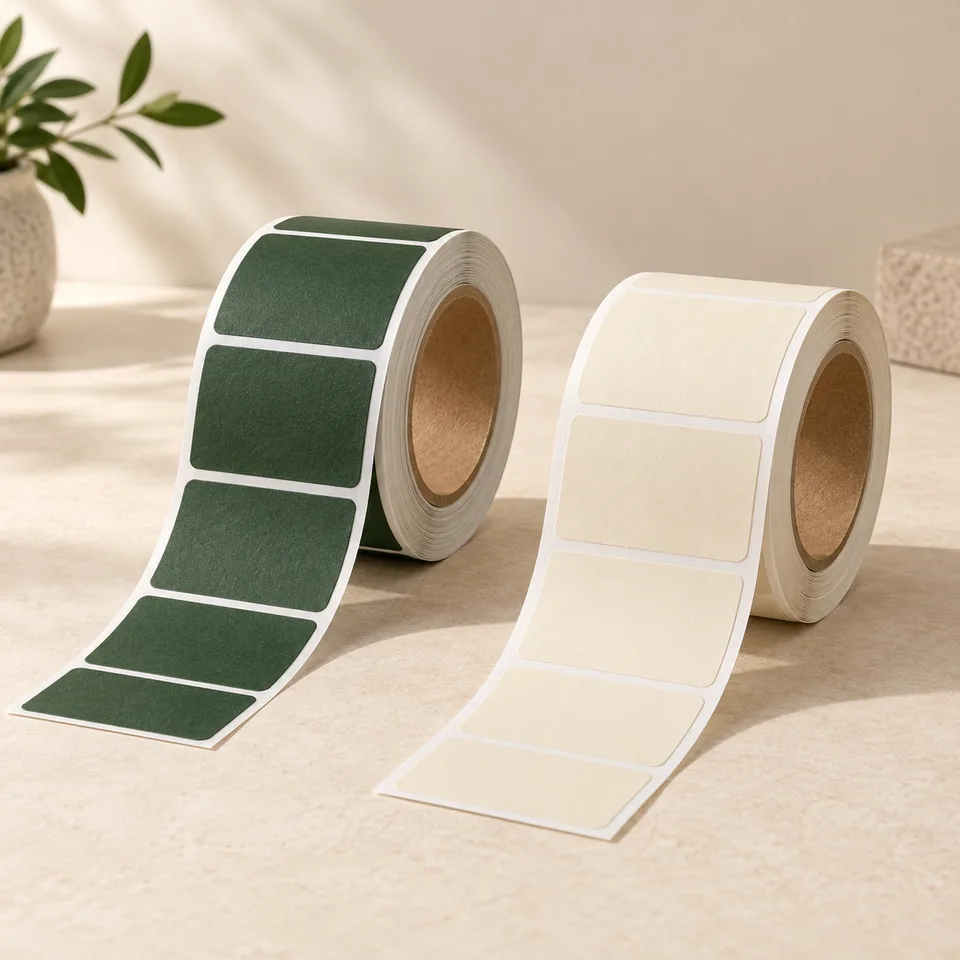
Labels
MOQ: 500 pieces per product / design. Plan the quantity for each design in your brief.
Plan roll labels from the label shape, actual-size content, application surface and dispensing route. Review rectangles, squares and circles against the same application requirement.
Packaging concept · Feasibility unverified
MOQ 500 pieces per design.
Packrivo support: packaging sourcing, requirements preparation and supplier coordination.
Share the product dimensions, quantity, material or finish preferences and delivery destination. Feasibility, sample scope and costs, production timing and delivery terms are reviewed for your project before an order.
Send the label width and height, application surface and intended artwork. Say whether labels will be applied by hand or with equipment; include roll requirements supplied by that equipment or the packing operator.
Get a QuoteShare your dimensions, quantity and delivery destination.
The minimum is Packrivo’s project threshold. Availability for the chosen structure, material and finish is checked for your project.
The finished dimensions and usable interior determine material use and product fit.
Closures, folds and assembly steps change the work needed to make the pack.
Board, wrap and insert choices affect both construction and material cost.
Artwork coverage, colors and decoration steps change setup and finishing costs.
The quantity per design changes how setup and production costs are distributed.
Shape, supply format and surface construction are separate choices. Compare the same wording, receiving surface and application route before choosing the finished outline.
| Shape | Dimensions and artwork to supply | Check on the applied candidate |
|---|---|---|
| Rectangle | Finished width and height, corner shape, artwork orientation and the available panel. | Readable content and edge placement on the actual flat or curved surface. |
| Square | Finished side length, corner shape and clear space around the actual-size content. | All edges in the intended placement; identify whether the label stays on one panel or bridges a fold, seam or tissue layer. |
| Circle | Finished diameter, actual-size artwork and a marked placement view. | Readable content within the circular area and the intended position of any bridged closure. |
State whether the label is a branding mark or is intended to bridge a closure. Show its position and review the actual peel, placement and opening action; a circle or square alone does not establish a sealing function.
For equipment application, obtain the selected equipment’s roll, core, liner, gap and unwind requirements. Keep those requirements separate from the label’s outline. Compare sheet labels when sheet handling suits the packing route; review a coated construction against its stated surface conditions rather than inferring it from gloss.
Compare roll and sheet proposals using the same label size, artwork and application surface. A roll needs an agreed presentation direction and dispensing setup; a sheet needs an agreed layout and handling sequence. Keep these as practical packing choices rather than choosing by shape alone.
Use the roll versus sheet application checklist to describe the operator, surface and delivery format before comparing label responses.
MOQ: 500 pieces per product / design. State the quantity for each design, not just the combined order total. Packrivo helps organize the brief and supplier questions. The relevant supplier confirms the proposed materials, construction, price, sample scope and delivery timing for the agreed configuration.
Include your destination and any open inputs. If a detail is not yet known, name who will provide it before the next review.
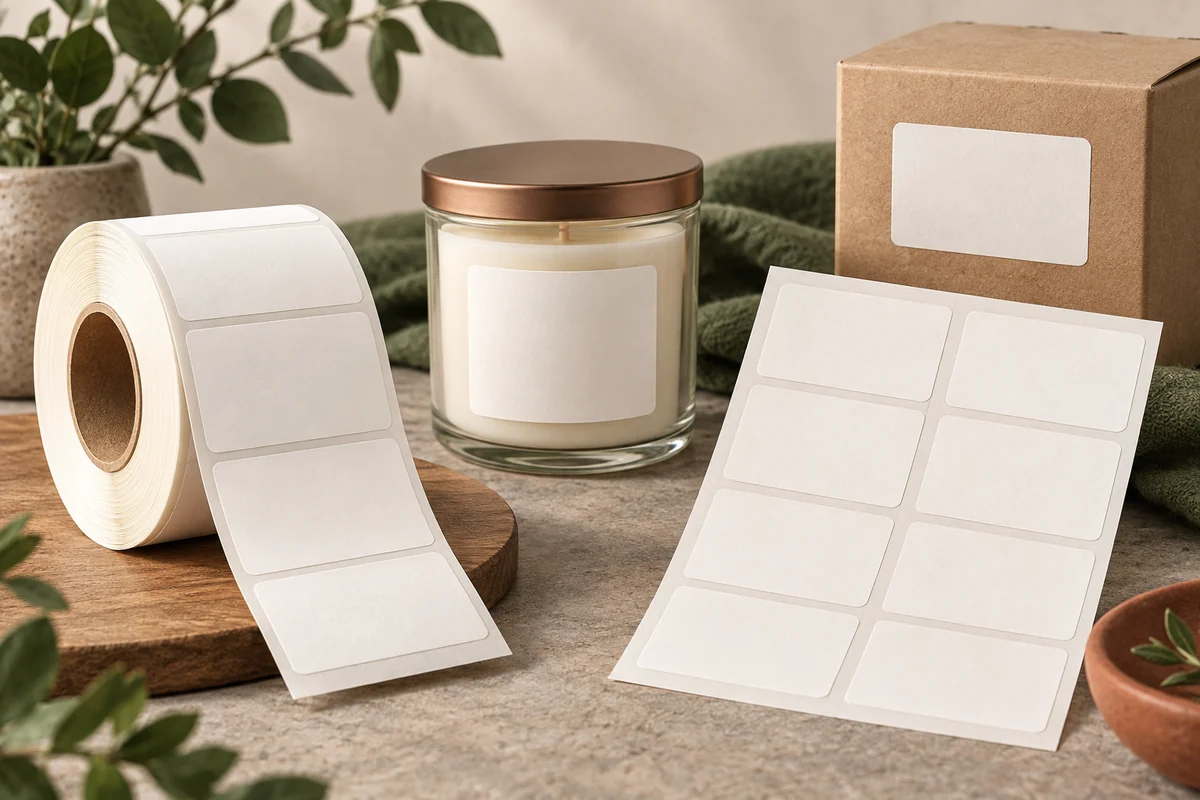
Include your desired logo placement, print surfaces and colors. Final artwork must use the approved supplier dieline and pass proof review.
The picture is an AI-assisted concept, not a production promise. Structure, materials, tolerances and finishing need supplier review and a physical sample.
A person reviews the brief and missing details. Supplier checks and sample or quotation discussions follow only after the next steps are agreed.