
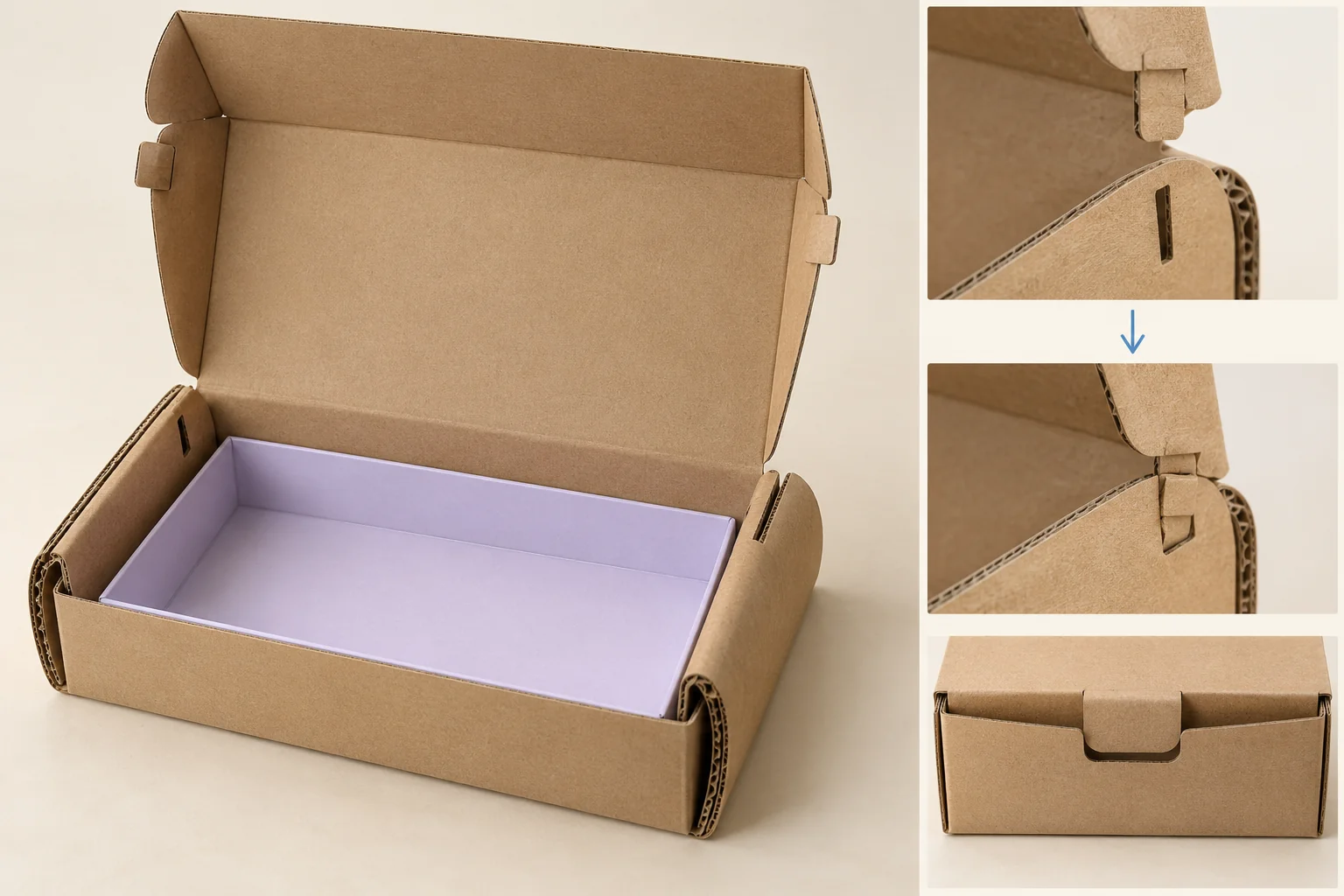
This packaging concept requires supplier confirmation of the offered corrugated blank and material proposal; its tab geometry remains tied to that offered drawing.
Identify the lock on the actual blank
The tab-lock roll-end catalogue identifies the corrugated style. The FEFCO Code provides general corrugated design language. No particular FEFCO code is assigned to this project’s tabs or receivers.
Ask the converter to label the rolled walls, each tab and its matching receiving cut on the proposed blank. Mark the folds in their intended order and distinguish wall formation from the later lid closing action. Keep the offered corrugated construction and flute direction with the drawing revision.
Supply the complete inner-pack envelope, including insert, presentation box, card and projecting features. Locate the contents beside any tab that enters the formed space. An outside carton dimension does not explain whether the lock or removal grip shares space with those contents.
Compare the closure with the existing front-tuck route
Use the existing front-tuck corrugated mailer as a direct comparison. Ask the converter to show which tab/receiver or wall-setup actions differ in the offered proposal. A new catalog name alone should not create another packing instruction if the actual interface is the same.
The paperboard roll-end dust-flap carton is a separate presentation configuration with its own material and flap questions. Compare the complete pack role and offered closing geometry rather than transferring a paperboard or corrugated performance claim.
Form the empty pack, engage the identified wall locks and load the contents in the confirmed order. Close and reopen through the proposed grip. Locate any catching tab, displaced card or wall that moves during removal and retain the observation against its drawing feature.
Use a wall-lock and loaded-contact record
This original hypothetical gift-pack map leaves the actual tab shapes and allowances to the converter.
| Interface | Brief input | Next evidence |
|---|---|---|
| Roll-end wall W1 | Fold order and flute proposal | Blank plus formed empty wall view |
| Lock T1/R1 | Actual offered tab and matching receiver | Before/after engagement detail |
| Contents PK1 | Complete presentation box and insert envelope | Loaded lock-contact view |
| Lid closure L1 | Separate closing and release movement | Closed/reopened complete pack |
| Comparison | Existing front-tuck versus offered interface | Located difference and next sample owner |
Handoff a feature-specific sample question
The converter supplies the lock drawing and material identity. The packing owner confirms the actual assembly and loading actions. The buyer decides whether the closure and access suit the complete gift or require a located revision. Keep any transport review as a separately scoped task for the full proposed system.
Use the flat and assembled scope record to retain preparation responsibility, and the sample revision method for a changed lock or contents arrangement.
Bring the complete envelope, offered lock map and comparison question to Get a Quote. MOQ is 500 pieces per design; structure, material, samples and commercial terms are confirmed against the project.