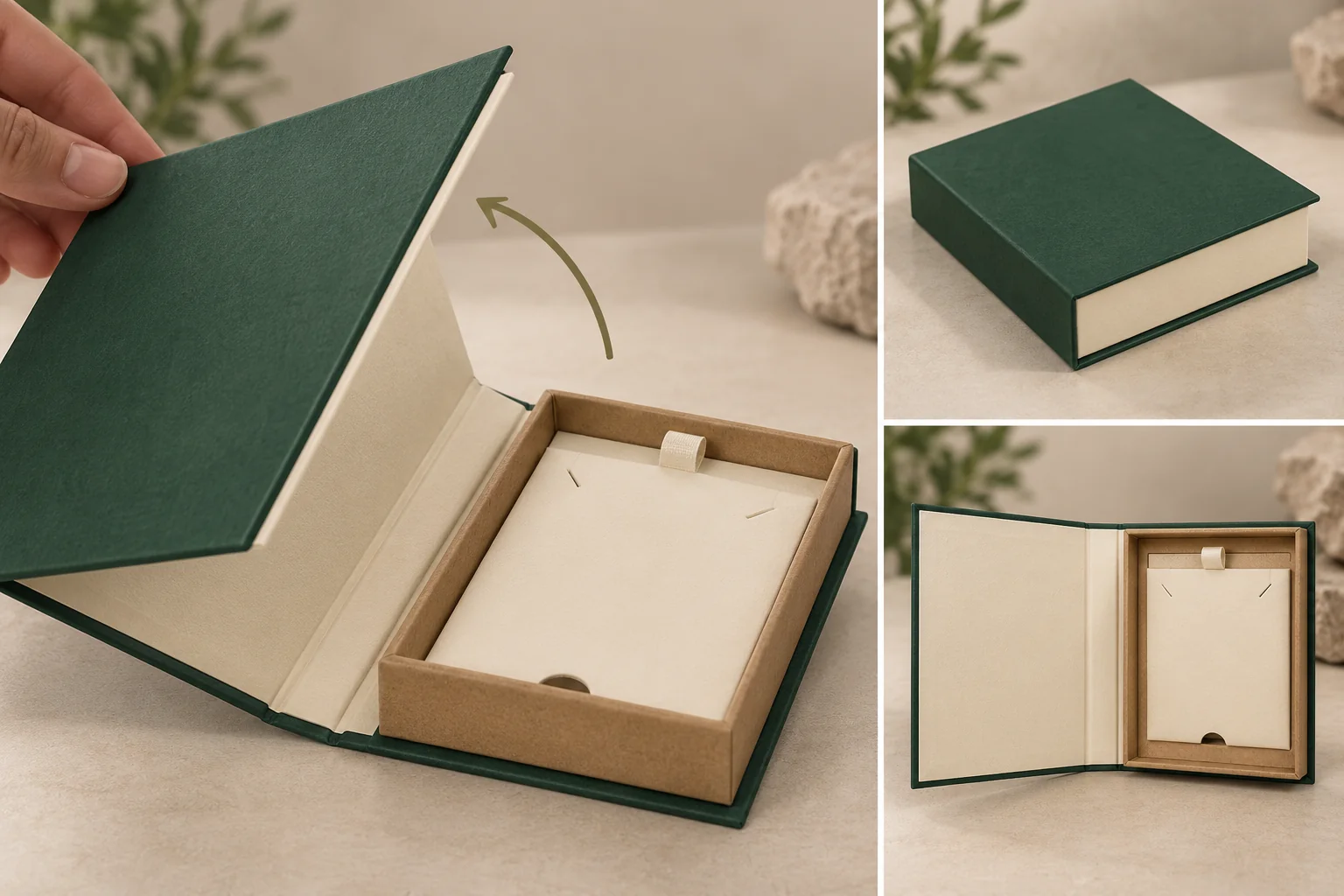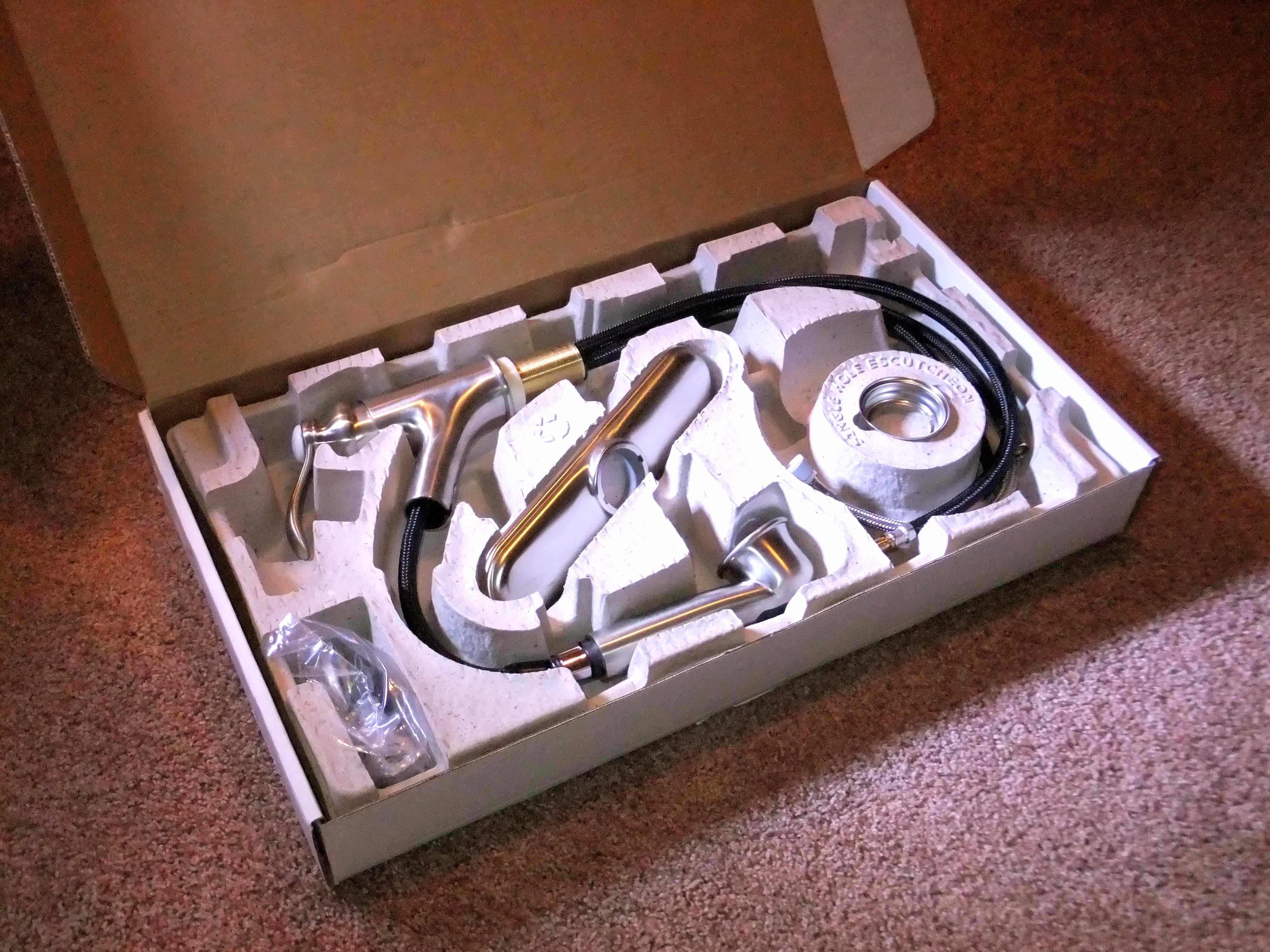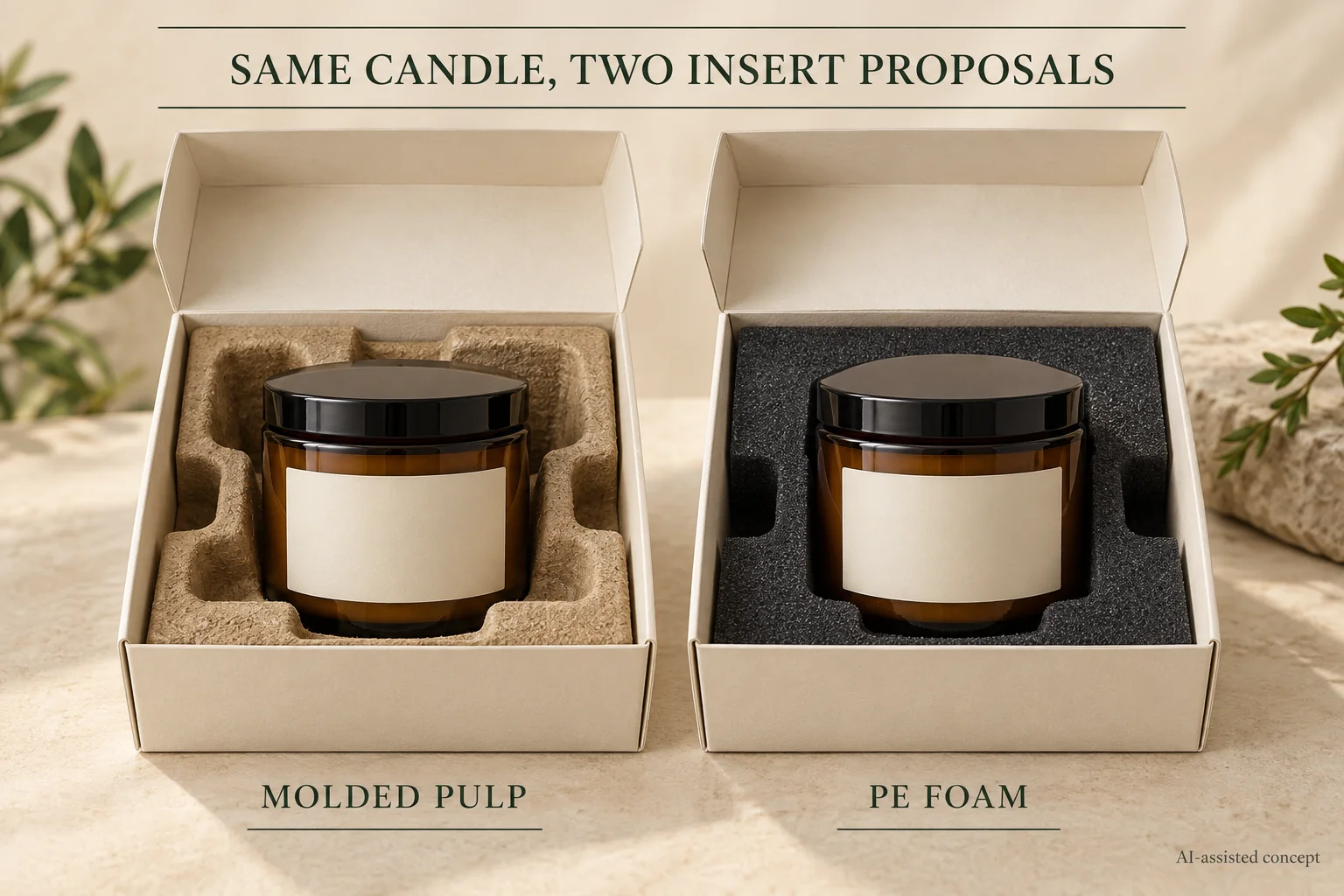
For a glass candle gift box, shortlist molded pulp when a formed fiber presentation justifies developing a dedicated shape. Shortlist specified PE foam when you want a converted foam holder and need its material grade and fabrication priced clearly. Compare development commitments and complete components before choosing which proposal to sample first.
Fix the candle brief before comparing the two purchases
Consider one lidded glass candle with a printed label and a care card. It will be sold in a presentation box and mailed inside a separate shipping package. Both insert proposals must serve that same product and opening experience. A proposal that quietly changes the box or adds an unpriced facing is a different purchase.
The first distinction is the form you are buying. A molded pulp proposal develops a formed fiber component with its own shaped contact areas. A PE foam proposal specifies a foam material and the fabrication needed to turn it into a holder. Both need a design, but the development questions and supplier quote lines differ.
The broader packaging insert materials guide covers other material forms. Here, keep only these two proposals on the table. Write down whether the visible interior must be fiber, whether the jar geometry is final, and which parts of the existing gift box you intend to retain. Those decisions will narrow the brief before any claim about cushioning.
Compare a formed component with a specified foam conversion
For Candidate P, ask for the proposed fiber construction, a shaped-part drawing and a separate development and tooling scope. The K1 Packaging insert comparison describes custom-formed pulp compartments and notes that structural changes may require additional tooling. This supplier explanation identifies a purchasing question; it does not set Packrivo’s tooling price or say that every change requires a new tool.
If the brand may replace its jar or lid, identify which change would alter the proposed formed part. Ask how a revised cavity would be handled and quoted before accepting the development scope. A fiber appearance preference should be weighed against that commitment to a particular geometry.
For Candidate F, this example requests a fabricated holder from Sealed Air Ethafoam 220, a named PE foam grade. The manufacturer’s Ethafoam brochure distinguishes grades, plank thicknesses and material properties, and describes a fabricator network. Its property table is typical data, not specification limits.
Ask the converter to identify the supplied grade, stock thickness and fabrication. Price the cut holder, any separate base, bonding and visible facing as actual components. A new cavity may change that conversion scope; do not assume it is a free revision. Neither the material name nor this example establishes availability from Packrivo.
Use presentation and redesign needs to narrow the shortlist
If an exposed formed-fiber interior is essential, Candidate P is the route to develop first. An uncovered PE foam holder does not meet that requirement. If a foam proposal adds a paper top sheet to change the appearance, compare the resulting composite construction, including that sheet and its attachment, rather than calling it the same bare-foam offer.
If the brand accepts either interior and the product shape is still being revised, request a converted PE proposal first to see how the candidate grade, stock and fabrication would be supplied. Keep pulp as an alternative, but ask for the shape-change and tooling terms before committing to its development. This is a purchasing sequence, not a promise that foam is cheaper, faster or more protective.
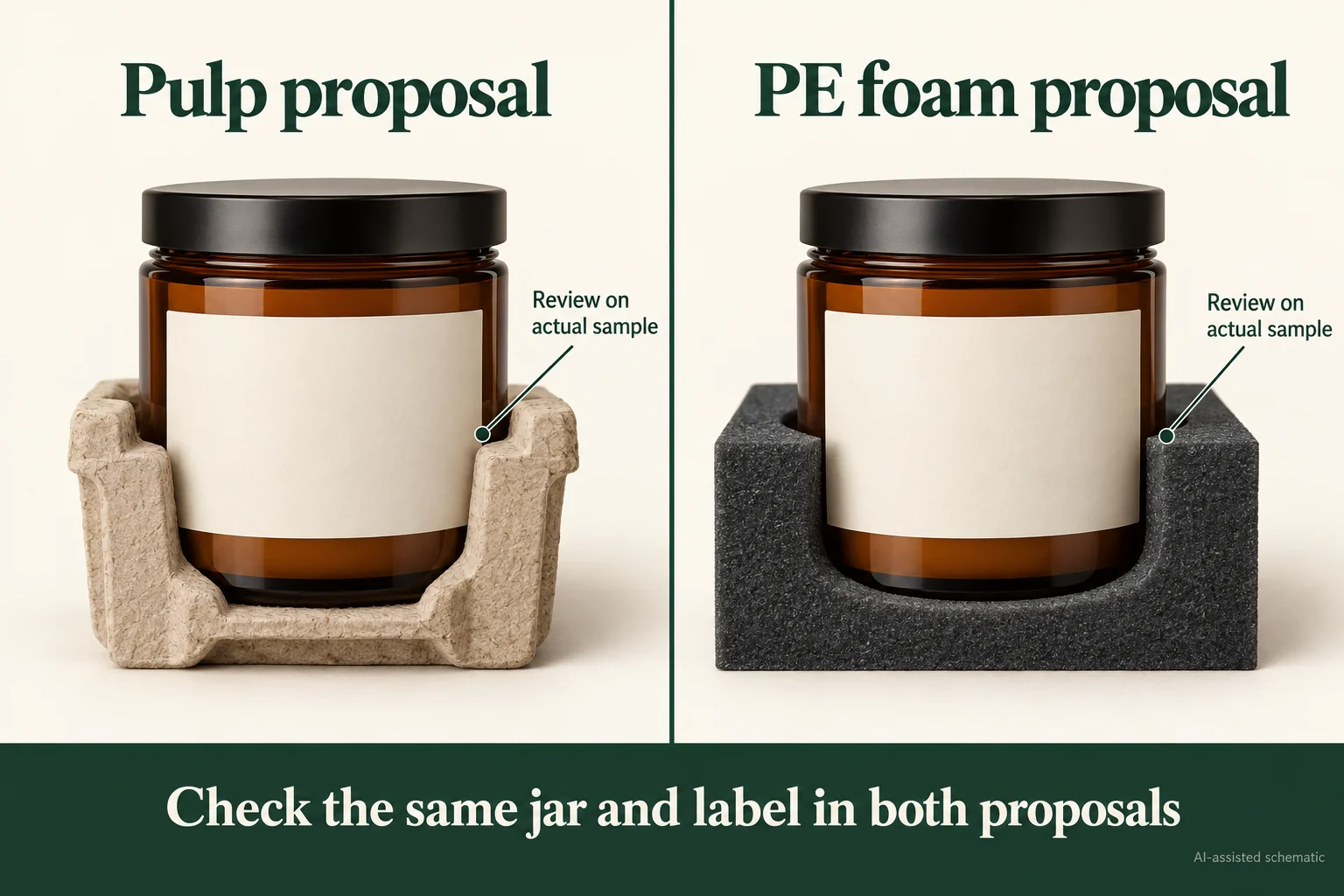
The candle’s label introduces another concrete choice. Decide whether the label must remain wholly visible when the box opens and whether the support may touch it. Ask each proposal to show the intended contact zones. A holder with a facing, a lining or a changed support height belongs in the comparison as a revised construction.
| Buying requirement | Molded pulp proposal | Specified PE foam proposal |
|---|---|---|
| Visible formed-fiber interior | Develop the proposed fiber surface and shape | Uncovered foam does not meet the requirement; added facing changes the offer |
| Jar geometry may change | Obtain cavity-change and tooling terms before commitment | Obtain revised cut-part, stock and fabrication scope |
| Clear first quotation | Separate development/tooling from formed components | Identify grade, stock, converted pieces and added facings |
| Keep the existing gift box | Review proposed formed-part envelope and installation | Review stock thickness, built-up parts and installation |
| Approve the shipped candle | Review the complete selected package | Review the complete selected package |
Compare quotations per completed gift box
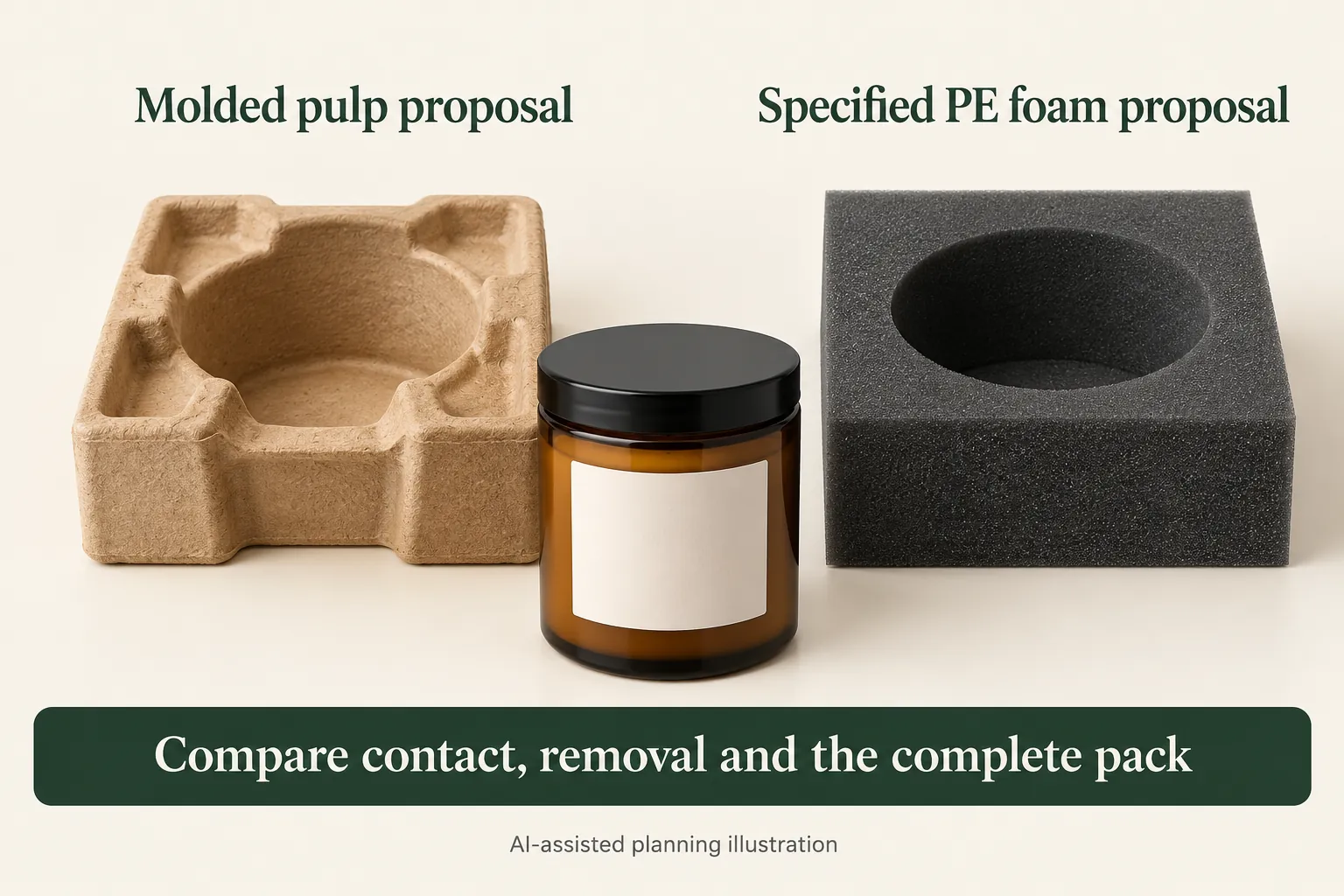
Build two short component schedules. For P, list the shaped fiber part, any additional supports and the quoted development work. For F, list the specified foam part, any base or bonded pieces, and any decorative facing. Both schedules also show any changes to the presentation box and care-card position.
Then compare the supplier’s actual commercial scope: one-time development, repeat-order components, assembly supplied or left to the packer, and what a product revision would change. Request quantities and terms against the same completed candle pack. A price for an unconverted plank is not comparable to a finished formed tray; nor is a bare insert price comparable to an assembled, faced holder.
The custom molded pulp insert page is the commercial starting point for a fiber project. Send the same product brief when asking about an alternative foam direction. Keep a material swatch separate from a fabricated holder sample: the swatch helps compare appearance, while the assembled holder answers product-contact and packing questions.
A hypothetical brand requests the PE proposal first
A fictional candle brand has an existing presentation box, accepts either a fiber or dark foam interior, and has not finalized its next jar shape. It wants an initial holder proposal before commissioning an insert tied to a final cavity. These are invented planning conditions, not a customer case or a report of accepted samples.
For this brief, the buyer selects Candidate F for the first conversion quotation and fabricated sample discussion. The request specifies Ethafoam 220 as the candidate material and asks the converter to identify stock thickness, finished pieces, any facing and how a later jar change affects the conversion. It does not authorize production or assume a material already in stock.
Candidate P remains a second route. The buyer asks for a formed-part outline and development terms, then defers committing to its cavity until the jar is settled. If the brand later makes exposed fiber a firm presentation requirement, that condition moves P to the first development route. The decision changes with the brief rather than with a universal material ranking.
Carry the chosen route into a defined sample request
The useful output is a preferred next proposal and its reason: P first for the required formed-fiber presentation, F first for a specified conversion proposal under the fictional changing-jar brief, or both when neither route clears the stated requirements. Record the product version and the complete component list with that choice.
Use sample review guidance to separate material appearance, fabricated fit and a finished gift-box assembly. Observe the actual labeled jar during loading and removal. A good opening view alone does not validate the parcel.
The ISTA test procedure overview distinguishes screening from distribution simulation for packaged products. Agree the relevant complete-package evaluation separately, using the selected insert, gift box and shipping configuration. Neither hypothetical proposal has passed a transport test.
Packrivo coordinates packaging sourcing questions with independent suppliers. Send the chosen route, actual product details, intended quantity and destination, plus the unresolved development or component question. Project availability, samples and commercial terms require confirmation.