Choose a natural-looking molded pulp insert when its supplied shade suits the pack. Ask for a colored insert when the fiber part itself must carry the chosen color. If only a logo area or removable message needs branding, compare a separate printed paper component before specifying color across the whole tray.
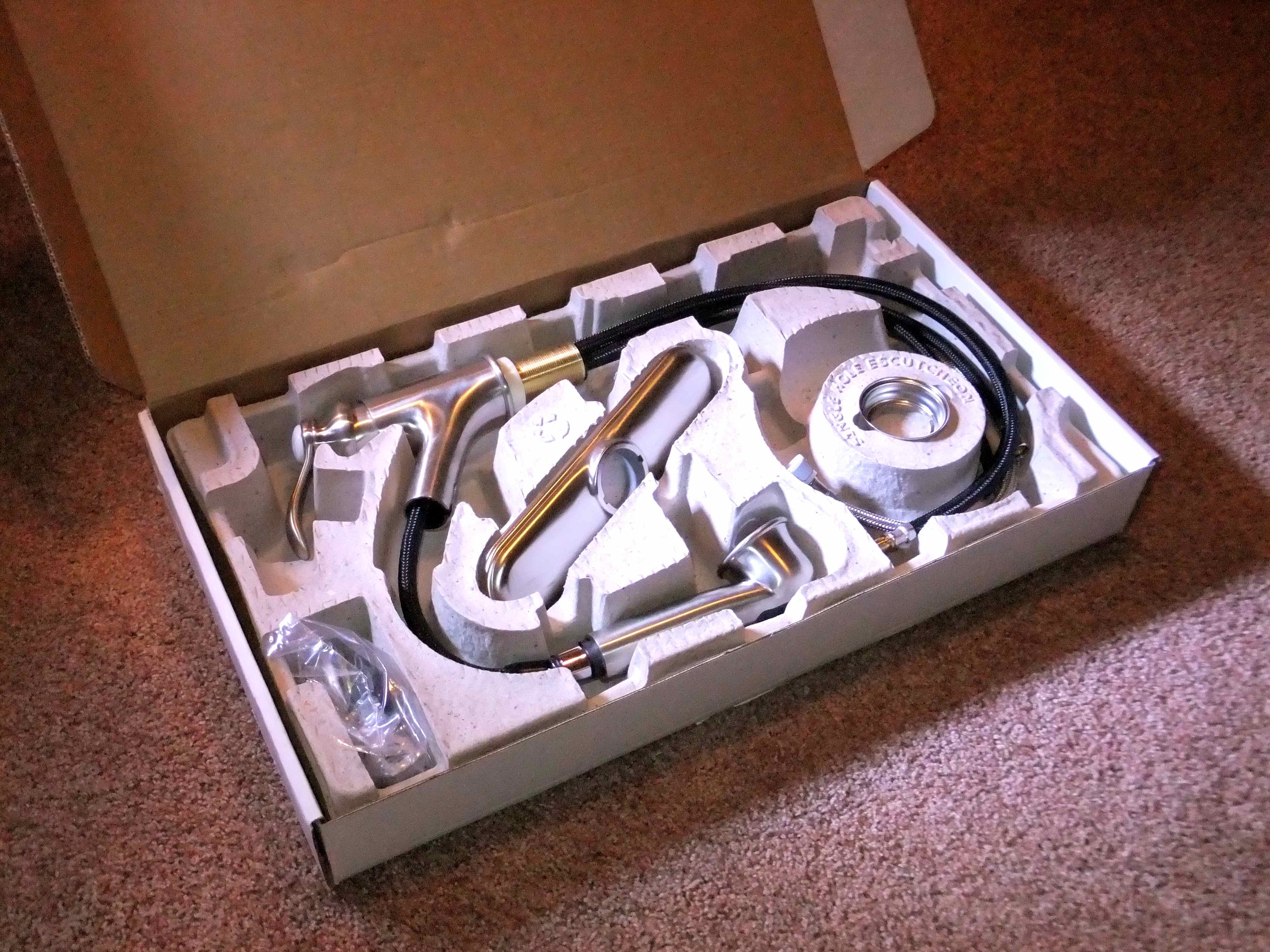
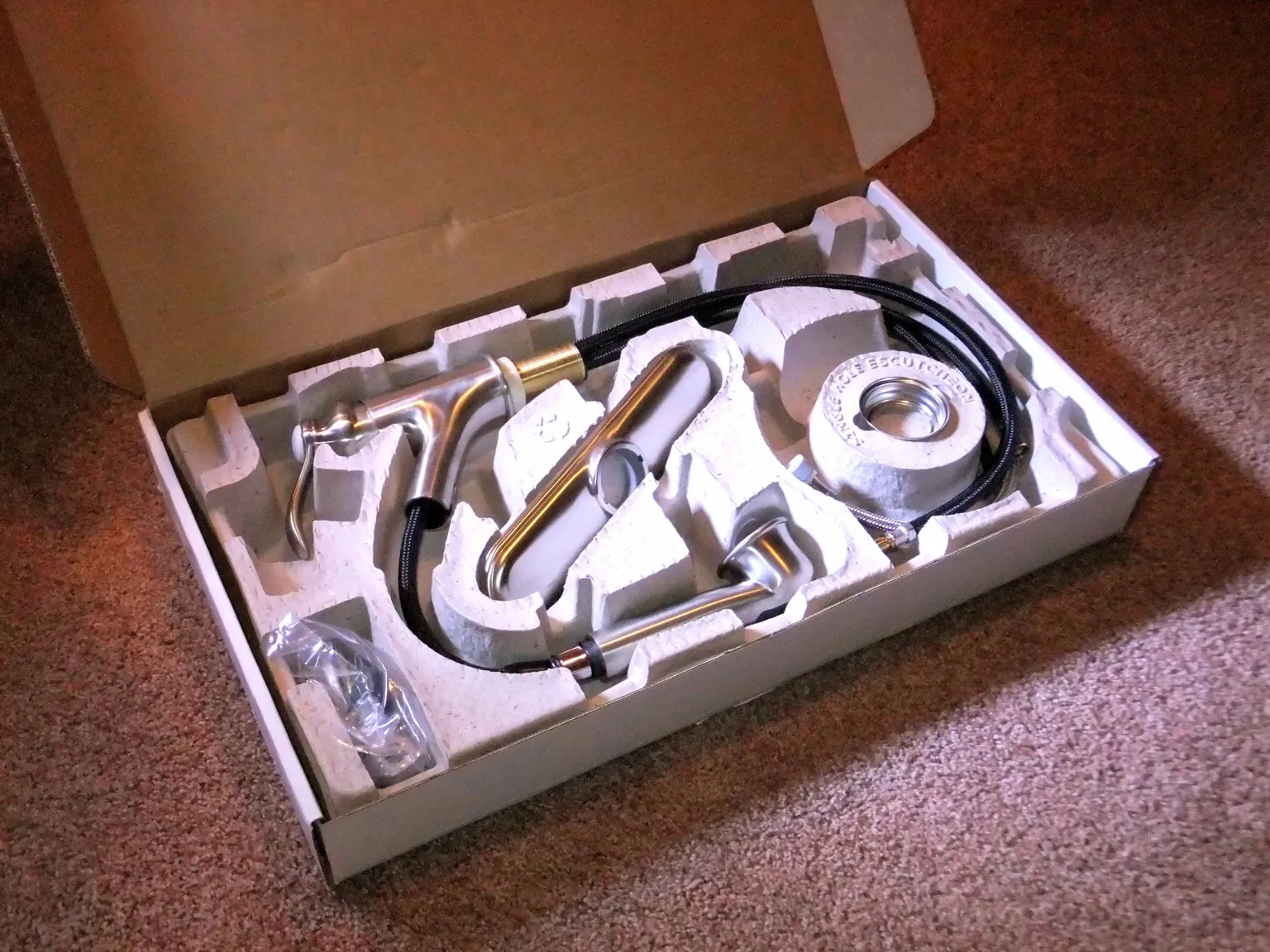
Third-party reference photo shows formed pulp surrounding several faucet components.
Rlsheehan / Wikimedia Commons, CC BY-SA 3.0; resized and converted to WebP; derivative under the same license. Full original reference photograph.
The buying decision is where the color belongs. A green fiber tray, green print on a tan tray, and a tan tray with a green paper collar are different purchases. Describe the physical parts first, then ask which route a supplier can actually offer. Availability, composition, and matching limits remain specific to that proposal.
Specify whether the tray, its surface, or another part carries the color
Request a colored fiber body only when the tray itself needs the appearance; request a named decoration or separate component when that is the intended result. The phrase “green pulp insert” leaves these alternatives unresolved.
Golden West Packaging's molded-pulp page describes dyed parts and color matching alongside direct silkscreen decoration and separate paper sleeves or cartons. These are examples of routes offered by that manufacturer. They establish that the routes differ, rather than proving that every pulp supplier offers them.
Start with the opened package. Mark the rim, cavity walls, exposed floor, and any reverse face the recipient will see. Then say which of those areas needs color. A logo printed on one flat area cannot answer a requirement for a green cavity wall. A colored removable card doesn't make the underlying fiber green.
If a quotation says “colored,” ask whether that means color in the fiber body, an applied surface treatment, or a separate piece. Keep the supplier's actual description. Don't rename a surface coating as dyed pulp simply because the front photograph looks similar.
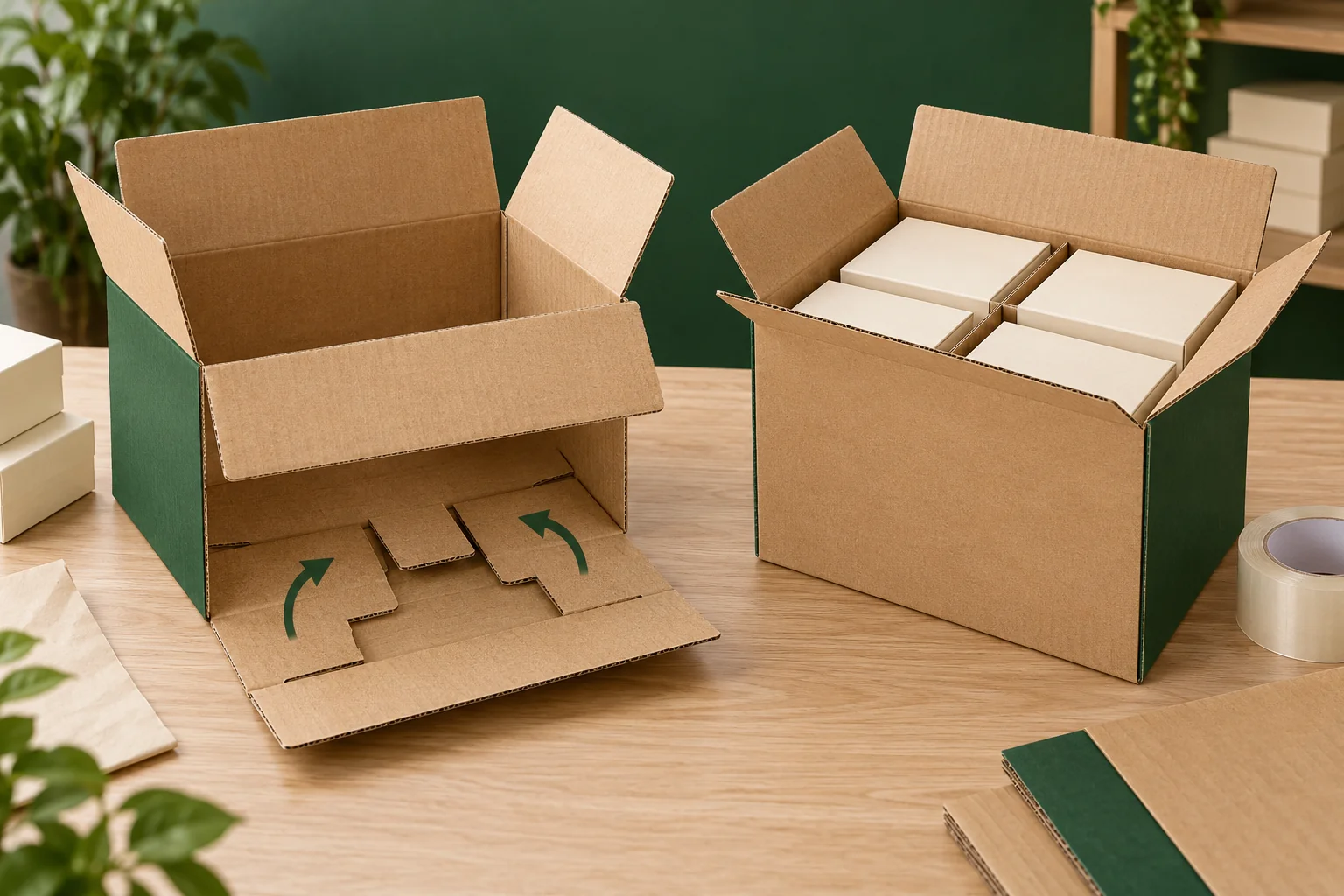
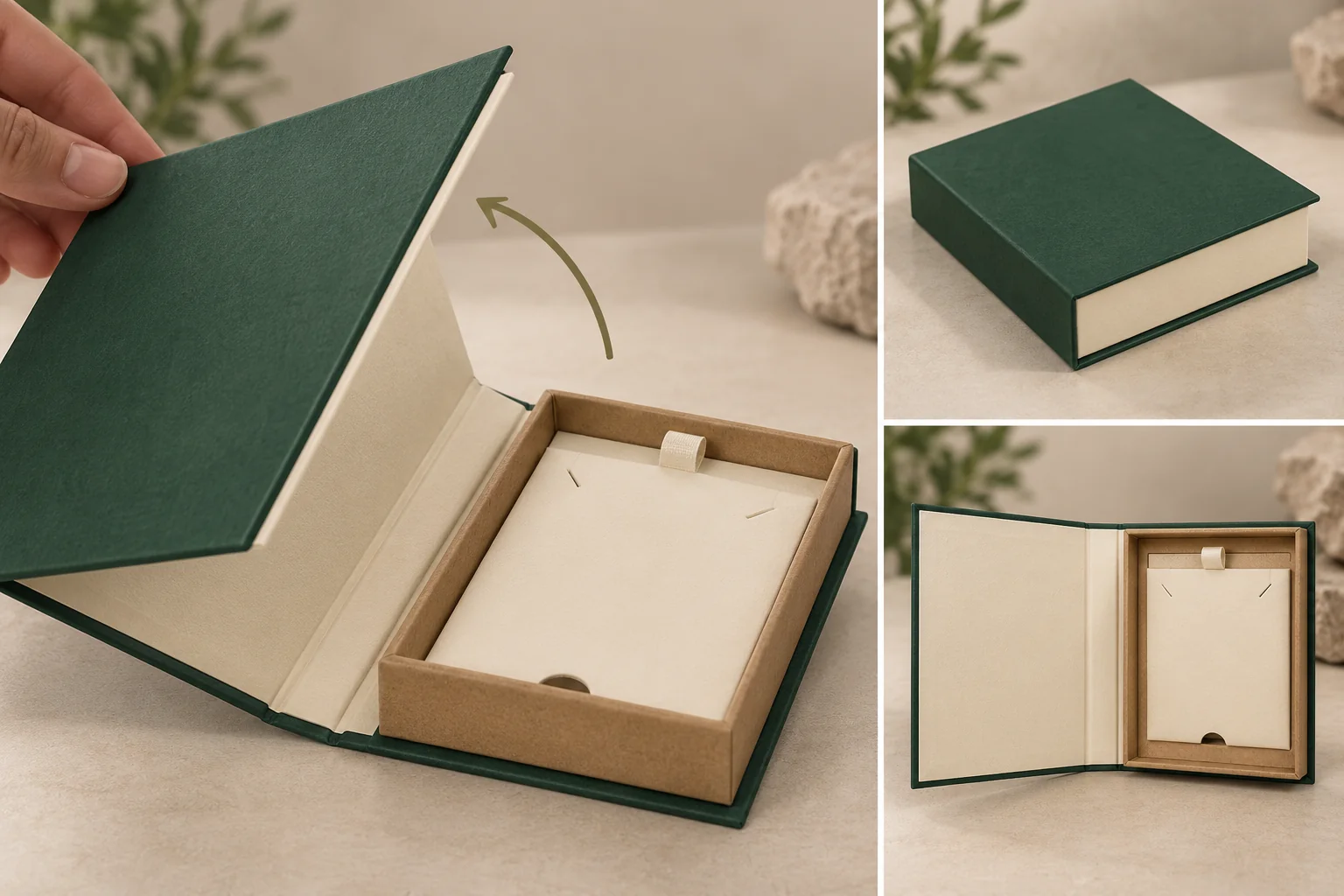
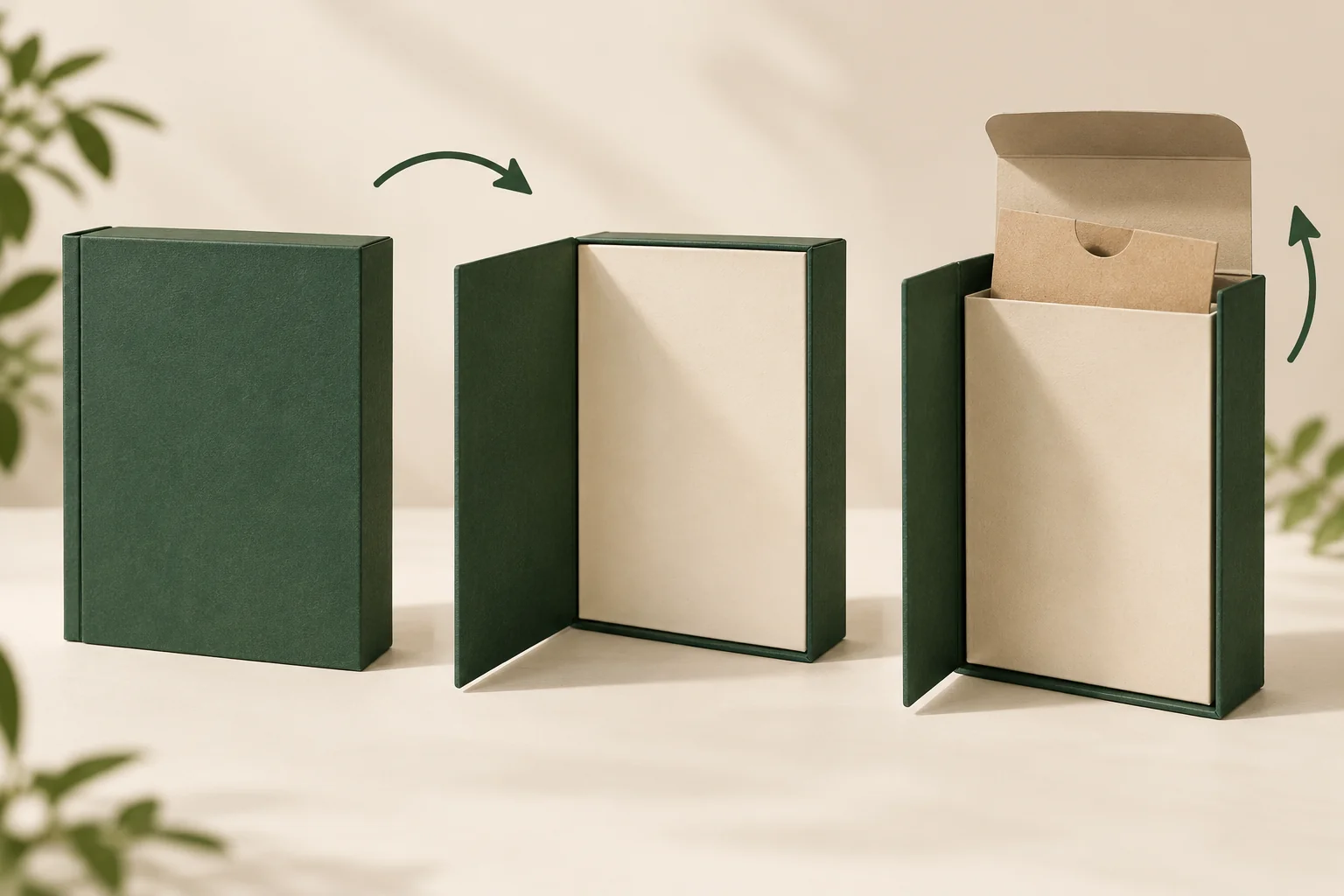
The illustrated colors are discussion aids, not calibrated targets or available Packrivo products.
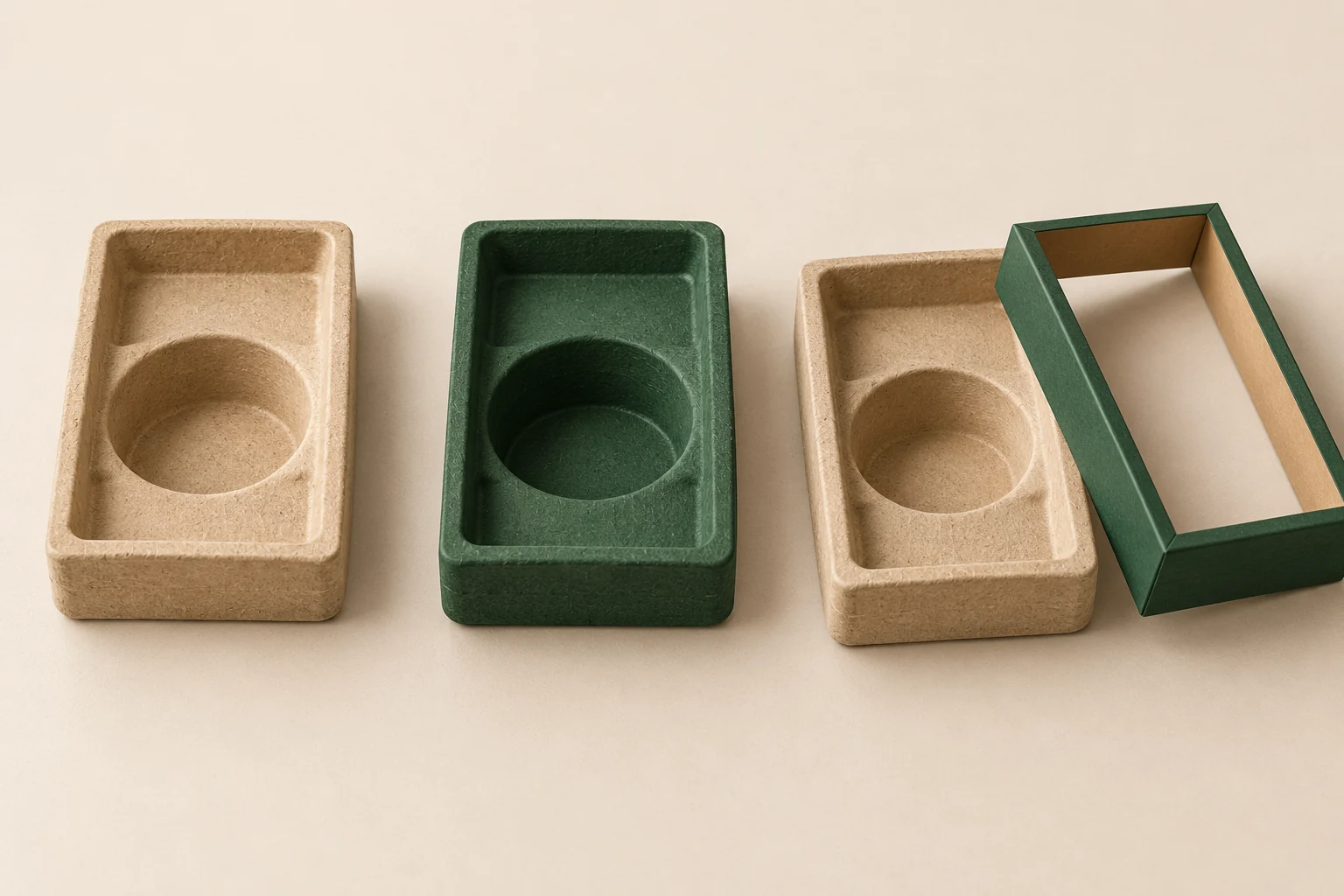
Keep the supplied pulp shade when the visible tray already suits the pack
Retain the supplier's supplied shade when it meets the intended opening view and the product remains easy to distinguish. Record that shade against a representative part rather than treating “natural” as a complete material specification.
A tan or gray appearance doesn't establish the fiber source, recycled content, absence of additives, or disposal route. Buyers still need the proposed material identified. Conversely, a pale tray in a photograph doesn't tell you whether bleaching, pigment, lighting, or another factor produced its appearance.
Describe what matters visually. You might want a warm background around a dark candle jar, or a restrained tray behind a strongly printed lid. If the outer box already carries the brand color, keeping a different tray shade may be an intentional choice. Neither arrangement requires every component to match.
Separate this choice from the tray's texture and forming route. Our guide to molded-pulp processes and finished surfaces addresses those decisions. Color alone cannot tell you whether the reverse is smooth, whether an edge is acceptable, or how a particular product will fit.
Color the fiber body when the tray itself must stay visibly colored
A body-color proposal is worth comparing when several exposed fiber surfaces need the same color direction, including areas beyond a printable logo panel. Ask the supplier to identify which faces, edges, and cavities its proposal covers.
James Cropper's Colourform technical sheet describes combinations of fibers and shades, custom color work, and print suitability. That manufacturer's material shows why a colored molded-fiber proposal can involve both the base part and later decoration. Its product-specific specifications shouldn't be copied into another supplier's quotation.
Request a representative formed piece in the proposed material and treatment. A flat color chip may help choose direction, but it doesn't show the cavity, rim, texture, or reverse of the part you intend to buy. If the sample uses another shape, identify which questions it can answer and which remain open.
For example, a colored sample may establish that a supplier can produce a useful shade direction on its fiber. It doesn't approve your tray's fit or show that your product can contact that finished surface. Keep those decisions separate. The color request should name the intended product and touching surfaces so they remain in the quotation discussion.
Put branding on a separate part when that part can do the job
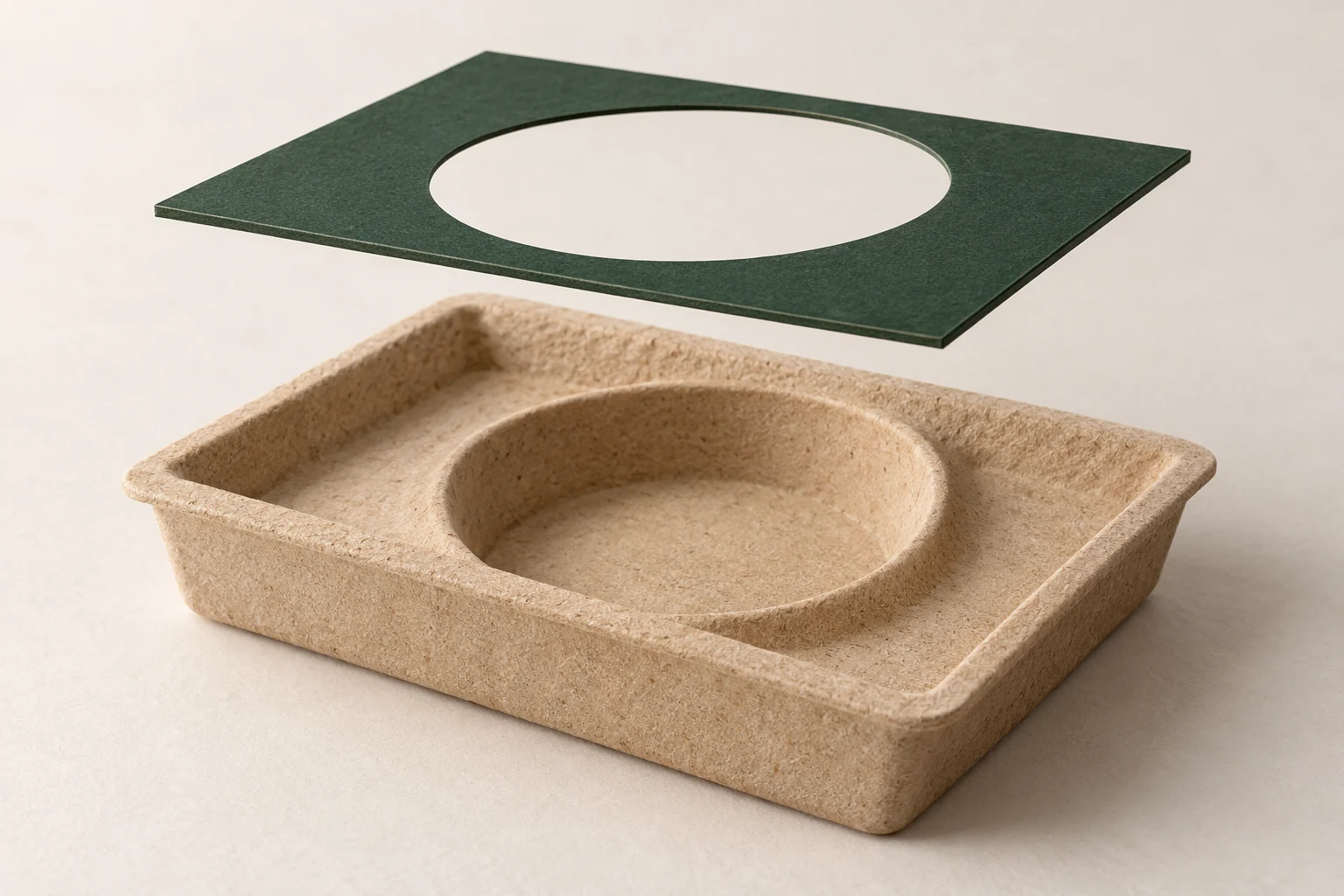
A removable printed frame, collar, or card is a sensible comparison when the color requirement belongs to a limited area rather than the whole fiber body. Specify it as an additional component, including how it sits in the pack and who places it there.
Consider a hypothetical candle brand using one tan tray for two seasonal boxes. If only the message and visible brand panel change, the buyer could compare a colored tray for each version with one tray plus two printed collars. This is a purchasing comparison, not a claim that the second arrangement costs less or uses less material.
The separate part needs its own description: material, printed face, artwork version, placement, and quantity per completed pack. A collar that covers a finger recess or makes the tray difficult to lift creates a different assembly. Show the parts together before choosing the route.
This exploded view explains the component choice; it isn't a production drawing or fit approval.
Compare complete proposals before choosing the color route
Compare the tray and every added part together, with the same product range and delivery assumptions. Otherwise, a price for an undecorated tray may be compared with one that includes color development, printed paper, or assembly.
| Route to compare | Name in the request | Keep visible in the quotation |
|---|---|---|
| Supplied tray shade | Identified tray material and representative shade | Which part and finish the reference covers |
| Colored fiber body | Proposed color method and required faces | Color-development scope and representative formed sample |
| Decorated tray surface | Printed or treated area on a named tray | Decoration method, coverage, and finished-surface sample |
| Separate printed component | Tray plus named collar, frame, or card | Part quantities, artwork, placement, and assembly responsibility |
State the chosen outcome in ordinary language: “Keep the fiber tray in the proposed tan shade; put the green brand panel on one removable printed frame.” Another valid outcome is: “The visible cavity walls and rim need the proposed green body color; no separate frame is included.” Both tell the supplier what to price.
For the actual shade decision, use a named physical color reference. A recolored packaging photograph remains a visual direction, even when the rendering looks convincing.
Treat environmental wording as a separate question about the proposed combination. Neither “natural” nor “colored” identifies the complete formulation or demonstrates recyclability or compostability. Ask what evidence applies to the actual fiber part, decoration, and added components before proposing a claim for the markets where the pack will be sold.
To discuss a proposal, send Packrivo your insert and color requirements, including product photos, the intended colored areas, and whether a separate printed part is acceptable. Ask for confirmation of the proposed supply scope before treating an illustrated route as available.