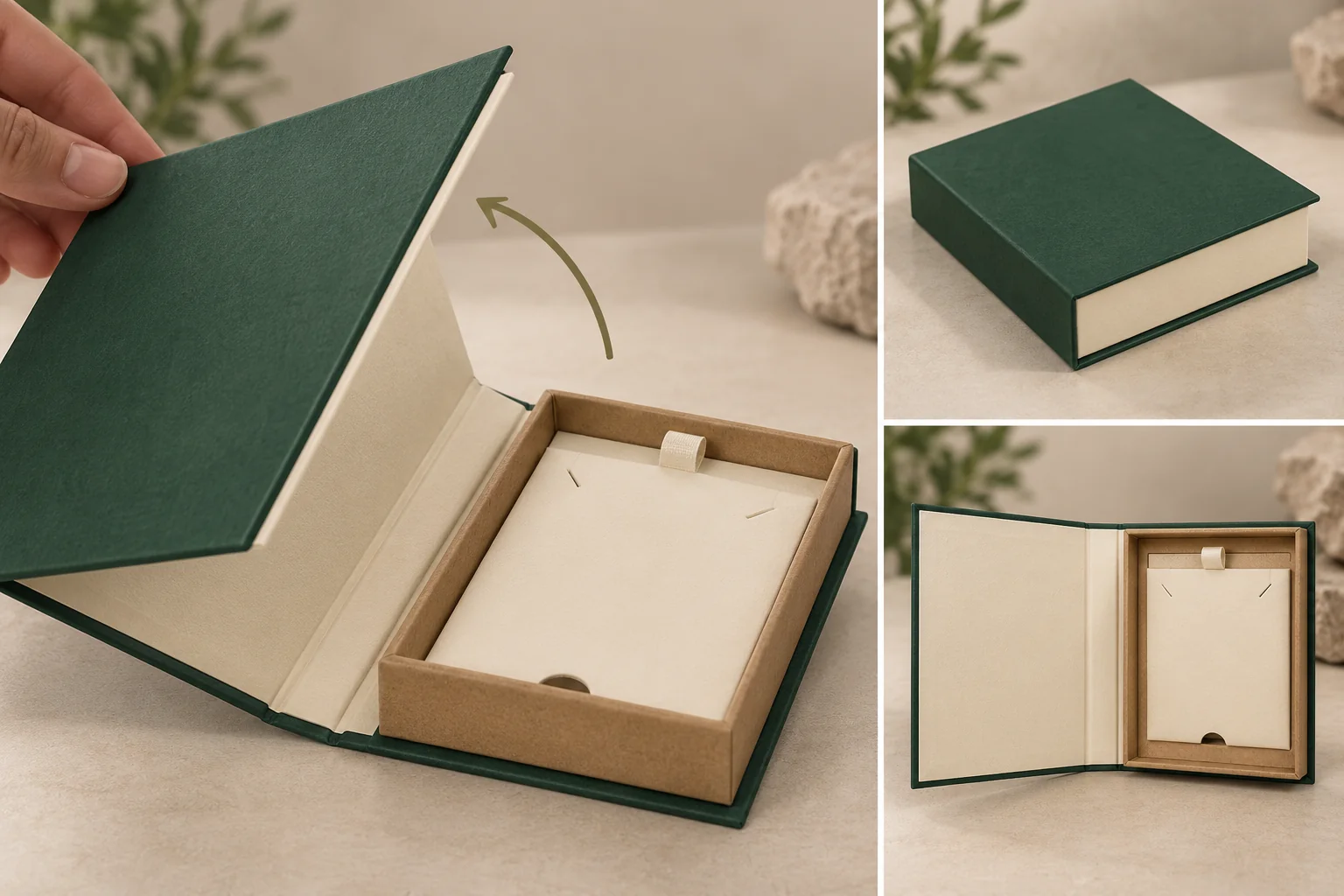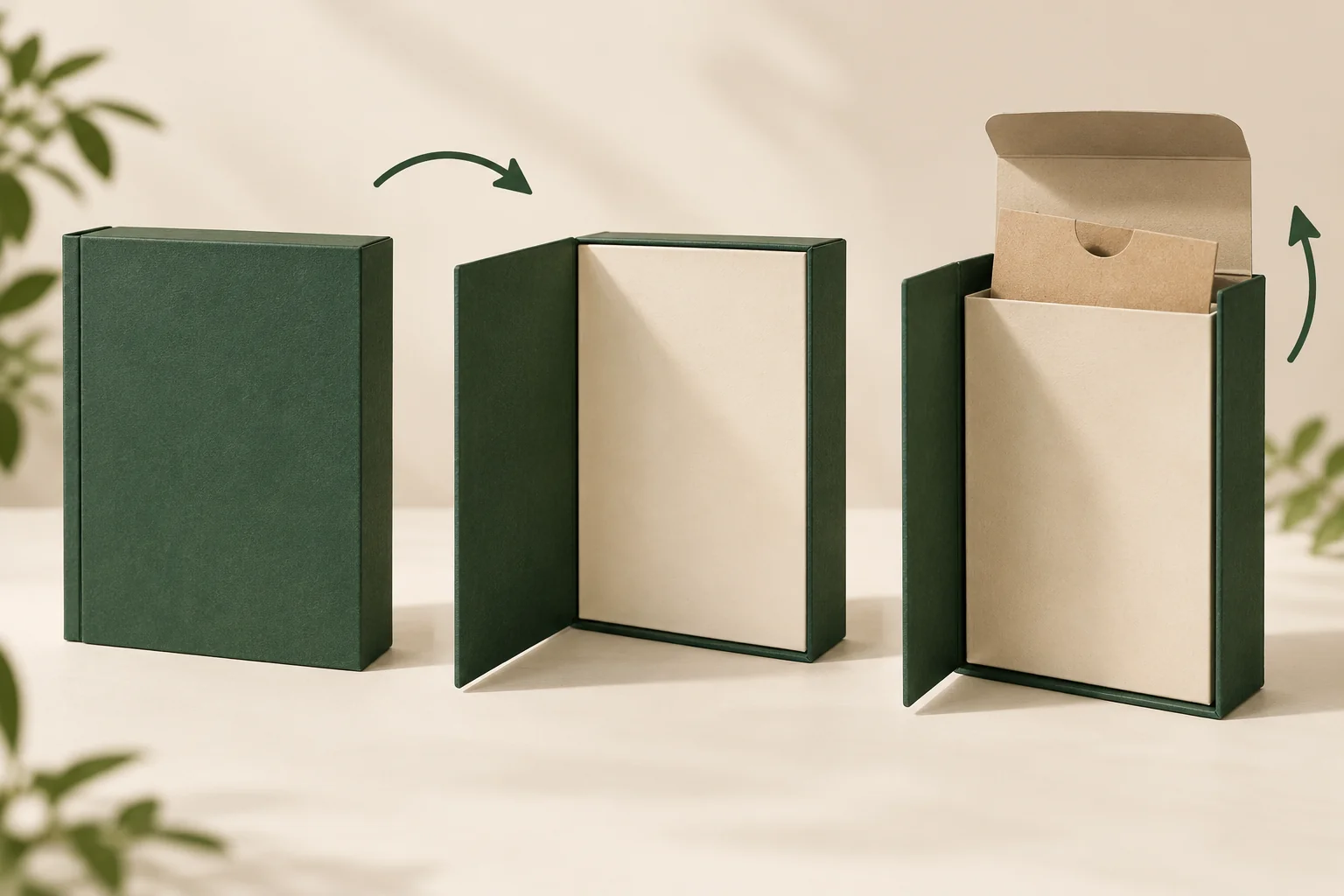
A reed diffuser gift box should be chosen around the complete sellable set. Keep the sealed bottle and reeds in one presentation pack when they are always handed over together. Consider a bottle box with an identified separate reed sleeve when reed packs vary or are supplied independently. Neither arrangement is automatically the better shipping package.
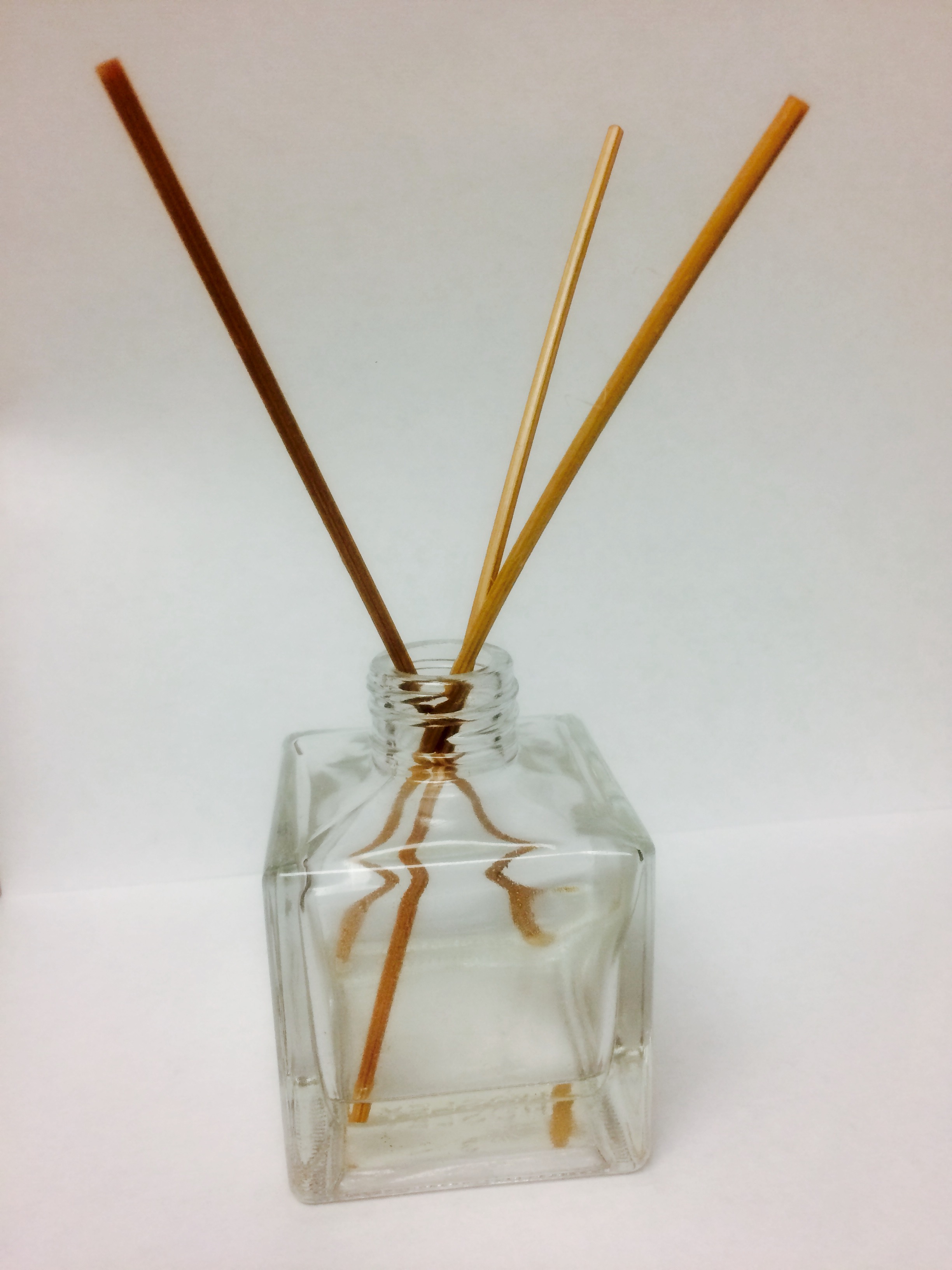
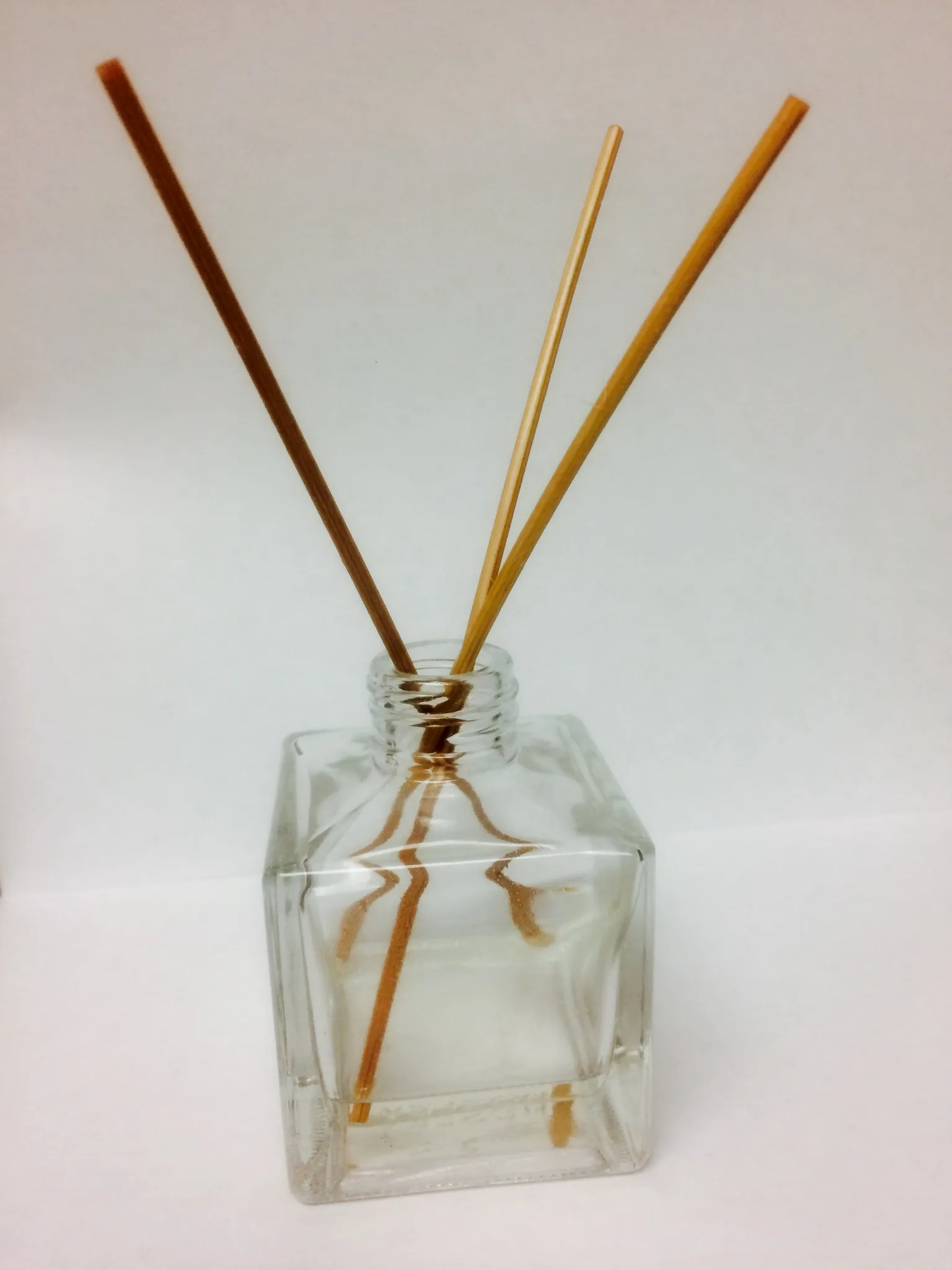
In-use diffuser reference photograph by Alex Tang, CC0 1.0, via Wikimedia Commons. Resized and WebP encoded; this open bottle is not shown in a shipping condition or Packrivo sample.
Photo by Alex Tang, CC0 1.0. Resized and WebP encoded. Open-bottle in-use reference, not a packed-shipping example. Full original reference photograph. Supplier and third-party photographs are references, not Packrivo samples; teaching concepts are visibly identified.
The purchasing difference is larger than the insert material. One route makes the whole gift a single presentation unit; the other keeps the bottle and long accessory as separate packaging components. Decide which unit you intend to sell before asking a supplier to develop its holder.
Define the gift before drawing the box
Write down whether the customer receives a filled diffuser bottle, an empty vessel with a separate refill, or another specifically identified combination. Add the actual reed bundle and any instruction item. These are different contents, even if their marketing photographs all show a bottle beside upright reeds.
Real product ranges illustrate the distinction. NEOM's diffuser-and-refill set lists a diffuser and an additional refill. That brand's configuration is not a specification for your product. It demonstrates why a procurement brief must list the actual items rather than rely on the phrase “diffuser set.”
For the choice here, assume one sealed bottle and one unused reed bundle. Any additional vessel or refill changes the brief and must be named separately. Specify the bottle in its packed state, including its closure and any decorative parts that remain attached. Measure the supplied reed bundle in the form in which the recipient will receive it, not only a single loose stick.
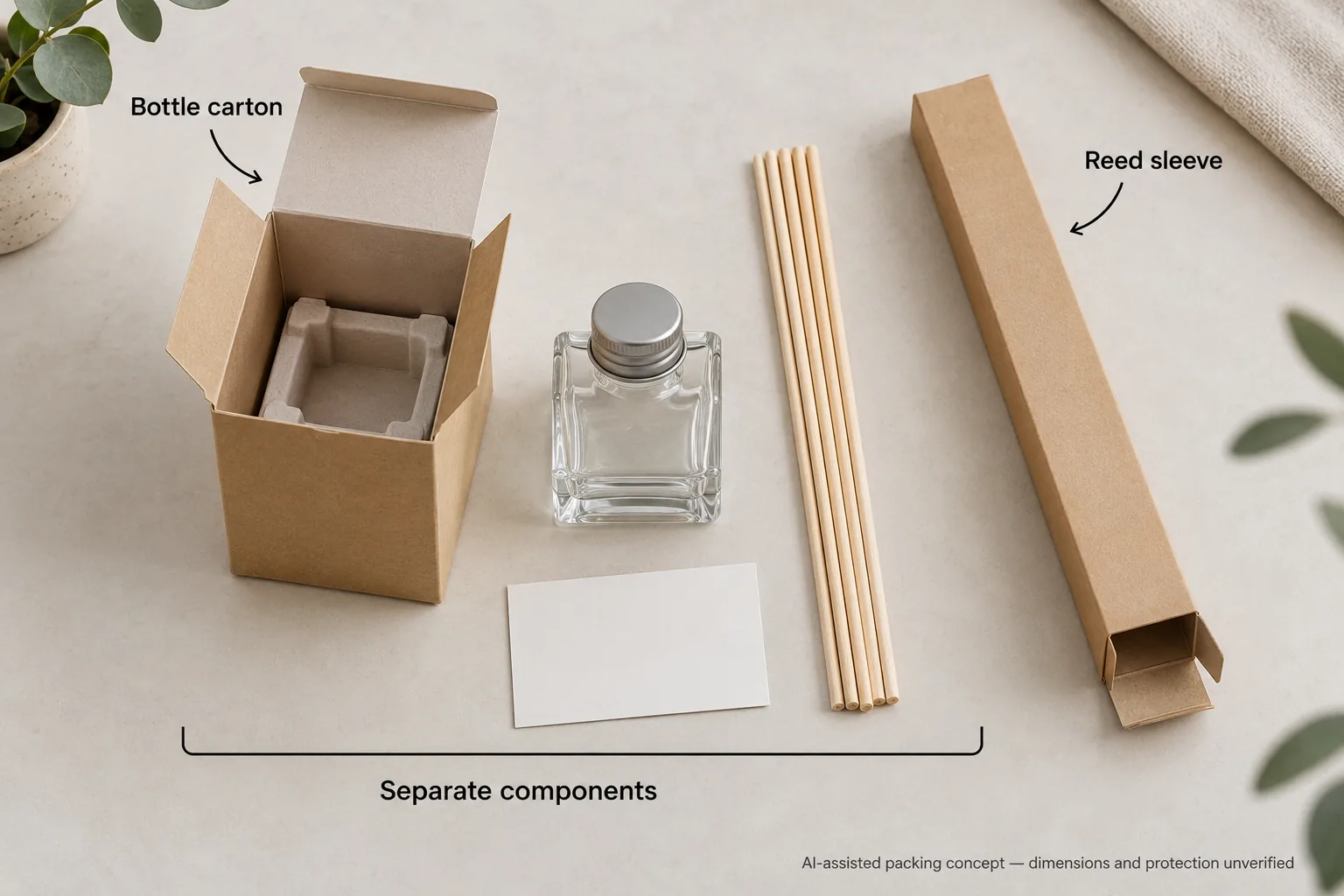
Keep the bottle closure separate from the presentation holder
A gift insert locates the proposed contents. It should not be mistaken for the bottle's liquid-containment system. Identify the actual closure, seal and product handling requirements through the product supplier before asking how the gift package should accommodate them.
Do not commission an insert around an open display bottle and assume it represents the closed product. A transport cap, plug or fitted decorative collar may change the packed shape. Equally, do not remove a product component merely because a proposed cavity was drawn without it. Return the drawing for a clear description of the intended packed state.
If a liquid formulation has classification, labeling or transport requirements, those require a separate product- and destination-specific check with the responsible parties. This guide does not classify fragrance liquids, specify a seal or establish carrier acceptance. A presentation sample is not evidence that a filled bottle can be shipped without leakage.
The packaging-insert materials guide can help describe holder directions. Ask what the proposed part supports and what it leaves accessible; material names alone do not answer the closure question.
Choose how the reed bundle stays with the bottle
A combined gift pack reserves a defined place for the bottle and a defined place for the reed bundle. The long accessory can influence the enclosure even when the bottle is compact. Obtain a drawing showing both together, including the bundle's sleeve or wrap if one is part of the proposal.
A Chiheng folding-box example describes a paperboard divider separating the bottle and reeds. That is a manufacturer's description of one construction, not proof of its protection performance or a recommendation to copy its dimensions. It shows that separate locations do not inherently require a molded tray.
Molded pulp is another candidate when the desired arrangement calls for a formed holder. Ask the supplier to show the proposed bottle position, reed position and removal access as one complete layout. Do not order a bottle cavity and leave the accessory to be accommodated later. Nor should an image be used to infer the holder's fiber composition or its contact performance.
With separate reed packaging, specify how the sleeved bundle accompanies the bottle: attached to a presentation unit, gathered with it at handover, or supplied as a separate item. A photograph of two packages side by side does not define that connection. The buyer must decide whether the recipient should receive one assembled gift or two identified components.
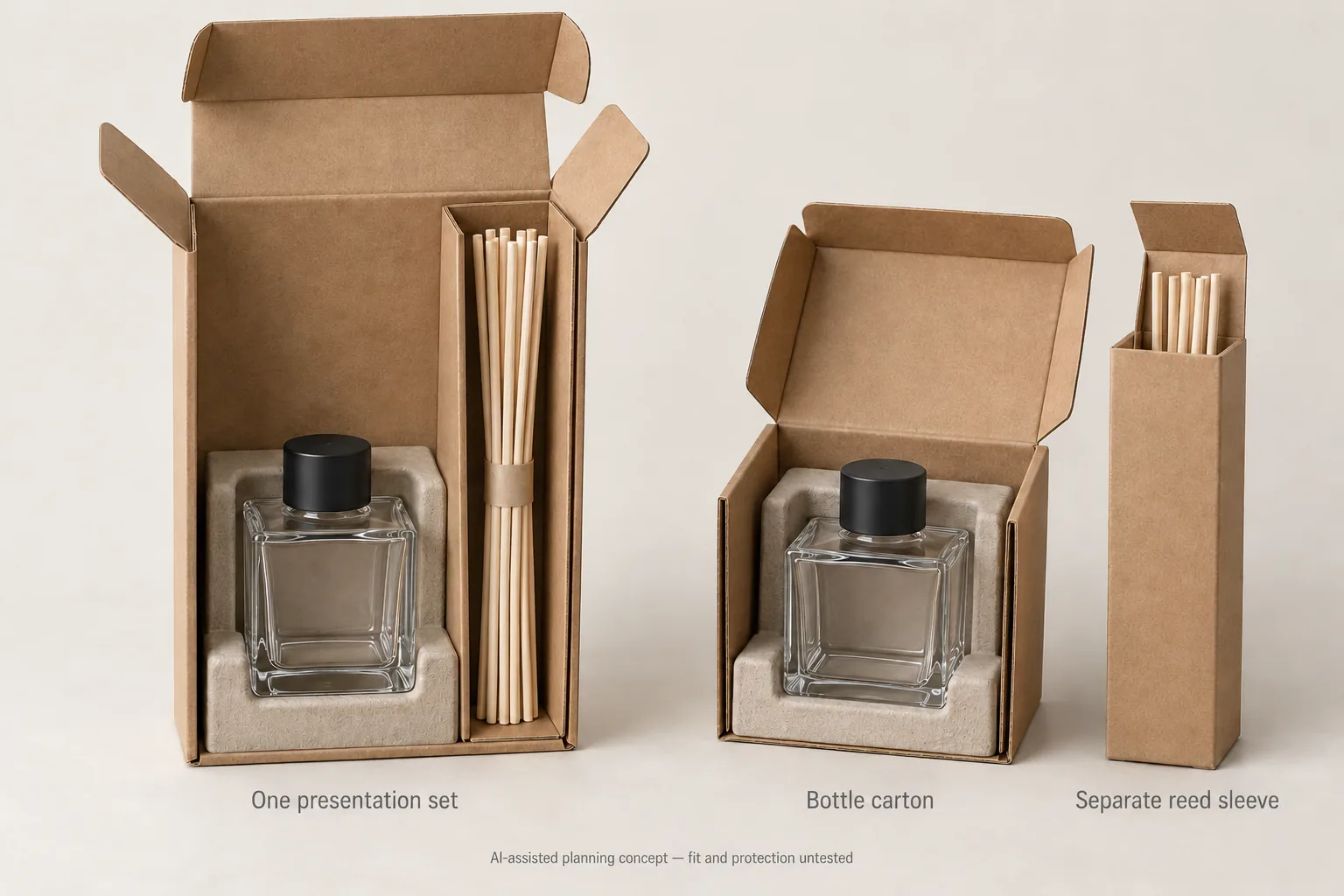
Walk through opening before approving the layout
Use the proposed layout to describe what becomes reachable first. Can the recipient grasp the reed sleeve without lifting the bottle? Does removal of the bottle depend on moving the long accessory? Are the instructions visible before the product needs to be handled?
These questions are about the opening sequence, not a requirement for a particular order. The selected arrangement should make that order intentional. If a sleeve lies over the bottle closure, review whether it obscures needed information or a grip. If the reeds sit alongside the bottle, identify how the recipient reaches them without treating the loose sticks as a handle for the whole insert.
| Configuration question | One combined presentation pack | Bottle box with separate reed sleeve |
|---|---|---|
| What is handed over? | One identified set with both components located | Two identified components with a defined handover connection |
| What determines the envelope? | Complete installed bottle and bundle layout | Bottle enclosure and reed sleeve considered individually, then together |
| What changes with a longer reed bundle? | Review the affected reed location and enclosing pack | Review the sleeve and its connection to the bottle pack |
| What must the opening review show? | Access to each component within the set | Recognition of both parts and their individual opening actions |
The complete molded-pulp arrangement guide covers supplied part identities. The additional decision here is whether the long accessory belongs within the same presentation enclosure at all.
Keep a changing reed order out of a fixed bottle drawing
Consider this hypothetical planning exercise: Bottle B is final, while Reed Bundle R-short and Reed Bundle R-long are alternatives. Neither reed bundle has been selected, and replacement reed packs will also be offered separately. The bottle closure must stay unchanged. These are invented input conditions, not actual supplier drawings or an approved range.
Request one bottle-enclosure proposal against B and a separate sleeve proposal for each reed candidate. Then ask for the complete gift connection using each sleeve. Naming that connection is essential: a revised sleeve does not automatically accompany the right bottle simply because both have the same printed brand. Show the proposed receiving unit, not just two loose components.
A combined layout would need two clearly identified candidate arrangements while the reed choice remains open. It must not show B with R-short while its quotation silently assumes R-long. If the commercial requirement is one self-contained presentation unit, compare those complete combined layouts before choosing the reed bundle. If the requirement allows a separate sleeve, keep B's enclosure and the sleeve revisions distinct during development.
For the stated exercise, separate reed sleeves are the first proposal because replacement packs need an independent presentation and the bundle remains unresolved. The required output is B plus a named sleeve revision and a named handover connection. No cost, shipping-volume or packing-time advantage has been calculated, and the arrangement has not been physically accepted.
Ask for the chosen arrangement as a complete purchase
For a combined pack, request the outer enclosure, proposed holder, treatment of the reed bundle and instruction position as explicit components. For separate packaging, request the bottle enclosure, reed sleeve and the means of keeping the complete gift identified. Ask which parts arrive assembled and which actions remain with your team.
State whether replacement reeds or refills need independent packaging. This is a product-range input, not permission to combine quantities or reuse tooling without agreement. A changed reed bundle or bottle closure may affect different components; ask the supplier to identify those changes instead of assuming the old layout still applies.
Finish the brief with an opening record: received unit → first component reached → second component reached → bottle closure left intact until the product instructions call for opening. Describe the actual connection between the bottle pack and reed sleeve at the first step. Leave every unobserved handling result open for the sample review rather than filling in “works.”
If a formed holder is the preferred direction, discuss the bottle-and-reed configuration with Packrivo. Send the named complete unit, its planned opening record, actual product references, quantity and destination. Packrivo coordinates independent suppliers; construction feasibility, samples and commercial terms remain project-specific.
Sources were checked on 29 October 2026. Product examples identify contents or described packaging forms only. No source photograph is reused here, and no liquid-containment, material-compatibility or transport result is claimed.