Buy a wax melt clamshell when the proposed component must hold the wax portions and remain with the product for sale. Buy an outer retail box when an identified product pack already exists and the next requirement is a separate presentation layer. If the melts leave their production mold, specify the packaging that receives them before discussing the gift box around it.
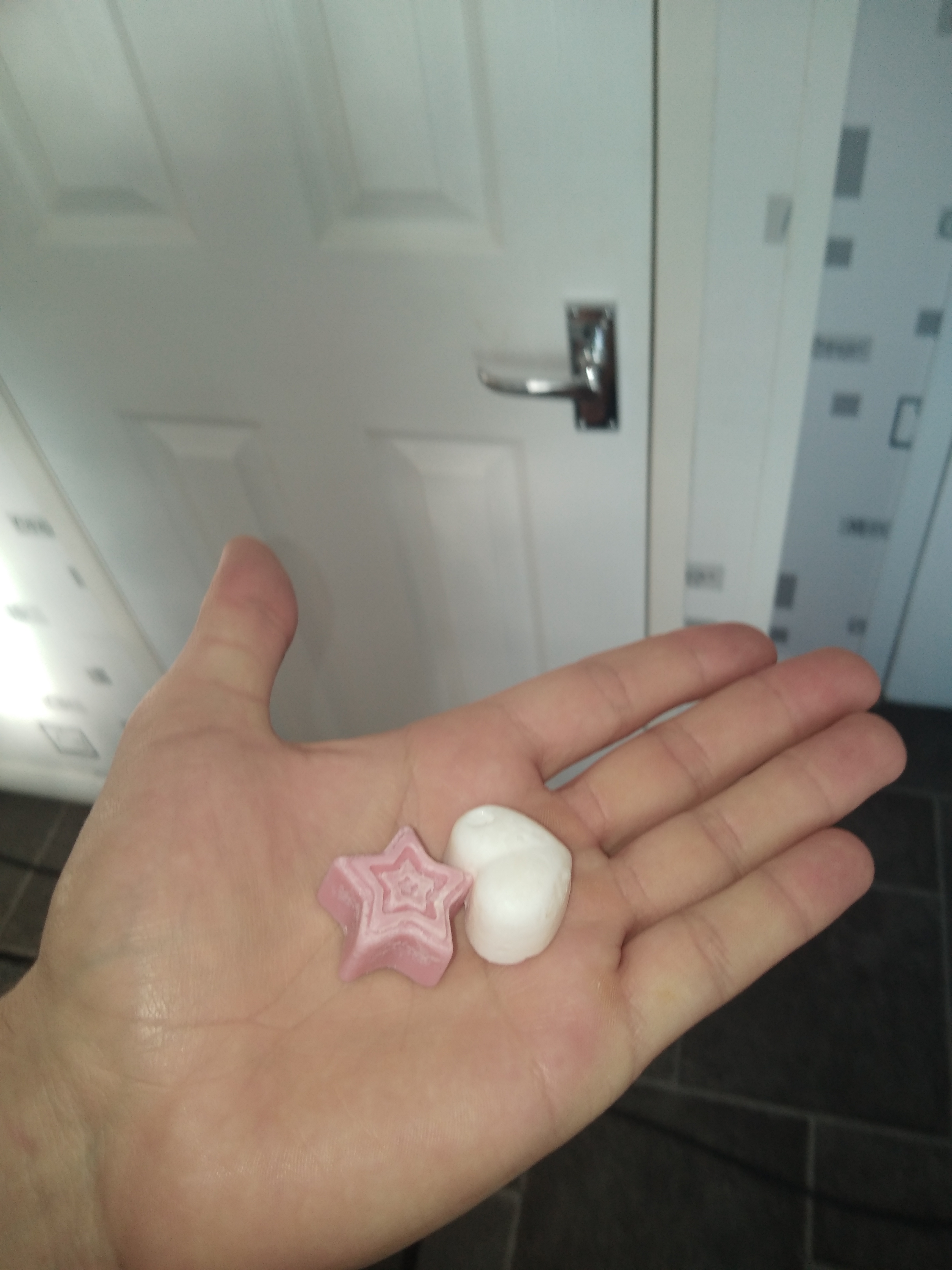
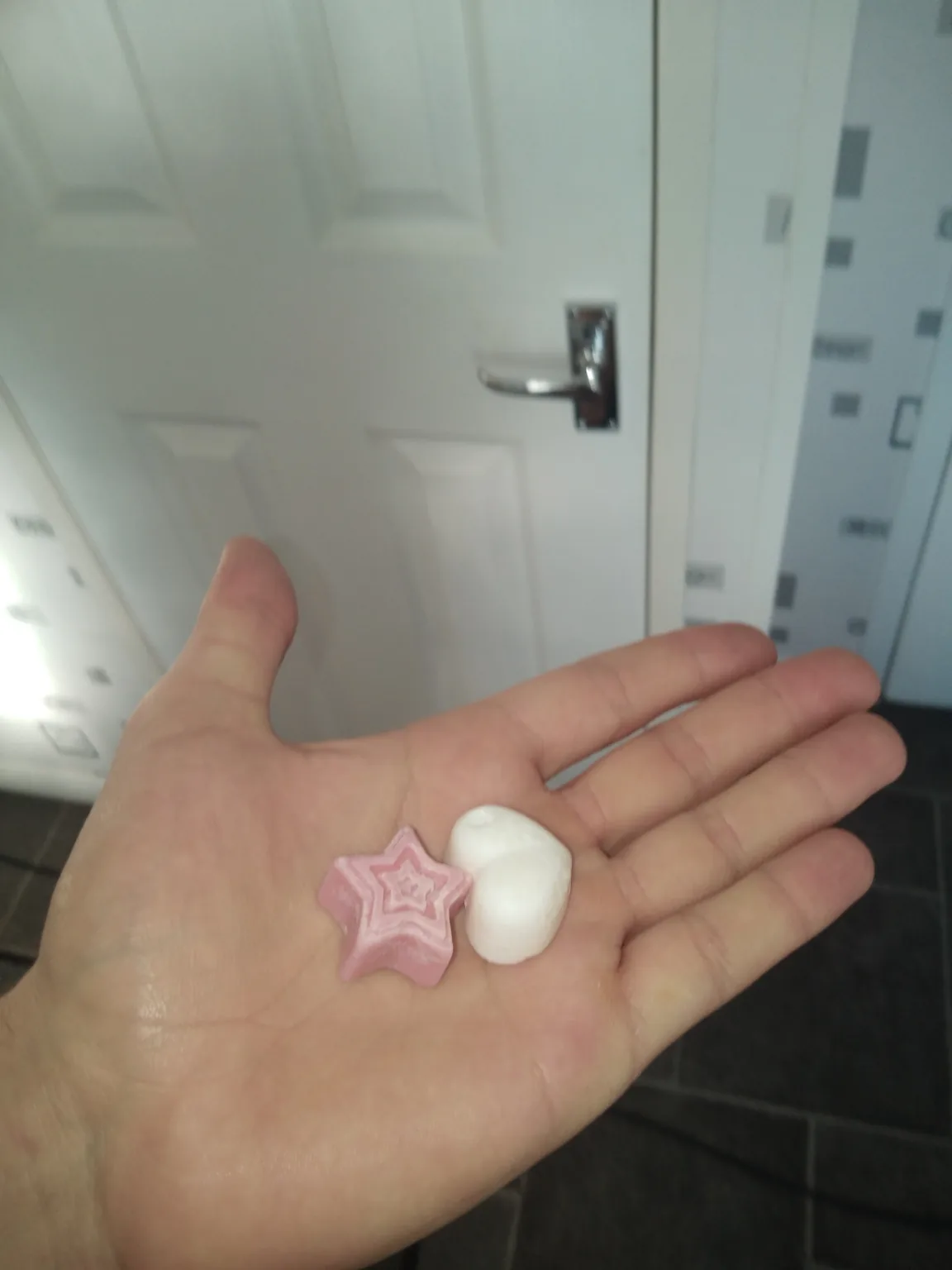
Third-party photograph of loose shaped wax melts outside their packaging.
Photo: Candle Wax Melts in hand.jpg, Jack Soley, CC BY-SA 4.0. Full-frame resize and WebP conversion; this image remains under that license. Third-party reference, not a Packrivo product or sample. Full original reference photograph.
This distinction changes what you're ordering. A clear formed pack, a reusable production mold and a printed folding carton can all appear in a wax melt project. Give each a separate name, then ask which parts the seller actually supplies.
Start with the state in which the melts will be sold
Choose the product-pack route before requesting an outer carton, because it determines the object that carton must contain. Record whether customers receive wax in its formed pack or loose shapes transferred from a separate mold.
CandleScience's Standard 6 pc. Clamshell is a named example of a component sold as a wax melt mold with a closing lid. Its role connects the forming arrangement and the package offered to the customer. That product's instructions belong to that exact component; they don't establish suitability for a similar-looking substitute.
An alternative process can use a mold that the maker retains and removes the solid shapes from before packing. In that case, the reusable production tool is separate from the purchased retail container. The customer does not receive the mold, so the packaging request must identify what receives and contains the released pieces.
Write the product state in one sentence. For example: “The customer receives one closed six-position pack,” or “The customer receives individually formed shapes transferred into a separate product container.” These are proposed specifications, not evidence that the formula and package have been assessed together.
Avoid beginning with a generic request for a wax melt box. It leaves the supplier to guess whether the price should cover a direct-contact formed component, a paper enclosure around it, or both. A detailed logo file cannot resolve that missing purchase decision.
A formed product pack needs its own identity
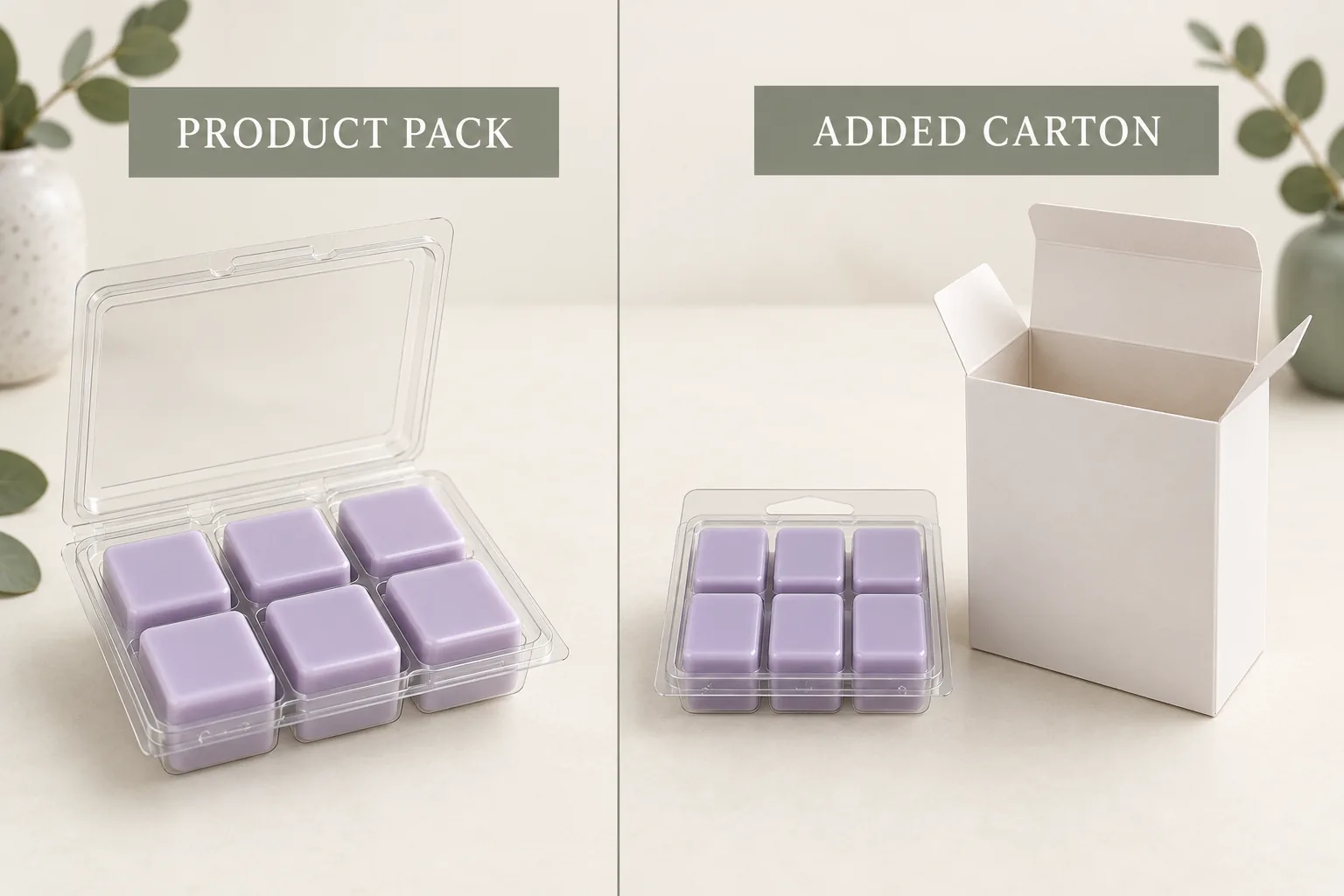
Specify a formed wax melt pack by its actual part reference and supplied construction, with the intended filling and product-contact questions assigned to the responsible reviewer. A cavity photograph establishes shape, not material suitability or an operating instruction.
VisiPak's wax melt clamshell page shows that a packaging manufacturer offers this as a distinct component category. Use the actual proposed drawing and material description when requesting a sample. Retain the supplier's instructions for that item rather than borrowing conditions from another manufacturer's catalog.
The visible arrangement matters to purchasing too. A bar divided into connected sections and a pack of separate shaped pieces can require different cavities, closures and labeling space. Identify what counts as one sold unit and show the closed pack that carries it. Cavity count alone cannot describe the full product.
Have the product maker identify the formula, production method and conditions relevant to its review. The packaging source should identify the material grade, construction and intended use of the offered part. Neither party should close the compatibility question merely because an empty sample looks clear and neatly formed.
For this sourcing discussion, keep the output practical: the selected component reference, the supplied version and the unanswered approval question. This article supplies no filling temperature, fragrance-load allowance, food-contact approval or sealing result for a custom pack.
An outer retail box adds presentation around the identified pack
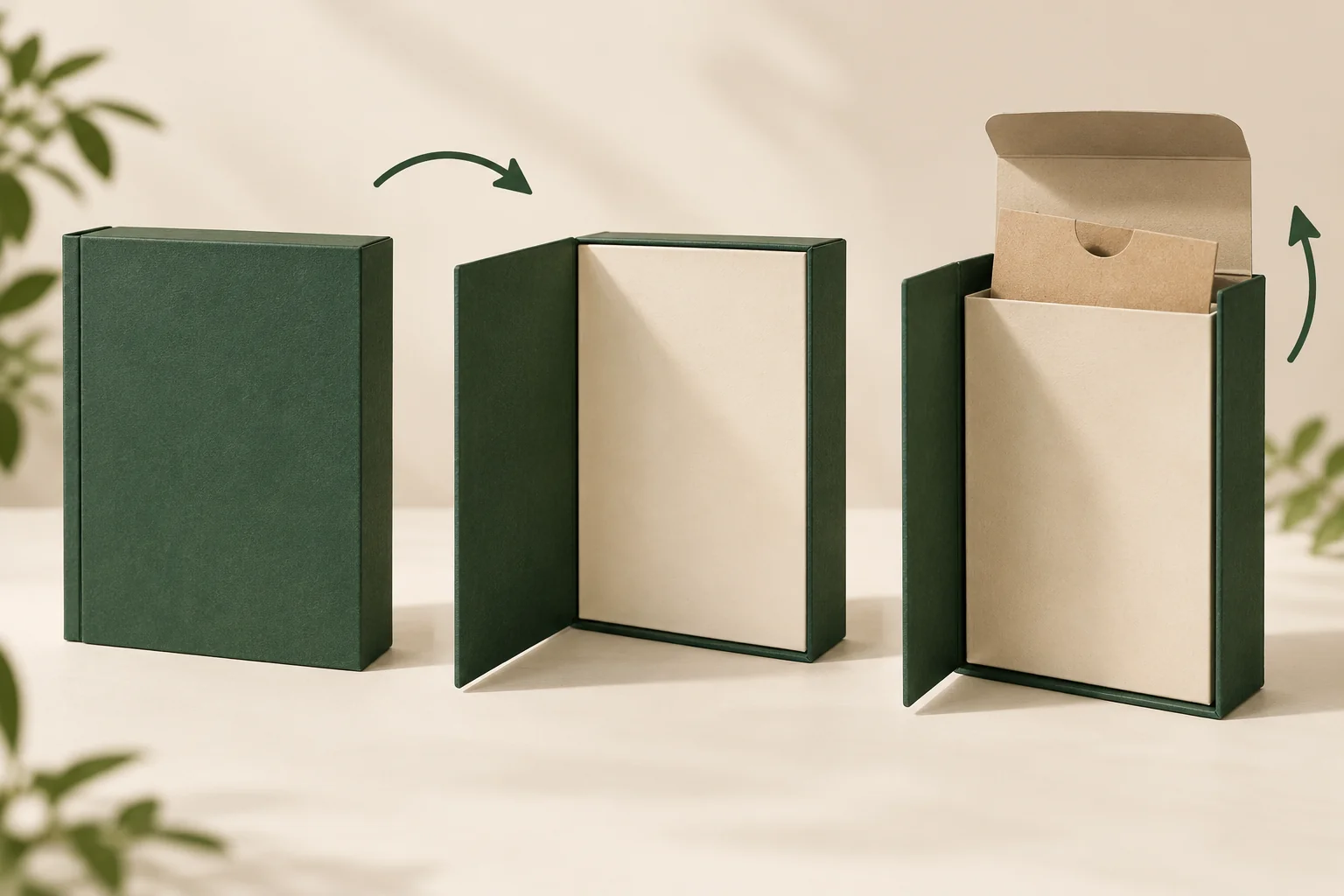
Choose an outer retail box only after naming the product pack it must contain and the presentation job it must perform. That purchase can add a printed enclosure without replacing the inner component's role.
CandleScience's White Retail Wax Melt Box explicitly pairs its carton with the supplier's own Standard 6 pc. Clamshell and advises against assuming it fits other clamshells. This is a useful real example of a two-component offer. It does not establish that a custom carton accepts another source's pack.
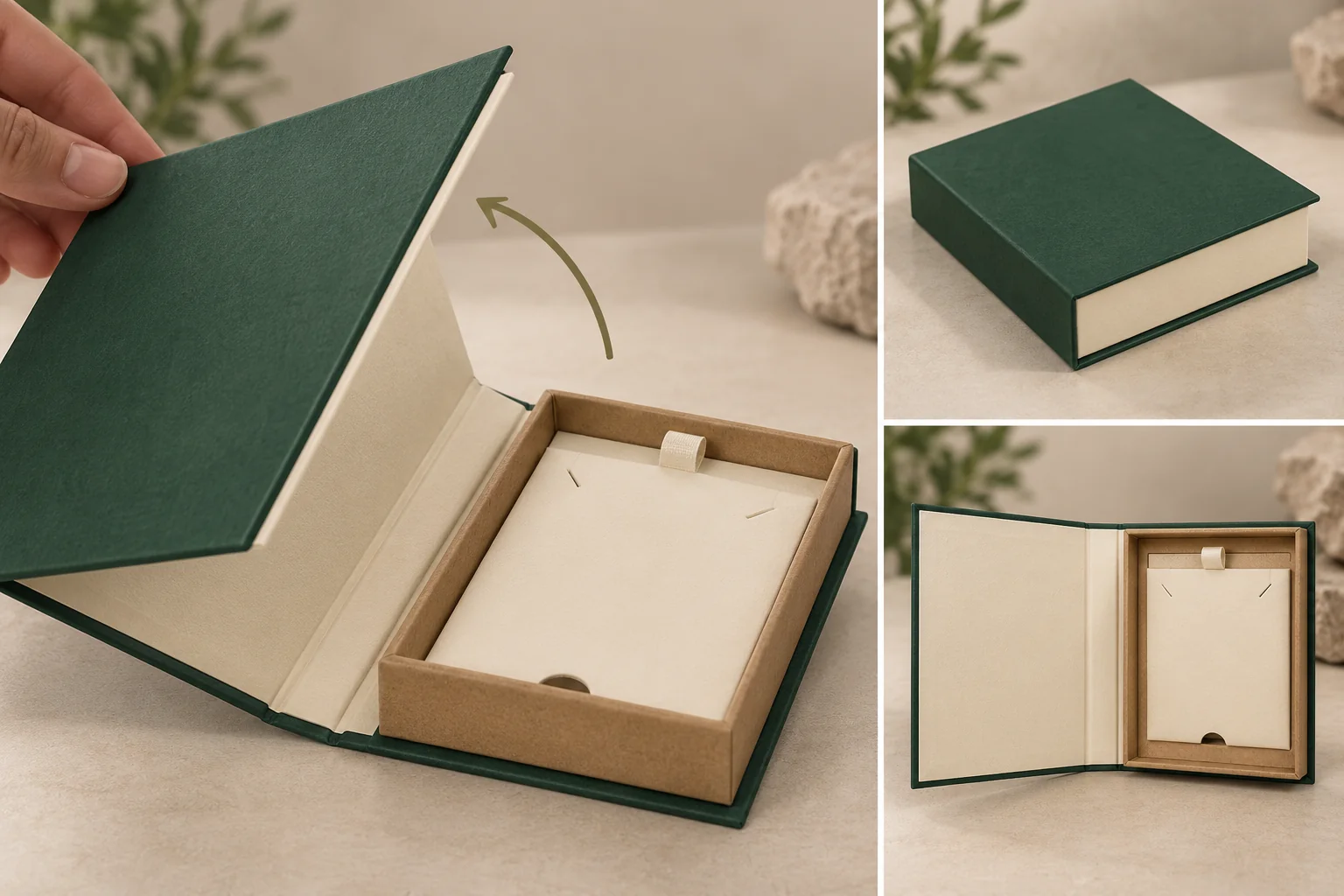
For an existing filled pack, send the complete closed reference to the carton source. Include the hinge, closure, label and any projecting hanging feature in the product envelope. Ask for the opening orientation and how the recipient gets a grip on the inner pack. An overall cavity-array dimension omits those installed features.
State the outer box's purpose. It might carry a gift message, create an opaque first opening or provide a coordinated branded exterior. If buyers need to see the wax shapes on the shelf, an opaque carton changes that interaction. Decide whether concealment is wanted before approving the artwork.
A separate box also creates a label-visibility question. Show the inner pack, the closed retail box and the state after the box is removed to the person responsible for product information. Don't copy a candle warning panel onto wax melt packaging without having that person confirm what applies to the actual product and market.
Request equivalent component schedules before comparing quotes
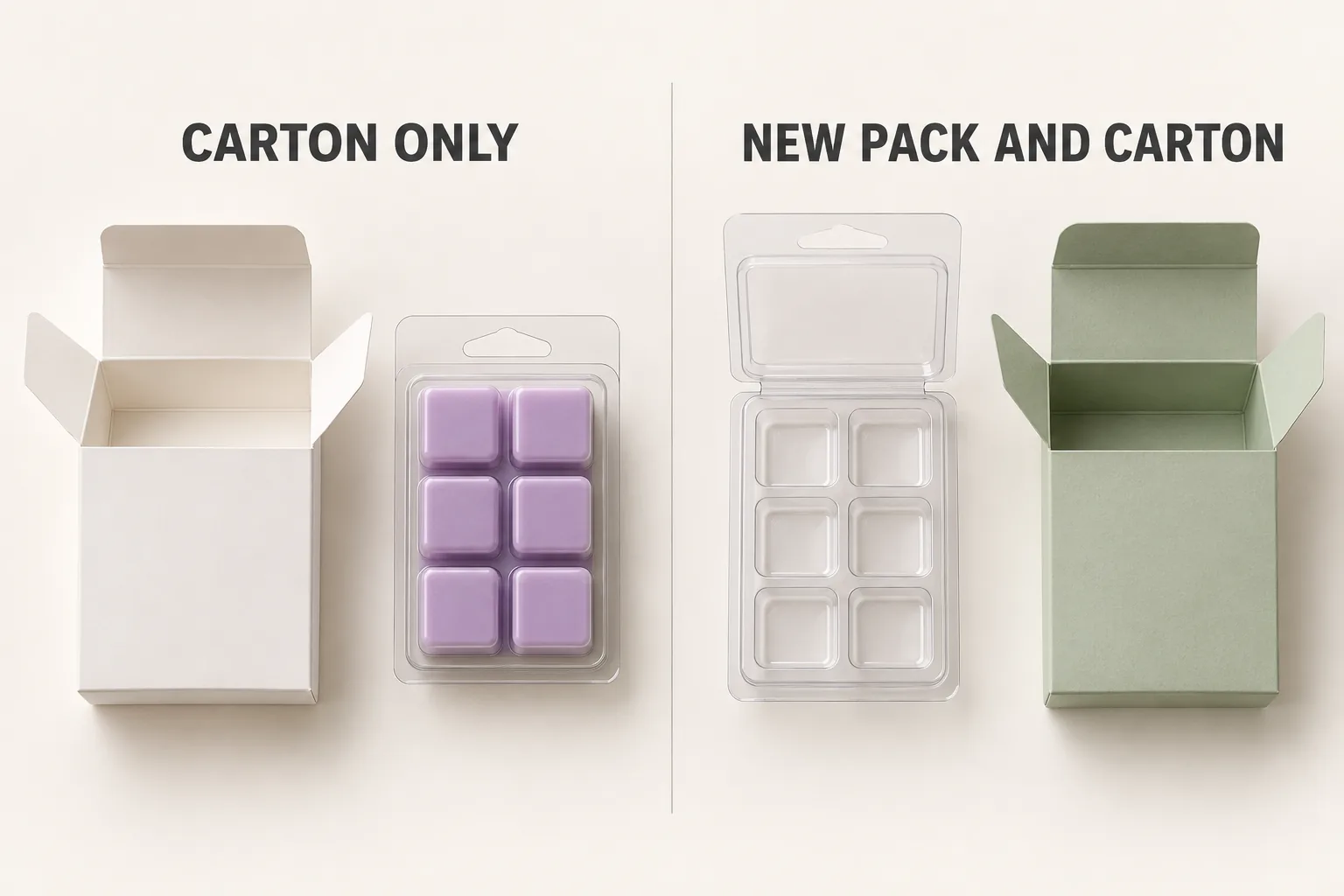
Compare offers for the same saleable product state, with the product pack and outer box on separate lines. A carton-only price answers a smaller purchasing request than a complete packaged-product arrangement.
| Requested route | Customer receives | Separate purchase questions |
|---|---|---|
| Formed pack alone | Wax portions in the identified closed pack | Which pack, label and delivered state are included? |
| Formed pack plus retail carton | The same pack inside an outer paper box | Which carton drawing and packing work are added? |
| Released shapes in another product pack | Wax removed from a production mold, then packed | Which supplied container receives the pieces? |
| Existing product pack plus new gift box | An established product pack with a new enclosure | What changes beyond the existing pack? |
Keep filling and packing services explicit. A seller supplying empty components has not automatically offered to make or fill the wax product. Likewise, a quote for printed cartons does not necessarily include inserting closed product packs or applying labels.
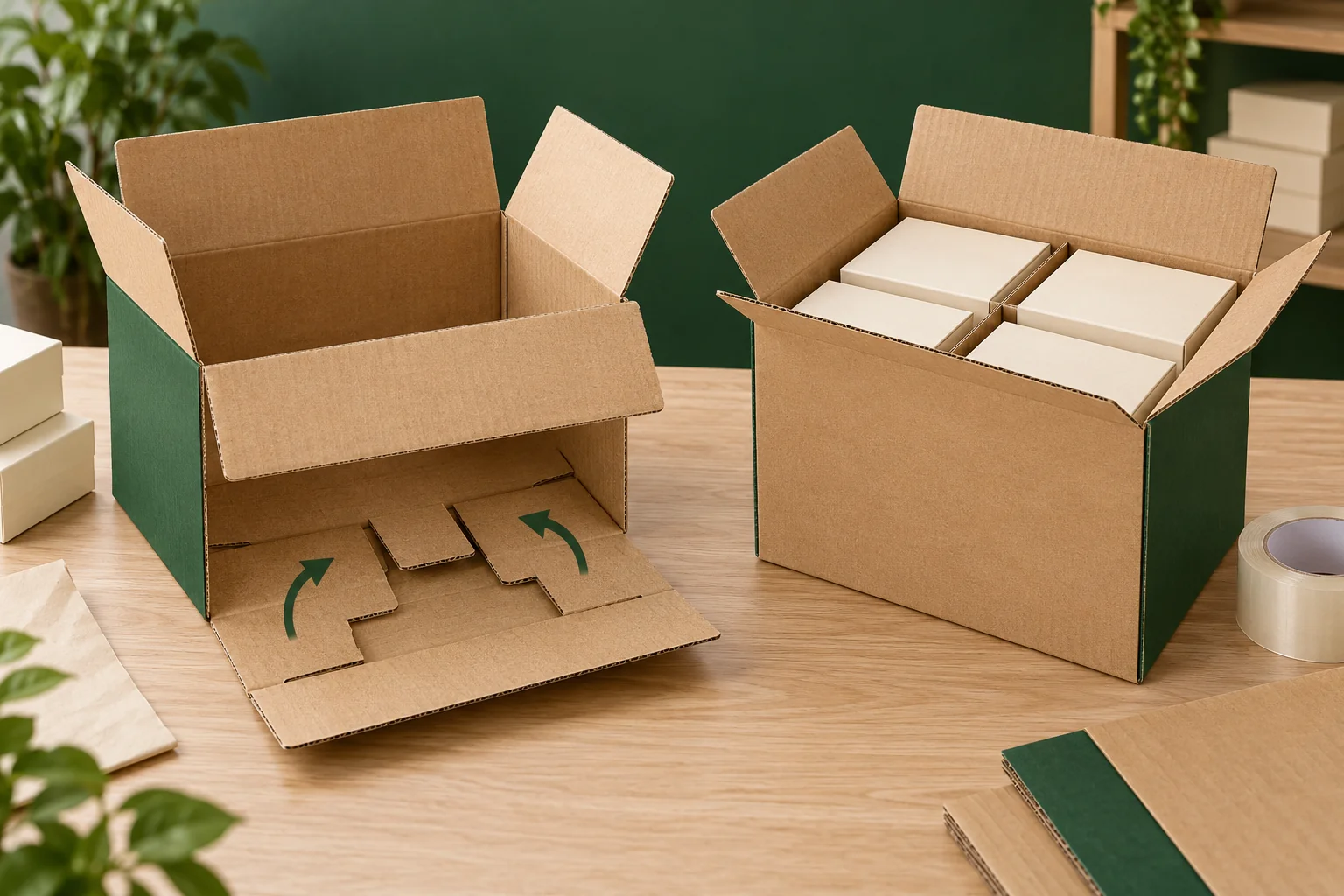
The box, insert and outer-pack guide helps separate the shipping arrangement from retail presentation. Use that broader framework for the parcel after the wax melt product pack is defined. No extra paper layer grants a transport rating by itself.
Keep a working product pack when only the gift presentation changes
Retain an established product-pack reference as the comparison input when the project only needs a new gift exterior. This keeps the new supplier request focused on the added enclosure and any dependencies it creates.
Imagine a fictional fragrance brand that already sells a closed pack of square wax portions. It wants an opaque printed carton for a seasonal gift. Its brief states that the existing pack remains unchanged and that no wax is placed directly in the new carton.
The buyer requests a carton proposal around that complete closed pack. The proposed drawing must show the pack's orientation, the recipient's opening route and the intended information surfaces. The price comparison includes the empty carton and any separate assembly operation, while retaining the original product pack as its own component.
If a source instead proposes a different clear pack to match an available carton, that is a second route. It changes the product-contact component and needs its own review. The buyer can evaluate it, but it should not quietly replace the original carton-only project under the same description.
The example supplies a decision boundary, not a completed product assessment. Use the sample revision record to retain the changed component and evidence if an alternative is developed.
Give the next supplier one complete purchasing statement
Send the current sold-product state, the exact component you need and the parts that remain unchanged. Attach available drawings or samples, actual measurements, quantities by design, destination and any unresolved product-contact or information requirement.
Packrivo coordinates packaging sourcing questions with independent suppliers. Discuss the packaging scope for your wax melt gift with the identified product pack and the proposed outer enclosure. Packrivo's general packaging inquiry does not establish a stock wax melt container, filling service or formula-compatibility assessment; availability and project terms need confirmation.
Sources checked November 1, 2026. Supplier descriptions concern their named products. The purchasing comparison and fictional gift brief are editorial guidance, with no physical fit, compatibility or transport result claimed.