
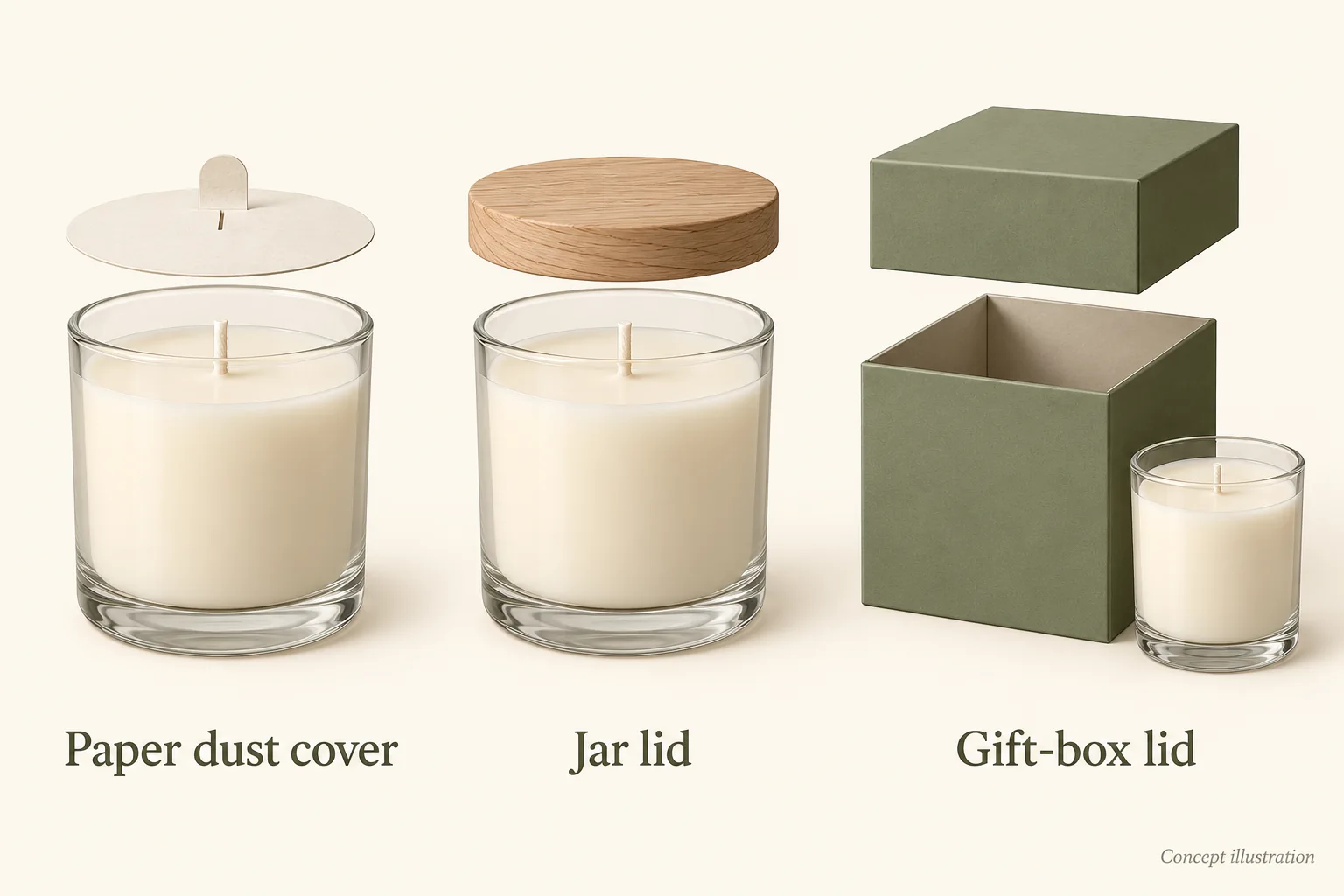
Choose a printed candle dust cover when you need a removable presentation layer over the unlit candle. Choose a fitted jar lid when your product brief includes a cover the recipient can retain between uses. Buy both only when each has a defined job and the actual jar, wick arrangement and packed gift can accommodate them together.
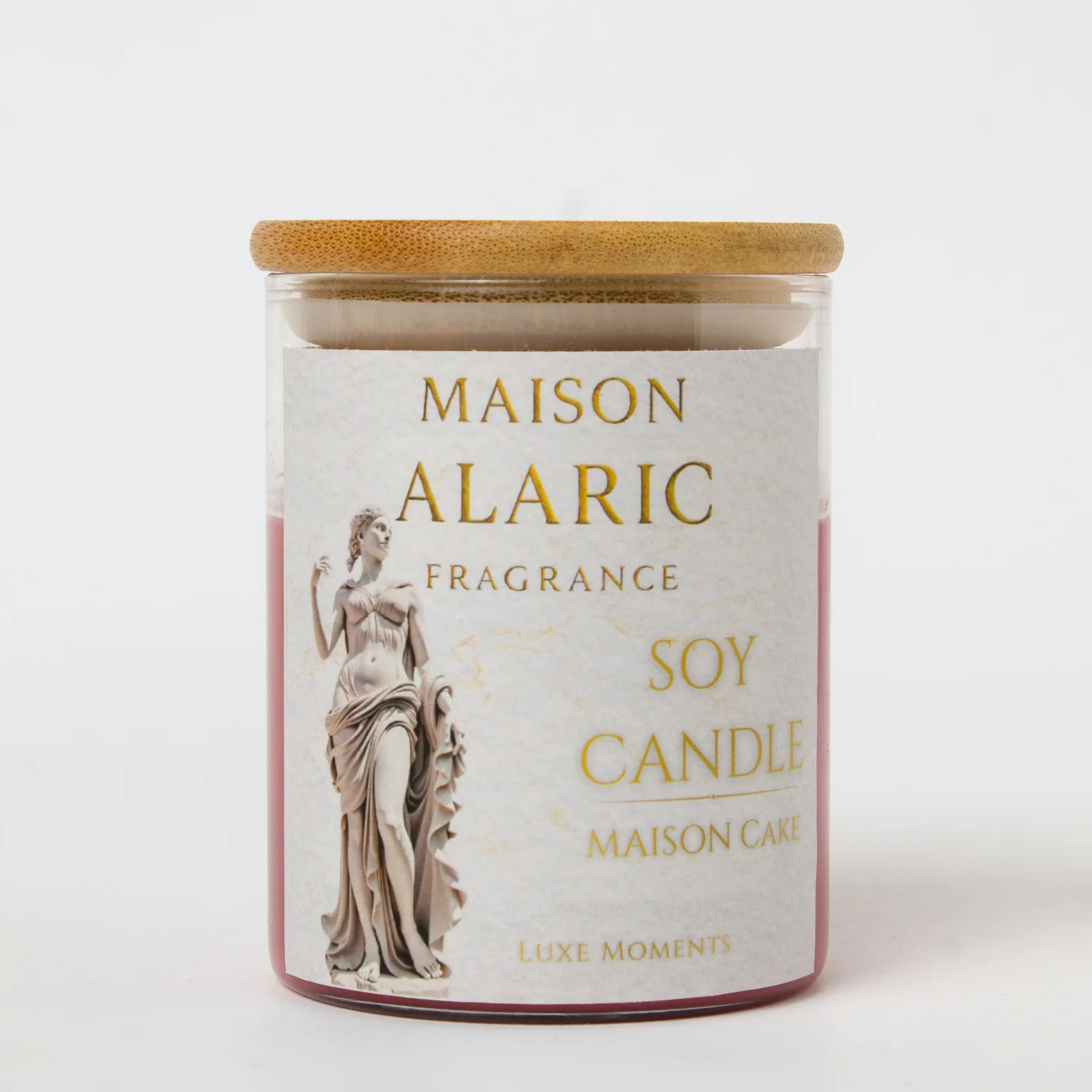
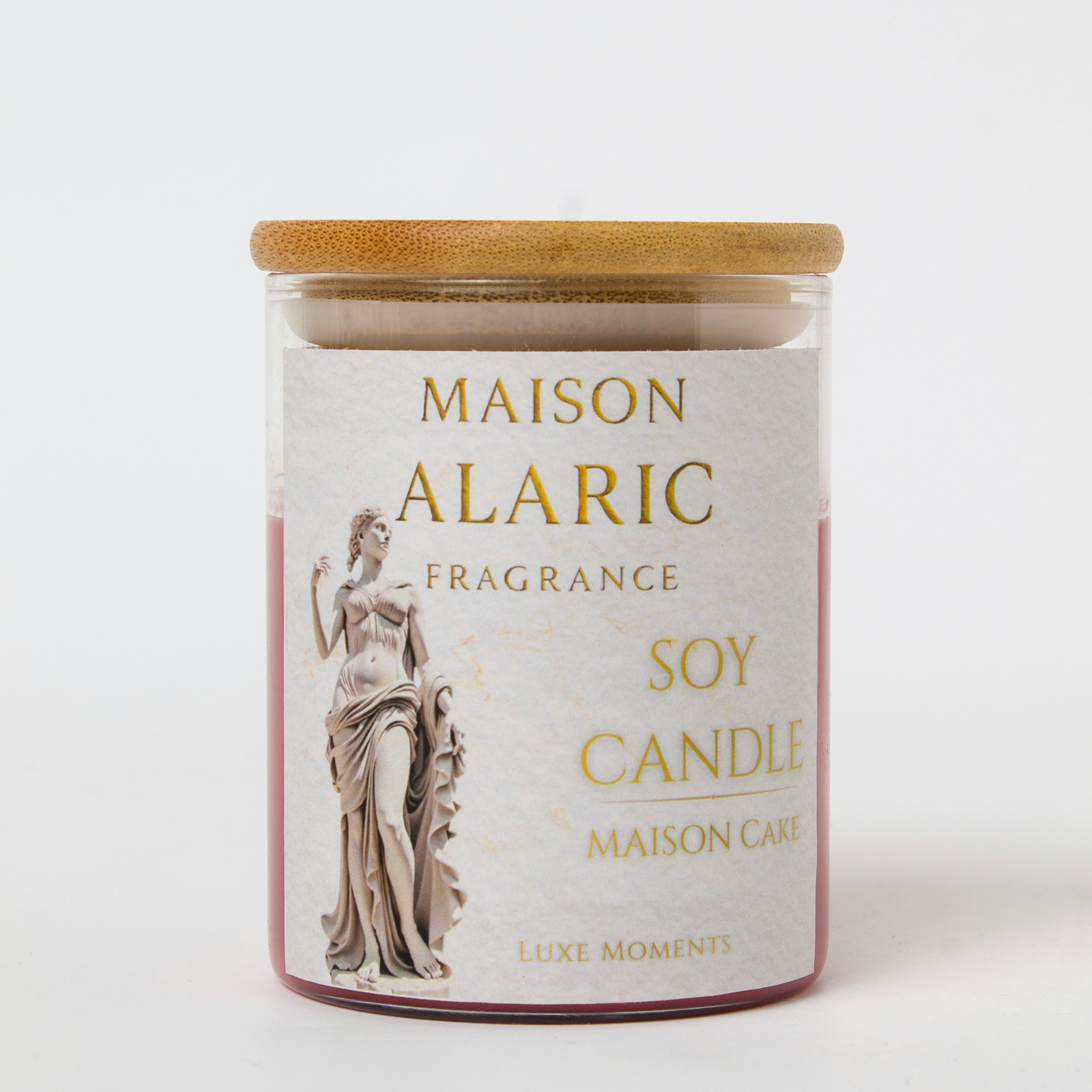
Third-party photograph of a candle jar with its wooden lid.
Photo by yousef samuil on Unsplash, used under the Unsplash License. Full-frame resize and WebP encoding only. Third-party brand reference; no partnership or tested lid pairing is represented.Full original reference photograph.
A gift-box lid is a third component: it closes the outer presentation box. Calling all three items a “candle cover” makes quotations difficult to compare. Name the part that touches or covers the candle separately from the box around it, then decide what the recipient keeps after opening.
Decide whether the cover leaves with the packaging
A removable printed dust cover belongs in the presentation brief; a retained jar lid belongs in the product-component brief. Start with that distinction before choosing artwork or a finish. A printed disc does not establish the same closure arrangement as a lid matched to the vessel.
The Flaming Candle’s single-wick tumbler dust cover is an example of a separately sold cover for a named candle format. Its description concerns the candle surface during storage, display and transport. That product page demonstrates a purchasing category, not a fit specification for your jar or evidence about a custom printed part.
By comparison, CandleScience’s jar-lid guide organizes lids by their relationship to particular containers. A continuous-thread lid engages a corresponding jar thread; a lug closure uses another arrangement. A flat lid may use an internal fitment. These are reasons to identify the exact vessel pairing rather than order from the mouth diameter alone.
If the brand already supplies a fitted lid and only wants a printed first-opening message, investigate a paper cover as an additional presentation item. If the brief requires a reusable cover after the candle is unboxed, start with the vessel supplier’s matching-lid proposal. Neither route should promise an airtight seal or a measured fragrance-retention benefit without evidence for the actual assembly.
Match the paper cover to the actual wax and wick arrangement
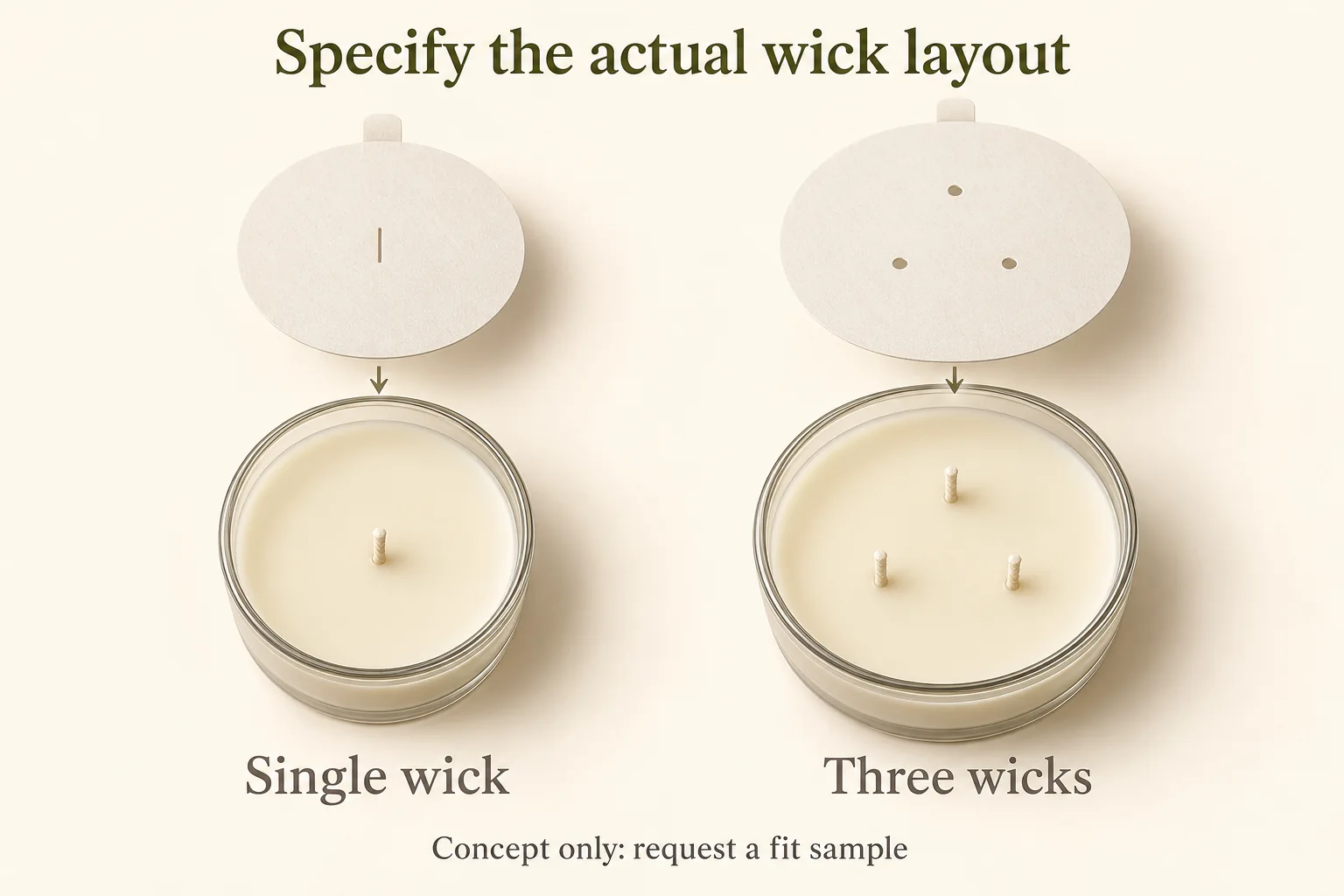
Specify a dust cover against the finished candle’s opening and wick layout, then request a physical fit sample before approving its print. A nominal jar capacity is not a drawing of the opening, wax position or wick arrangement.
Send the converter a top view and a section or clearly explained side view of the intended candle. Identify the inside opening, the proposed resting position, the wax surface and the wick locations. Ask the converter to propose the outline, openings and removal feature against those inputs. Keep unmeasured dimensions open instead of turning a photograph into a precision drawing.
A single-wick cover should not automatically become the artwork master for a multi-wick candle. The number and positions of openings may change, as may the route used to place and remove the paper. If a wood wick is used, identify its actual shape and orientation rather than describing it as a round hole by habit.
Review the formed, printed cover with the intended candle. Observe placement and removal without forcing the paper around the wick. Record whether a tab can be reached, whether the cover moves as intended and which surface it rests against. The candle contact-map guide covers the separate task of documenting contact observations. Here, the buying decision is whether this proposed paper component and its removal arrangement belong in the gift at all.
Keep the jar lid’s fit decision with the vessel
Select a retained lid through a named jar-and-lid pairing, and ask who owns approval of that pairing. The packaging converter can price a box around the product, but the phrase “lid included” does not identify which lid is supplied or who has checked it against the vessel.
Ask the vessel supplier to identify the lid reference, closure type and any separate fitment. Obtain the proposed assembly rather than comparing a loose lid photograph with an approximate jar dimension. If the lid is sourced elsewhere, make the cross-supplier pairing an explicit unresolved item before either component is ordered.
A lid also changes the state in which the candle enters the gift box. Pass the selected product assembly to the box and insert supplier as one identified input. If the lid is shipped loose, describe its separate packing position and the intended recipient action. The candle box and outer-pack brief addresses that complete-pack configuration.
Do not infer handling instructions from a lid that looks firmly fitted. The CandleScience guide specifically cautions against lifting jars by several of its fitted lid types. Follow the instructions for the selected product. A gift box or a printed cover should not encourage a handling action that its vessel-and-lid supplier has not accepted.
Compare the components the supplier will actually supply
Compare dust-cover and lid proposals as different component schedules, then price any combined version as its own arrangement. A quotation for a printed paper part and a quotation for a matched vessel closure answer different purchasing questions.
| Proposed purchase | Input that must be identified | Decision before ordering |
|---|---|---|
| Printed paper dust cover | Actual candle opening, wax position, wick arrangement and print file | Does the removable presentation layer have a useful, accessible role? |
| Retained jar lid | Exact vessel and proposed matching lid or fitment | Who confirms the pairing and product instructions? |
| Both parts | The same candle assembled with both components | Can each be placed and removed in its intended sequence? |
| Outer gift box | Complete candle state and included components | Does the chosen arrangement fit and present as intended? |
Ask whether print setup, cutting setup, paper components, lids and assembly are separate quote lines. The supplier should identify what arrives assembled and what remains for your packer. Do not compare a loose unprinted paper cover with a fully assembled printed gift as though the unit scope were identical.
Choose one route for a hypothetical gift launch
A fictional brand with an accepted vessel-and-lid pairing should keep that lid as the starting product configuration and decide separately whether a paper cover adds enough presentation value. Assume the brand wants a short message seen on first opening, with no new sealing or fragrance claim.
The buyer requests a printed paper-cover proposal using the actual candle layout. It keeps the existing lid reference in the brief and asks to see both parts together. The paper sample must show its resting position, wick openings and removal feature; a flat print proof answers only the artwork question.
If the combined sample adds an awkward removal step or hides information the brand wants visible, the buyer can omit the paper cover and retain the matched lid. If the cover provides a clear first-opening message and the intended sequence works, the buyer can continue with both. Those are decision conditions for an invented example, not results from a Packrivo sample or customer project.
Make removal and responsibility clear before artwork approval
Have the responsible product reviewer identify which parts are removed before candle use and where that instruction belongs. The British Candlemakers Federation’s joint advice sheet includes removal of packaging before use among its supplementary safety information. It is not a custom label approval for this hypothetical gift.
Keep the paper-cover message separate from required product labeling. The existing US candle gift-box labeling guide explains why applicability and the actual retail wrapper need their own review. A removable printed disc should not quietly become the sole home of information the responsible reviewer requires elsewhere.
Packrivo coordinates packaging sourcing questions with independent suppliers. Discuss the candle’s cover and gift-box scope with the actual vessel reference, intended retained lid, proposed paper-cover role and unresolved component questions. Availability, samples and commercial terms need project-specific confirmation.
Sources checked October 31, 2026. Supplier descriptions apply to their named products. The selection sequence and launch example are editorial purchasing guidance; no physical fit, sealing, candle-use or transport result is claimed.