
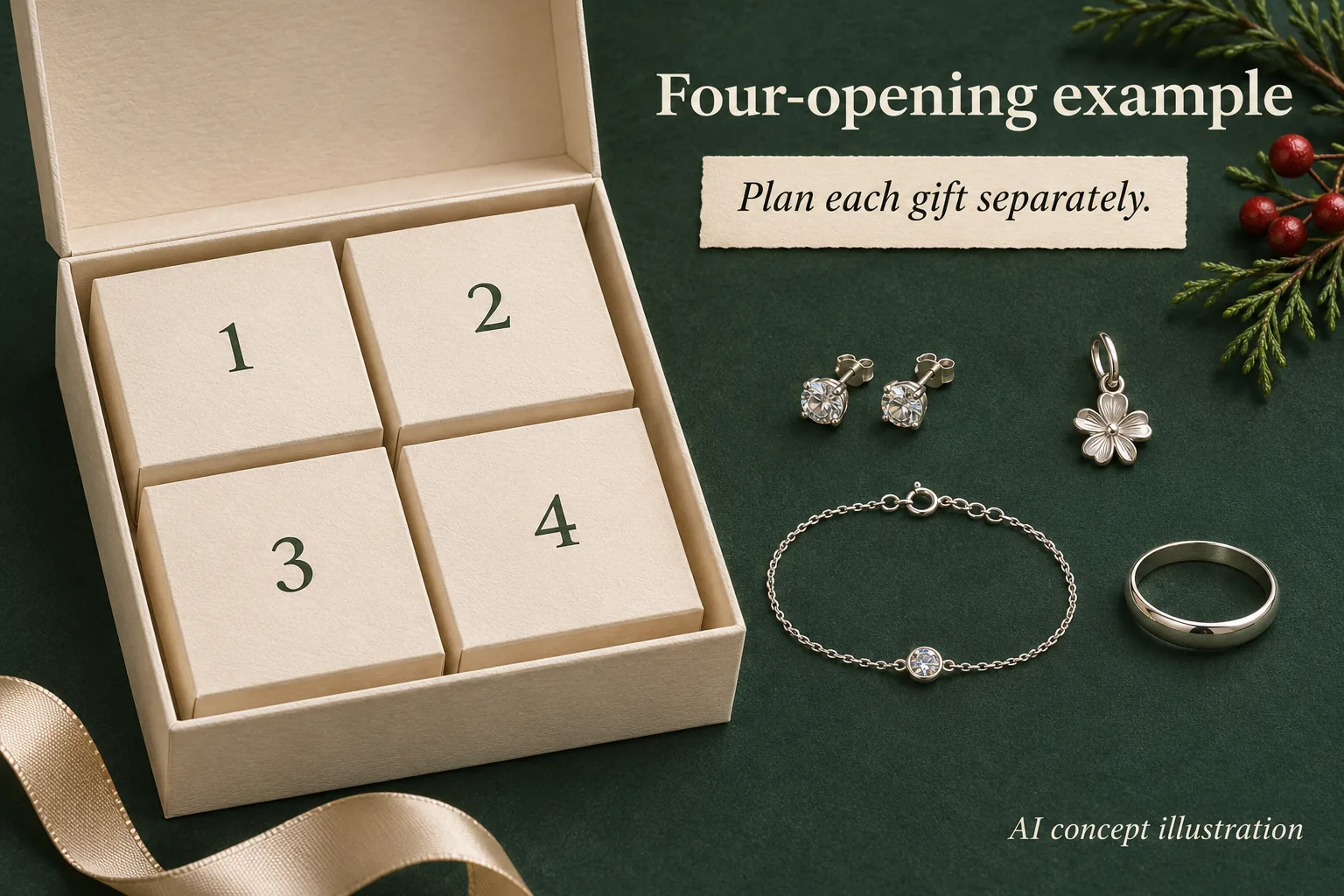
Choose jewelry advent calendar packaging by assigning a specific gift to every opening before choosing the outer box. A four-opening calendar and a daily countdown require different product plans. The useful buying document is a compartment-by-compartment list showing what is revealed, how it is held, and which parts remain closed after an earlier gift has been removed.
AI concept of four numbered openings with jewelry gifts planned separately.
For a jewelry brand, the sequence is part of the offer. A small box containing four pieces opened together is a gift set. A calendar asks the recipient to return to separate gifts over time. Packaging that makes every item visible at the first opening may defeat that plan, even when all the jewelry fits.
Set the number of reveals from the gift offer
Use the advertised opening schedule to define the number of separately presented gifts. Do not assume that every jewelry advent calendar needs the same number of compartments.
Westpack’s published advent calendar example uses four jewelry gifts, each in its own numbered inner box, for the four Sundays before Christmas. It demonstrates one real commercial format. It does not establish a universal calendar specification or show that a particular assortment will fit a stock design.
Write the schedule in customer language before requesting packaging. Is the offer four Sunday surprises, twelve separate openings, or another clearly described sequence? State whether a pair of earrings counts as one gift, whether a charm arrives without a chain, and whether a later piece is intended to be worn with an earlier one. Count the promised reveals rather than loose jewelry components.
Keep a fixed assortment separate from a customer-selected one. With fixed contents, the packaging can be developed around known pieces. If shoppers choose their own combination, the brand needs to define which selections are eligible for each position. A photograph of one filled sample cannot approve every possible combination.
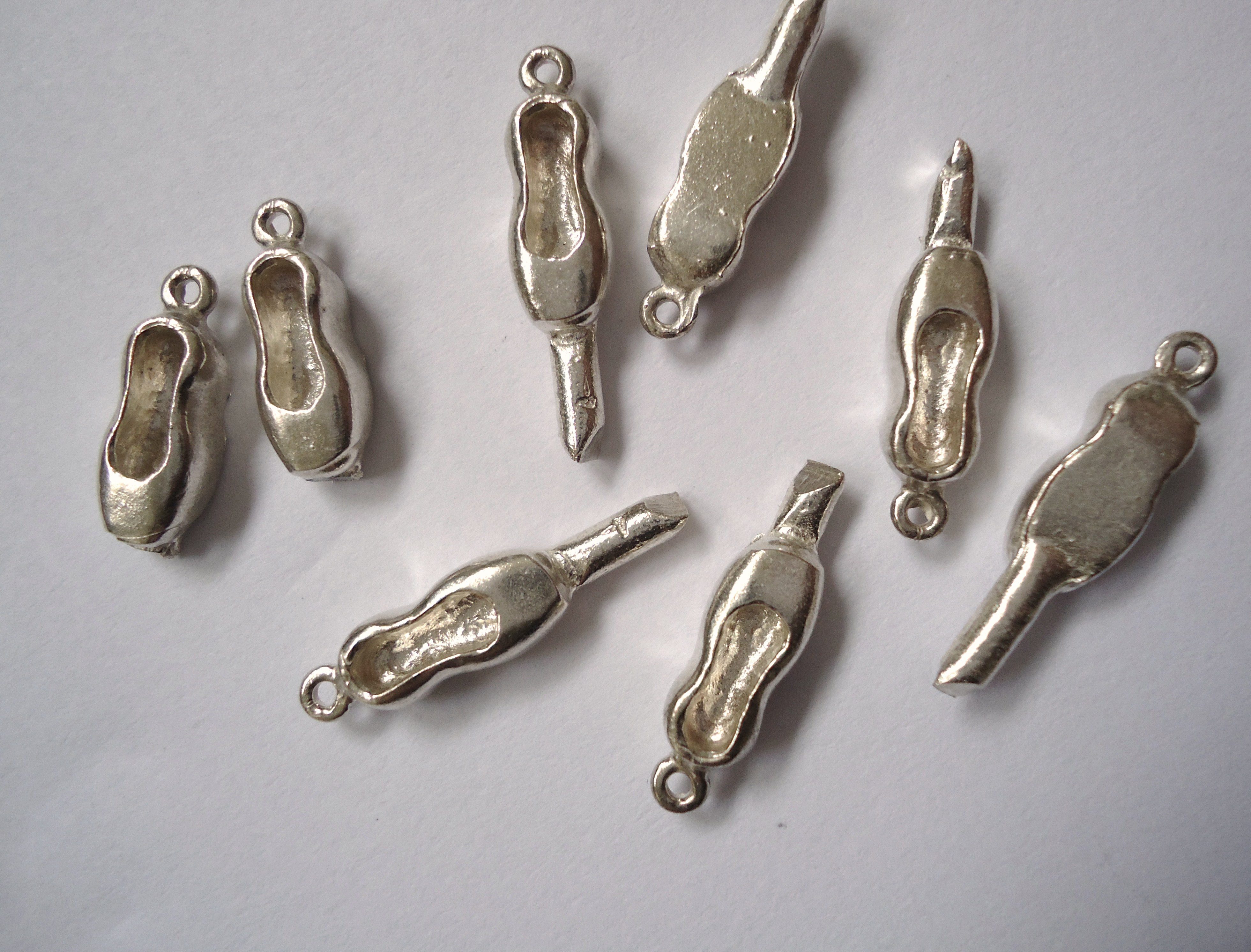
The reference photograph shows small jewelry elements for shape comparison, not the proposed calendar assortment.
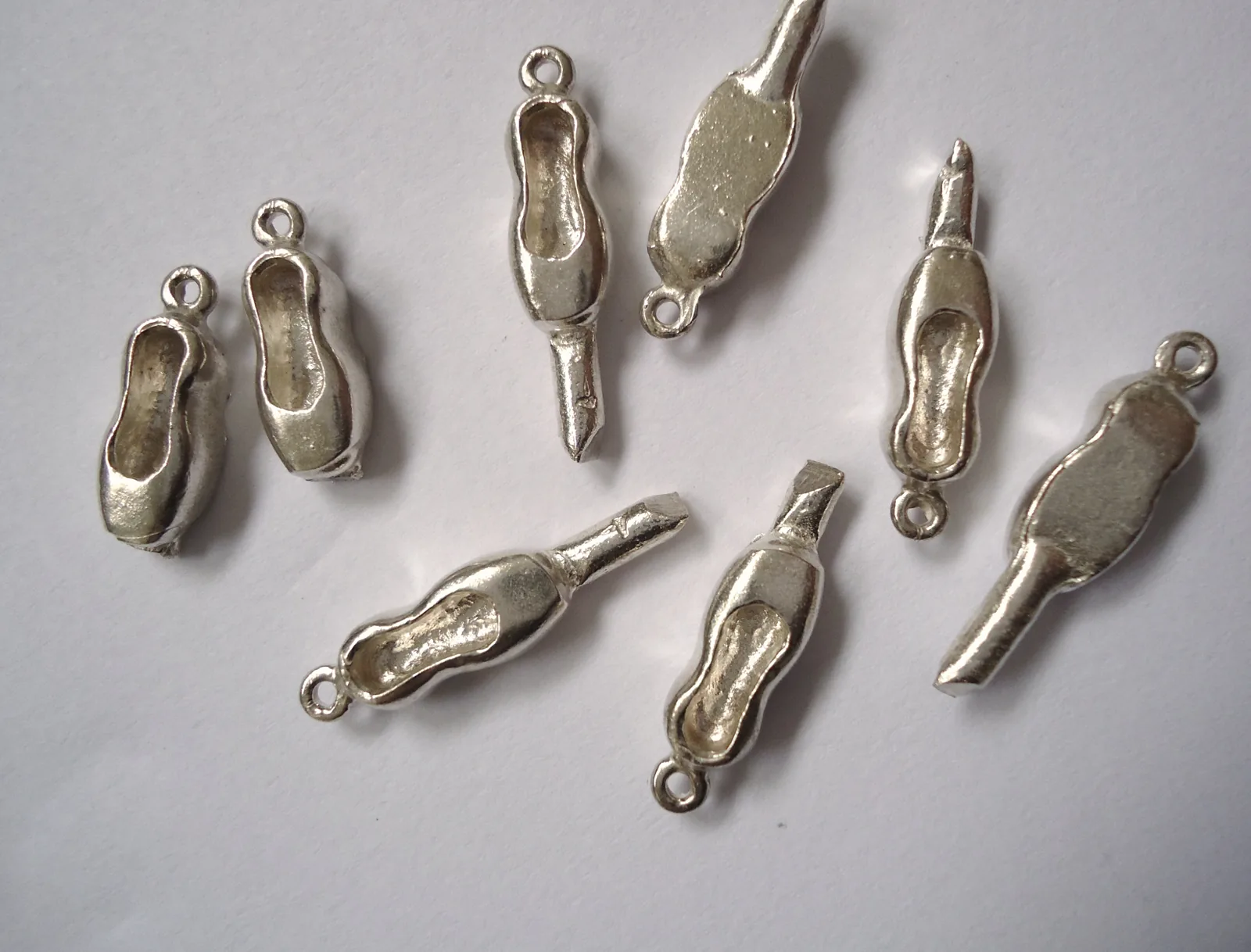
Photo: Mauro Cateb, Wikimedia Commons, CC BY-SA 3.0; resized and re-encoded for web under the same license. Full original reference photograph.

Assign the jewelry before fixing equal-size compartments
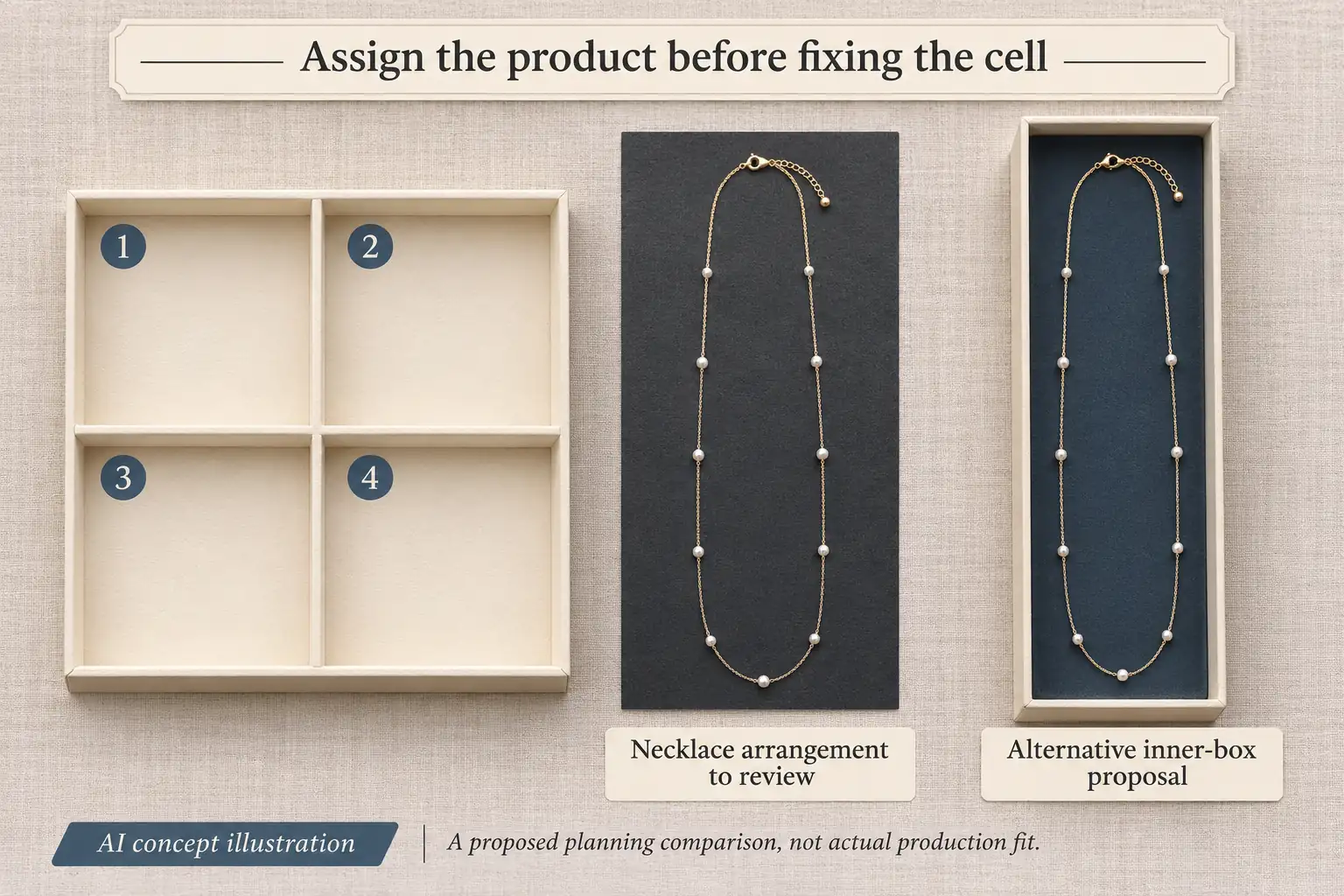
Use the largest or most awkward gift to challenge the proposed layout before committing to equal-size inner boxes. Matching fronts can hide different space needs behind them.
A ring, a pair of studs, a loose charm and a chain bracelet may look like a compact assortment in a flat photograph. Their mounted forms differ. Stud backs occupy rear space; a bracelet needs an intended resting shape; a necklace may need a chain route behind its display. Record the complete packed form for each reveal, including its card or support.
Prepare an original planning table like the illustrative example below. These are invented contents and proposed questions, not a tested calendar or an approved product layout.
| Reveal | Illustrative gift | Packaging question | Decision before artwork |
|---|---|---|---|
| First | One pair of studs | Where do the posts and backs sit? | Identify the complete mounted depth. |
| Second | One loose charm | How is a small loose item held and released? | Select a holder without assuming a chain is included. |
| Third | One fine chain bracelet | Where is the unused chain length placed? | Show its route and removal sequence. |
| Fourth | One ring | Can the recipient grip it without moving another box? | Identify the support and access direction. |
If one gift requires a different inner format, choose whether to change that compartment, change the whole layout, or change the assortment. Do not fold a chain into an undocumented space simply to preserve a symmetrical sketch. The existing multi-SKU jewelry packaging guide can record eligible product arrangements; the calendar plan adds their individual positions and opening sequence.
Keep later gifts contained after the first opening
Choose inner closures that let the recipient open one gift while the unopened gifts retain their intended presentation. Evaluate the calendar in partially opened states, not only when every compartment is full.
Separate lidded boxes, drawers and tear-open windows create different experiences. A removable inner box can be lifted out and kept. A drawer can remain part of the outer structure. A tear-open front is changed by use. None is automatically best; the decision depends on what the brand wants the calendar to look like after the first, second and later reveals.
Ask for a sample review with the first intended gift removed. Check whether a neighboring inner box shifts into the empty position, whether a drawer remains accessible and whether the remaining number labels can still be read. Repeat at the final opening. Record observations rather than assuming that a tight-looking new box will behave the same when partly empty.
Keep jewelry support separate from calendar structure. An inner gift box may contain its own mounting component even when the outer shell holds the small boxes neatly. The jewelry box collection is a starting point for discussing those item-level formats, not evidence that any listed design forms an approved calendar.
Make numbering follow the actual loading plan
Assign every reveal number to a named gift and an identifiable packaging component. A numbered front alone does not tell a packer which piece belongs behind it.
Decide whether the number is printed on the small lid, on a drawer face, on an attached label or on the outer opening. Identify how those parts are supplied. If lids and bases arrive separately, the loading instructions need to keep the intended numbered lid with its gift. If the product order matters, add a reference photograph of the complete loaded arrangement for authorized packing use.
State what happens when a gift changes during development. Substituting a longer necklace can affect its holder and compartment even if the printed number stays the same. A replacement product needs a new fit review; a matching jewelry color does not settle its packed geometry.
Review the customer’s view as well as the packer’s. A full product list printed across the outside may reveal every surprise. That could be intentional, but it should be a deliberate merchandising choice. Any information that must accompany the actual jewelry still needs an appropriate place; the calendar concept does not decide labeling requirements.
Quote one complete calendar, including its inner pieces
Compare packaging proposals per complete calendar with all required inner boxes, supports, printed parts and supplied assembly identified. An outer shell price leaves too much of this purchase undefined.
List which components are supplied assembled and which require loading or preparation. Identify separate artwork for numbers and panels, the proposed assortment, the delivery condition and the required project date. Ask the supplier to confirm feasibility and purchasing terms for that exact scope. Do not carry another seller’s stock sizes, order quantities or seasonal delivery promises into a custom inquiry.
For example, a fictional jewelry brand might choose four separate lidded inner boxes because each Sunday gift should remain individually presentable after removal. It keeps an outer display shell, but changes the proposed bracelet to one whose packed form can be reviewed in the chosen position. That is a planning choice, not a claim that the arrangement has been manufactured or tested.
Finish with a numbered assortment map, a component list and the questions the sample must answer. Send Packrivo the jewelry reveal plan and proposed calendar packaging scope to discuss the next sourcing step. Availability, construction and timing remain subject to confirmation for the actual project.