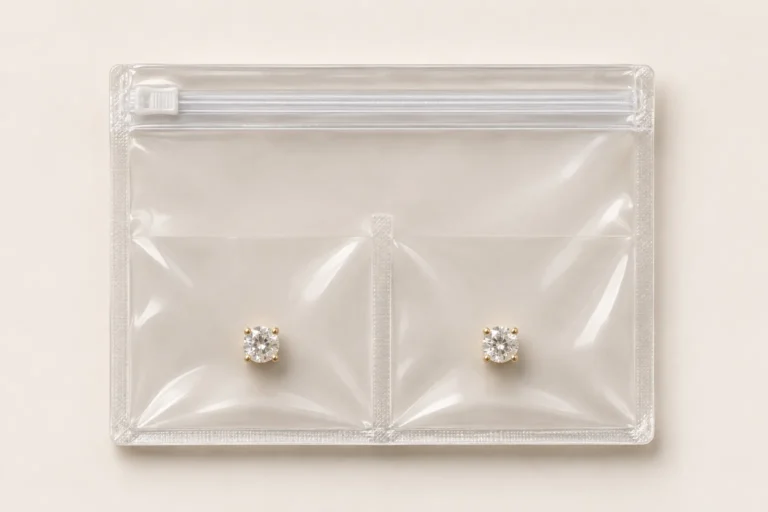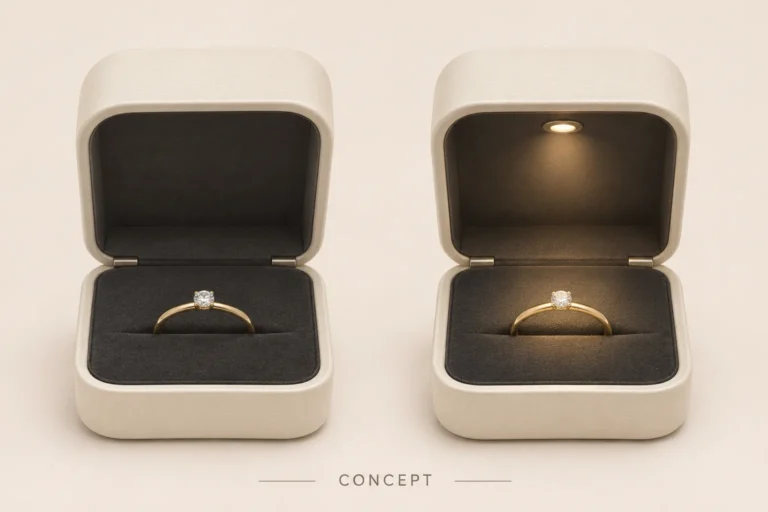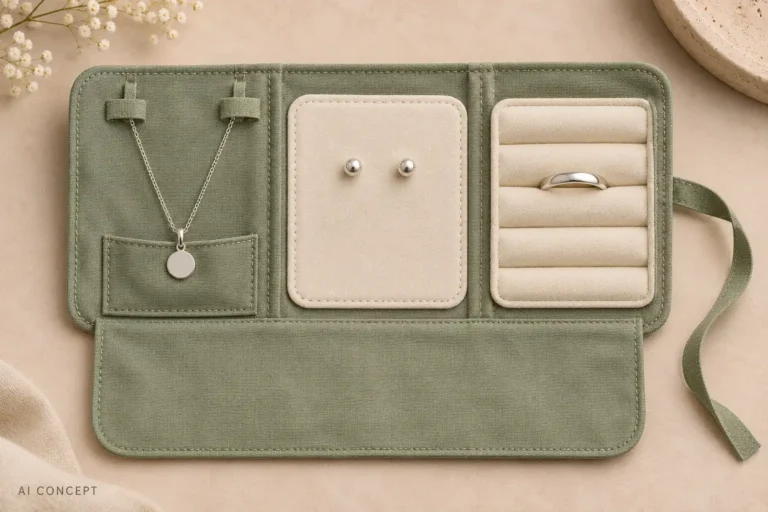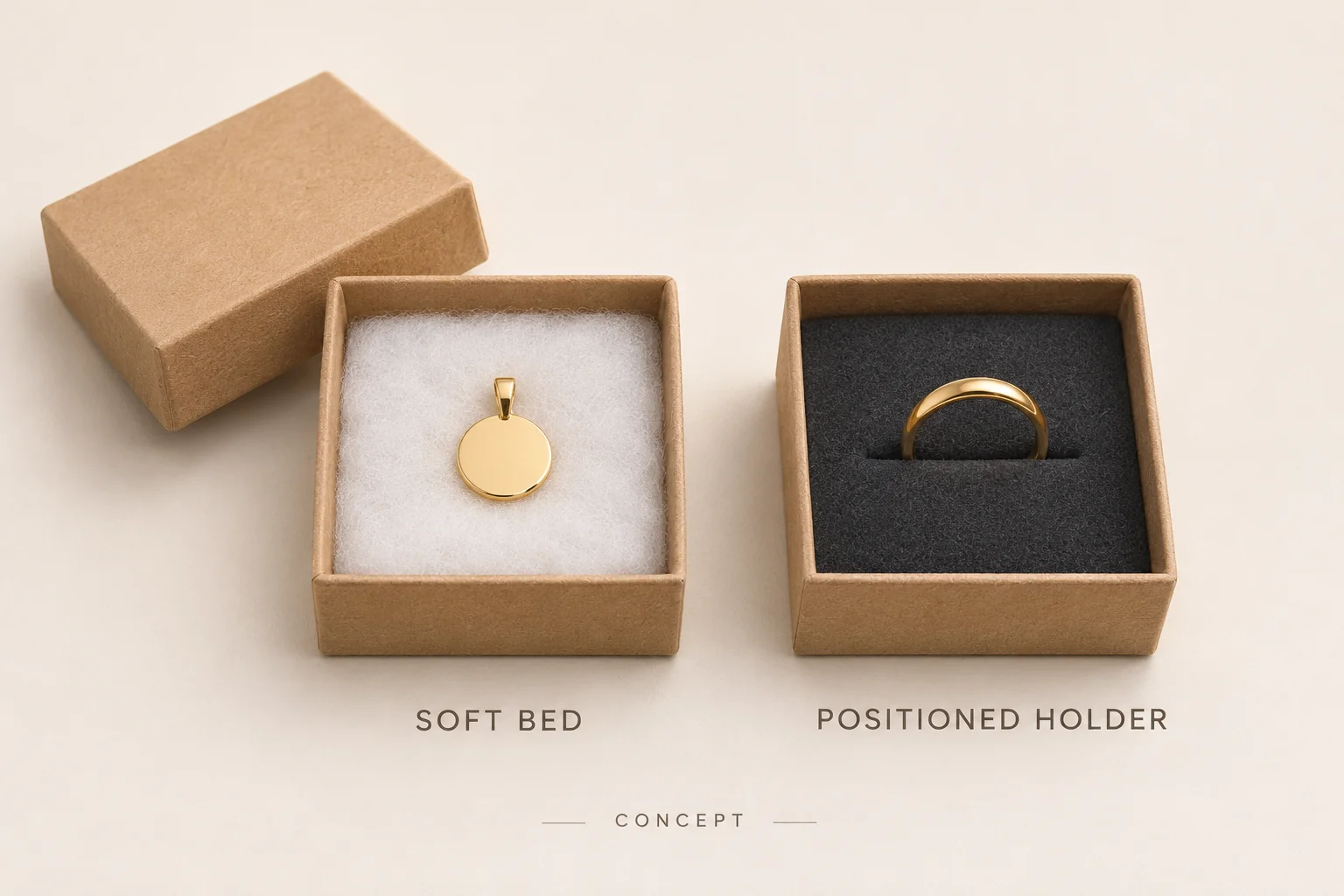
Native AI concept: a soft bed and a positioned holder serve different presentations.
For a small jewelry brand, that distinction affects what belongs in the supplier brief and any later customer-facing description. It also prevents two quotations with similar white interiors from being treated as the same purchase.
Separate the trade name from the supplied fiber
A cotton-filled jewelry box specification listing does not, by itself, establish that its insert is pure cotton. Read the named product’s material declaration and ask the proposed supplier to identify the exact filling it would supply.
ULINE’s Cotton Inserts page describes spun fiber polyester. Carolina Absorbent Cotton’s Jeweler’s Fiber is specified as 100% polyester. These are facts about those listed products, not a claim that every cotton-filled jewelry box contains the same fiber.
A different declaration appears in JPI Display’s cotton-filled assortment FAQ, which identifies a polyester and cotton blend. The useful lesson is to obtain the actual composition rather than infer it from appearance, the seller’s company name or a familiar category label.
When the proposed filling remains unknown, keep its material field open. Do not turn the phrase cotton-filled into a pure-cotton, plastic-free or environmental claim in your own packaging copy. A confirmed composition is also only one part of a broader claim’s evidence.
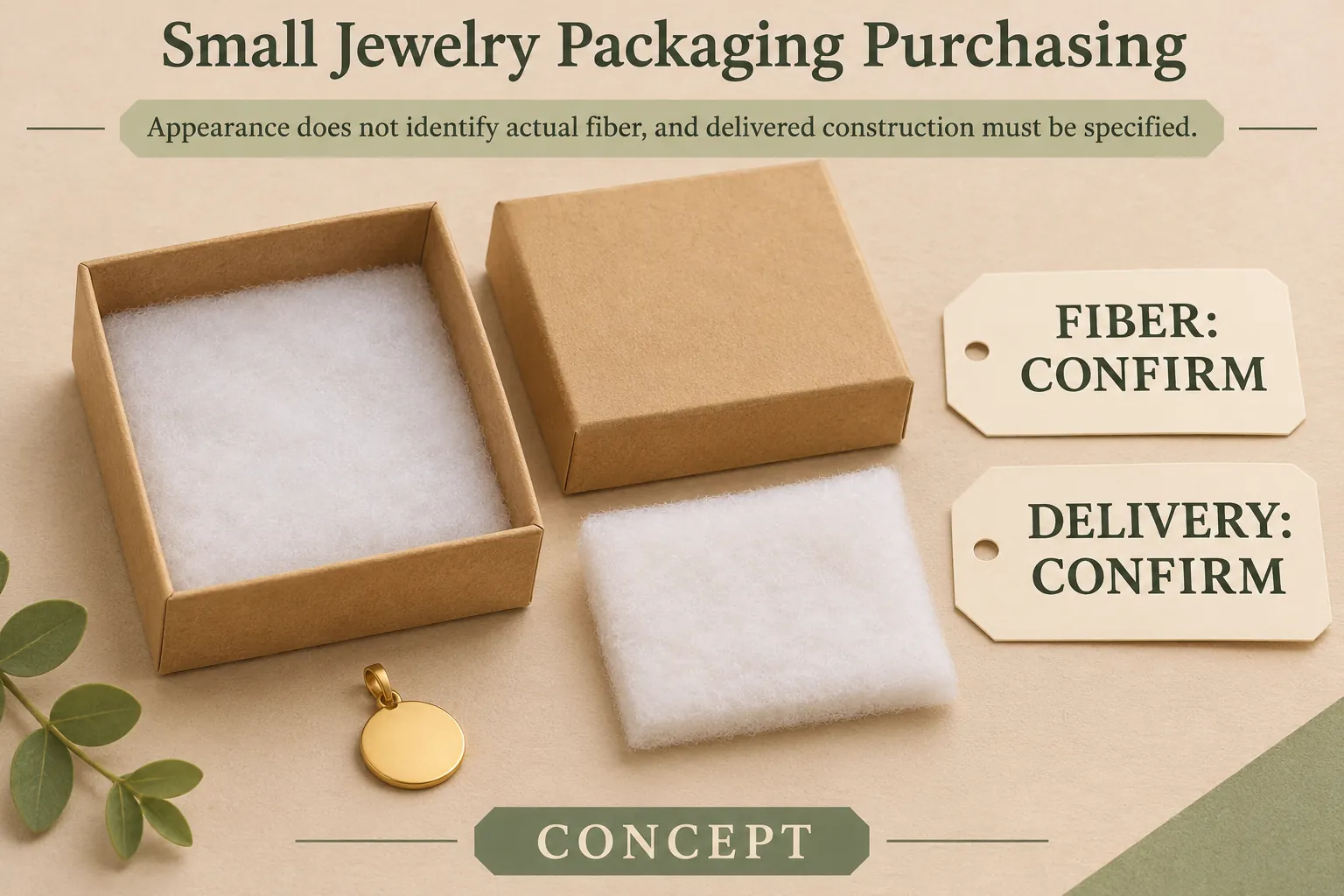
Describe the filling in its delivered state
The jewelry-box inquiry should state how the filling arrives and how it sits inside the box. A loose piece, an attached layer and a separately supplied replacement insert create different packing and handling tasks.
Ask whether the quotation includes the box and filling together or supplies them separately. Identify the proposed filling’s finished outline, thickness or loft specification, and how the supplier defines those measurements. Do not borrow a value from another manufacturer’s product as the default for a custom proposal.
JPI’s named assortment states that its filling is not glued to the box. That illustrates one removable arrangement; it does not establish the attachment state of another seller’s box. Carolina’s manufacturer page offers different weights and sizes, further showing why the actual proposed insert needs a specification.
Record the finished interior that receives the filling. Outside box dimensions do not settle the space remaining above a loaded piece. Use the jewelry box measurement guide to keep the box, insert and actual jewelry references distinct.
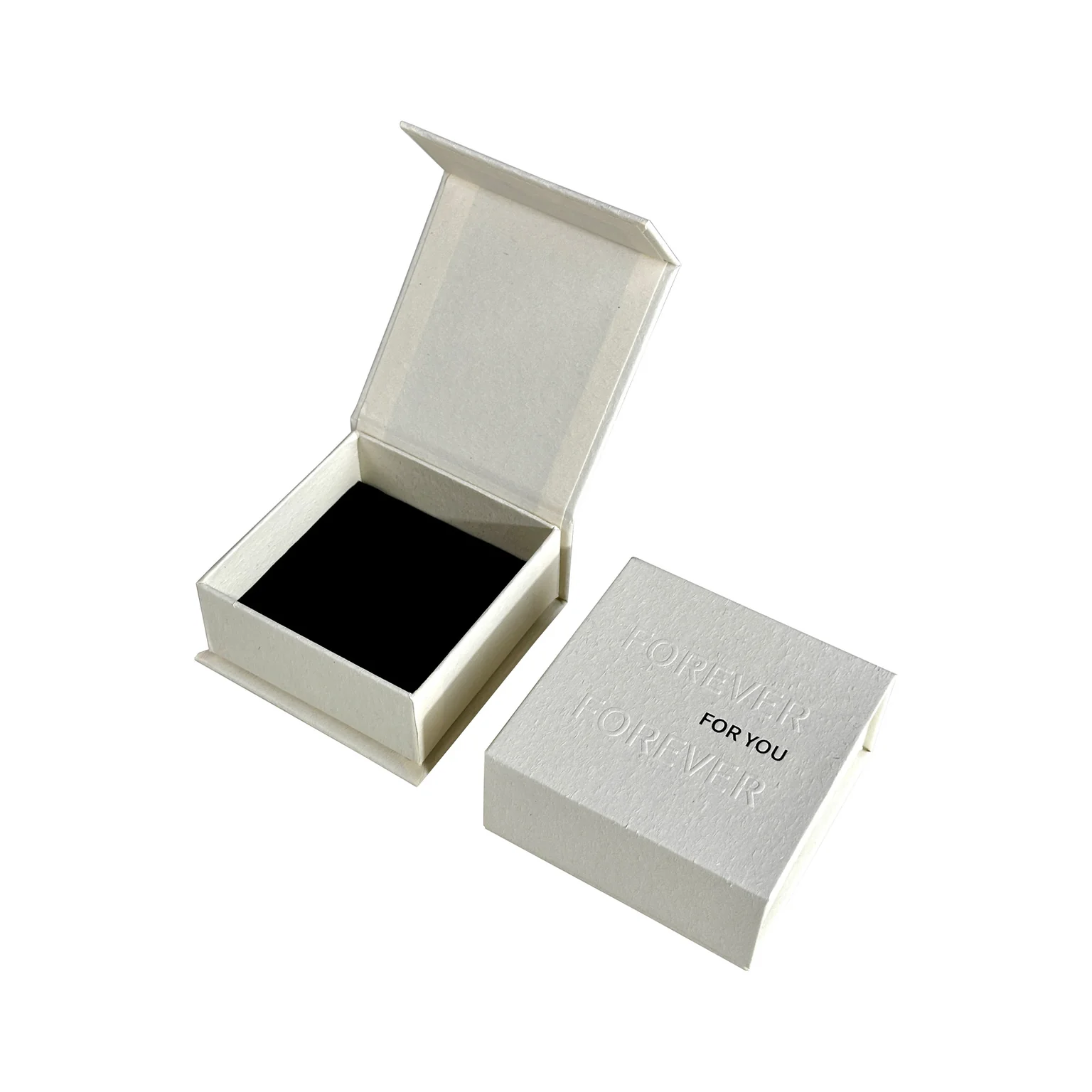
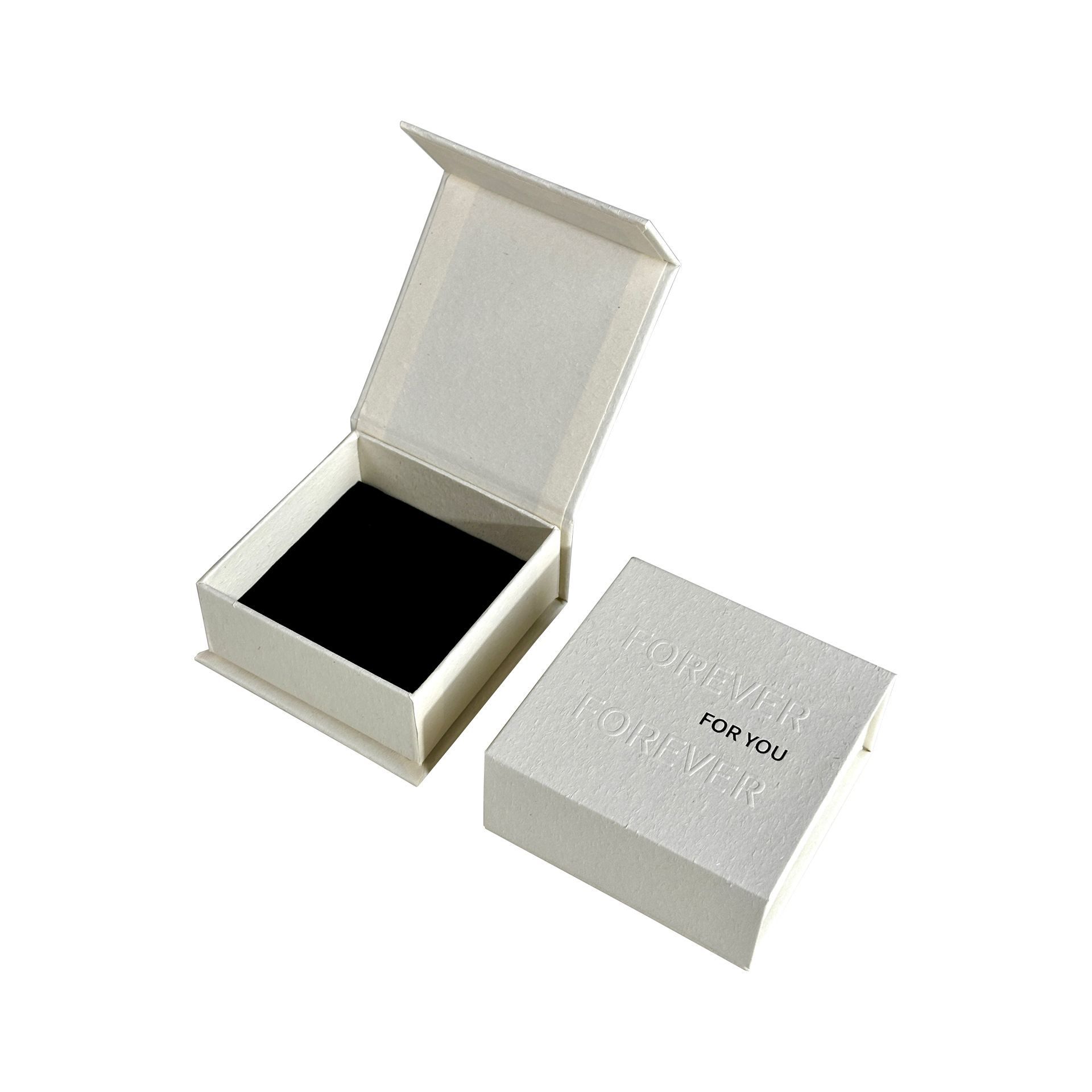
Owner-authorized supplier reference photograph, proportionally resized and WebP encoded. Its visible interior does not identify the filling material, and it is not a Packrivo sample. View original reference photograph.
Choose between a soft bed and a positioned presentation
A soft filling layer is a candidate when the intended jewelry presentation can rest on that layer; a defined holder is a separate candidate when the piece needs a particular display position. The decision begins with the actual item and customer handoff.
For earrings, identify the complete pair, including posts or hooks and their backings. For a pendant, show whether a chain is included and where it goes. A photograph of an empty white pad cannot answer those questions.
Do not assume that soft filling performs the work of a slotted ring pad or a mounted card. If the customer should see a ring upright when the lid opens, the proposal must explain how that position is achieved. If the item lies flat, name the intended orientation and removal route instead.
The broader insert materials comparison considers the job and shape of a holder. Cotton-fill purchasing adds a different question: what is the supplied fiber layer, and does that complete arrangement serve the chosen jewelry presentation?
Product-contact compatibility and any protection claim need evidence for the actual materials and jewelry. Supplier descriptions such as anti-tarnishing should remain attached to their named product and supported scope; this guide does not apply them to all white filling or to a proposed Packrivo package.
Compare the complete offers without changing the jewelry
A useful cotton-filled box comparison holds the jewelry and intended handoff constant while recording differences in the supplied filling. This makes material and assembly differences visible before the buyer compares quotation totals.
Consider a fictional jewelry brand purchasing small boxes for a flat pendant. It has two proposals that look similar in front photographs. The first identifies a removable polyester layer; the second uses the category name cotton-filled but leaves composition and attachment unspecified. No actual quotations or samples are represented.
| Purchase field | First hypothetical proposal | Second hypothetical proposal |
|---|---|---|
| Filling material | Polyester stated | Unknown; category name only |
| Delivered state | Removable layer stated | Attachment and assembly unspecified |
| Actual pendant position | Review required in finished box | Review required in finished box |
| Decision | More defined sample scope | Request missing specification before treating offers as equivalent |
The first proposal is better defined in these two fields. That does not make its fiber superior or prove a successful fit. The buyer can request its identified sample while asking the second supplier to complete the missing information.
If the first sample later reveals a retrieval problem, return that specific arrangement for review. Changing from polyester to a named cotton blend without understanding the contact or geometry would change a material field while potentially leaving the original problem unresolved.
Review packing and removal with the selected layer
The finished cotton-filled box needs a complete packing and customer-removal review with the actual jewelry. A loose insert approved on its own does not show how the item sits after the lid closes.
Begin from the state in which the components arrive. Record whether the packer positions the filling, adds a mounted card, routes a chain or inserts the piece directly. If the intended appearance depends on rearranging the filling by hand, describe that work instead of leaving it invisible in the purchase scope.
Then examine the customer sequence: opening the lid, identifying the jewelry, starting its removal and retrieving any separately included card. Observe whether the filling moves with the piece or hides a small component. These are questions for the actual review; no universal acceptable result is assigned here.
Where several jewelry designs will share one outer box, apply the multi-SKU fit matrix to each complete configuration. Acceptance with one flat pendant should not silently cover a tall setting or a pair of stud earrings.
Send the identified box and filling into the sourcing brief
A supplier-ready cotton-filled jewelry-box brief identifies the box, filling declaration, delivered assembly and jewelry arrangement together. Include photographs of the actual piece, requested quantity and destination, then distinguish confirmed requirements from fields still awaiting an answer.
Ask for material wording that can be traced to the offered filling, a sample representing the delivered construction and a clear statement of the work your team performs. Keep unconfirmed composition, contact suitability and performance out of customer promises.
Discuss the specified jewelry box and filling with Packrivo. Packrivo coordinates independent suppliers; the offered materials, sample scope and commercial terms need project confirmation.
Named supplier product descriptions were checked on 3 November 2026. The comparison and pendant example are hypothetical planning aids, not approved materials, tested packaging or a report of a customer order.