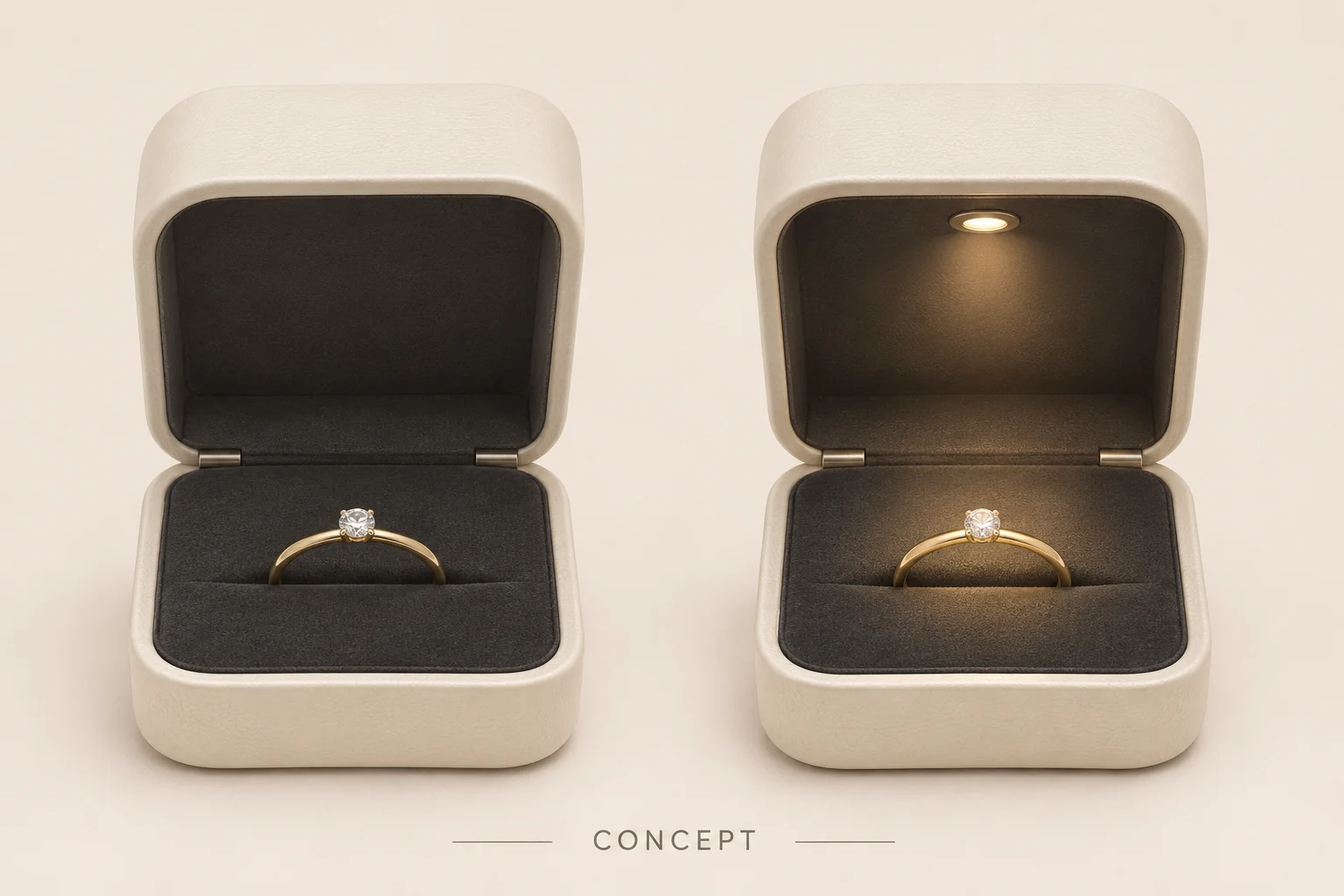
Native AI concept: compare ordinary and illuminated ring presentation.
For a jewelry brand, this is a packaging purchase with an added function. The supplier needs to understand where the box will open, what the customer should see and what happens after that first reveal. Start with those decisions before selecting an exterior color or printing a logo.
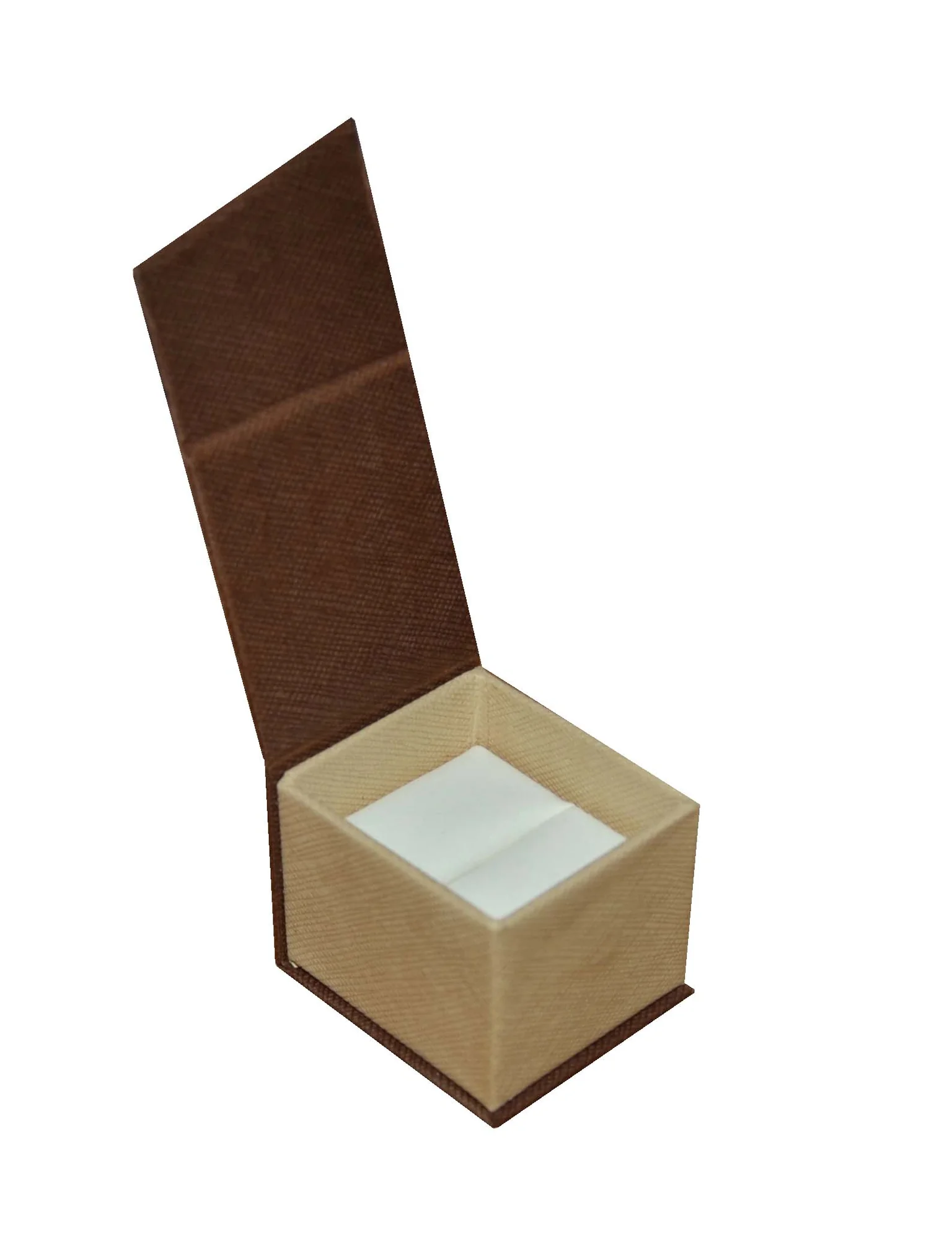
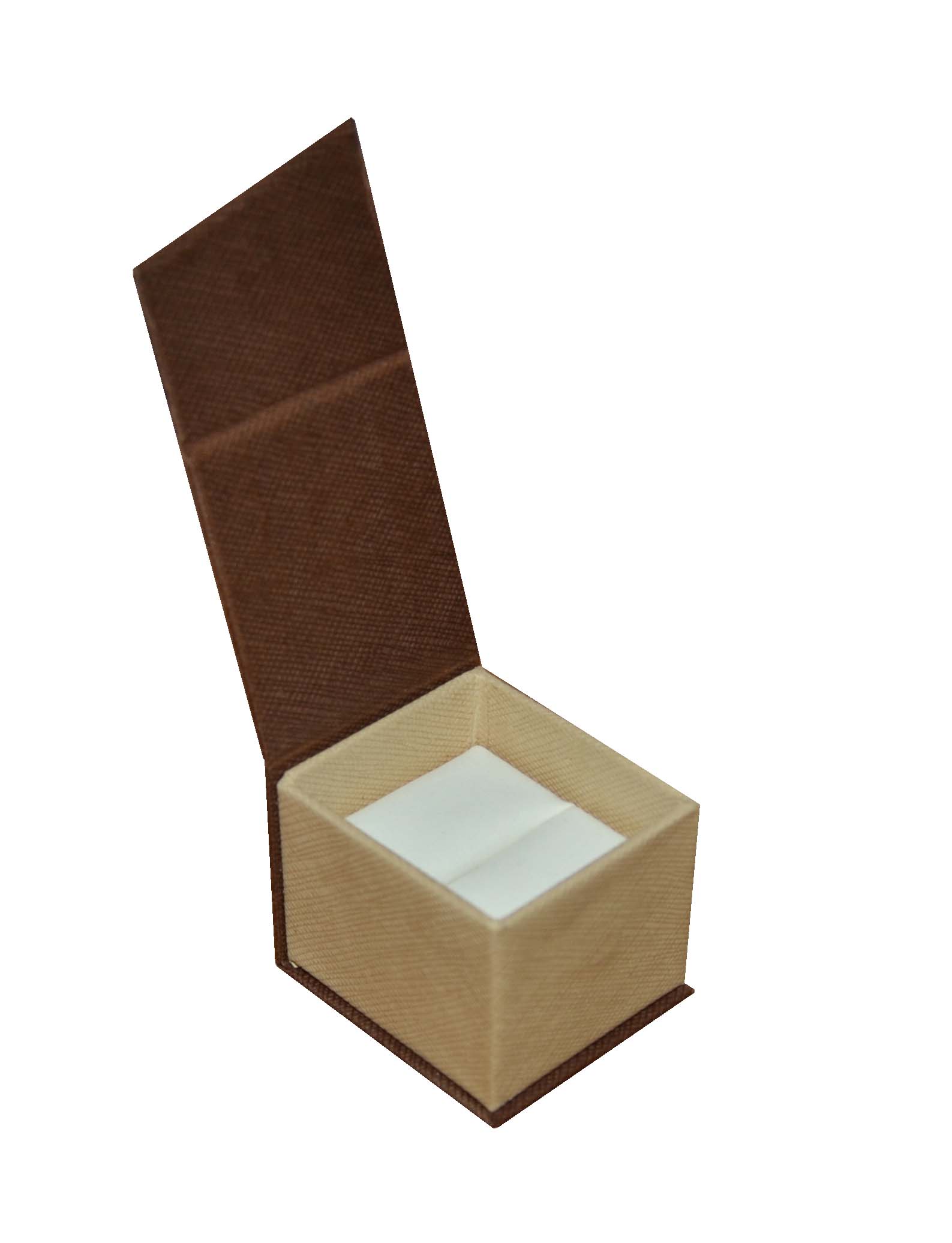
Photo by Vineet1771980, CC BY-SA 4.0. Proportionally resized and WebP encoded; this derivative uses the same license. View original reference photograph.
Give the light a specific presentation job
An LED ring box is a candidate when a deliberate illuminated reveal is part of the brand’s customer handoff. A conventional box remains a useful comparison when the customer will see the ring under the counter’s existing lighting.
Write the setting plainly. A seated consultation, a gift opened at home and a proposal outside the shop create different viewing situations. The box buyer cannot assume that a small source inside the lid will reproduce a studio photograph across all of them.
Real suppliers offer this product direction. Boxpack’s LED collection describes a light inside the lid that activates when the box opens. The collection includes different ring holders. Grant Austin’s jewelry packaging catalogue also lists LED ring and necklace boxes. These examples establish available product categories at those suppliers, rather than performance or availability through Packrivo.
Ask what the light contributes to your intended handoff. If the answer is simply that a photograph looks dramatic, keep the conventional alternative on the shortlist until the actual presentation has been reviewed.
Compare the ring in the same viewing arrangement
The useful lighting comparison keeps the ring, holder, viewing position and surroundings consistent while the proposed illumination changes. Otherwise the buyer may be comparing two different settings rather than the light’s contribution.
Use the complete ring, including its setting and any projecting details. A tall setting can occupy a different position relative to a lid-mounted source than a low band. The jewelry box measurement guide explains why the packed product and finished interior need separate references.
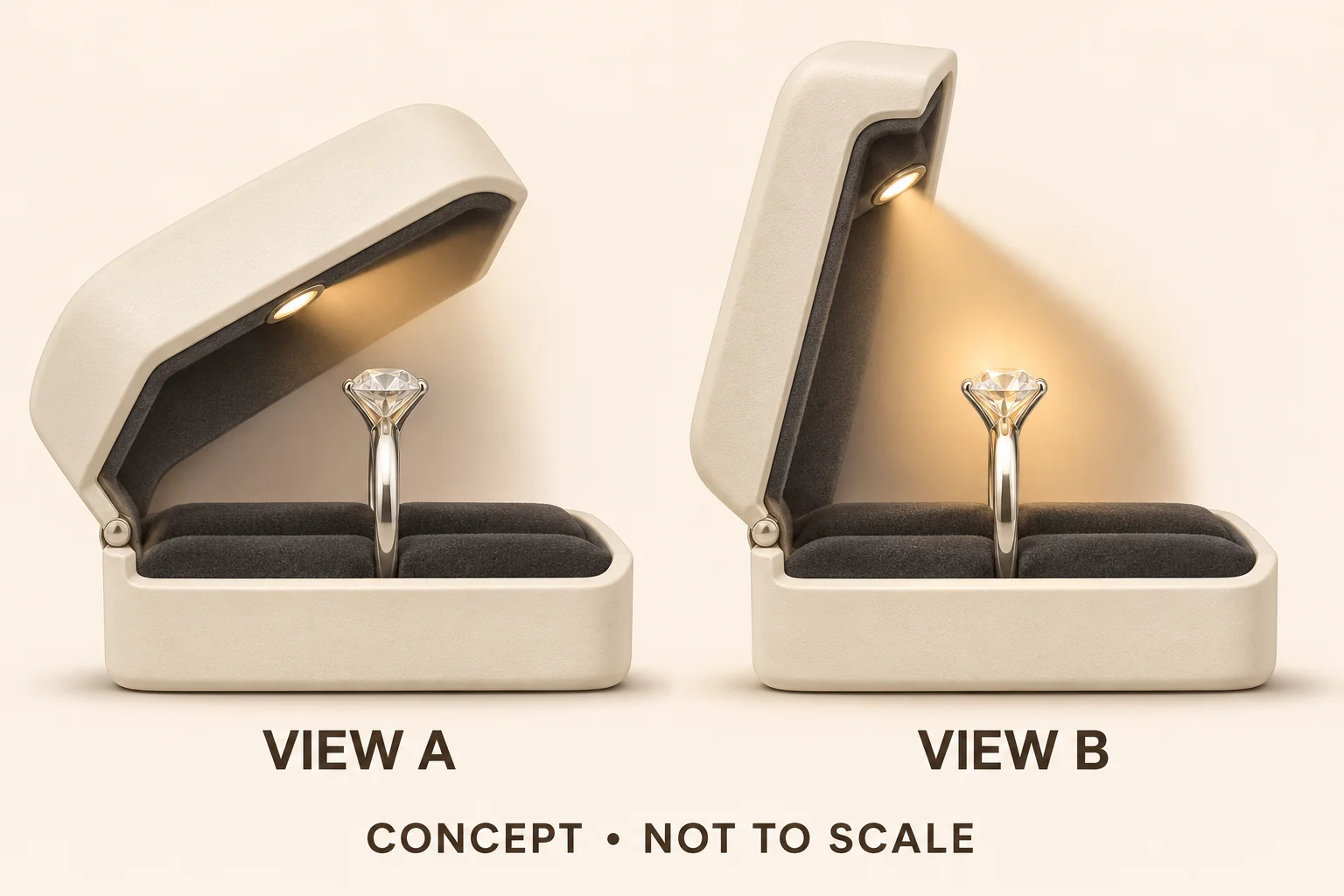
Observe the normal customer viewing angle, then the intended opening position. Look for a source hidden by the setting, a conspicuous bright spot or a ring that sits outside the lit area. Record the actual observation and configuration instead of assigning a universal acceptable angle or brightness.
A comparison photograph can help the packaging discussion, but it cannot establish gemstone color grade or reproduce every viewing condition. Keep the jewelry owner’s assessment of the piece separate from the packaging buyer’s observation of the proposed reveal.
Specify the holder before accepting the illuminated appearance
The LED box still needs a holder that supports the actual ring and allows its intended removal. A well-placed light does not resolve an unsuitable slot, inaccessible grip or incomplete closure.
Ask whether the proposed model uses a slot, post or another identified arrangement. Check how the complete ring rests, what moves when the box opens and where the customer grips it. A change of holder may also change the position that the lighting comparison used.
The jewelry box structure comparison covers the broader opening and retrieval decision. Here, add the light’s position to that same arrangement rather than approving it from a separate empty-box image.
Keep carry requirements separate. The proposal ring box handoff guide concerns concealment, transfer and opening. An illuminated box is not automatically a slim carry box, and a successful counter reveal does not settle the customer’s later carrying plan.
Keep activation and power questions in the purchase scope
A quotation for an LED ring box should identify the complete supplied lighting arrangement and its power documentation. The name LED box alone leaves battery inclusion, activation behavior and after-delivery responsibilities unresolved.
Ask the supplier to identify the power source, whether it is included, the instructions supplied with the finished box and the intended service or replacement route. If a stated operating time matters to the program, request evidence for the exact offered configuration and conditions. This guide supplies no runtime estimate.
Observe opening and closing using the supplied instructions. Note when the light activates, whether it remains on at the intended presentation position and whether it switches off in the instructed closed state. These are sample observations to obtain, not results established by the concepts shown here.
Battery-containing products also require appropriate product, destination-market and transport review. Assign those questions to the responsible qualified parties before ordering. A packaging appearance review provides no electrical, battery, shipping or disposal approval, and this article gives no instructions for opening or modifying the lighting assembly.
Use one fictional purchase comparison to narrow the choice
A jewelry brand can compare an LED candidate against its conventional ring-box baseline before choosing either. Consider a hypothetical brand that wants a clearly illuminated presentation during a seated consultation; no real sample or customer result is represented.
Its ordinary box already defines the desired ring position and removal action. The LED proposal is therefore asked to preserve those actions while adding the intended reveal. If the new holder changes the ring’s presentation height, that becomes a changed input rather than an unnoticed difference.
| Candidate | Question to answer | Decision still open |
|---|---|---|
| Conventional box | Is the ring presented adequately in the intended setting? | Whether extra illumination has a purpose |
| LED box, light off | Does the proposed holder preserve the required position and retrieval? | Holder and opening acceptance |
| Same LED box, light on | Does the light serve the intended view with this actual ring? | Presentation preference and activation observations |
| Complete powered product | Are supplied components, instructions and responsible reviews identified? | Power documentation and qualified compliance review |
Suppose the fictional buyer prefers the LED appearance but has not received the power information. The appropriate output is a preferred presentation candidate with an unresolved purchase condition. It is not an accepted production order. Equally, if the conventional box already serves the intended view, the brand can retain it without inventing a reason to add a light.
Request the box around the presentation you selected
A useful LED ring-box inquiry names the ring, holder, opening setting, intended view and remaining power questions. Include actual product references, the requested quantity and destination, plus ordinary and illuminated comparison views when available.
Ask the supplier to separate the enclosure, interior holder, installed lighting, power source, instructions and branding in its proposed scope. This makes omissions visible without assuming that every LED model is supplied in the same state.
Packrivo coordinates packaging sourcing questions with independent suppliers. Discuss the selected ring-box presentation with Packrivo, identifying the comparison still needed before an order can proceed. Model feasibility, samples and commercial terms remain project-specific.
Supplier sources were checked on 3 November 2026. The comparison method and fictional example are editorial planning aids; no lighting, battery, holder or production performance has been tested here.