
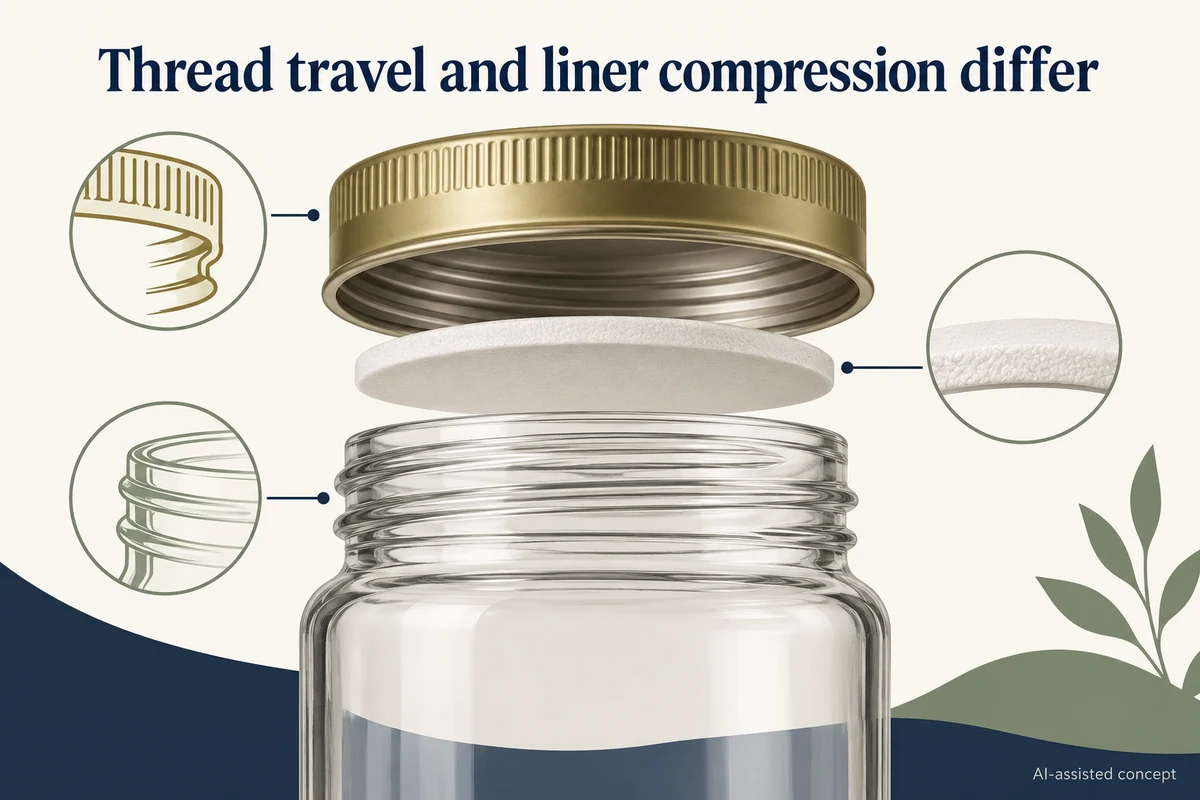
A screw lid's rotation, its axial travel and the compression of its liner describe different inputs. A torque figure doesn't establish how far the lid has moved after first liner contact or whether the resulting assembly provides the intended seal.
The Screw Top Metal Gift Container: Define Thread Engagement and Opening provides a physical reference for the thread, lid and receiving rim. Confirm the actual liner and closing stages separately; the concept does not establish a torque requirement or sealing result.
For a candle brand comparing continuous-thread lids, identify the thread, rim and liner together. Matching outside diameter or a reported tightening value leaves important contact geometry unresolved.
Thread geometry relates rotation to travel
A screw thread guides motion around and along its axis. OpenStax's simple-machine explanation uses the screw to illustrate that geometric relationship. Its ideal machine model isn't a closure specification.
The actual thread arrangement determines the axial travel associated with a turn. Don't assume that every closure has the same thread or substitute a general pitch figure for the identified system's travel. Multi-start and other constructions need their actual geometry understood.
That travel describes relative component position. Before the liner reaches the rim, lid movement can close an initial gap without compressing the liner against the sealing surface. Rotation during that stage shouldn't be counted as compression merely because the cap is moving down.
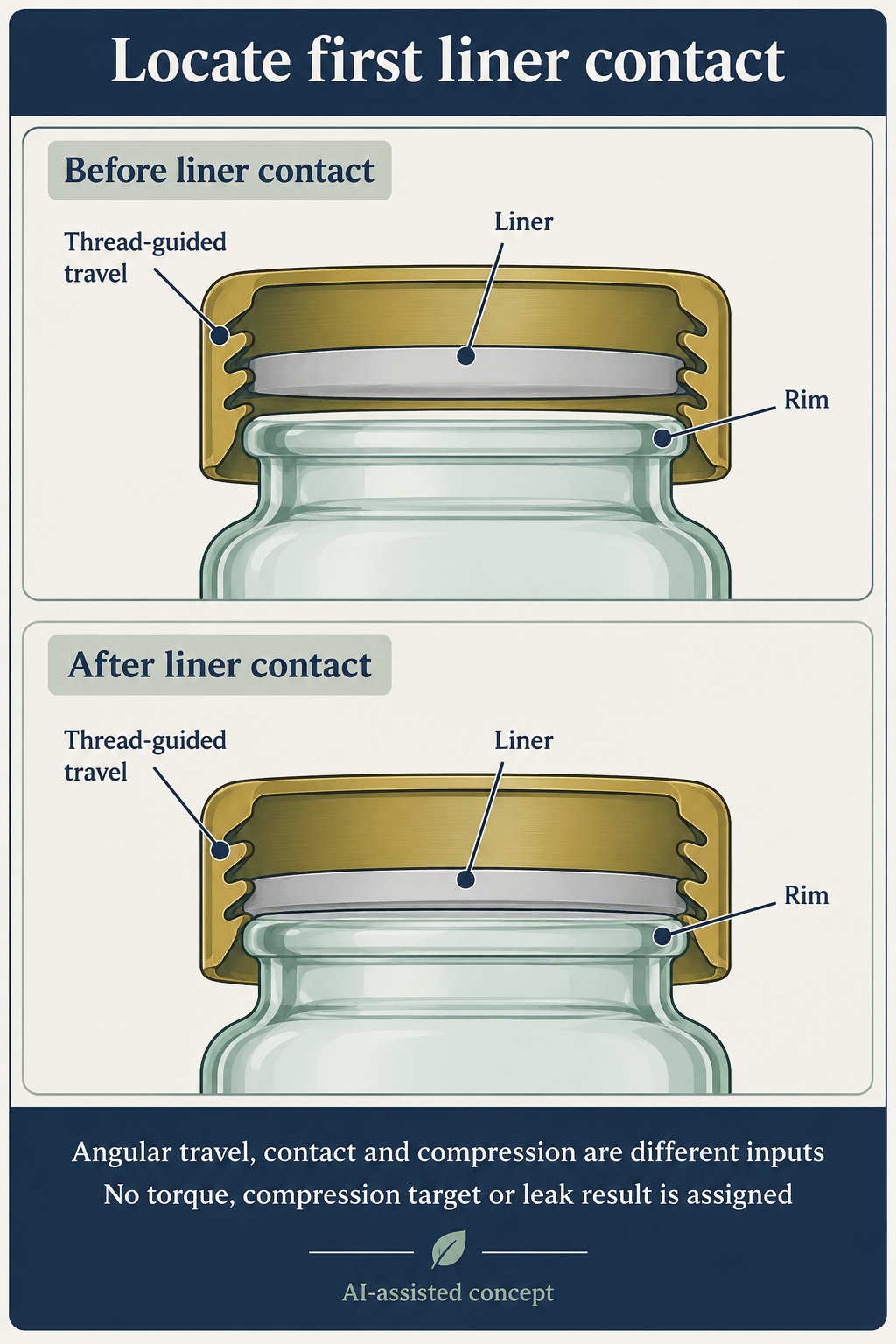
First contact creates a different stage
Once the relevant surfaces meet, further movement can involve liner deformation, component flexibility and other contacts. A stop or another part of the construction may also affect the motion. The axial travel of the lid isn't automatically equal to useful liner compression.
The liner's identity, initial dimensions and installed state therefore matter alongside the thread. A drawing that shows a generic strip beneath the cap doesn't establish its material response or the required contact condition.
An identified contact position is useful because it separates gap-closing motion from what happens after contact. It doesn't provide a compression target, force or seal result on its own.
Torque includes resistance along the motion
Torque concerns a turning effect. The resistance encountered during closure includes the relevant interfaces and their conditions. A reported value cannot independently reveal which share came from thread friction, liner contact or another contribution.
The public scope of ASTM D2063/D2063M-24 identifies torque evaluation for matching continuous-thread container and closure systems. It isn't a leak test, and the full paid method wasn't reviewed here.
The same stated torque on two different constructions therefore shouldn't be treated as proof of equal liner compression. Nor should an application value be relabelled as the later removal value or as a seal-integrity conclusion.
Follow two hypothetical cap-and-liner proposals
Imagine two matching jar-and-cap proposals with similar visible lid diameters. Their thread arrangements and liners differ. No measured travel, force, torque or seal result has been supplied for this teaching example.
The buyer can first identify where each liner meets its corresponding rim and how the thread guides the cap to that state. This distinguishes the geometry from the later deformation question. An earlier first contact in one proposal doesn't establish better sealing.
If the brand changes only the liner, retain that change separately from the thread. If it changes both, a later difference in opening or seal behaviour can't be attributed automatically to one component.
The useful comparison asks which evidence describes the intended assembled state. A single torque number leaves too many of those inputs unidentified to decide the result.
Keep contact, compression and sealing conclusions separate
Contact means the identified surfaces meet. Compression concerns their relevant deformation. Seal performance concerns the intended boundary and use. Evidence about one can inform the others, but it cannot silently replace them.
Packrivo's candle glass contact map helps locate the complete jar, lid and packaging arrangement. The report-configuration guide helps identify which assembly a supplied result concerns.
Use that configuration to request the specific contact, deformation or performance evidence needed for the selection. This article supplies no tightening instruction, target angle, torque setting, liner-compression percentage or leak-proof guarantee.
Identify the contact stage before comparing torque documents
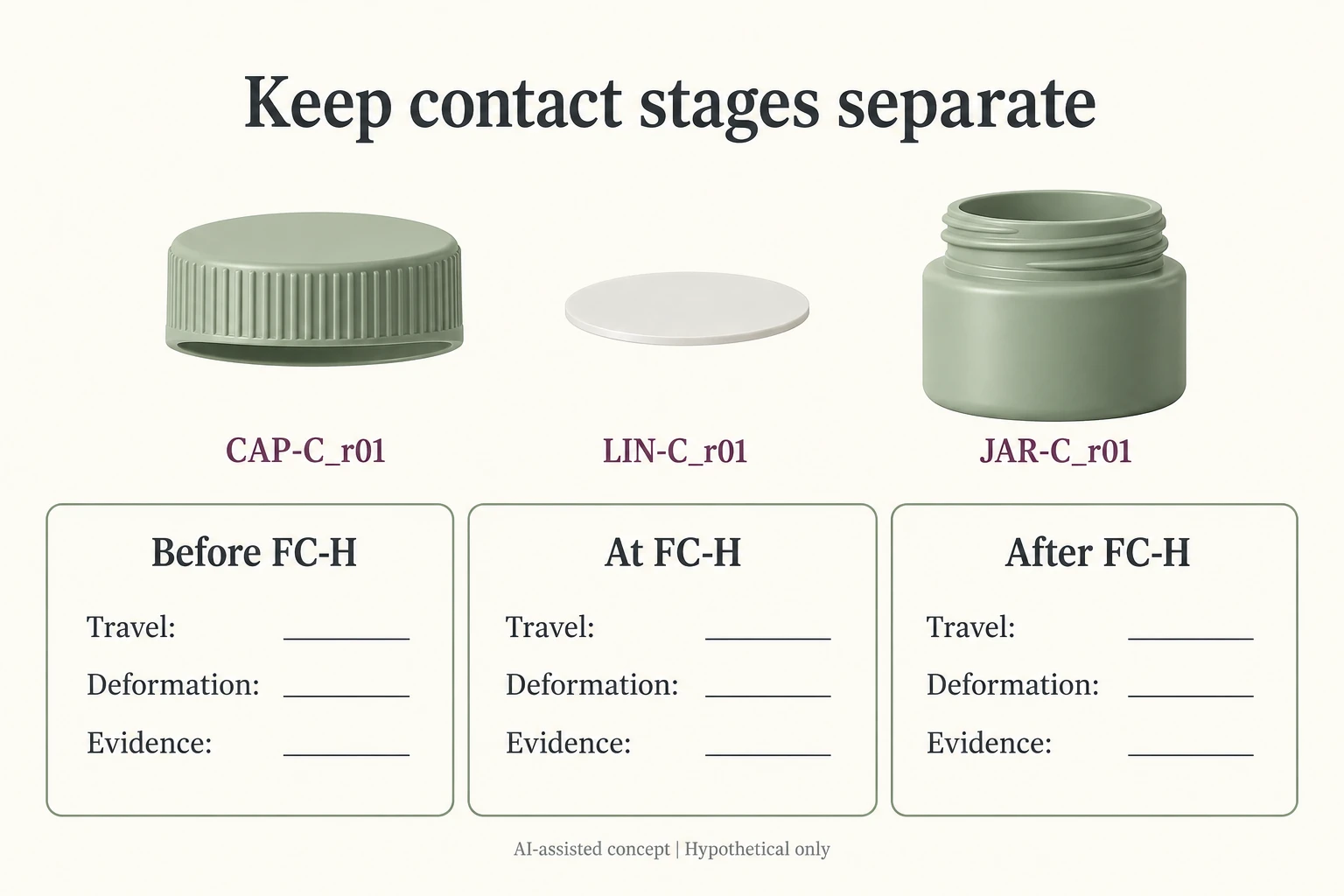
This new hypothetical closure map names jar JAR-C_r01, cap CAP-C_r01 and liner LIN-C_r01. Their first-contact reference FC-H is a proposed geometry milestone, not a tightening target.
Scroll horizontally if columns extend beyond the view.
| Stage | Question | Evidence that remains separate |
|---|---|---|
| Before FC-H | Thread-guided gap closing | Actual thread/travel and contact position |
| At FC-H | Which surfaces first meet? | Geometry and contact evidence |
| After FC-H | Which parts deform or meet another stop? | Relevant deformation basis |
| Later opening | Matching assembled system and timing | Removal torque and seal performance separately |
Retain the actual thread arrangement instead of assigning travel from a generic pitch. Cap motion can close a gap before liner contact and involve several components afterward. No turn count is entered as liner compression.
A proposal that changes only LIN-C_r01 must receive a distinct liner revision while retaining the identified jar and cap. A proposal changing the thread as well is a different comparison. Record both rather than attributing an outcome to the liner alone.
The empty application and removal torque fields do not imply equal values. They also do not establish sealing, leak tightness or a compression target. No tightening direction, angle, force, operator procedure or torque setting is provided.
Download the screw lid liner compression record (.csv). HYPOTHETICAL rows are invented examples. Use ACTUAL_BLANK for permitted project inputs; replace that row label only when recording actual facts. Empty evidence, observation and date fields mean unknown or not performed, never acceptance. Keep checkpoints and revisions separate.
Bring the exact matching jar, cap and liner revisions through the packaging enquiry so contact, deformation and torque evidence remain traceable. Packrivo coordinates independent suppliers. These records establish no supplier offer, service availability or MOQ exception; its published baseline is 500 pieces per product/design.