
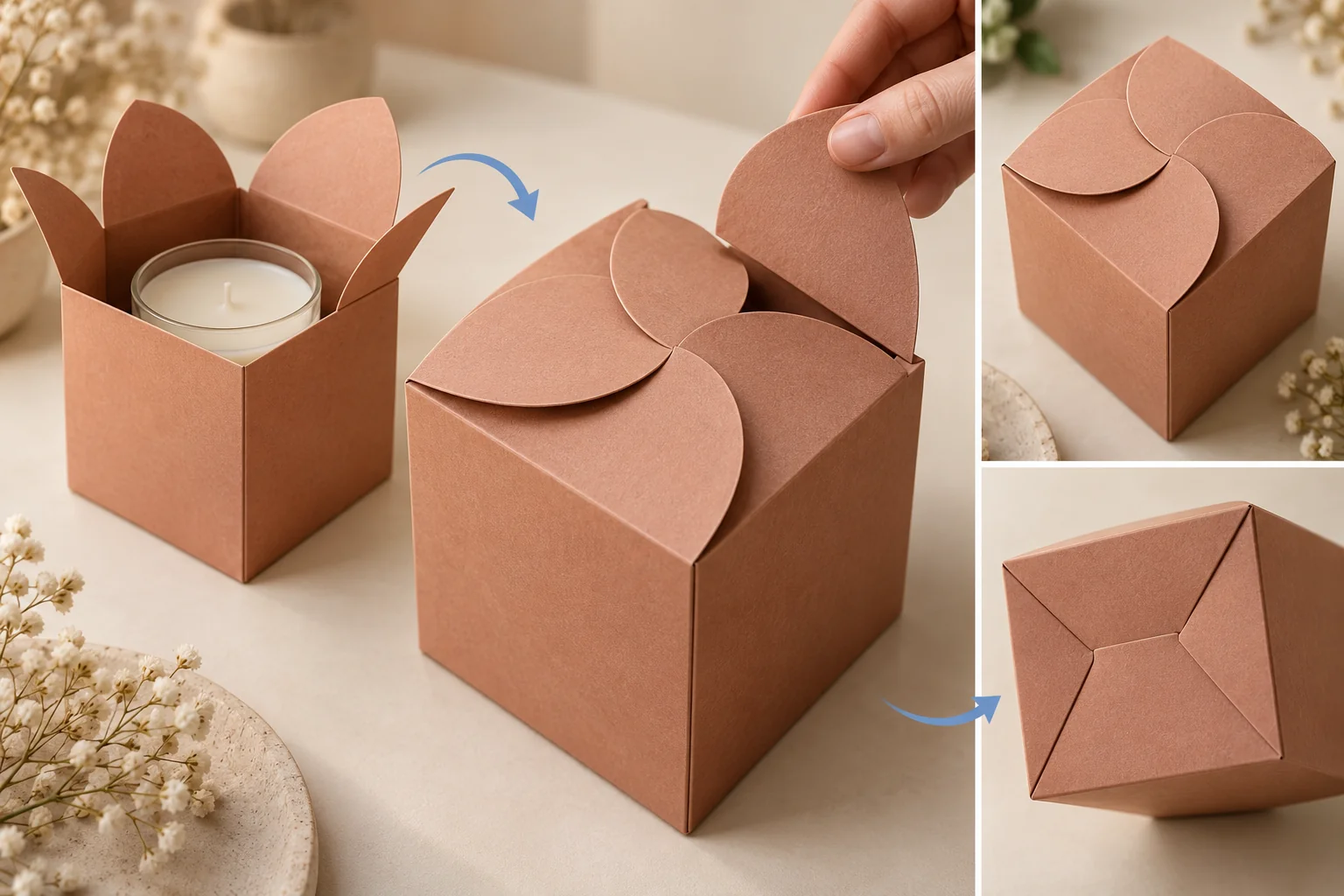
This packaging concept requires supplier confirmation of the offered petal geometry, board, base and supplied state. The illustration explains the closure sequence.
Identify the petals and the final entry
PakFactory’s flower-petal top reference identifies folding-carton flaps that interlock into a flower-shaped top. A rosette-top carton description identifies a sequentially folded petal closure, separate tuck bottom and flat delivery with a prepared side seam. Those are narrow construction examples, not universal dimensions or Packrivo manufacturing claims.
Ask the converter to label every petal, its crease and the edge it overlaps. Mark which petal moves first and where the final one enters the offered overlap. Keep the actual panel count on the drawing rather than inferring it from the style name.
Supply the complete product and holder envelope. Identify the highest local projection beneath the moving top. A gift can sit inside the carton yet approach a petal as that panel crosses the opening. Record that movement with the product state and offered drawing.
Separate bottom setup from petal closing
Request the actual base construction and delivered preparation. State who forms the bottom before loading, which joints arrive prepared and what remains for local packing. The petal-top choice does not settle the bottom operation.
Compare the paperboard roll-end dust-flap carton directly. That option forms rolled walls and closes dust flaps with a top tuck. This flower-petal option needs a sequence of overlapping top panels and a final petal engagement, plus a distinct release touchpoint.
Form the offered base, load the complete contents and follow the named petal sequence. Pause before the last petal enters and inspect the top-panel/product relationship. Then open through the intended touchpoint and record which petal releases first. Ask for a located revision if the agreed route needs a different action.
Use a petal sequence and height record
The following hypothetical four-petal proposal is an original brief example. The offered design can have another panel count or arrangement.
| Closure field | Illustrative input | Review evidence |
|---|---|---|
| Order P1→P2→P3 | Named moving panels on drawing FT1 | Partly closed views in the offered sequence |
| Final petal P4 | Entry beneath the offered receiving overlap | Last-entry detail with complete contents |
| Product envelope | Holder and care card in final positions | Highest projection below moving petals |
| Opening touchpoint | Edge used to begin customer release | Loaded reopening route |
| Bottom B1 | Offered tuck or other proposed base | Supplied-state and local setup record |
Handoff the actual closing route
The converter supplies the panel, overlap and base drawings. The packing owner confirms setup and closing actions with the actual contents. The buyer chooses the intended opening route or requests another sample tied to a particular petal or height question.
Use the tuck-end carton option for a simpler end-closure comparison and the supplied-state record for preparation responsibility. Send the petal sequence, contents height and opening question through Get a Quote. MOQ is 500 pieces per design; materials, samples and commercial terms are confirmed for the project.