
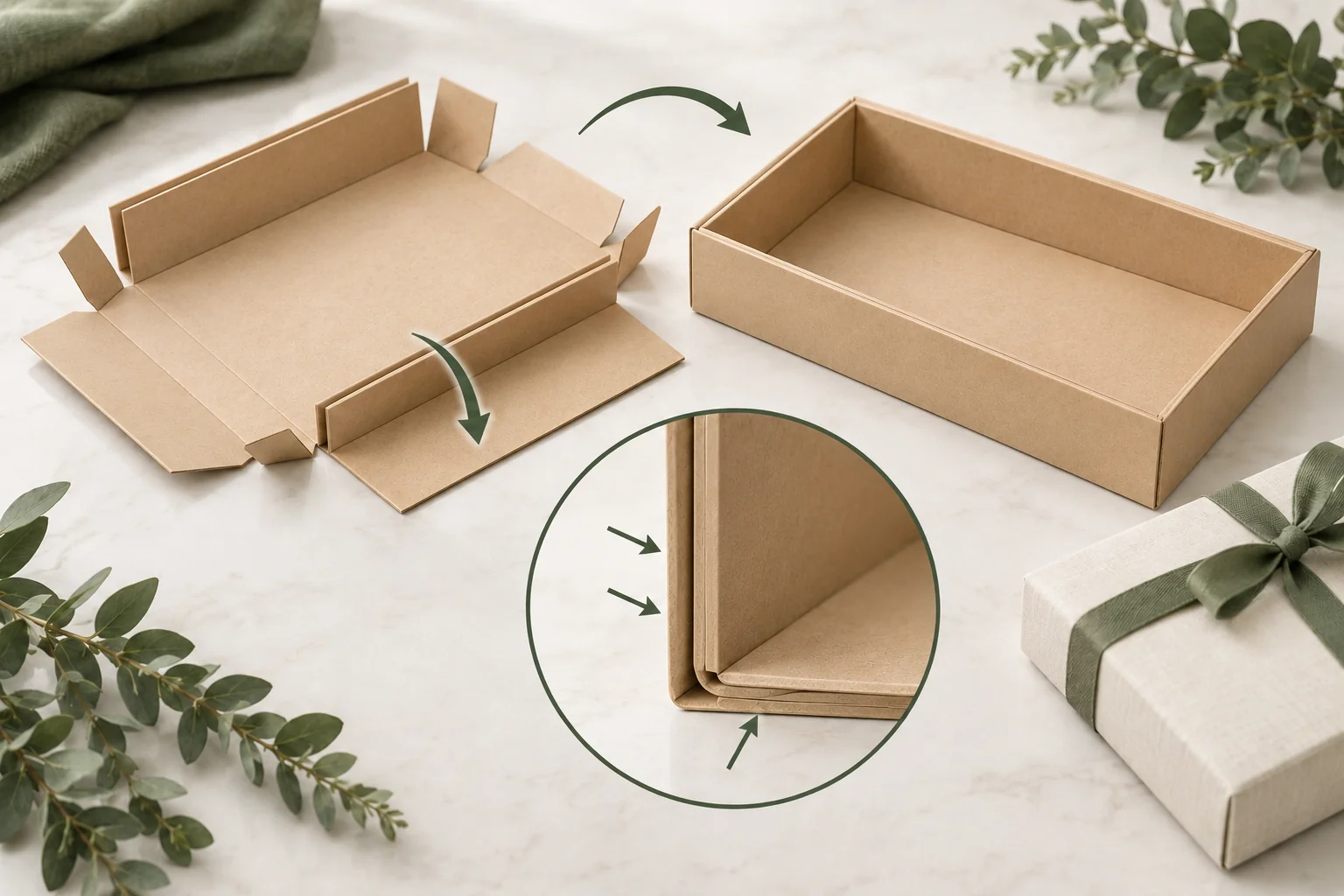
This concept explains a doubled-wall interface; the actual wall preparation, board and lid fit are confirmed on the offered drawing.
Draw the wall section as well as the outside shape
The double-wall tray-and-lid reference identifies the named set. Esko’s ArtiosCAD tray catalogue includes double-sidewall/double-endwall drawings. Ask the converter for its own section through the inner wall, outer wall and corner joint, plus a formed tray view.
Record which panels are factory prepared and which are folded at packing. A catalog name does not establish that every wall is glued, locked or erected in the same order. Show those operations individually and attach the supplied-state description to the component IDs.
Locate the usable cavity after the wall returns are formed. Include the insert, finished gift and card in that space. An outside length and width cannot explain how much room is occupied by a returned wall or whether an insert sits over it.
Compare full walls with a frame return
The double-wall frame tray-and-lid option introduces a raised frame or hollow rim around the product. A frame-tray construction description identifies inward-folded walls forming that rim. Compare the section, cavity edge and lid engagement rather than deciding by similar product names.
The folding lid-and-base set is another alternative with two separately formed pieces. Hold the gift contents constant while comparing the wall formation, lid placement and customer removal. The useful output is a description of different actions and clearances, not an unsupported ranking of strength.
Seat the proposed lid over a fully loaded tray and inspect its contact with the formed walls. Remove the lid through the intended grip, then remove the gift. If a wall return lifts with an insert or a card sits in the lid engagement area, locate that interface and ask for the next revision.
Use a wall-section comparison record
The hypothetical entries distinguish tray construction from decorative finish.
| Comparison field | Full doubled-wall proposal | Question to resolve |
|---|---|---|
| Wall section | Inner and outer wall panels labeled W1/W2 | Which joints are prepared or formed locally? |
| Cavity edge | Insert I1 seats inside formed walls | Does any return overlap the insert? |
| Lid engagement | Separate lid L1 over tray T1 | Where does the loaded lid contact? |
| Frame alternative | Raised rim shown in a separate section | How does the usable cavity change? |
| Removal | Lid lift followed by product grip | Does another component move with it? |
Ask for the section that settles the comparison
The converter should return wall and lid sections with component revisions. The packing owner should verify that the described delivered pieces can be formed in the planned order. The buyer can then compare complete sample states using the same contents and decide which cavity and opening route to develop.
Use the folding gift-box guide for the broader dimensions and flat-pack brief. Send the wall sections, complete contents and selected comparison to Get a Quote. MOQ is 500 pieces per design. Final construction, material and commercial conditions are confirmed for the project.