
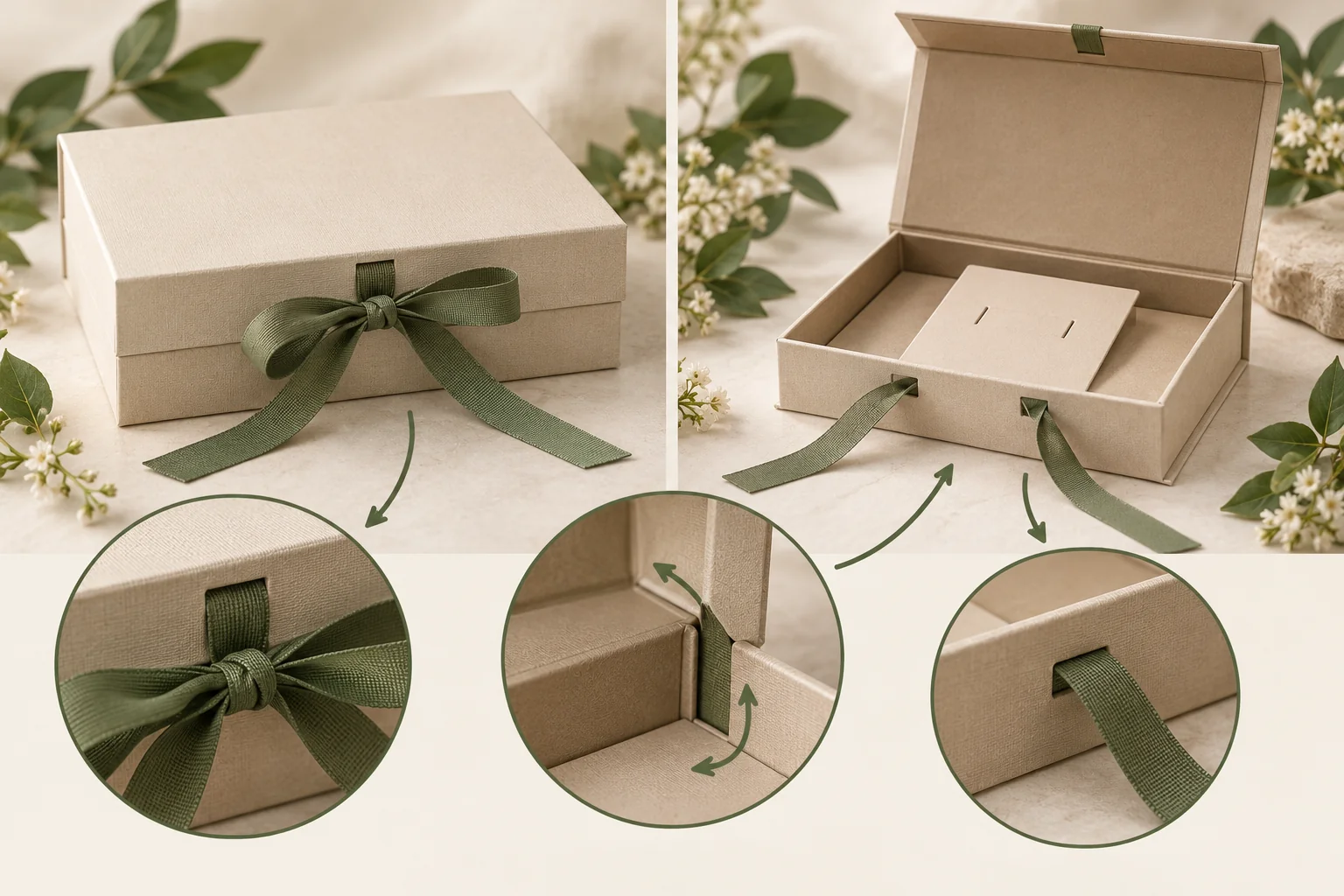
This concept explains a functional ribbon closure; the offered hinged structure, anchor details and material are confirmed for the project.
Identify what the tie actually closes
The rigid-box specification guide describes ribbon or paper-tie closures among rigid packaging choices. Ask the converter to show how the proposed tie joins the moving cover and base. Record the hinge/spine separately from the ribbon anchors.
State whether the ribbon passes through slits, is attached under a wrap or uses another offered construction. Give the free-end position, intended knot and customer grip as proposal fields. A drawing can then show which surfaces move and where the tie remains when the cover opens.
Add the product and insert height to the closing view. Include a card or accessory on the inside cover if one is planned. The ribbon can cross a different surface when untied, so inspect the open state as well as the closed bow.
Review tying and opening with the complete gift
Seat the gift in the holder, close the cover and tie it through the intended route. Open it again using the planned release grip. Photograph the anchor areas and the free ribbon ends beside the contents. Record any contact with the product finish, card or holder that needs a change.
Compare the existing magnetic jewelry box when its offered closure may better suit the project. The functional tie introduces an additional hand operation and customer release question. Keep that action explicit rather than treating the ribbon as a visual substitute for a hidden mechanism.
The collapsible gift-box option also raises a separate supplied-state decision. If a rigid ribbon box arrives formed, record its storage and packout state rather than assuming it folds flat.
Use an anchor and tie-route record
This hypothetical jewelry-gift example defines the closing operation without assigning holding-force values.
| Interface | Example brief entry | Review decision |
|---|---|---|
| Cover hinge | Spine H1 on offered structure | Review full cover travel |
| Ribbon anchor | Attachment A1/A2 and wrap relationship | Request attachment detail |
| Tie route | Front knot with free ends outside lid edge | Review loaded tying action |
| Open state | Released ends stay clear of jewelry holder | Observe finish/contact locations |
| Supplied state | Formed box and separate ribbon preparation if any | Confirm packing-owner action |
Give the proposal a visible release route
The converter should identify anchor construction and the supplied ribbon/box state. The packing owner should retain the tying sequence and any positioning changes used in the sample. The buyer can then decide whether the tie is an acceptable closing action or whether another offered closure needs comparison.
Record the sample changes in the revision record so a relocated anchor stays connected to the box and wrap drawing.
Bring the functional tie route, complete contents and open-state contact question to Get a Quote. MOQ is 500 pieces per design. The offered hinge, ribbon, wrapping, sample arrangements and commercial terms are confirmed for the project.