
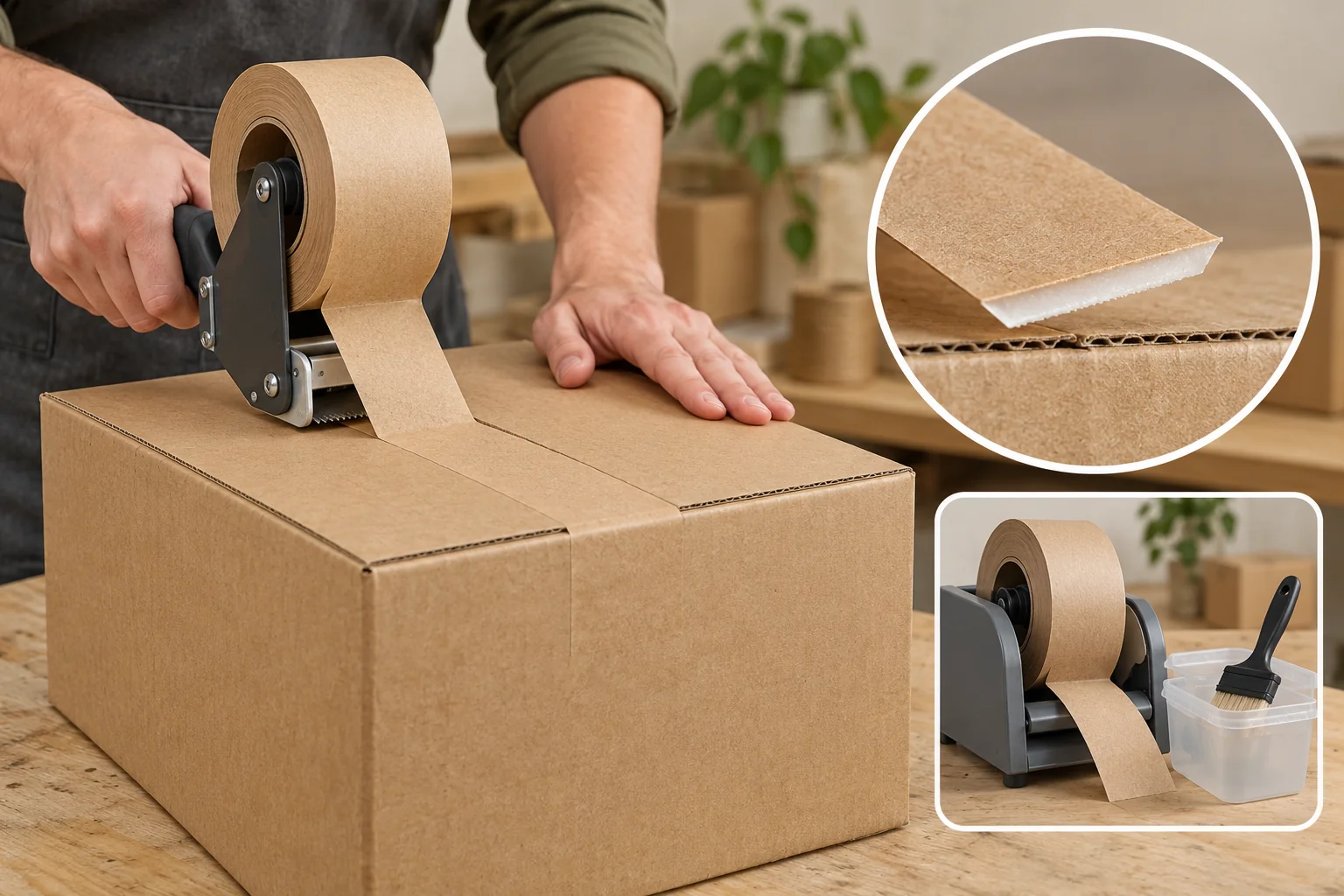
This concept is a packaging option for a paper-backed pressure-sensitive seal. The actual offered tape grade and carton suitability require confirmation.
Identify the adhesive operation as well as the paper
The original tesa paper-tape construction reference identifies a paper backing and synthetic-rubber adhesive example, with manual or machine dispensing. Use that description to separate backing, adhesive and application fields. Its published grade properties are not specifications for a different offered tape.
Request the actual tape grade and current technical sheet. Record the backing and adhesive identities, proposed width and intended dispenser. If the supplier offers another adhesive construction, retain that as a different proposal instead of referring to every paper tape as the same material.
Map the carton seam that needs sealing. Include the finished printed/coated surface, flap arrangement and top/bottom operations. Ask the packing owner to identify the surface and conditions at application; those inputs belong to the seal review.
Compare dispensing with water activation
The reinforced water-activated paper tape adds a different preparation step and layer stack. This pressure-sensitive option centers on dispensing and applying the offered adhesive to the named carton surface. Compare the actual packing operation rather than choosing by a generic paper or reinforcement label.
Have the packing owner dispense the proposed tape with the intended tool and apply it through the confirmed method. Photograph seam coverage and any edge observation on the actual carton. Record the tape grade, carton revision and application conditions with that observation.
If a seal edge lifts or the tape does not follow the seam as intended, locate the area and ask for an application or grade response. Avoid assigning an allowable box weight from an unrelated manufacturer example. The next decision needs the actual offered tape and packed-carton evidence.
Use a tape and seam application record
This hypothetical gift-carton example keeps the adhesive and packing operation visible.
| Seal field | Example input | Next confirmation |
|---|---|---|
| Tape grade T1 | Backing/adhesive and current technical sheet | Offered grade identity |
| Seam S1 | Top flap joint on carton BX1 | Width/coverage proposal |
| Surface | Final printed/coated carton face | Maker or converter compatibility question |
| Dispenser | Intended manual or machine setup | Packing-owner confirmation |
| Observation | Located edge/coverage result and conditions | Application/grade response and owner |
Send an application question that can be answered
The tape supplier should confirm the offered grade and its application instructions. The carton converter should identify the relevant surface construction. The packing owner should report the operation actually used, and the buyer should decide what additional evidence is needed before accepting the seal plan.
Keep supplied tape and local packing operations in the assembly-scope record. Use mailer options for the enclosure comparison.
Share the grade, seam map, carton surface and dispensing question through Get a Quote. MOQ is 500 pieces per design. The offered material, sample scope and commercial terms are confirmed for the project.