
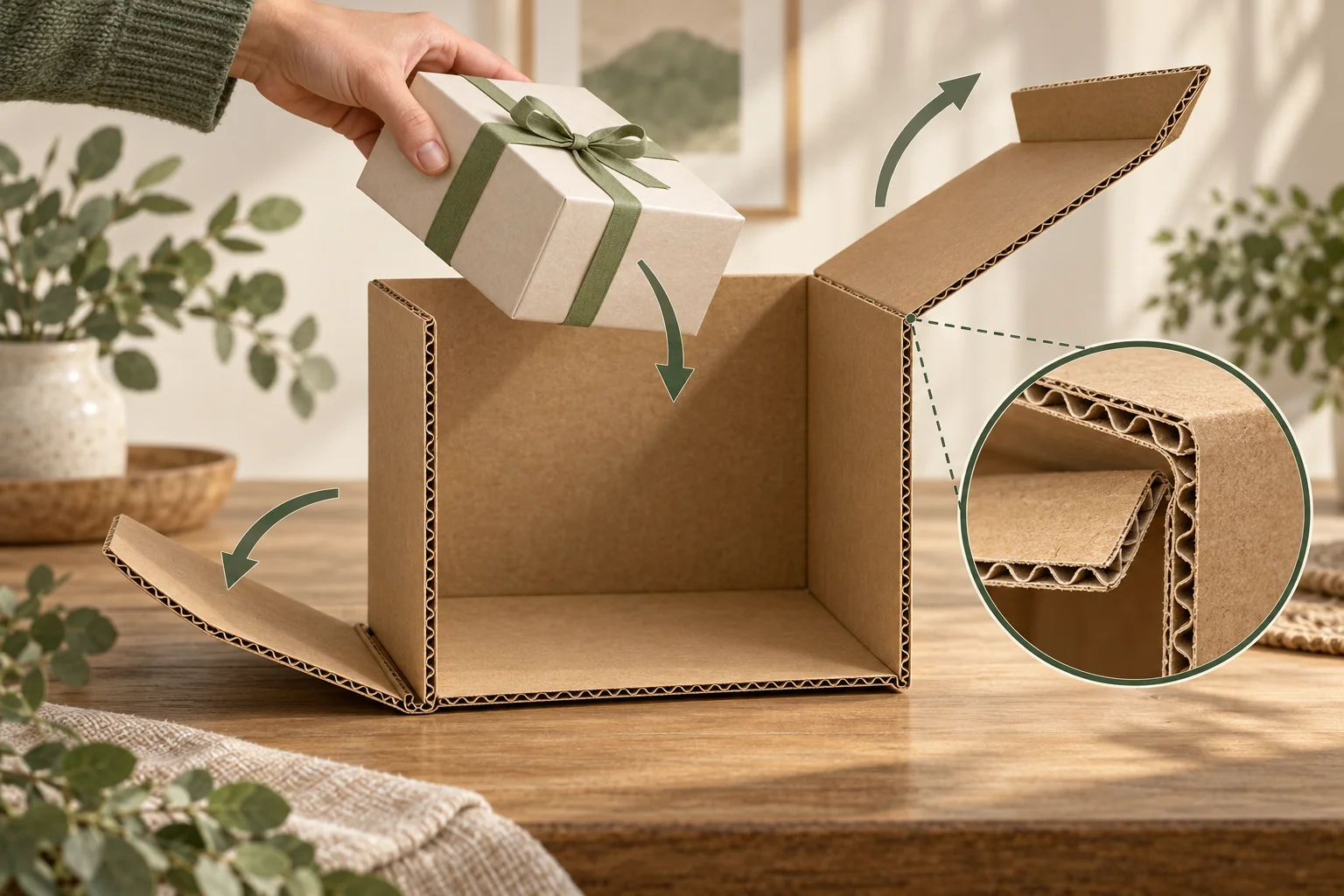
This is a packaging concept for an inquiry; the offered corrugated construction and end geometry are confirmed for the actual product.
Draw both ends with the corrugated proposal
The corrugated reverse-tuck reference identifies the named style. The FEFCO reference provides general corrugated design language. Neither replaces the project’s offered end drawing or assigns a universal closure allowance.
Label the end used by the packing team and the end intended for the customer. Mark the tuck receiving edges and the flute direction across their folds. Record the corrugated construction as a named proposal so the formed sample and drawing use the same material identity.
Measure the complete inner pack, including the presentation box, insert and any accessory. Show where those contents approach each tuck edge. A changed board proposal can alter the formed interface and should remain linked to a sample revision rather than being treated as an interchangeable brown sheet.
Check fold build-up and loaded closing contact
Form the carton using the offered instructions, then inspect the thickness build-up at each folded end. Load the complete contents through the intended route and close both tucks. Record a catching edge, displaced card or interference at a receiver by its location on the drawing.
Compare the paperboard reverse-tuck carton for a different presentation role. This corrugated option adds flute/fold and outer-pack contact questions. The comparison should keep the product arrangement and intended route visible, without assuming that a material name establishes transit protection.
The existing front-tuck mailer offers a different cavity and closure route. Compare how the same inner pack is loaded and removed rather than choosing only by the outline seen from above.
Use an opposing-end contact record
The following hypothetical candle-gift entries separate the two tucks and the inner pack.
| End or interface | Input to supply | Sample observation |
|---|---|---|
| Packing end A | Named tuck panel and receiver | Loading access before closure |
| Customer end B | Opposite tuck and intended grip | Reopening and product removal |
| Flute/fold | Board proposal and fold orientation | Formed end build-up |
| Inner gift box | Finished envelope and projecting card | Contact beside each tuck |
| Outer-pack role | Route and additional enclosure if proposed | Required review of the complete system |
Keep material and drawing revisions together
The converter should return a board identity, flute/fold map and end geometry. The packing owner should report the end used for loading and any contents adjustment. The buyer should approve a specific configuration or ask for another sample, with any transport review scoped separately to the full packed system.
Use the dimensions and acceptance-method guide to name the receiving edge or formed feature that needs checking. Keep the ordinary tuck-end option available as a presentation-format comparison.
Share the complete inner pack, both end maps and the corrugated proposal in Get a Quote. MOQ is 500 pieces per design. Structure, material, samples and commercial terms are confirmed for the project.