
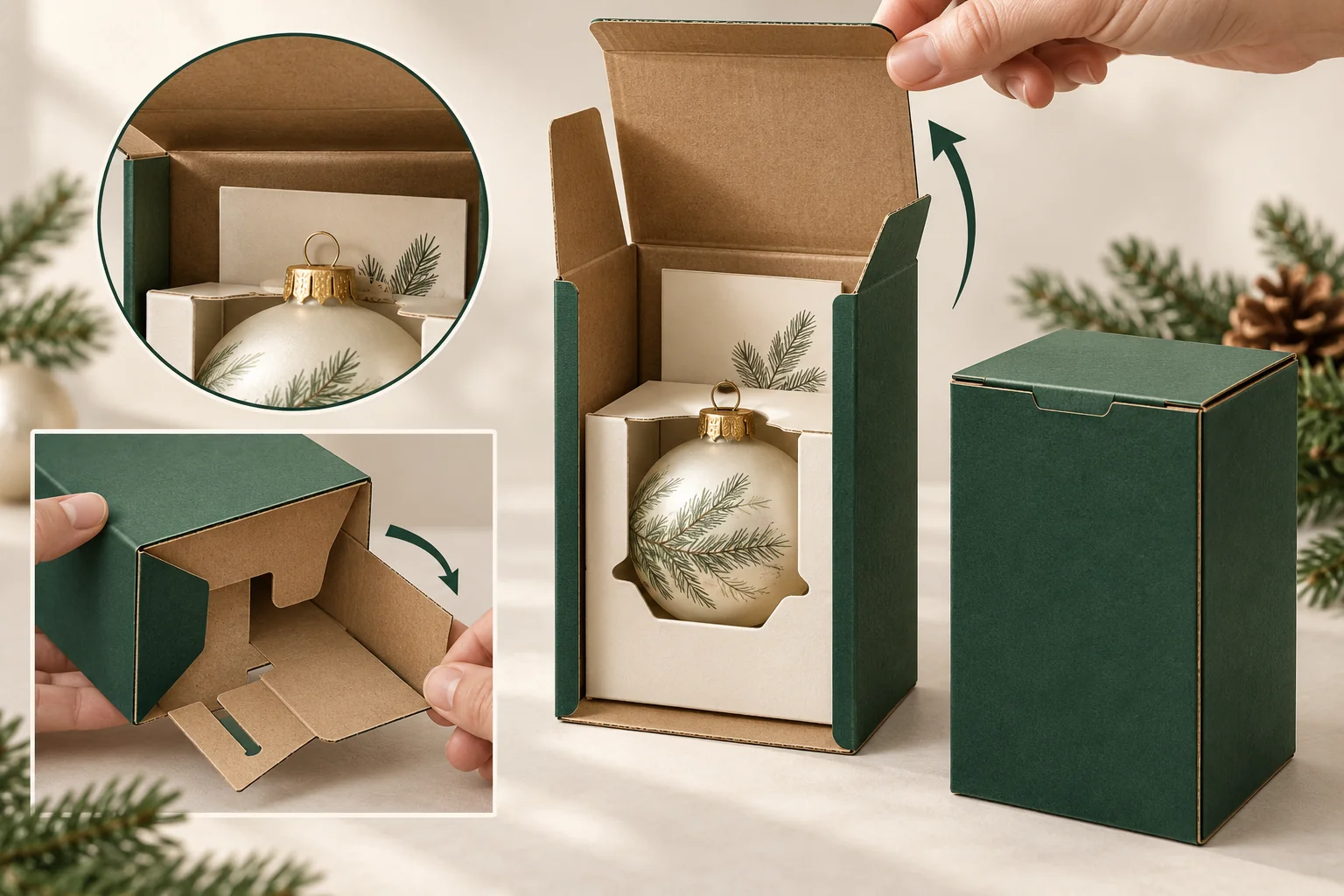
Request the bottom-tab sequence, tuck-top drawing and named corrugated construction together. Use the same complete product arrangement when reviewing both closures.
Start with the base instruction
The tuck top 1-2-3 bottom reference identifies the combined format. Obtain a marked drawing and the actual manual base sequence. A catalog name cannot tell staff which tab folds first or what final engagement to inspect.
Show the empty carton in its supplied state. Identify the prepared side seam and any remaining work. Keep the base inspection before the loading step so contents cannot hide an incomplete tab.
The snap bottom slotted outer carton has a related manual-base task but a different top-closing proposal. Compare the top work explicitly rather than treating both options as the same carton.
Fit the tuck top to the complete packed envelope
List the product, holder, wrap and card that belong inside. Mark the highest packed point and where it sits under the top. A card folded above the product can change the top question without changing the main item.
For a hypothetical ornament pack, form the base, insert the holder and product, then place the care card as proposed. Close the top in the confirmed order. Photograph the tuck entry before pushing it to its final position.
Record contact with contents or another flap by location. The supplier can then assess the actual interface. Pressing harder without recording the action leaves the apparent fit misleading.
Use a paired closure record
Keep one carton, contents and material revision across both closure reviews. The record should show the different evidence each end needs.
| Closure or step | Closure input for the supplier proposal | Review evidence |
|---|---|---|
| Manual base | Named tabs and order | Empty final engagement view |
| Loading | Product/holder/card sequence | Complete open loaded state |
| Tuck-top entry | Flap and receiving position | Contact before final closure |
| Closed top | Highest contents and panel position | Loaded closed view |
| Customer opening | Preferred end and grip | Opening and removal sequence |
Ask whether the bottom is intended to remain closed throughout use. If the customer should open the top only, place any instruction accordingly. A packing operator’s convenient access route is not automatically the customer route.
Keep material and supply scope connected
Record corrugated grade, fold construction and any proposed finish on the sample. If the base sequence changes after a material revision, update its instruction as well as the drawing. A retained title does not mean the operator actions are unchanged.
Confirm whether the carton arrives flat and which closure work belongs to your team. Keep any required handling evaluation separate from the local fit record. Neither a locked base nor a tidy tuck top establishes a distribution result.
If another product variant shares the design, record its complete envelope separately and repeat the top review. The same manual base instruction can still sit beneath a different loaded top question.
Send both closure jobs
Submit the base instruction, contents envelope, top observations, quantity and destination through Get a Quote. The minimum is 500 pieces per design. Construction, materials, samples, pricing and timing require project confirmation.