
Start at 250 custom boxes, not 5,000
We match your order with vetted independent suppliers in South China that take small-batch runs, so you don't over-order before testing a product.
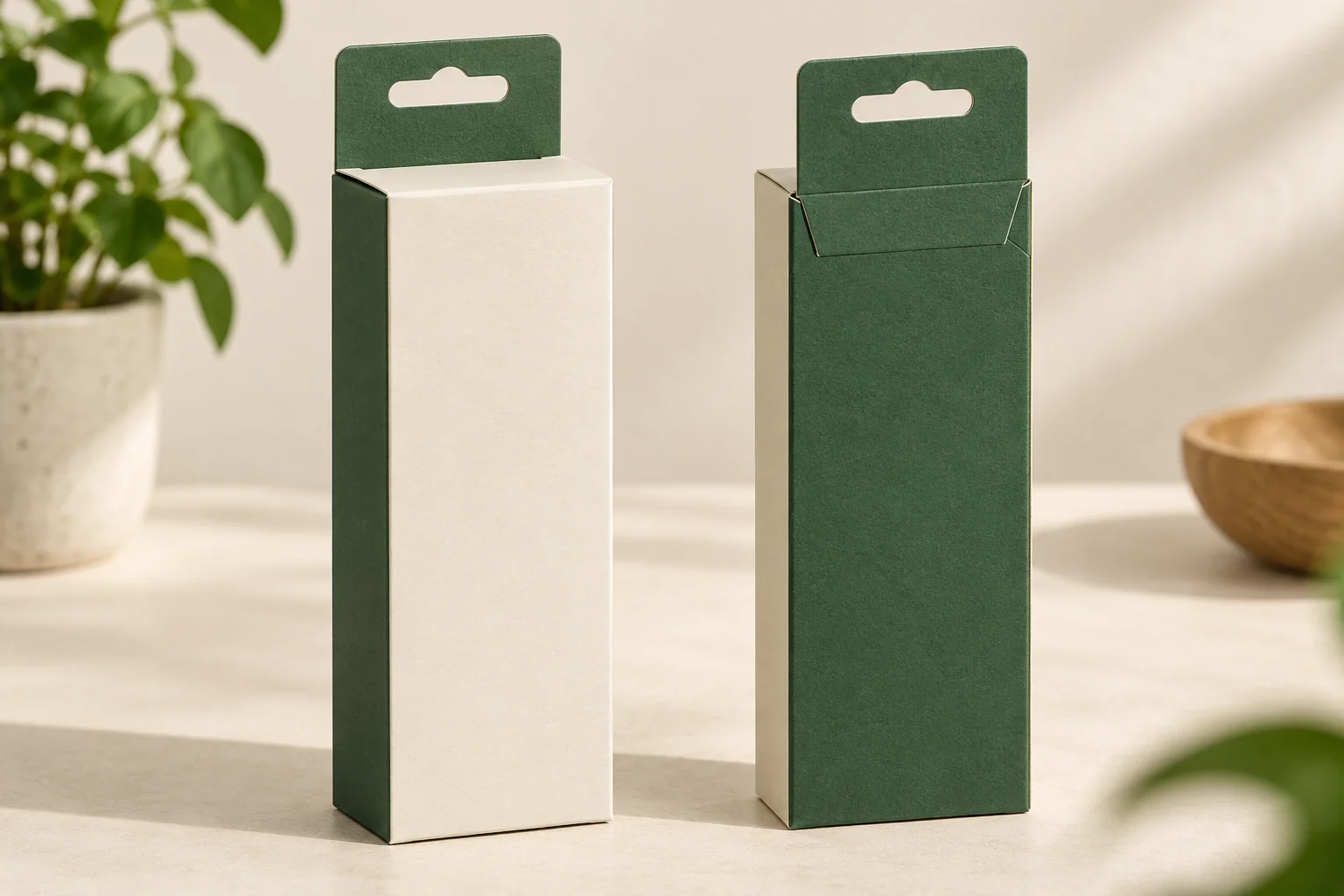
Illustrative
Lightweight paperboard boxes in tuck-end, auto-bottom or handle styles for retail candles, soaps and small gifts.
Key information
Price on request
Ask for a material and quote Request a sampleCartons ship flat to save storage space and fold up quickly at your packing table. Smooth 300–400 gsm board takes sharp CMYK graphics, Pantone inks, embossing and spot UV on every panel for clean shelf impact.
| MOQ | From 250 units per design |
|---|---|
| Structure | Straight-tuck, reverse-tuck, auto-lock bottom or handle carton |
| Material | 300–400 gsm paperboard |
| Printing | CMYK, Pantone |
| Finishes | Foil stamping, embossing, debossing, silkscreen, spot UV, matte or gloss lamination |
| Inserts | Paperboard, corrugated, EVA or PU foam |
| Size | Custom, confirmed in your quote |
We match your order with vetted independent suppliers in South China that take small-batch runs, so you don't over-order before testing a product.
Send your product dimensions and budget. We reply with 2–3 box, material and insert options and a dieline your designer can work on.
You hold and test the actual box before the full run, and we send press-sheet and finished-order photos while your goods are still in South China.
The minimum is 250 units per design. Send your dimensions and finish choices, and we reply within 6 hours with a quote and a custom dieline.
Samples take 5–10 days. Before full production starts, we also send photos of the printed press sheets and finished units for your sign-off.
Production takes 7–30 days after sample approval. Choose DDP for door-to-door delivery with duties included, or FOB if you use your own freight forwarder.
Yes. Every quote includes a custom dieline matched to your box size and board, so your designer can place artwork accurately.
It can, with the right build: 400 gsm board, an auto-lock bottom and a paperboard or corrugated base insert. Fit and strength are checked on the sample with your actual jar.
In a five-panel hanger proposal, identify the projecting hanger panel separately from the carton body and its end closures. Show its fold, hole and printed face on the actual drawing. A projecting hanger should not be mistaken for the flap used to load or close the box.
| Hanging feature | Construction to identify | Assembly question |
|---|---|---|
| Integral projecting panel | Panel outline, fold, hang opening and relationship to the carton closure. | Does the panel remain raised or fold at another stage, and which end receives the product? |
| Separately attached feature | Additional part, attachment position, joining proposal and receiving carton surface. | What arrives attached, what remains to join and who performs that work? |
Provide the real hook or fixture, surrounding display space and complete packed weight. Review three actions with the same loaded sample: resting on the fixture, lifting the pack off it and opening the contents. Record a problem against the action and interface where it occurs.
Keep a fixture observation tied to its sample and load. Neither the structure name nor a catalogue picture establishes a hanging capacity for a different product or material.