
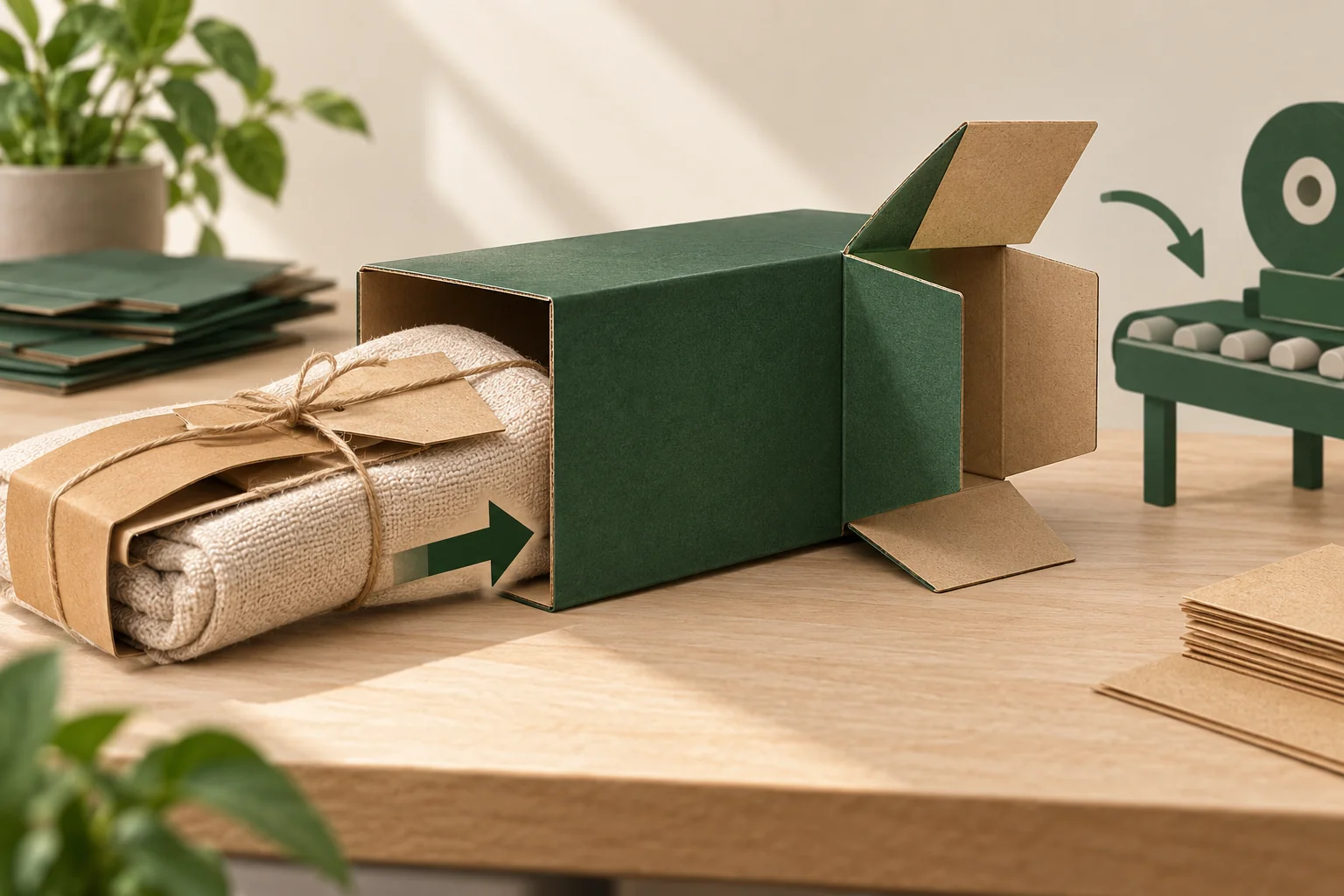
This option is distinct from a carton that closes by tucking a flap into the body. Its brief needs both geometry and production handoff. An assembled concept can hide the operation that your packing bench would have to complete.
Show coverage at each end
The full overlap seal end reference describes fuller end flaps and warns that large-volume assembly requires glue equipment. Use those statements to ask process questions, not to assume a particular supplier machine or your own production capability.
Request an end view showing the flap order and coverage. Label the intended sealing areas separately from printed artwork. The proposal should explain which surfaces meet and which flap closes last.
Compare the existing tuck-end carton option if a reopenable end action is central to the product. Here, review the sealed-end opening route explicitly rather than calling it the same closure.
Assign the sealing work before asking for samples
State whether the supplier seals one end before delivery or both ends after packing the product. If your team performs the final seal, describe the equipment and method available at the actual packing location. Mark unknown equipment as an open question.
A hypothetical accessory bundle might be inserted through one open end after the other has been prepared. The operator then closes the remaining flaps and completes the agreed seal. Identify the adhesive system, equipment and responsible packing operation in the supplier proposal before adopting that sequence.
Ask how the sample should represent the proposed sealing method. A manually assembled appearance sample and a process-representative sample answer different questions. Record the purpose of each if both are proposed.
Use a coverage and responsibility record
Attach the end views and process description to the same drawing revision. Fill each responsibility with an actual role, not an assumed factory step.
| Stage | Geometry required in the proposal | Responsible operation |
|---|---|---|
| First end | Flap order and coverage | Who prepares and seals it |
| Loading | Open-end envelope and product orientation | Who inserts the complete contents |
| Second end | Last flap and sealing surfaces | Method, equipment and operator |
| Customer opening | Intended access route | Instruction and acceptable opened condition |
The record makes a missing process visible before price comparison. A quotation for empty flat cartons can’t be treated as a quotation for packed, sealed units.
Inspect the loaded seam and opening
Confirm the supplied state, material and caliper. View the end seam after the proposed operation with complete contents present. Photograph any flap lift, uneven placement or visible contact with the product.
Open the sample using the intended customer route. Record where opening begins and how the product is removed. If the pack is intended for a single opening, say so in the brief; if reuse is desired, ask whether another closure option is more appropriate.
These observations don’t demonstrate seal integrity, tamper evidence or transit protection. Any such requirement needs a defined evaluation and responsible evidence. Keep vendor promotional protection language out of the approval record.
Record the quantity being discussed for the sealing operation as well as the carton design quantity. A small appearance sample may be assembled under different conditions from a production run. Ask the supplier to state which conditions its sample represents, then keep that explanation with the seam photographs before using them as an approval reference.
Send the end process with the product
Provide end views, packing responsibilities, equipment details, product envelope, quantity and destination through Get a Quote. The minimum is 500 pieces per design. Final structure, materials, sample scope and commercial terms are agreed for the project.