
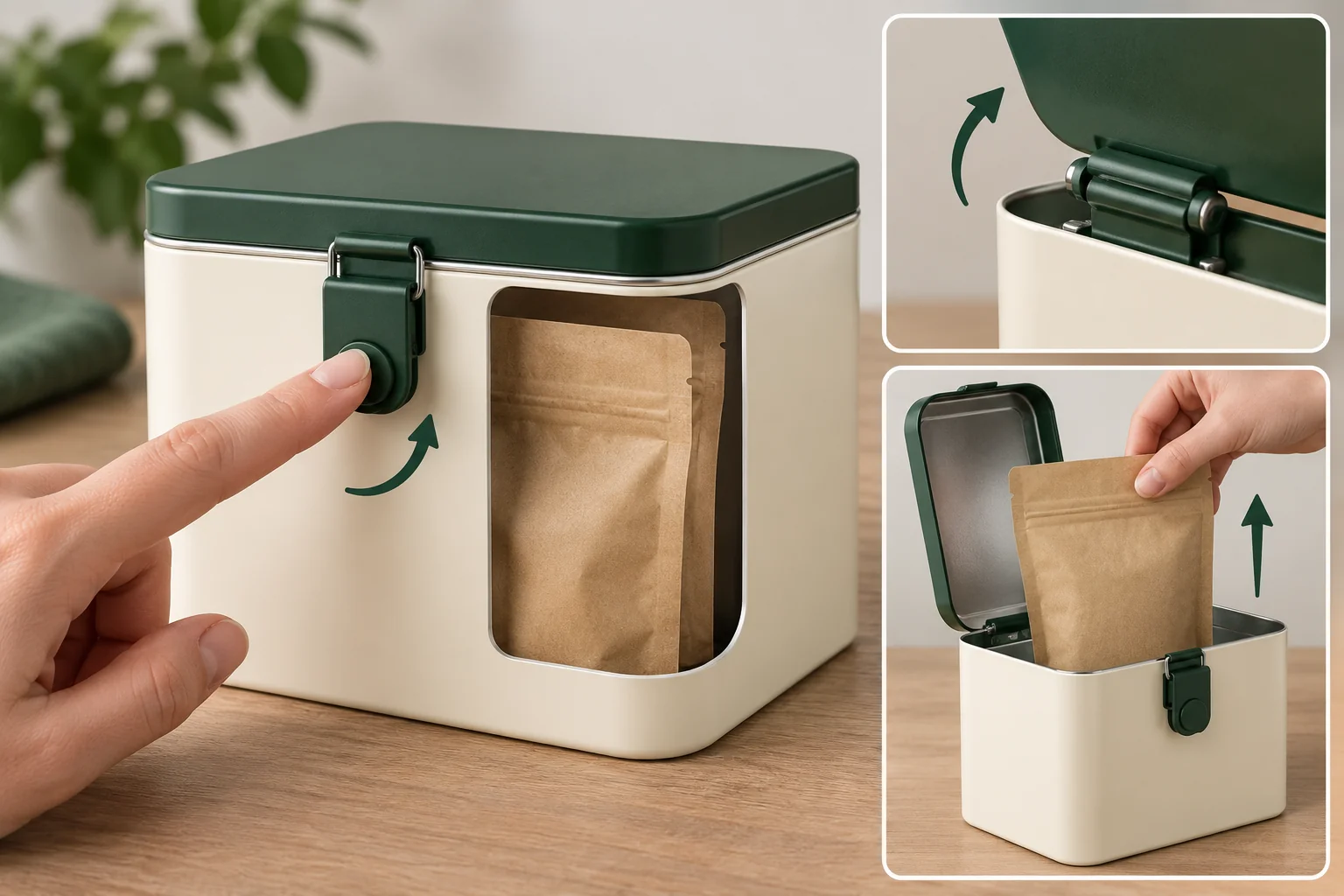
This inquiry concept is for dry gifts. The actual metal, lining, edge construction and latch/lid arrangement need supplier confirmation.
Identify the latch and lid proposal
The latch tin catalogue identifies the closure option. Request the actual latch parts and their attachment to the lid and body. Show whether a hinge or another lid movement is proposed; the name alone doesn’t settle that detail.
Mark the release point and hand route. Keep the external hardware separate from inner lining or covering layers. Ask which components arrive assembled and how paired parts are identified.
Compare a screw-top option if a rotating lid is another option. The meaningful difference is the actual closing and opening action around the same dry gift.
Review the full inner pack
Provide the product, holder, pouch and card envelope. Mark any part near the latch, rim or proposed hinge. Record the actual finished contact surface from the supplier proposal.
For a hypothetical gift accessory in an inner pouch, close the loaded container before reviewing latch release. Keep the pouch position fixed. A pouch moved away from the rim for the opening photograph describes another configuration.
After release, follow the confirmed lid route and remove the contents. Record any hand or product contact by location. Finished-edge and use requirements should be given to the responsible supplier without asserting a universal safety result.
Use a latch interaction map
Keep one paired lid/body and hardware revision throughout the sequence. The map separates release, lid travel and product access.
| Action/interface | Hardware or interface in the supplier proposal | Evidence |
|---|---|---|
| Latch release | Hardware and finger route | Closed loaded starting view |
| Latch engagement | Confirmed final relationship | Loaded closing view |
| Lid travel | Hinge or movement proposal | Opening arc around contents |
| Edge/contact | Finished surfaces and inner pack | Located hand/product observation |
| Product removal | Holder or pouch route | Opened complete configuration |
Use the sample revision record to keep paired components and any changed hardware traceable. A familiar container color does not identify the same latch construction.
Ask a located release question
In the hypothetical map, call the latch LT1 and pouch edge PE1. If PE1 sits near the release route, record both parts before asking for a revised container size. The source can assess the actual interference.
If a proposal changes the hardware, lid movement or lining, retain those component changes and repeat the relevant action. Outside artwork approval can remain a separate decision from the latch interface.
Any retention, security, repeated-use or distribution requirement needs defined responsible evidence. The local action record doesn’t establish those results or adopt the catalog’s food-use claim.
Submit the loaded latch brief
Send hardware views, full contents, contact requirements, quantity and destination through Get a Quote. The minimum is 500 pieces per design. Final construction, materials, samples and commercial terms require project confirmation.