
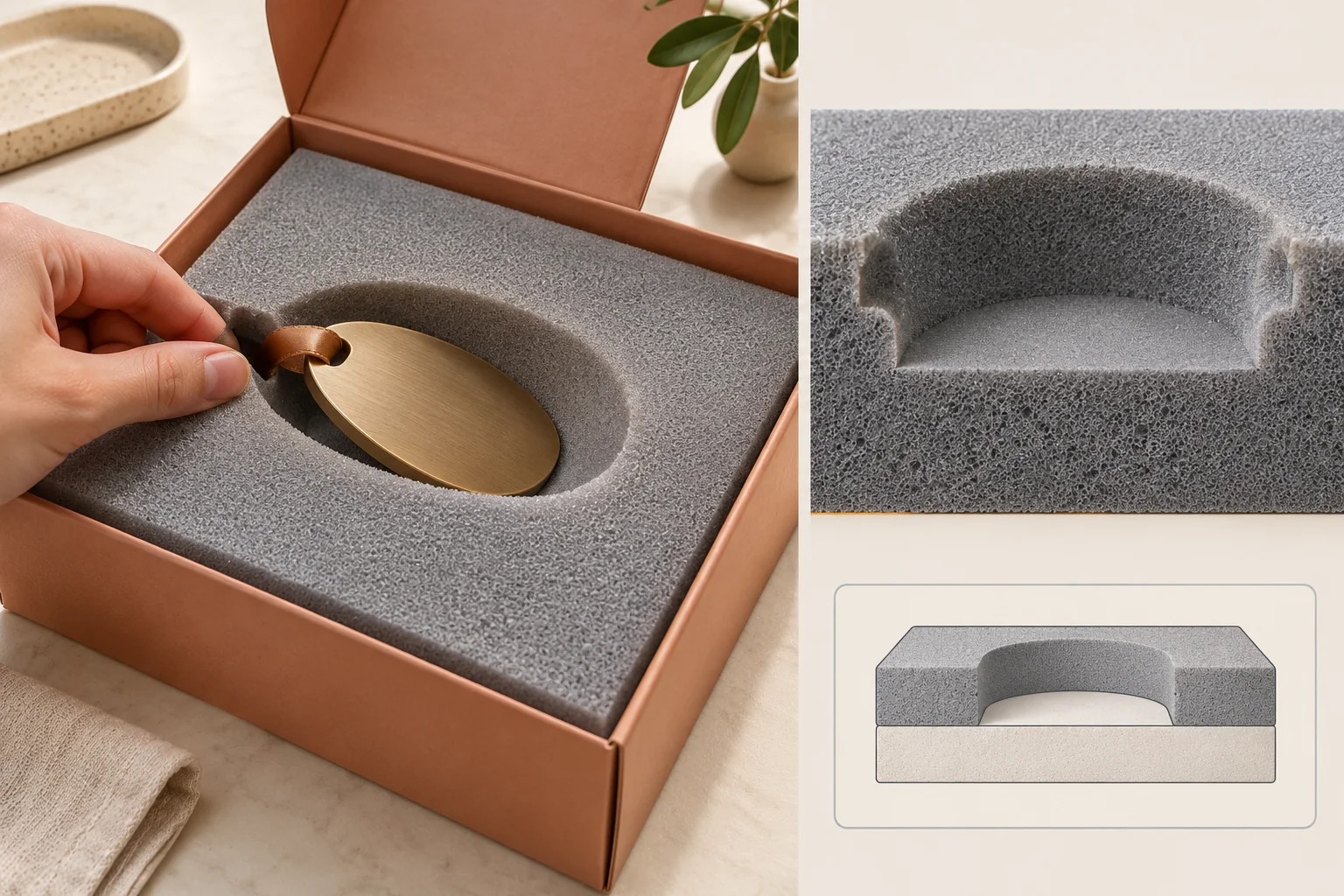
The image is a concept of a depth-cut bed. Actual foam grade, pocket construction and review method are confirmed for the project.
Identify the pocket and the remaining bed
The original flexible polyurethane grade sheet identifies foam grades and technical fields such as density and compression-related properties. It supports requesting the actual grade and relevant proposal; its values are not specifications for another holder.
Ask for the offered pocket contour, proposed cutting method and material remaining underneath it. The exact depth-cut pocket and remaining layer are project-specific supplier proposals. Keep that section visible beside the product contact map.
Supply the finished product and any primary wrapping. Mark areas permitted to contact foam and areas where pressure should remain an open question. Identify how the customer grips and lifts the product out of the depth-cut pocket.
Compare a bed with a through-cut layer
The through-cut EVA holder uses a separate top cut layer and backing interface. A depth-cut PU bed instead asks for the remaining support beneath the pocket and its offered deformation/contact proposal. Those constructions should be compared with the same product envelope rather than by a softness ranking.
Load the actual contents into the offered pocket and record which contact areas meet the foam. Review the proposed handling method and observe the local deformation and removal route under its stated conditions. Keep the supplier’s compression proposal separate from those observations.
If the next response changes the pocket depth, grip or grade, retain the earlier contact map and sample identity. The buyer should see which field was revised instead of receiving another broadly described protective foam option.
Use a pocket and contact record
This hypothetical gift-component table is an original brief aid, not compression-test evidence.
| Bed interface | Example input | Next review |
|---|---|---|
| Pocket P1 | Offered depth-cut contour | Actual product seating and local fit |
| Remaining layer B1 | Section beneath the pocket | Converter confirms the bed proposal |
| Grade F1 | Current supplier grade/technical sheet | Compression-related proposal and method |
| Contact face | Finished product surface and restrictions | Located contact/deformation observation |
| Grip G1 | Proposed lift recess or route | Actual loading/removal evidence |
Handoff the actual cavity question
The foam converter provides the grade, section and fabrication proposal. The buyer supplies the product and contact restrictions. The packing observer returns the actual loading/removal state, and the buyer decides whether a pocket, grip or material question needs another sample.
Compare the current die-cut insert option through the inserts hub. Use the insert-material method to retain grade and contact questions alongside the construction choice.
Bring the pocket section, product finish and unresolved contact/compression proposal to Get a Quote. MOQ is 500 pieces per design; materials, sampling and commercial terms are confirmed for the project.