
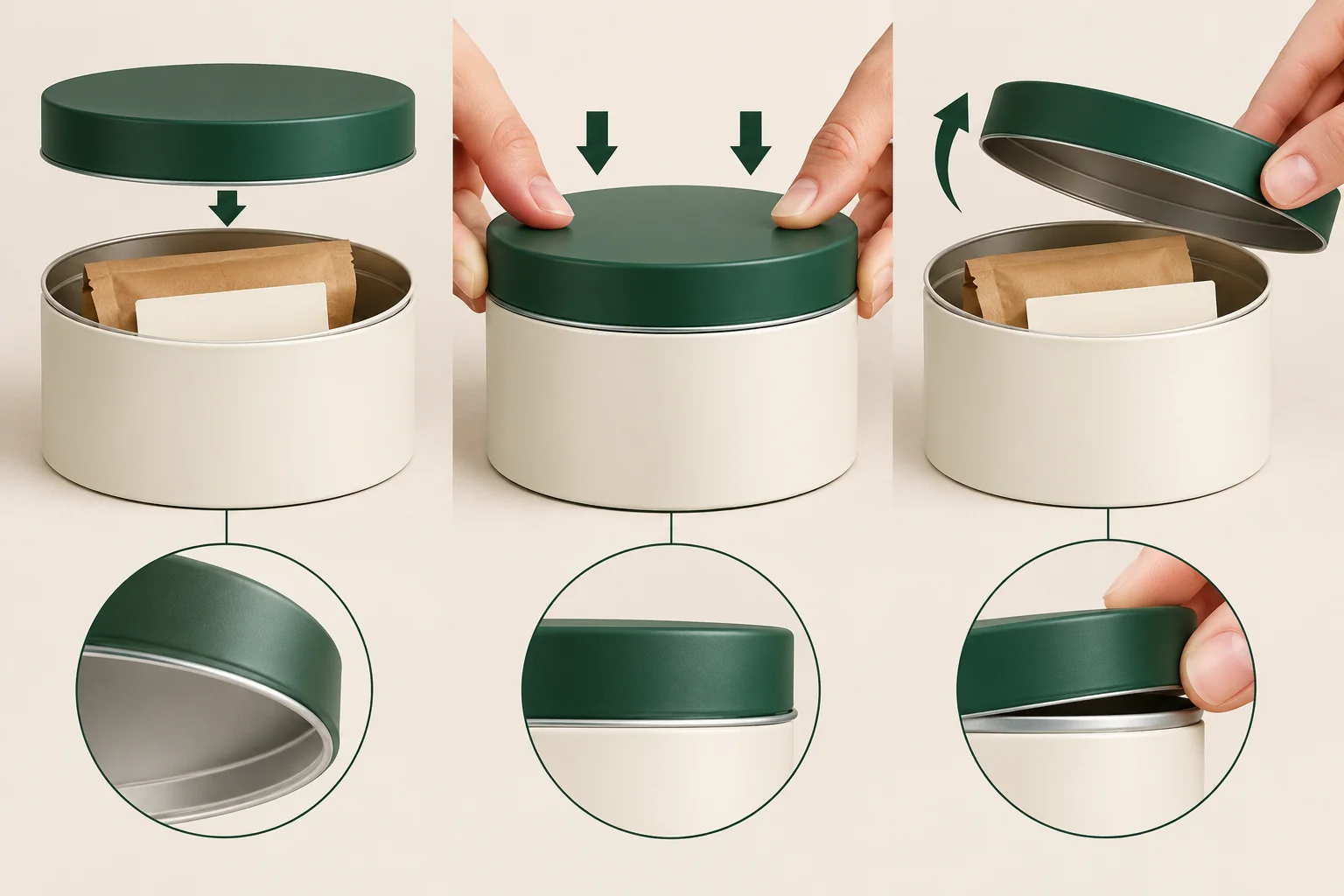
This is a packaging concept. Material, lining and closure construction need confirmation; no sealing, food-use or security outcome is implied.
Confirm the closure action before the sample
The clip-click tin reference identifies clip-on or click-on lid options. Use it as a closure-family reference, then request the specific press-close proposal and its opening route. Don’t silently treat all click or clip mechanisms as the same rim.
Ask for a section showing the meeting lid and body surfaces. Mark the point where the proposed engagement occurs and how the customer begins release. Keep any required retention as a use request with separate evidence.
Compare an external latch option when another visible release point is useful. The difference should be the actual action, not an assumed security ranking.
Review the complete dry gift at the rim
Provide the inner pouch, holder or wrap and the full packed height. Identify the lining and finished rim surfaces proposed by the source. A metallic-looking interior doesn’t establish contact suitability.
For a hypothetical charm pouch and folded card, place both in the intended arrangement before lowering the lid. Observe the rim before pressing it to the proposed final state. A card caught there is a contents interface, distinct from the closure mechanism itself.
Follow the confirmed release action and remove the gift. Keep material and performance evidence scoped to the actual proposal rather than transferring the catalog’s food or environmental claims.
Use a rim-action record
Keep paired lid and body identities attached. The table makes the pressing and opening tasks visible separately.
| Stage/interface | Proposal input | Sample evidence |
|---|---|---|
| Rim approach | Paired surfaces and full contents | Before engagement view |
| Press action | Confirmed movement and user grip | Loaded closing sequence |
| Final engagement | Supplier-defined closed relationship | Rim and lid position |
| Release | Starting point and movement | Customer opening sequence |
| Inner contact | Lining and dry-gift envelope | Located rim/product observation |
A sound or tactile impression can be recorded as an observation, but it should not be treated as an unagreed pass rule for retention.
Keep revisions tied to paired parts
In the hypothetical record, call the lid L1, body B1 and card C1. If C1 meets the rim, retain that issue before changing the paired closure. If the rim proposal changes, assign a new component revision and review both press and release.
Confirm the delivered form and who loads and closes the container. Outside artwork, grip appearance and functional acceptance are separate decisions even when they share one sample.
Any measured retention, repeat use, sealing or handling requirement needs an agreed method and responsible evidence. The action record identifies the configuration and open questions for that later work.
Send the rim and user action
Submit the closure section, full contents, intended press/release use, quantity and destination through Get a Quote. Packrivo’s minimum is 500 pieces per design. Final construction, samples, price and timing require project confirmation.