
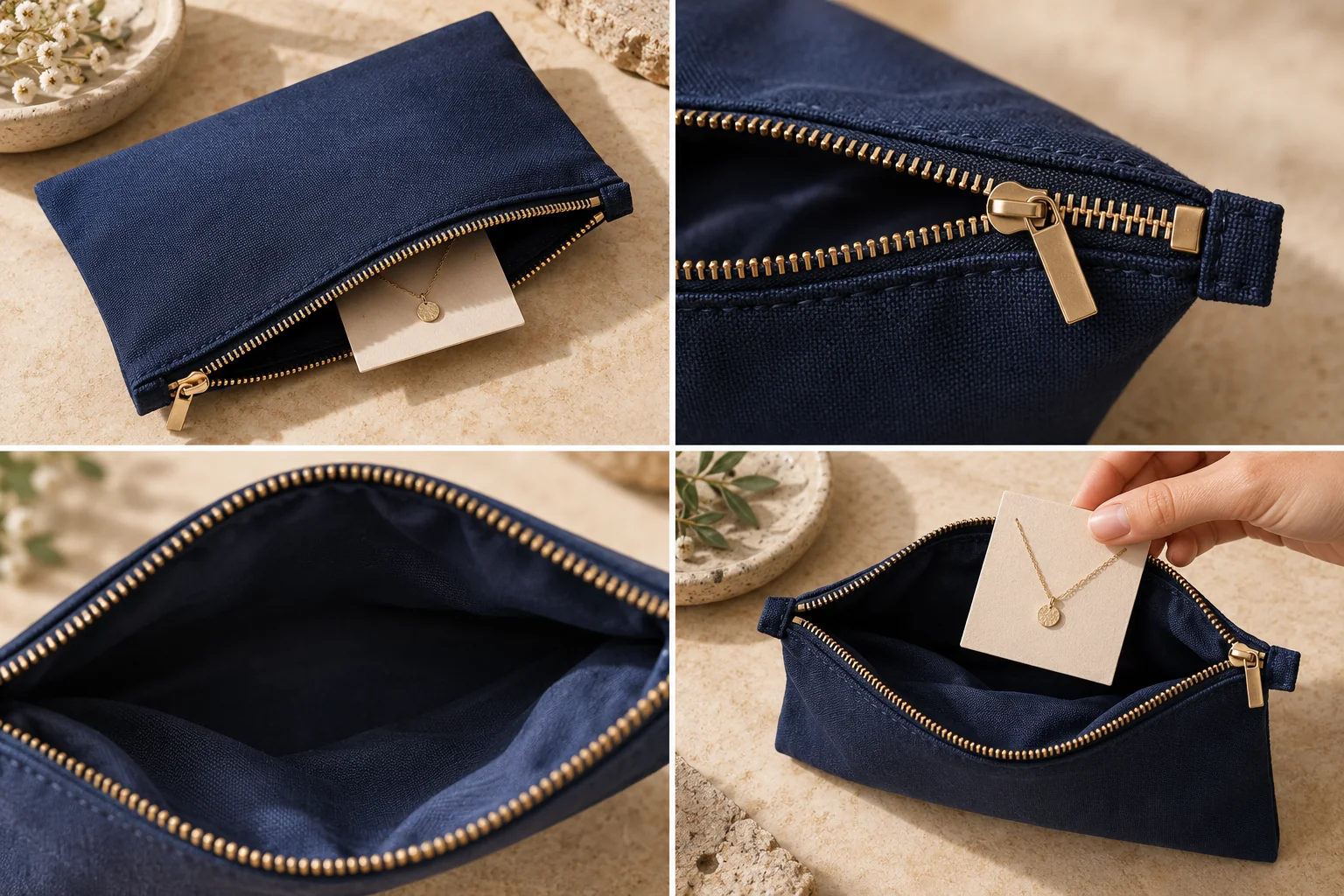
The visual is a concept reference for a zipped pouch. The converter confirms the proposed zipper, seams, lining and fabric for the project.
Define the working zipper envelope
The original fabric closure reference names zipper as a pouch option. Ask for the offered zipper type, slider and end-stop positions on a construction drawing. Keep those proposal fields separate from the overall pouch dimensions.
Give the converter the product’s finished envelope, including a jewelry box, backing card or other primary packaging. Mark the edge that enters first and any corner that approaches the teeth. State the surface that should remain clear of metal or another proposed zipper component.
Request the lining and seam allowance around the zipper route. A lining edge can occupy the intended opening or lie in the slider path. Keep its position on the same drawing as the zipper so it is reviewed as part of the complete pouch.
Review insertion before closing
Load the actual product through the usable opening and record whether its orientation changes. Then close the slider using the intended grip. Inspect the path near the teeth, lining and end stop rather than evaluating only the closed silhouette.
Reopen the pouch and remove the product while it remains in its agreed primary pack. Locate any observed contact or lining obstruction. The next proposal should identify which opening, seam or slider field changes; it should not rely on an unrecorded packing adjustment.
Compare the drawstring fabric gift bag when a gathered mouth may suit the pack. Compare the existing textile pouch option for broader fabric/holder decisions. This zipped configuration specifically adds usable opening loss, slider movement and teeth/contact questions.
Use a zip-opening and contact table
The following illustrative jewelry-box plan separates overall size from the working opening.
| Feature | Input to record | Question to resolve |
|---|---|---|
| Overall pouch | Flat dimensions and seam positions | What is the actual formed cavity? |
| Zip opening Z1 | Clear opening between offered stops | Can the finished primary box enter? |
| Slider S1 | Pull and intended customer grip | Does closing press on the contents? |
| Lining L1 | Edge location beside zipper teeth | Is the slider route clear? |
| Product finish | Permitted contact and corner envelope | What contact appears during removal? |
Keep the closure proposal with its sample
The converter should return zipper and lining identities plus the construction revision. The packing owner should return loading, closing and removal observations for that revision. The buyer can then decide whether the usable opening and contact route suit the product or request another closure proposal.
Retain changes using the sample revision record. Share the primary-pack envelope, usable opening and located contact question in Get a Quote. MOQ is 500 pieces per design; final materials, sample scope and commercial conditions are confirmed for the project.