

Keep packaging variants matched by defining the permitted box, insert, sleeve and card combination for each finished pack. Give every component a visible internal identifier and show the current combination at the packing bench. Review receiving, selection and changeover separately so similar-looking pieces don't rely on memory to reach the intended product.
A shared outer box can make a collection look consistent while the inserts or printed sleeves differ. The packing task is to select the correct combination after those configurations have been defined. It needs a clear component map even when the fit decisions are already complete.
Name the combination rather than the appearance
Assign a finished-pack identifier to each intended arrangement. List the component versions allowed within it and the product it serves. Names such as "cream box" or "small insert" can be useful descriptions, but they should sit beside an identifier that distinguishes revisions.
Keep a common component explicitly common. If two variants use the same box drawing and print version, show the same box ID in both rows. If their inserts differ, show different insert IDs. This makes the actual selection task visible without creating unnecessary extra names.
Use internal component identifiers for your packing record. They can be ordinary codes agreed within the project; they are not automatically retail barcodes, GTINs or supplier certification numbers. Keep any external item identifiers in their appropriate product records.
The multi-SKU fit matrix helps define the physical configurations. This combination map starts after that decision and identifies how the agreed components are received and selected during packing.
This hypothetical example contains two necklace arrangements sharing a box but using separate inserts and sleeves. It illustrates permitted combinations, not real client products or reviewed fit results.
| Finished pack | Product reference | Box | Insert | Sleeve | Card |
|---|---|---|---|---|---|
| PACK-A | Pendant A | BOX-01 | INS-A2 | SLEEVE-A3 | CARD-C1 |
| PACK-B | Pendant B | BOX-01 | INS-B1 | SLEEVE-B2 | CARD-C1 |
The shared box and card don't establish that the two insert or sleeve rows are interchangeable. If you want to introduce a substitute, request a separate decision and update the permitted combination after its required reviews.
Keep identity visible from receipt to the bench
Ask how the supplier will identify each bundle, carton or group of components. Confirm that the receiving labels distinguish the variants you need to select. A label on the outer shipping carton may be lost once individual bundles move into storage.
Record the component count and identity at receipt using the agreed scope. If a label is unclear or disagrees with the supplied pieces, hold that group for clarification. Avoid assigning its identity solely from color when the versions look similar.
Decide where identification will remain during packing. You might use labelled storage locations, bundle cards or another agreed method that stays with the components. Keep any added label away from customer-facing surfaces or functional areas unless that placement has been reviewed.
At the bench, show a current combination reference where the operator selects parts. A small labelled photograph can explain the intended assembled appearance, while the component IDs tell the operator which pieces create it. Keep both current when a revision changes the selected arrangement.
US EPA guidance on mistake-proofing distinguishes preventing an error from detecting one. This packing map adapts that concept through component separation and explicit checks; it does not claim an error-free process or measured packing improvement.
Trial selection and changeover with realistic references
Ask the intended operator to select components for one identified finished pack. Observe which labels or references they use and where they hesitate. The goal is to find ambiguous choices before treating the instruction as ready for wider use.
Keep the first trial focused on identity rather than speed. If someone recognizes the insert from past experience, ask how a new operator would distinguish it. A visual difference may help, but it should be documented and tied to the component identifier.
Trial a changeover to another pack using the method you intend to follow. Identify which common parts may remain at the bench and which variant-specific pieces must be removed or relabelled. Record how unfinished packs are distinguished from the new work.
Use this original changeover checklist for the proposed operation. Assign an owner and record any missing input before accepting the handover.
- Identify the finished pack ending and the finished pack beginning.
- Account for unfinished packs and the variant-specific components at the bench.
- Confirm the common components allowed in both combinations.
- Bring in the new identified inserts, sleeves or cards and the current instruction.
- Review a complete first arrangement against the permitted component map.
A review of one arrangement records that observation. It doesn't establish the error rate of a whole production or fulfilment process. Agree any wider checking scope and responsibilities with the people who operate it.
Control substitutions and leftover components
A supplier may propose another insert or the buyer may request an updated sleeve. Keep that change separate from day-to-day selection. The approval owner should identify which fit, artwork or commercial questions reopen before the new component enters the permitted map.
Use the reorder version checklist to retrieve the selected references. An old sleeve left in storage can remain physically usable while carrying superseded artwork; its status needs a decision rather than a quiet return to the current bin.
Mark replaced, held and current groups so their identity stays visible. Decide who may release a held group or authorize another permitted combination. Keep that decision with the updated map and any revised packing photographs.
The jewelry box with insert direction is one starting point for a shared outer-box proposal. The permitted component map should still identify each separately selected insert and sleeve.
Bring the component map, receiving-label questions and proposed substitutions to Packrivo's packaging inquiry. A useful brief explains which pieces are shared, which must remain separate and how the operator will identify the combination required for each finished pack.
Keep unfinished old packs separate when one sleeve changes
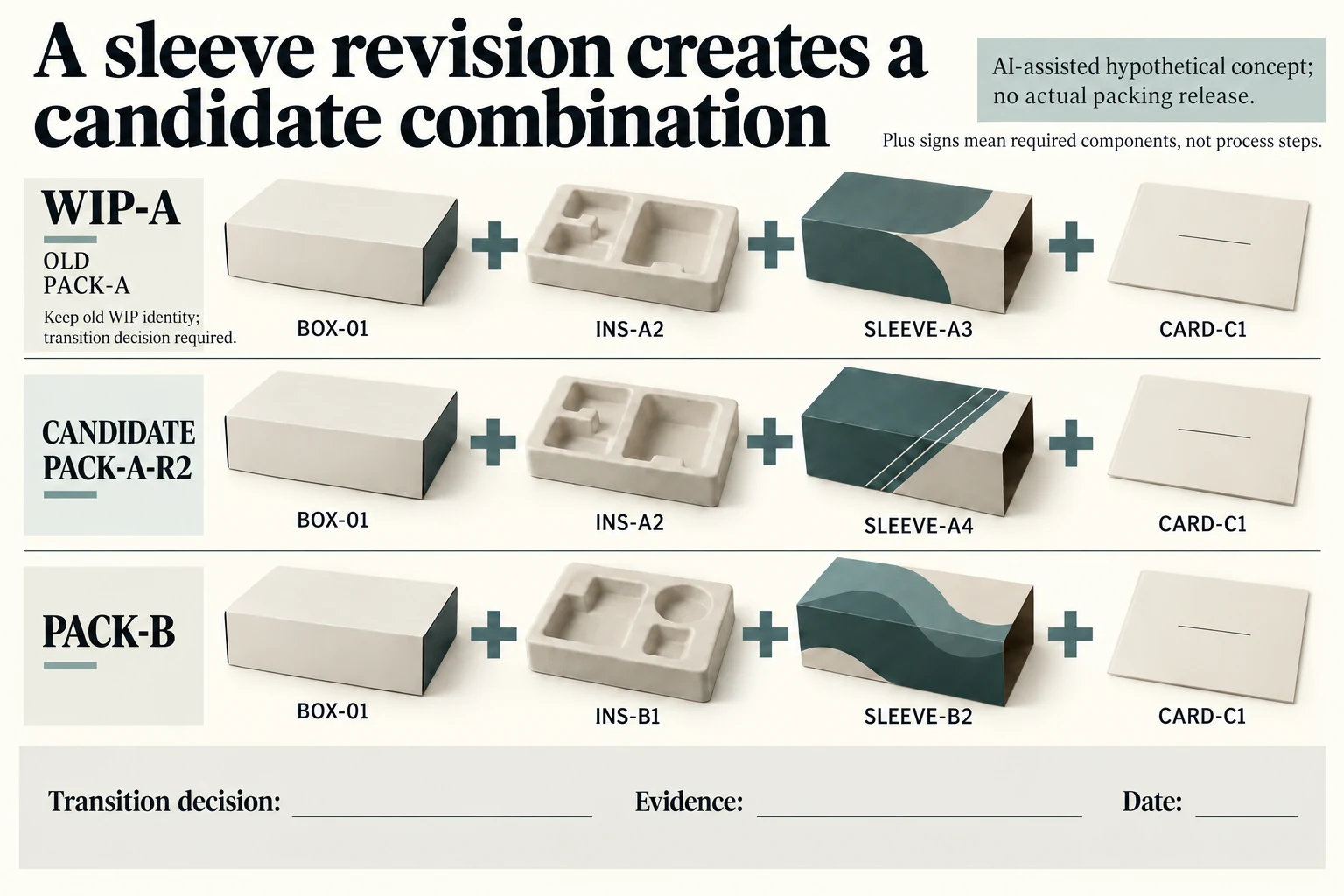
Extend the fictional map with a sleeve-only revision. PACK-A-R2 proposes BOX-01, INS-A2, SLEEVE-A4 and CARD-C1 for Pendant A. The original PACK-A still names SLEEVE-A3. PACK-B continues to require INS-B1 and SLEEVE-B2 with the shared box and card. A revision to the A sleeve does not create permission to substitute either B component.
Scroll horizontally if columns extend beyond the view.
| Hypothetical configuration | Named object | Relationship | Input or next scope |
|---|---|---|---|
| PACK-A-R2 | PACK-A-R2 | requires sleeve | SLEEVE-A4; 1 item per finished pack |
| PACK-A | OLD_WIP | transition permission | PACK-A; Keep unfinished old configuration and new start separately identified; actual disposition unknown |
| PACK-A-R2 | NEW_START | transition permission | PACK-A-R2; Keep unfinished old configuration and new start separately identified; actual disposition unknown |
Name unfinished old work WIP-A before clearing the bench. Its recorded combination is PACK-A, not PACK-A-R2 merely because a new instruction has arrived. Ask the transition owner to identify whether that work will finish under its old configuration, be held, or follow a separately reviewed rework route. Those are alternative dispositions; none is preselected in the download. Do not put an old partly completed pack into a new-start bin and rely on its external appearance to recover the identity later.
The buyer can now request two different answers: which component list defines the new start, and what happens to the already-started work? A supplier reply confirming SLEEVE-A4 addresses the first question only. The unfinished pack still needs its own disposition, and the changeover needs a complete first-arrangement review using the selected combination. The CSV preserves five product/component relationships for each original pack and the proposed new A configuration, plus separate WIP and new-start identity, combination and transition rows.
This is an identity transition, not a new fit claim or an assembly-rate calculation. If the replacement sleeve changes a physical or artwork interface, reopen that question before including it in a permitted production combination. The diagram's plus signs mean components required together; they do not prescribe packing order.
Download the packaging component variant matching record (.csv). It includes the original table fields and scenarios alongside the added relationships. HYPOTHETICAL rows are editorial examples or required review scopes, not actual records. Actual quantity, configuration, component and file identities, materials, process, specification, copy, method, condition, observation, owner, decision, evidence and dates are blank. ACTUAL_BLANK is a separate empty starting row; enter permitted project evidence before using an actual record. A blank means unknown.
Use the Multi-SKU Jewelry Packaging Starts With a Fit Matrix for its separate question. Use the Link Component Approvals Before Releasing the Whole Set for its separate question. Use the File Names Need a Revision Convention and an Approval Cross-Reference for its separate question.
References apply to the materials, processes or guidance named in each source. Worked configurations and dimensions are teaching examples, not tested specifications or production limits. Use the project’s material specification, drawing and formed sample for approval.
Discuss this packaging specification with Packrivo. We coordinate independent suppliers. MOQ: 500 pieces per product/design; illustrative quantities are not production offers. Confirm materials, samples, price and timing for your project.