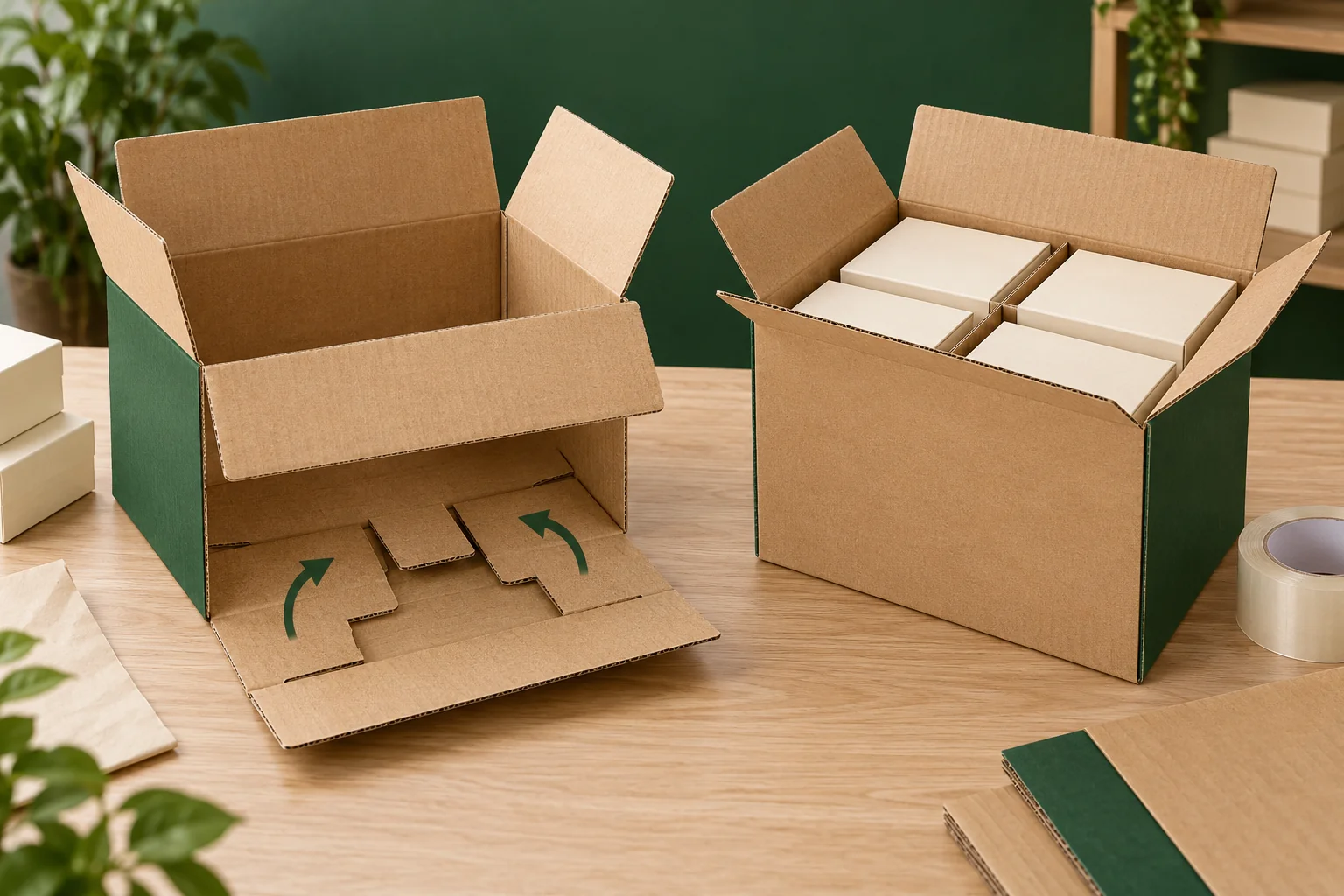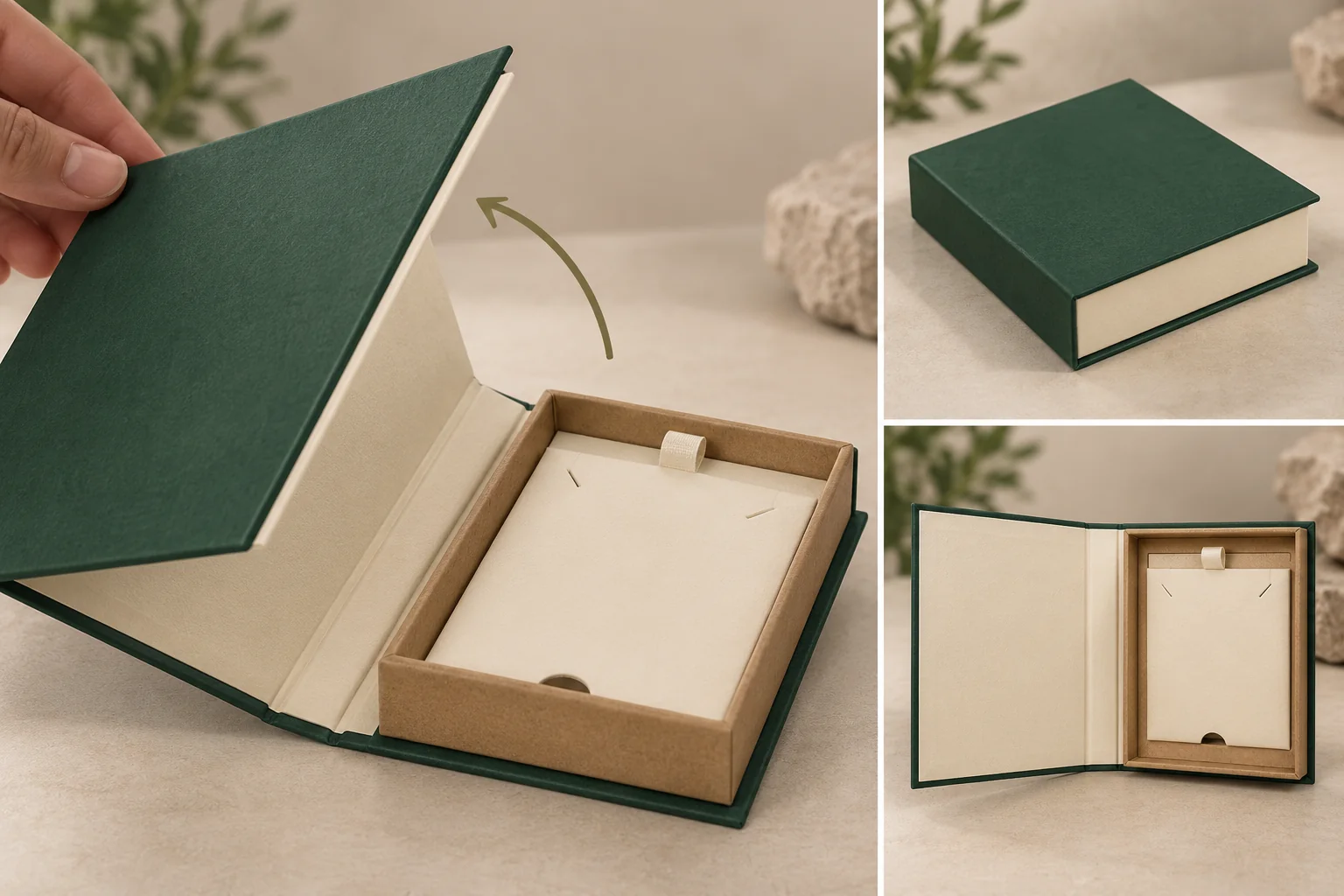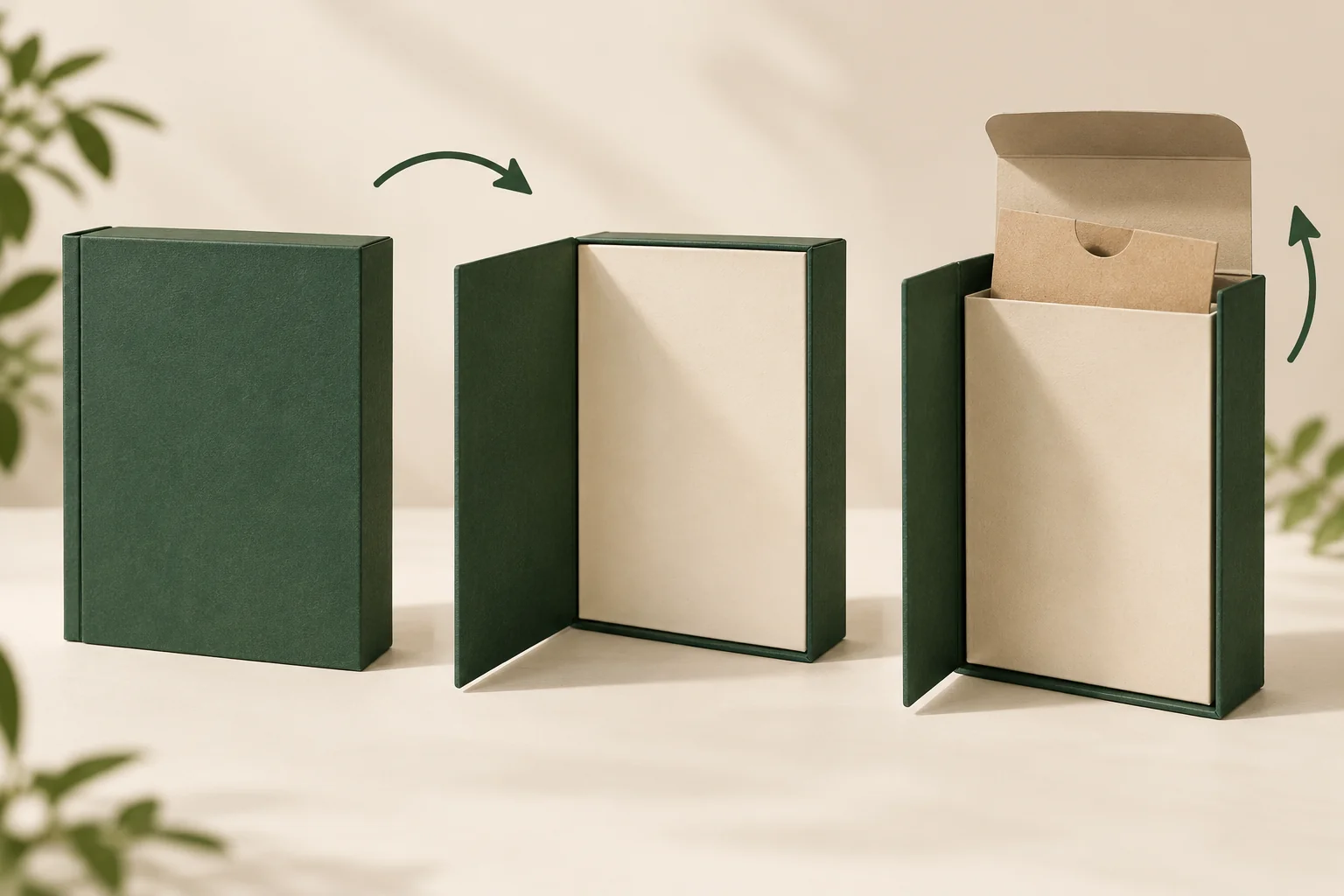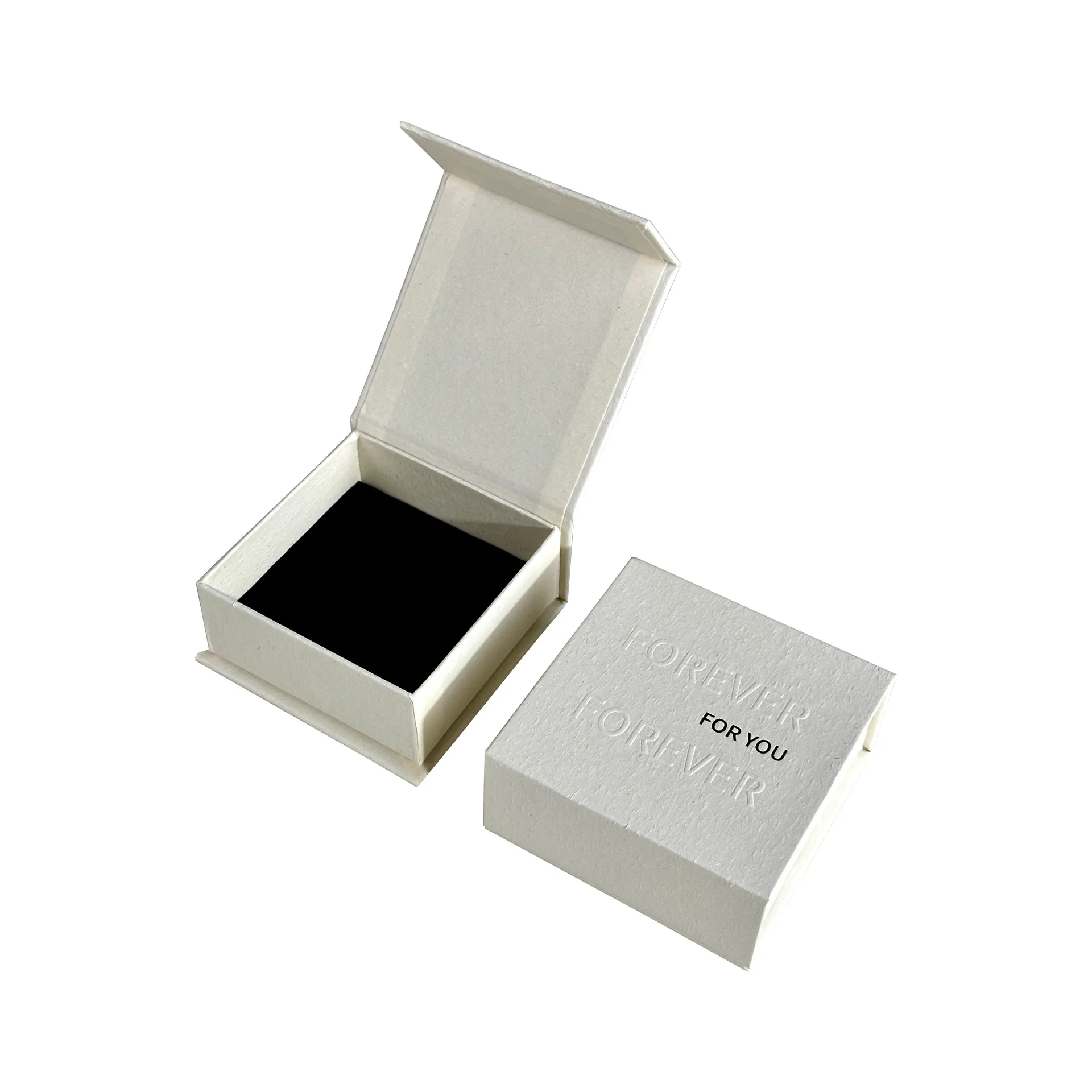
Choose a cufflink gift box around the complete pair, including the posts and backings beneath the decorative faces. A compact face-up display works only when both cufflinks can be supported, reached and removed in their intended orientation. If a tie clip is sold with them, compare a dedicated set layout rather than adding it to a box selected for the pair alone.
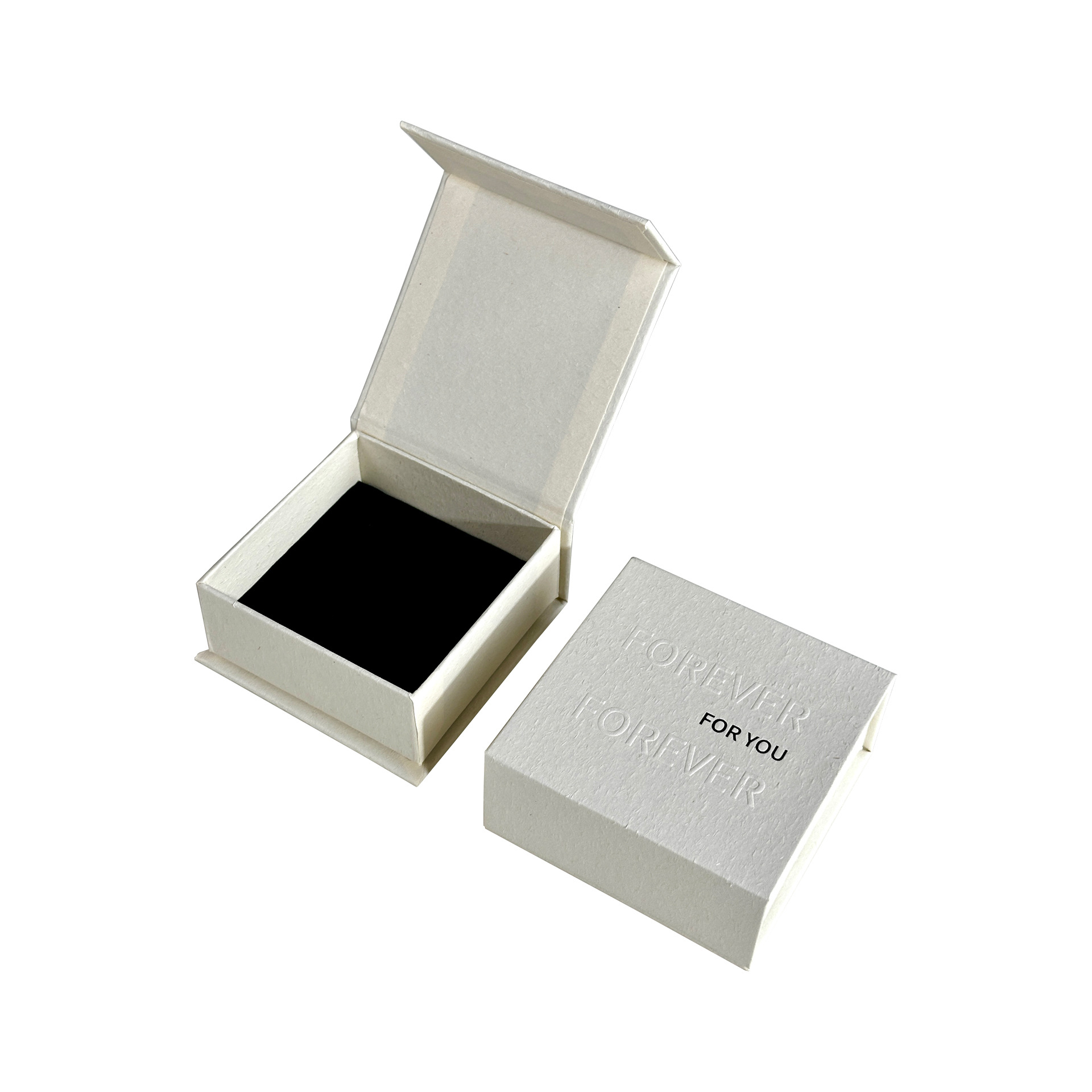
Supplier reference photo of an empty jewelry enclosure.
Photograph source. Owner-authorized supplier original; read-only. Full original reference photograph.
The purchasing question is what the box must present: one pair, several pairs, or a defined accessory set. A picture of two neat oval faces cannot answer how their backs occupy the interior. Begin with the actual cufflinks and the customer's intended gift, then ask for the support and enclosure together.
Specify the whole cufflink before choosing the holder
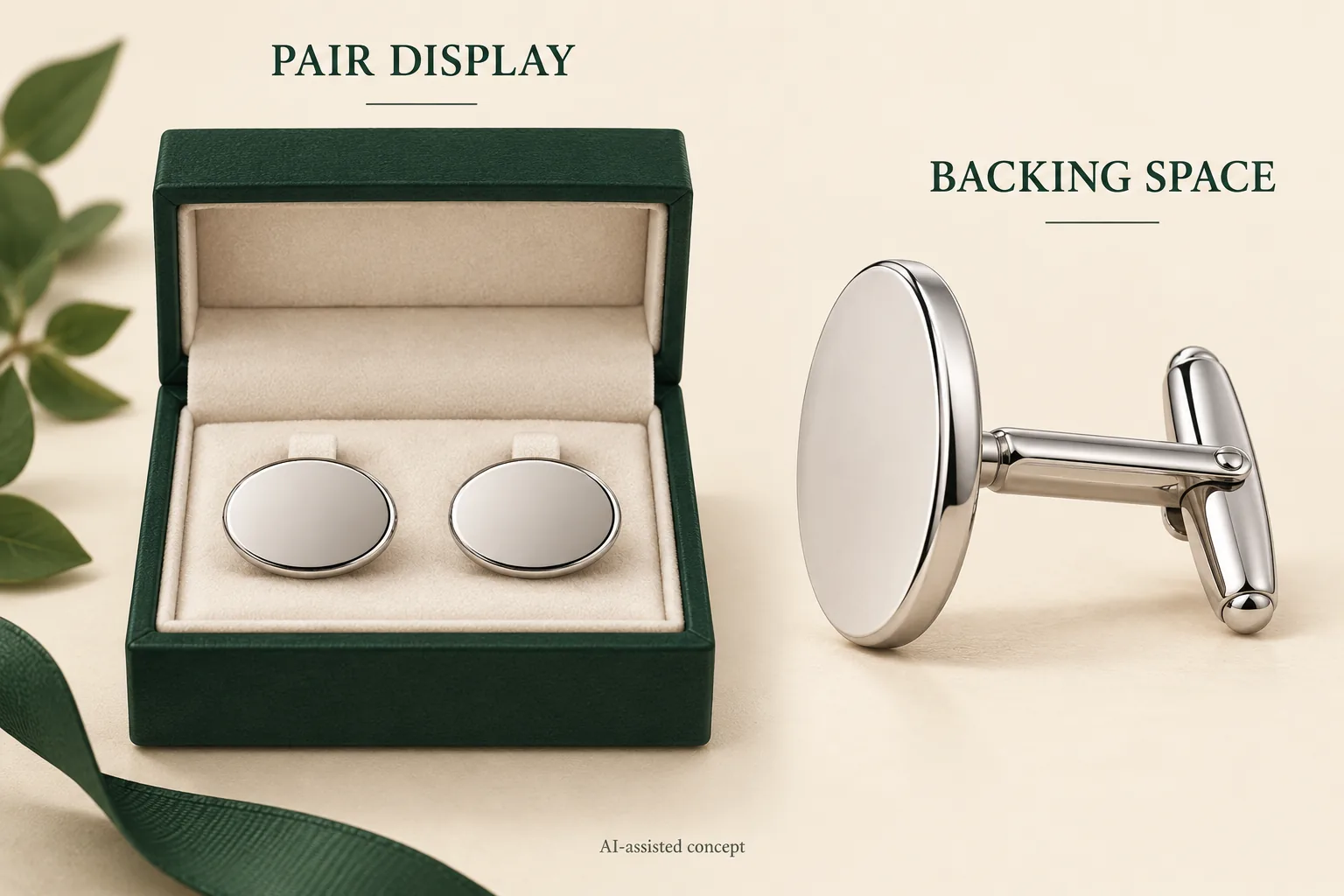
Show the supplier the face, post and backing of each cufflink in the position proposed for packing. The visible face alone leaves part of the object's shape out of the brief.
A swivel backing may occupy a different envelope when aligned with its post than when turned across it. A linked or fixed-back design presents another geometry. Describe the actual fastening rather than assuming that a slot made for another pair will work. Include front, side and underside photographs, with dimensions and units taken from the actual product.
The Royal Museums Greenwich record for a cufflink box describes a historical example with two protruding holders inside the base. That record is useful evidence that the holder is a distinct part of the presentation. It is not a specification for a modern holder, a recommended material choice or permission to reproduce the museum's photograph.
The proposed support needs a defined contact point and a place for the backing. A narrow opening may retain a post while leaving the face exposed; a recessed position may accommodate more of the body. Neither is automatically preferable. The actual fastening determines the loaded shape and the movement needed to release it.
Use the jewelry packaging measurement guide to distinguish the product envelope, proposed support and finished usable interior. Those measurements support the choice; the source photograph of an empty jewelry box in this article demonstrates only an enclosure direction. It is not an approved cufflink holder.
Give the pair two deliberate display positions
Choose a support that presents both cufflinks as a pair while leaving their individual removal routes clear. Decide their face orientation and separation before approving a front-view arrangement.
For matching oval faces, the brand may want the long axes aligned in the same direction. For an asymmetric design, the desired relationship could be mirrored instead. A monogrammed or directional motif makes this choice especially visible. The packer needs an identified orientation for each piece rather than an instruction to make the pair look neat.
Then examine what is happening below that view. Two faces may appear separated while the posts or backs overlap underneath. A wide spacing on top can also leave too little room for a finger to reach the intended release point. Review the loaded support from the side and underside, then as part of the closed box.
Keep decoration away from the proposed working grip. A removable support lets the recipient reach its underside after lifting it out; it also needs a reachable edge. An installed support avoids a loose tray, but its intended release points must remain accessible inside the box. Choose between those actions with the actual pair rather than adding an instruction that tells the customer to pull a hidden fastening.
The desired result is simple to describe: the customer sees two clearly positioned cufflinks and can follow the intended release without pulling an unexplained part. Material compatibility and any required shipping evaluation remain separate questions for the selected configuration.
Buy a pair box or an accessory-set box deliberately
Order a pair-only layout when cufflinks are the complete sold gift. Choose a set layout when the tie clip or another accessory is genuinely included and should appear in the same opening.
Scottsberry's cufflink and tie-clip box is a published example of a set-specific format. Its description identifies positions for a pair and a tie clip and separately states that the accessories are excluded from that packaging purchase. The useful lesson is to name both the intended contents and the supply scope. Its construction does not establish what Packrivo or another supplier can provide.
For your offer, distinguish these purchases:
| Sold gift | Relevant packaging proposal | What belongs in the scope |
|---|---|---|
| One pair of cufflinks | Two-position presentation box | Box and support for that actual pair |
| Cufflinks plus a tie clip | Set box with a position for each accessory | Complete support arrangement and both product references |
| Choice of pair-only or set offers | Separate identified configurations | Which components can be shared, if any |
| Several pairs for a collection | Multi-pair case | Pair count, separation and intended later use |
Do not buy empty positions simply because a larger box looks more generous. If the tie clip is optional, decide what the customer who buys only the cufflinks should receive. An unexplained vacant tie-clip position may imply a missing item. A separate pair-only insert or another box is a proposal to discuss; it is not automatically available as a no-cost substitute.
For broader set choices, the jewelry set packaging comparison explains combined and separate gift-ready containers. Here the additional requirement is the cufflink pair's fastening and support, which must remain visible in the set proposal.
Use one pair-and-clip example to settle the purchase
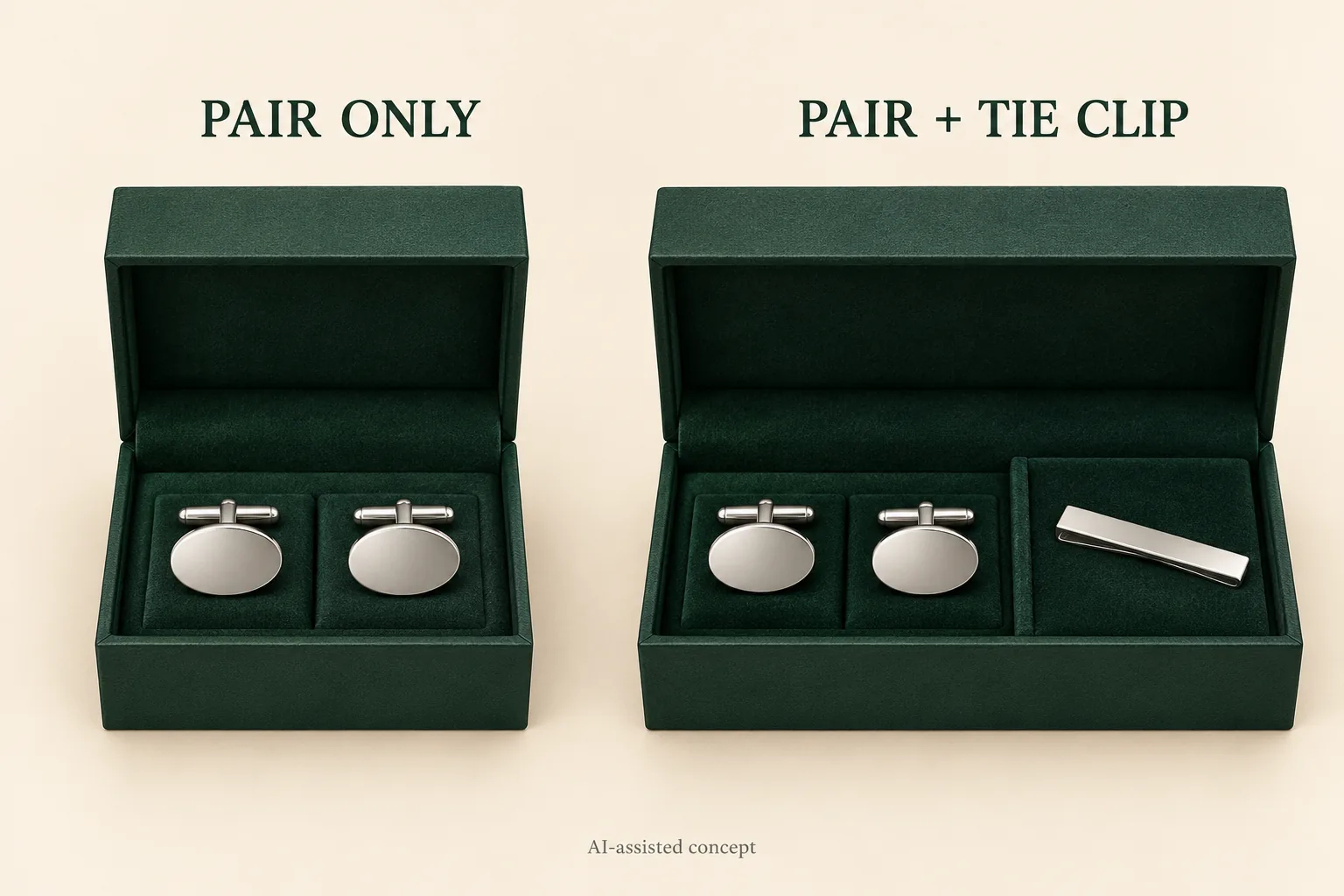
For a hypothetical brand offering cufflinks alone and cufflinks with a tie clip, two identified interior layouts are a clearer starting request than one universal empty tray. This example is a planning exercise, not an accepted design or stock claim.
The pair-only offer needs two cufflink positions and a complete presentation when the lid opens. The set offer needs those two positions plus a deliberate tie-clip position. The brand wants both gifts to look complete and does not want an empty clip space in the pair-only purchase.
The supplier may propose one outer construction with two different supports, or separate boxes where that makes more sense. Ask it to show both proposals around the actual objects. Compare the resulting purchases by their complete included components, not merely the empty exterior's appearance.
At this point, the brand can choose a direction: seek a shared outer appearance with distinct pair-only and set supports, subject to feasibility and sample review. Its inquiry names the two configurations and asks the supplier to identify separate artwork, support and quantity requirements. The brand has made a useful decision without claiming that a shared box has already been engineered.
A later physical review should load each actual accessory, close the complete box, reopen it and follow the intended release. Observe each cufflink independently. If one backing catches while the other releases, record the affected position and mechanism rather than calling the whole pair approved because the front view is attractive.
Bring the actual pair to the packaging discussion
Send the actual cufflink references, backing type and chosen sold-gift contents before asking for a cufflink-box proposal. Include the desired face orientation, whether the support should lift out, and any tie clip or other included accessory.
Provide quantity per proposed design and the destination. Keep the purchase description explicit about empty packaging, supplied supports and any assembly operation; do not assume jewelry is included in a box quotation. Ask which fastening position the supplier expects during loading and what sample will let you review removal.
Packrivo helps organize packaging briefs and coordinate questions with independent suppliers. Material suitability, supply scope, physical fit and commercial terms require project-specific confirmation. Request a cufflink packaging sourcing discussion with the actual pair and the single-pair or accessory-set offer you want to develop.
Sources checked 30 October 2026. The illustrated layouts are teaching concepts and the authorized empty-box photograph is a supplier reference. They do not demonstrate an accepted cufflink holder, completed customer project or tested shipping performance.