
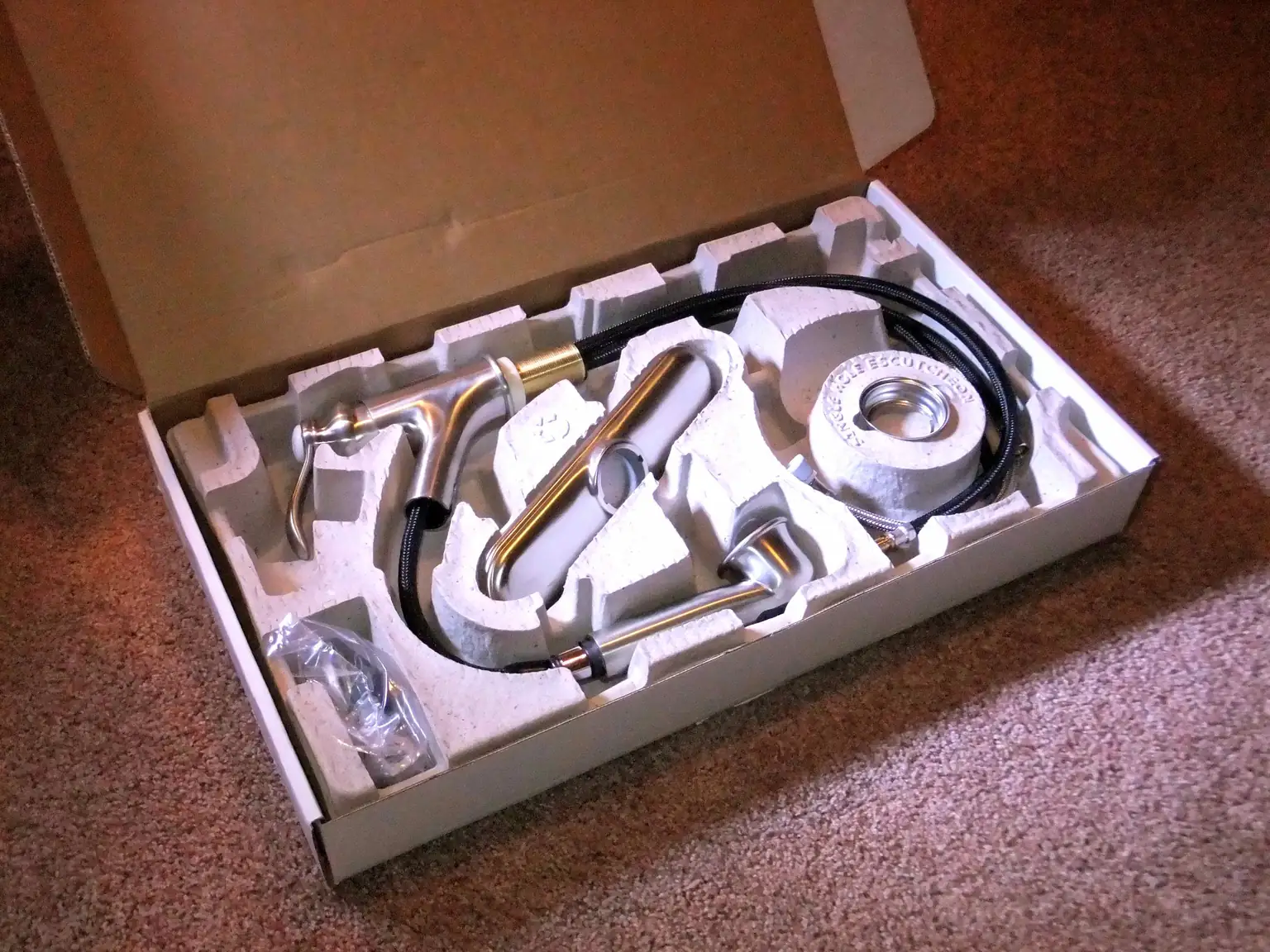
Evaluate an existing molded pulp tray first when its actual cavities, footprint and supplied form could serve your products without changing them. Develop a custom shape when the required product arrangement cannot be met by an identified existing part. Decide which purchase you are considering before comparing price or committing to a new tool.
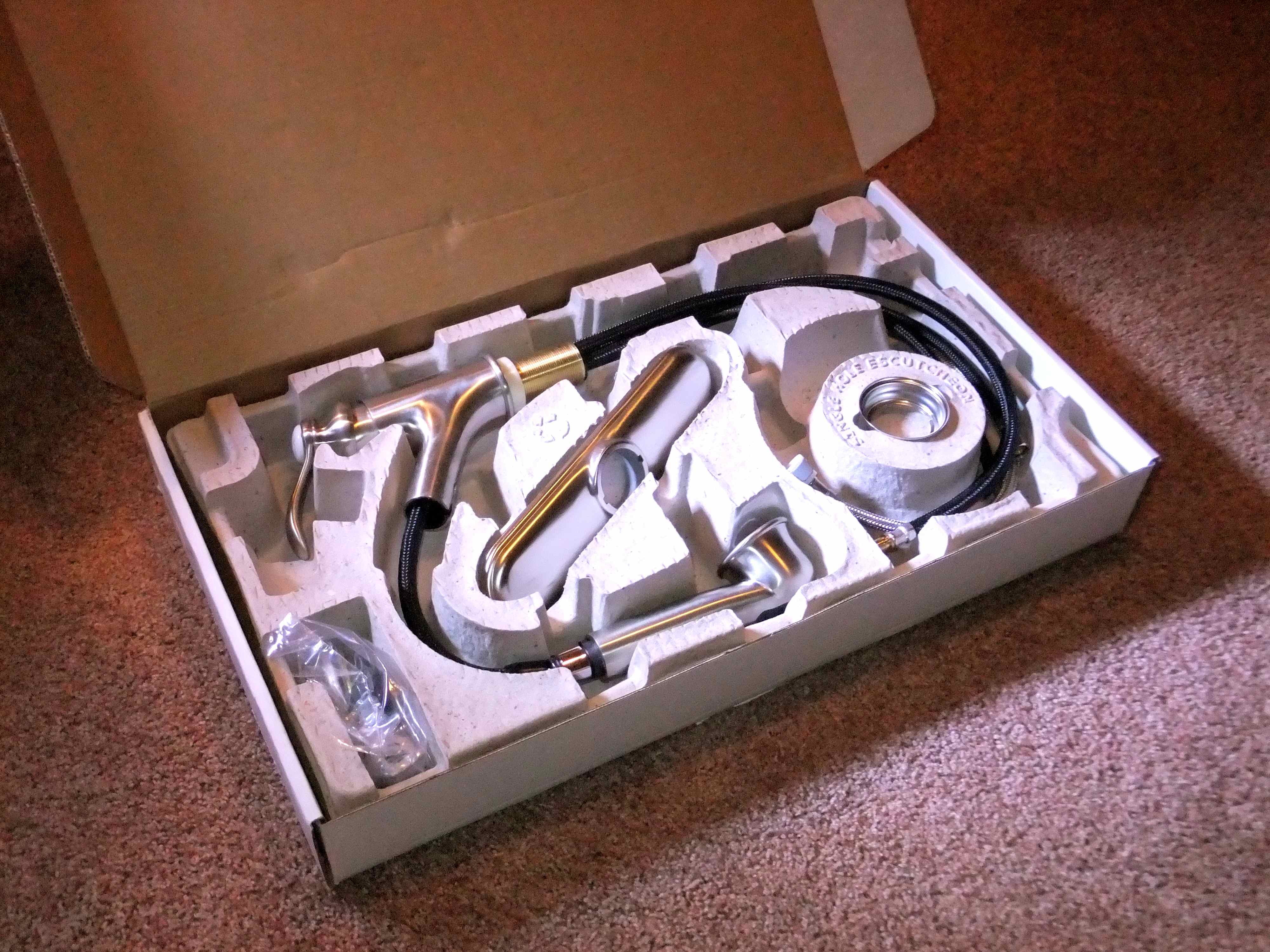
Third-party reference photo of shaped pulp packaging around several faucet components.
Photograph source. CC BY-SA 3.0 Unported; Rlsheehan; full-frame resize and WebP conversion only, derivative same license. CC BY-SA 3.0 license. Full original reference photograph.

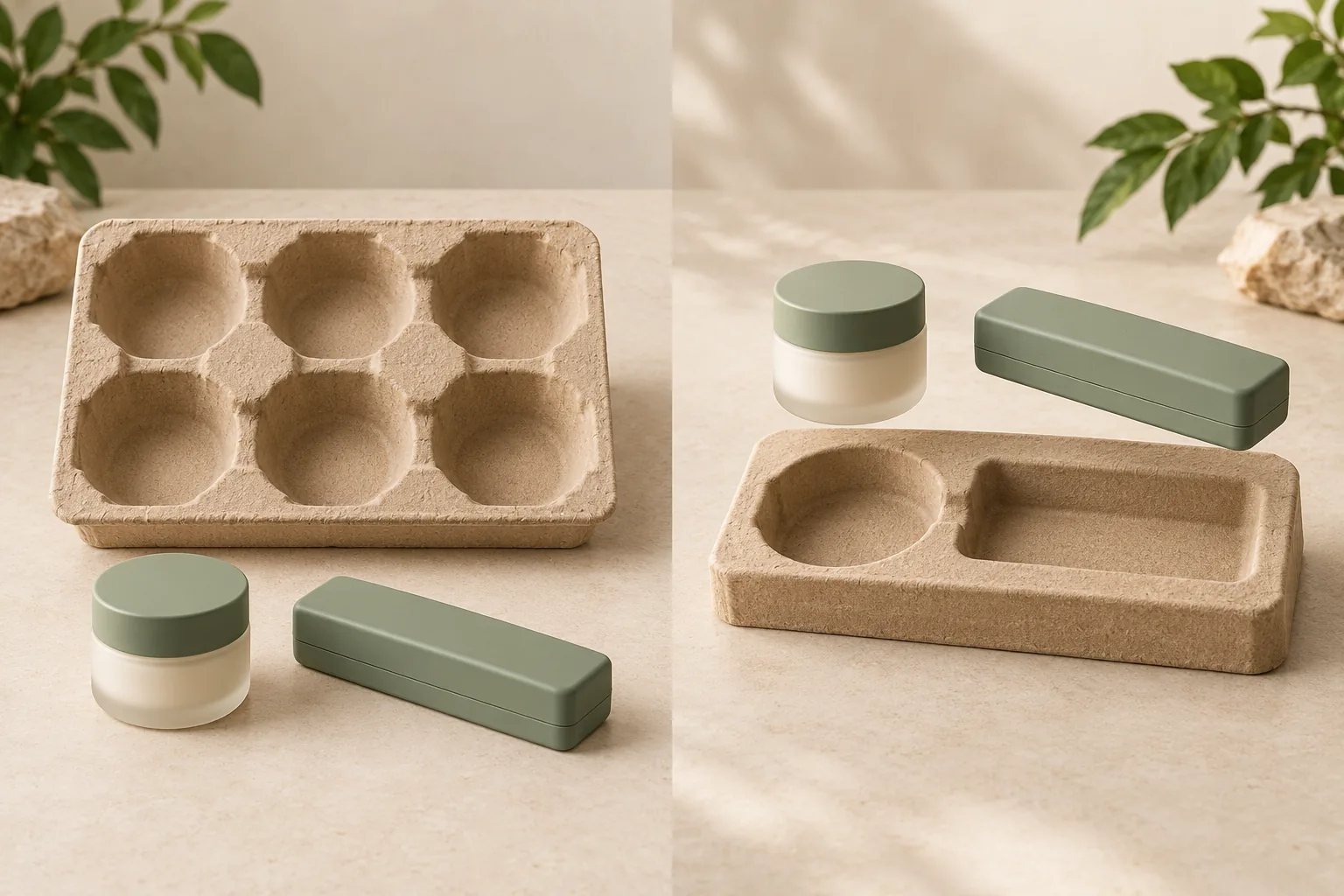
Here, “stock” means a pre-existing tray design offered as a product. It does not mean pulp raw material, a generic manufacturing capability, confirmed inventory or guaranteed immediate dispatch. A listing is a lead to investigate; the supplier still needs to confirm the actual part and commercial availability.
Separate an existing part from an adaptable design
An existing tray is a useful candidate only when the seller identifies the part you would receive and the geometry that stays fixed. A picture described as customizable may instead be an example of a design service.
Engineered Components & Packaging lists stock molded pulp egg trays and separately describes custom pulp trays. That establishes that both commercial routes exist at that source. It does not show that an egg-tray cavity suits your product, that its environmental claims apply to another tray, or that Packrivo carries those products.
Ask whether the quoted item is the listed standard part, a modified version or a newly developed component. If the proposal changes cavity spacing, depth, perimeter or another formed feature, ask what development and tools are involved. Do not keep calling it off-the-shelf merely because the conversation began with an existing photograph.
A supplier may already have a shape that is unavailable to your project, belongs to another customer or is offered only under particular conditions. Treat access and repeat supply as explicit commercial questions. The existence of a physical tool is not an offer to use it for your order.
Match the whole product range before choosing a standard tray
Choose an existing tray by its relationship to every product configuration you intend to pack, not by whether one item sits inside one recess. The relevant decision is whether the fixed geometry serves the actual range.
List the complete product state, orientation and accompanying parts. Compare the tray’s outside envelope with the finished box interior, and its individual cavities with the relevant product outlines. An overall tray dimension cannot describe cavity access or intended contact. A part that fits the box may still be the wrong holder.
For a range of small products, map each product to a named cavity and record any deliberately unused positions. An unused cell may be acceptable for an internal parts tray yet unsuitable for a customer-facing gift. Decide that presentation requirement before accepting the apparent flexibility of a repeated cavity array.
Keep mixed products separate from alternative uses. Packing two products together in one tray differs from using that tray for either product on different orders. The first needs an agreed assortment and simultaneous layout; the second needs an accepted arrangement for each variant. Neither relationship follows from a photograph of one loaded cavity.
Use custom development for a defined missing arrangement
Request a custom molded pulp proposal when you can name the arrangement an existing part fails to provide. That may be the position of a second product, the usable outline, a required opening view or the relationship with an existing outer box.
Write the requirement before prescribing the cavity. “Keep these two separately identified parts in this orientation inside box B” gives the designer a task. Copying a catalog recess and asking for a smaller version can conceal the product contact and removal questions the new shape must resolve.
The existing molded pulp tray versus end-support guide compares complete physical arrangements. Use it if a supplier proposes separate supports instead of one tray. The process and finished-surface guide addresses a different decision: what manufacturing description and finished faces are being offered.
Custom development is not automatically the better route. If the product shape, accessory assortment or outer box is still unsettled, identify what must be fixed before asking for a production-tool commitment. A preliminary concept and a released forming design are different deliverables.
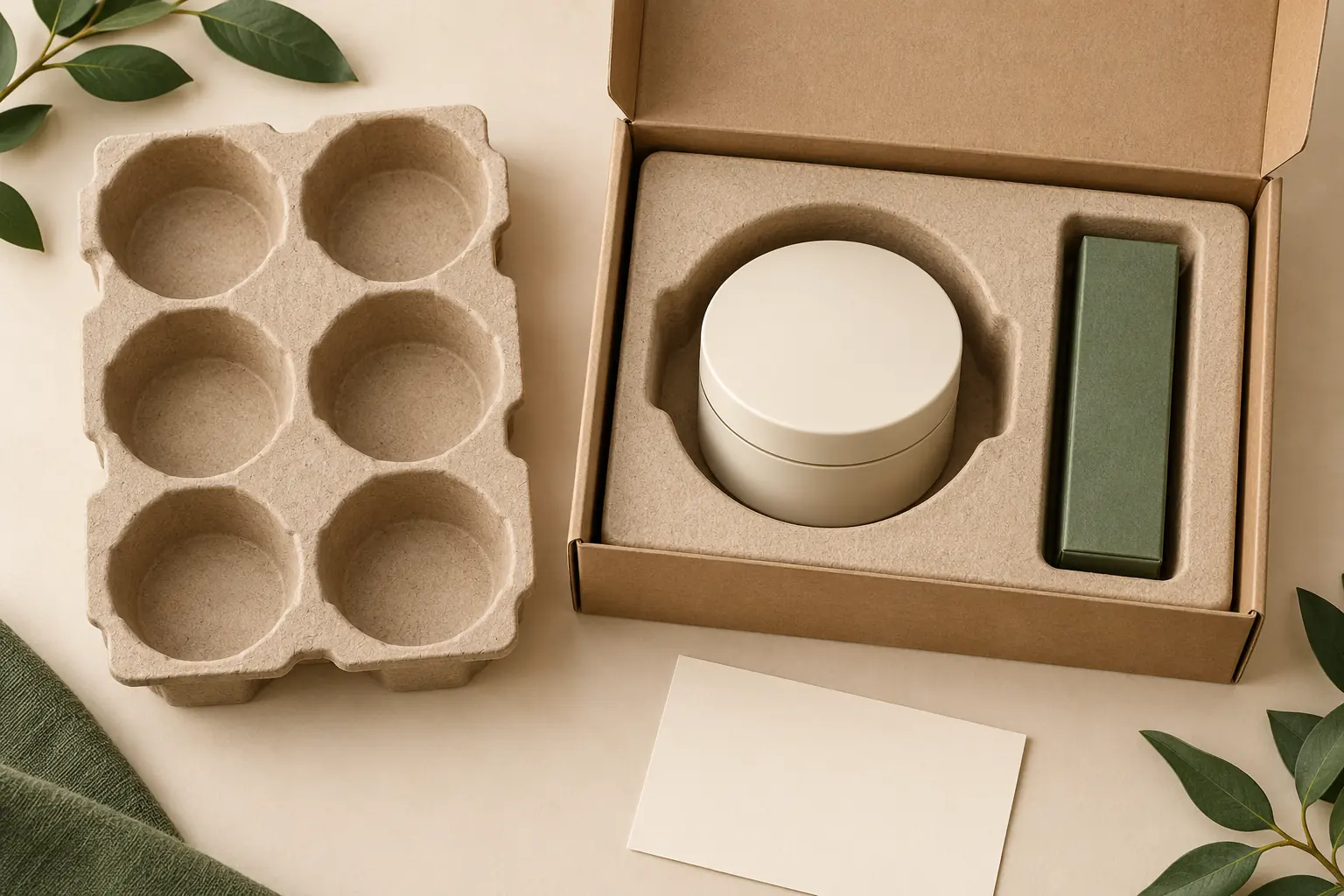
Compare the supplied parts and development separately
Compare an existing-part proposal with a custom proposal on the same finished-pack requirement, while keeping development charges separate from repeat-order components. “No new tool” is not the same statement as “no setup charge,” and neither proves a lower delivered total.
For the existing route, request the actual part reference, construction, supplied quantity basis and any additional components or operations needed for your application. A divider, cover, separate support or changed outer box belongs in that purchase scope. If the candidate needs cutting or another modification, ask who performs it and which supplied version is being quoted.
For the custom route, request the development deliverables, sample scope, proposed formed components and production basis. Ask how a product change would affect the proposal. Keep tool identity, ownership, storage and later reuse questions with the separate packaging tooling guide, rather than assume that payment creates particular rights.
The broader stock-versus-custom first-order cost guide explains cash and unused quantities after physical suitability has been established. This article makes the earlier choice: whether an actual existing cavity arrangement is a credible route at all. It supplies no invented prices, purchase minimums or break-even quantity.
Apply the choice to two different product briefs
An internal assortment of similarly shaped small parts may justify sampling an identified repeated-cavity tray first; a fixed two-item retail presentation may justify a custom layout first. These are hypothetical starting decisions, not claims that either product has been tested.
In the internal-parts scenario, the buyer accepts visibly empty cells and has no requirement to display a logo-shaped recess. It asks the source for the identified standard tray, geometry information and sample availability. The next review checks the actual parts, intended separation, handling and outer enclosure. If those relationships fail, the standard candidate is removed rather than forced into the brief by adding unspecified filler.
In the retail scenario, the buyer needs two unlike items in defined visible positions inside an existing presentation box. A catalog array leaves the opening view and accessory position unresolved. The buyer requests a custom layout showing those relationships and asks for the development and sample scope. It has not yet authorized production tooling or accepted the proposed material.
If both routes remain plausible, retain both until the missing geometry or sample evidence is available. The useful output is an identified route and its unresolved decision, rather than a universal winner for every small order.
Send the information that makes the route answerable
Ask for an existing-part assessment when you can provide the actual products and accept that part’s fixed arrangement. Ask for custom development when you can describe the missing arrangement and the product version it must serve.
Send product outlines and photographs, intended packed orientation, all variants, the finished enclosure reference, presentation requirements and expected purchase quantities. Name any candidate standard tray. Mark unknown dimensions and unsettled product features explicitly instead of replacing them with measurements inferred from photographs.
Packrivo coordinates questions with independent suppliers. Its molded pulp insert page is the commercial starting point for a sourcing discussion; it does not establish a stock catalog or immediate availability. Request a molded pulp sourcing review with your existing-tray candidate or the custom arrangement you need.
Source checked on 30 October 2026. The route comparison is an original purchasing method. Actual fit, transport performance, material claims, availability and commercial terms remain project-specific and have not been established by this article.