
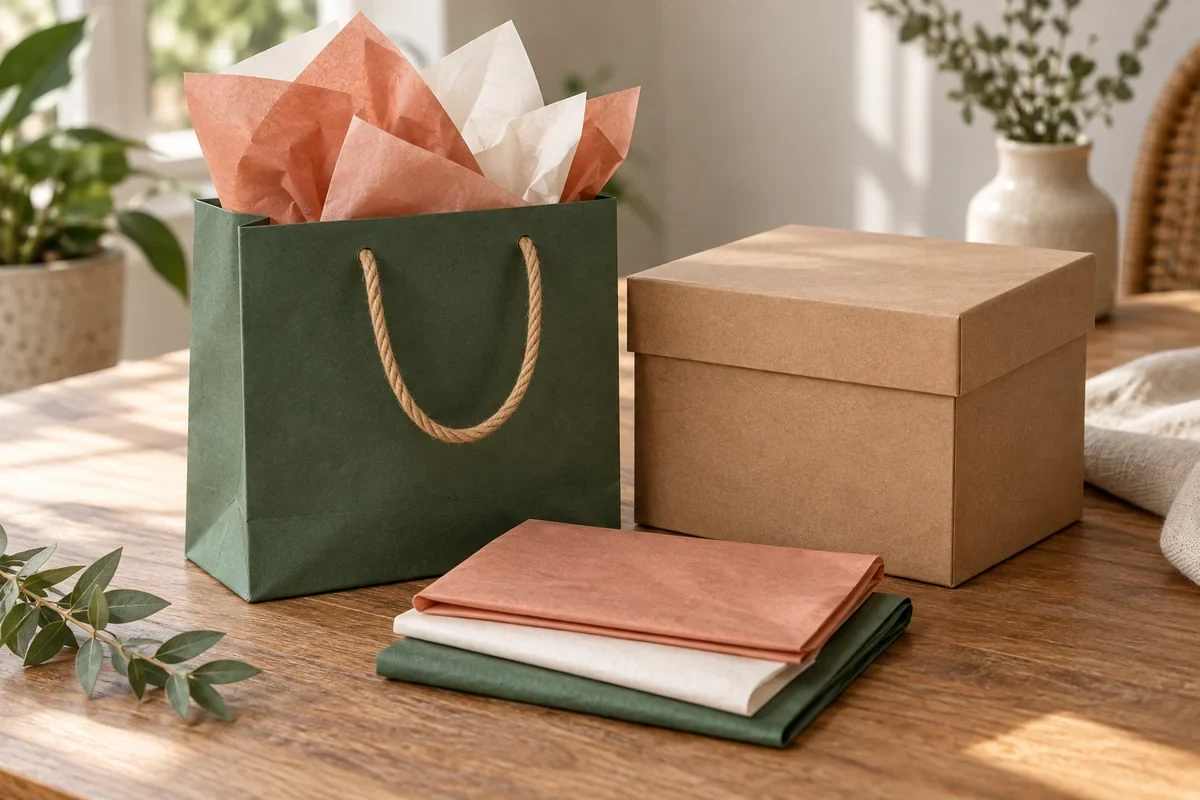
Specify a gift bag and tissue as two line items, even when they will look like one set. Measure the boxed product first, then set the bag’s usable opening, gusset and handle direction. Give tissue its own sheet size, fold and print brief. Ask whether one supplier can coordinate the components; do not assume a bundled offer.
In this guide
Check the handoff sequence
Describe what a staff member does: place the product or box in the bag, add tissue, carry the bag, then hand it to the customer. That sequence exposes size issues a visual mockup may hide. If tissue wraps the product before bagging, its sheet size and contact surface matter. If it is only a top layer, the fold and visibility matter more.
Scroll horizontally if columns extend beyond the view.
| Component | Measure or decide | Check in a sample |
|---|---|---|
| Gift bag | Boxed item’s outer size, bag opening, gusset, handle position | Loading, carrying orientation and handle attachment |
| Tissue | Sheet size, sheets per set, fold, color and print | Coverage, fold, contact and visible result |
| Set packing | Number of bags and sheets, flat or assembled supply | Count and packing sequence |
Keep bag and tissue quantities separate in a quote request. A set can contain one bag and more than one sheet; the commercial unit needs to say which. Identify the artwork revision for each component. A screen color match is a direction, not a verified match across different papers and printing processes.

AI-assisted concept / Not a physical sample. Paper, handle strength, print match and production availability require supplier evidence.
Keep use claims within the evidence
A gift bag and tissue make a retail presentation direction; they are not evidence of parcel protection. Specify an outer shipper separately if the set will travel by courier. If sustainability, recyclability or product-contact claims matter, ask for documentation for the exact materials and destination market. For US marketing, the FTC Green Guides summary explains that environmental claims need appropriate qualification and support; it does not certify any proposed bag or tissue.
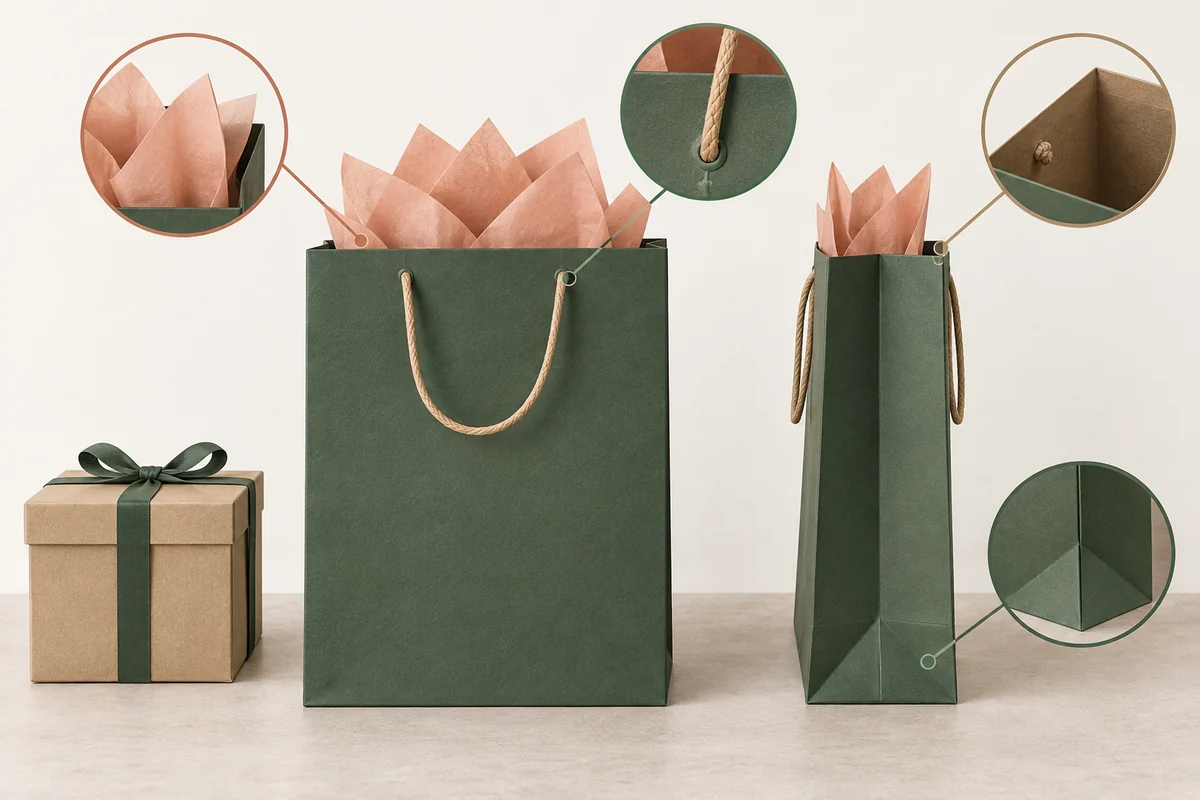
The gift bag and tissue set direction shows the two components to describe; name any related box or label separately. Put each component and its open supplier question into the packaging brief. This is a buyer’s preparation method, not a promise that Packrivo offers a coordinated set.
Reconcile gift bag and tissue quantities before asking for a set price
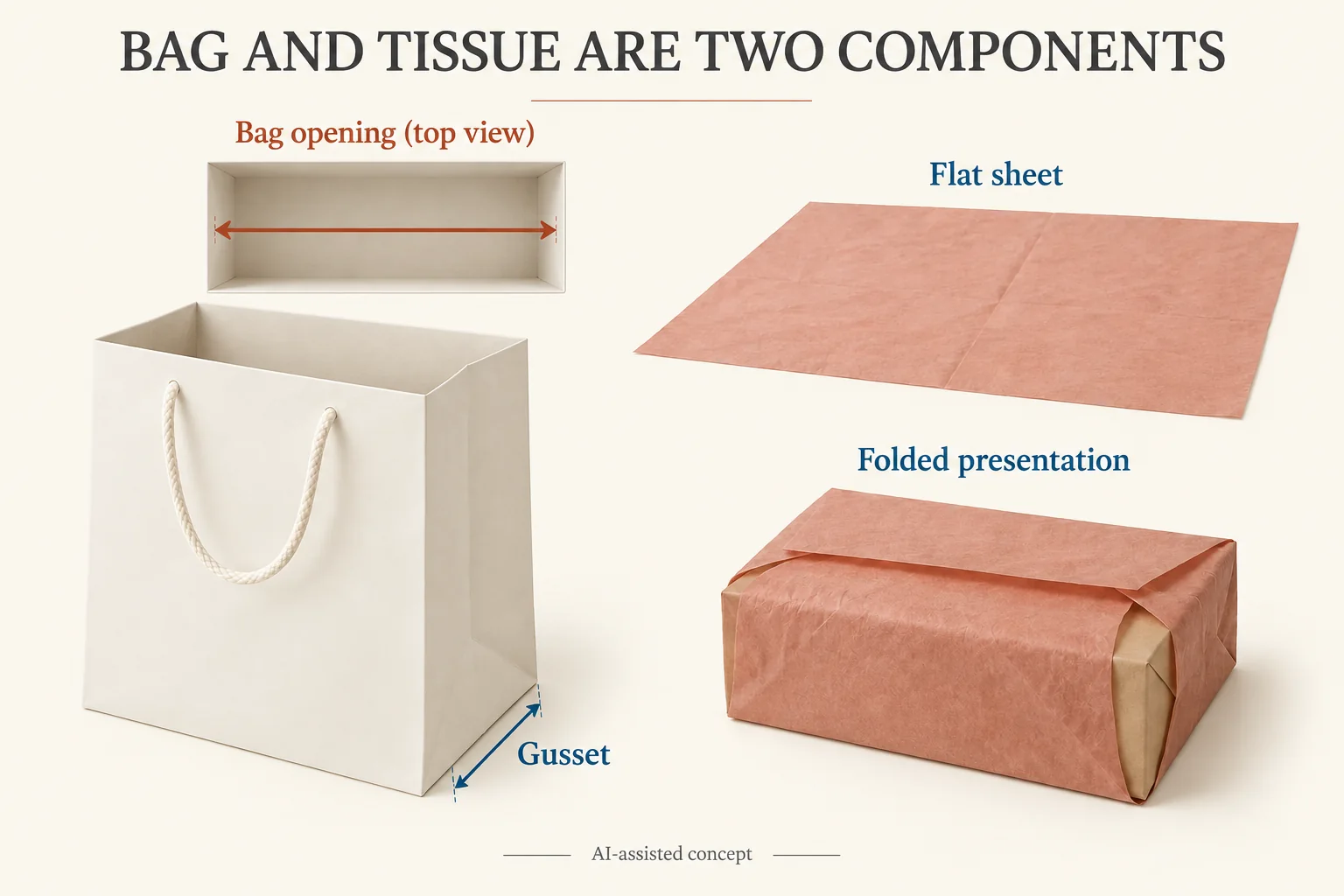
Define one finished presentation first. State how many bags, tissue sheets, boxes, cards and seals it contains. A sheet folded into several visible layers remains one sheet. Name different printed sheet designs separately instead of placing all paper under a single “tissue” total.
| Component | Hypothetical quantity per gift | Requirement for 500 gifts |
|---|---|---|
| Gift bag B1 | 1 bag | 500 bags |
| Tissue T1 | 2 sheets | 1,000 sheets |
| Gift box X1 | 1 box | 500 boxes |
| Seal L1 | 1 label | 500 labels |
These counts are an arithmetic example, not a commercial bundle or confirmed component MOQ. Ask which pieces the offer includes and how each design is quoted. A 500-bag quotation alone does not supply 500 complete gifts.
Review two moments with the actual box and decorations: entry through the usable bag opening, then the seated arrangement with tissue and handles in place. Record any rotation or temporary movement of handles during loading. A photograph at the base leaves the entry path unreviewed.
For tissue, keep the flat sheet size, print side, fold order and final visible face together. Decide whether the paper wraps the item before bagging or is added after loading. The fold changes both required coverage and which print remains visible.
The gift bag loading path examines the corner entry in detail; the handle joint brief identifies hidden attachments; the tissue fold and print map locates artwork after folding. Use those narrower records only for the open issue instead of repeating the entire set brief.
Download the custom gift bags and tissue paper specifications project record (.csv). The file has named planning fields and blank project rows. It contains no preset acceptance limits or approved results.
Questions buyers ask
Can both components go in one quote request?
Yes, list the bag and tissue separately within the same request. Ask whether the supplier can price and sample them together. Keep the quantity and specification for each visible.
Must tissue match the bag exactly?
Only if that is part of the design requirement. State whether an exact match or a related color is acceptable. Compare physical proofs on the proposed papers before approval.
Will the set protect an item in parcel delivery?
Do not assume that. Define the full outer pack and delivery route, then decide what evidence is needed for protection. Bag and tissue presentation alone does not establish it.
What if tissue touches the gift item directly?
For jewelry or another decorative gift, describe surface sensitivity and the intended contact in the brief. Ask for the paper and ink details if they affect appearance or handling. Food-contact packaging follows separate destination-market rules and is outside this gift-bag checklist.
Send the current configuration for review
Bring the completed record, actual product or component references, requested quantity by design and destination to Packrivo’s packaging inquiry. Name the specific open decision above so the next sourcing discussion can address it. Packrivo coordinates sourcing questions; material, sample, price and delivery terms need project confirmation.