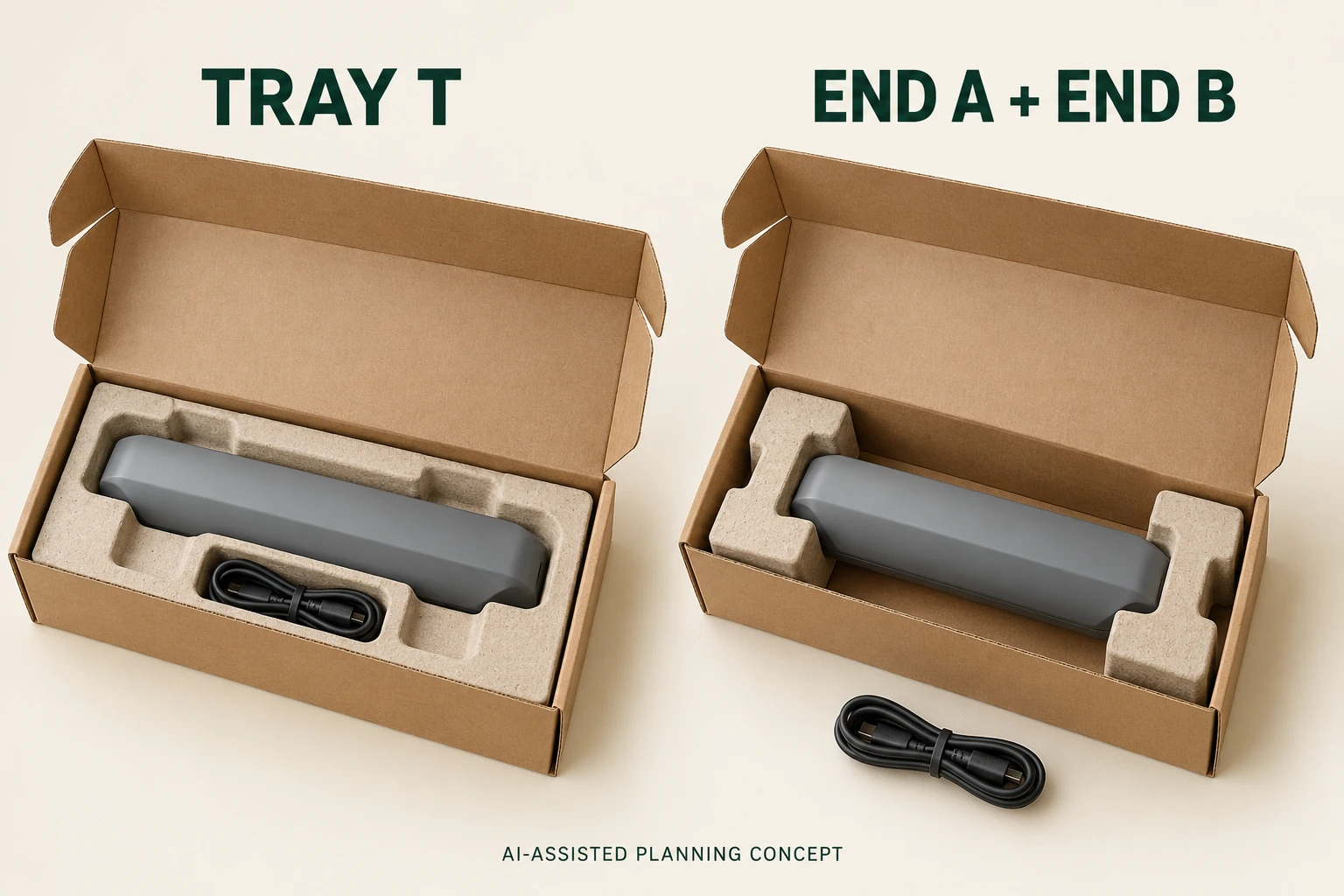
Choose molded pulp by buying a complete way to locate and pack the product, not by comparing one tray price with one loose end support. An integrated tray and two separate supports can transfer different matching and packing work to the buyer. Until the accessory position, outer box and supplied state are described, the offers cannot be ranked meaningfully.
Start with the product and the delivered packing job
Fix one finished-pack requirement before comparing constructions. Identify the product in the orientation in which it will be packed, any accessory that must accompany it, and the proposed outer box. The comparison then has a common physical destination: a packed product and accessory inside the agreed enclosure.
Ask what the forming supplier would deliver and what the product packer would still have to do. An empty tray that arrives ready to receive the product is one possible handover. Two loose supports that must be matched to opposite ends are another.
The accessory matters even if it never touches the main product. A cavity drawn for a device may leave no specified location for its cable, instruction item or detachable part. Another proposed arrangement may reserve an accessory area within the tray, or depend on a separate part inside the box. Do not assume that the mere appearance of an accessory in a marketing photograph defines where it sits in the offered construction.
This is a buying decision about the physical arrangement, not a general claim that molded pulp is preferable to other insert materials. The custom molded pulp insert direction is the relevant starting point for project-specific options.
Choose between an integrated tray and separate support positions
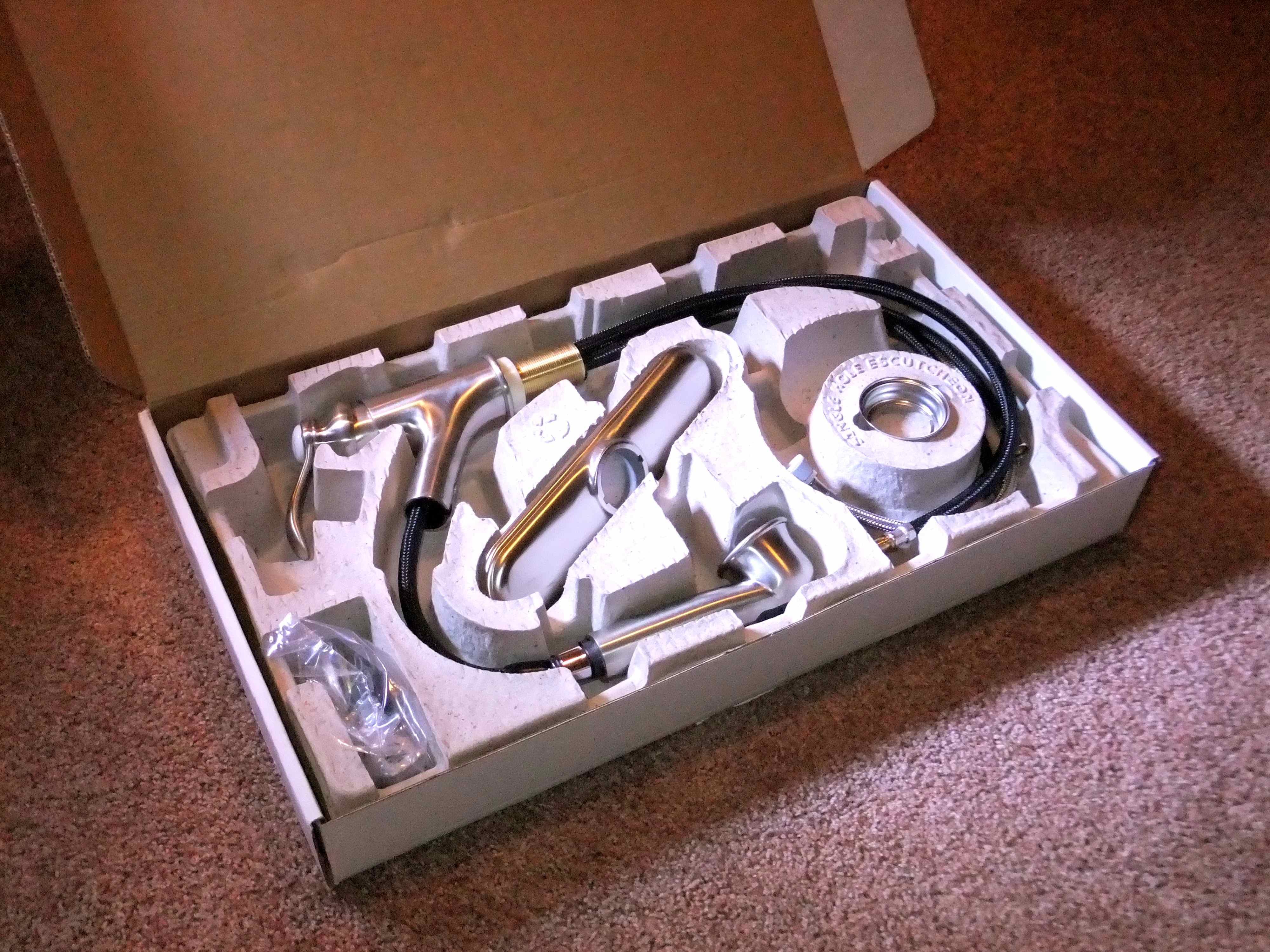
An integrated tray proposal puts several locating features into one supplied formed component. In a proposed layout, the main product may occupy a central region while an accessory has an identified neighboring recess. Whether each actually supports its contents, and whether that part seats in the box, still requires evidence for the finished configuration.
Separate end supports arrange the job differently. End A may locate one specified product end and End B the opposite end, with space between them for the product body or other agreed contents. The supports need not have identical geometry or contact requirements. “Two end caps” does not tell you whether A and B differ.
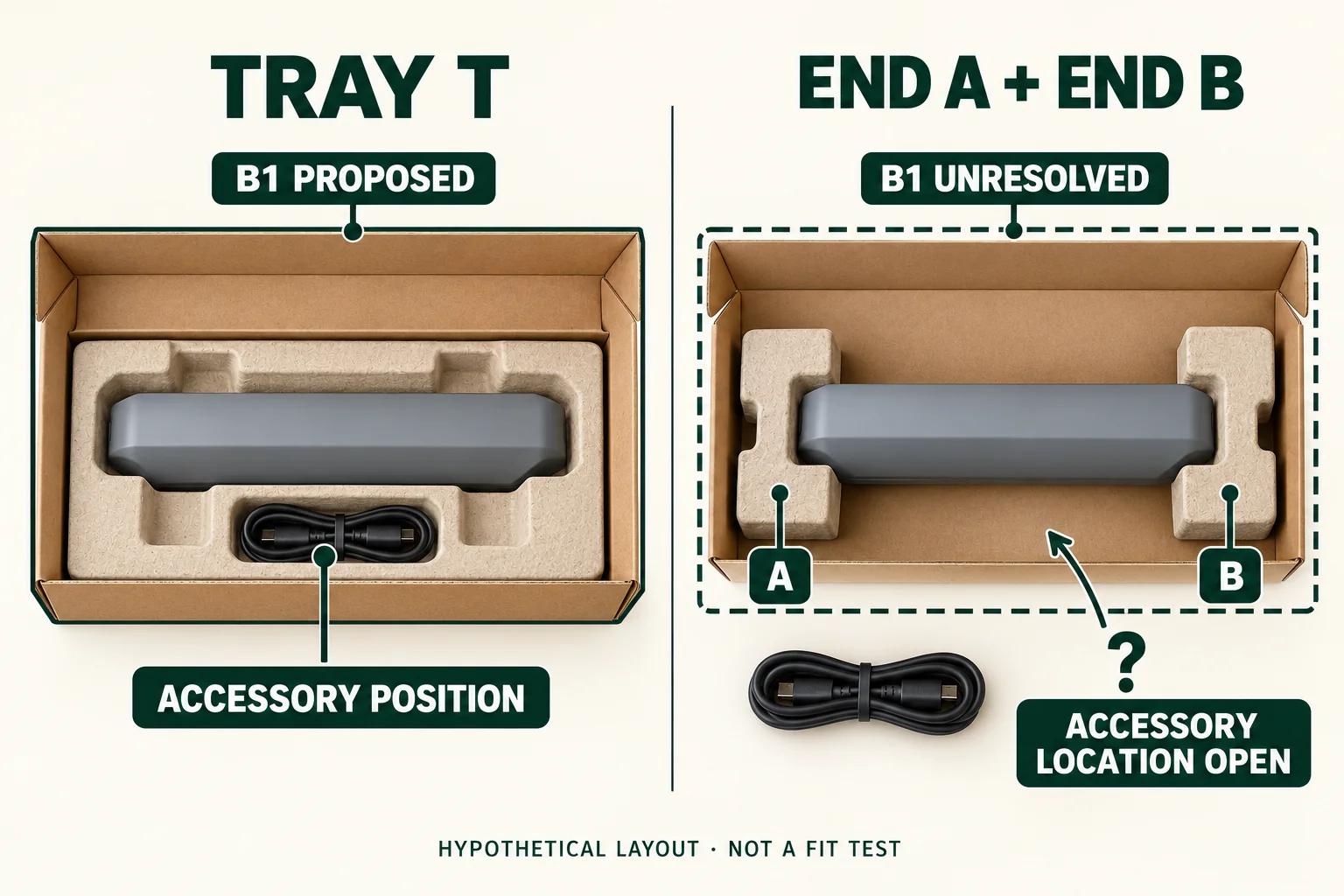
The outer box is part of this choice. A tray may have a proposed footprint and seating orientation within candidate box B1. An end-support arrangement may depend on B1’s walls to retain each support in its intended position, or may require a different enclosure or additional locating detail. Without the assembled outer-box view, the buyer cannot assume that the same B1 works for both constructions merely because the main product is unchanged.
What prevents End A and End B from being reversed during the proposed packing action? Is the accessory placed before the supports are positioned, alongside them, or in a separate defined location?
A nearby paired corrugated end-cap option shows that separated end support is also a construction direction outside molded pulp. Corrugated and pulp supports are not equivalents. The buyer must choose the construction actually proposed and identify its relationship to the product and box.
Read product-pack labels separately from insert-part counts
Real manufacturer literature shows why form names and pack-size labels should not dictate the parts ordered. Great Northern/Rollguard’s 2016 custom molded pulp sheet names bottom and top trays, right and left end caps, and edge or corner protectors. These are examples of formed-part roles, not a standard recipe or a claim about Packrivo’s supply capability.
MFT-CKF’s undated product catalog identifies a three-bottle laydown configuration using two trays and a six-bottle stand-up configuration using three trays. In that catalog, “three-pack” and “six-pack” count bottles, not formed insert pieces. Neither defines your part recipe.
For a deliberately hypothetical target of 500 finished packs, a proposed one-tray recipe would consume 500 Tray T parts; a proposed End A plus End B recipe would consume 500 of each, or 1,000 support pieces altogether. A quote for 500 mixed loose support pieces would not automatically cover 500 finished A/B arrangements.
The broader complete-scope quotation guide handles component arithmetic and converted totals. Here, the question is why the physical recipes differ.
Compare two complete purchase scopes
The following comparison is an explicitly hypothetical planning exercise, not a received quotation, an order or a tested packaging design. No actual product dimensions, prices, assembly times or supplier acceptance have been supplied.
Scroll this comparison table to see all columns.
| Purchase or pack-out issue | Integrated Tray T | Separate End A + End B | What the buyer can decide |
|---|---|---|---|
| Finished-pack requirement | 500 complete packs | Same 500 complete packs | Keep the packed outcome constant |
| Proposed supports | One formed T per pack | One A and one B per pack | A and B require named identities and positions |
| Support piece demand | 500 T | 500 A plus 500 B | Do not confuse a loose-part total with paired arrangements |
| Pricing unit to confirm | Per Tray T | Per End A and End B, or per expressly defined matched pair | Confirm the offered unit; do not double-count a pair price |
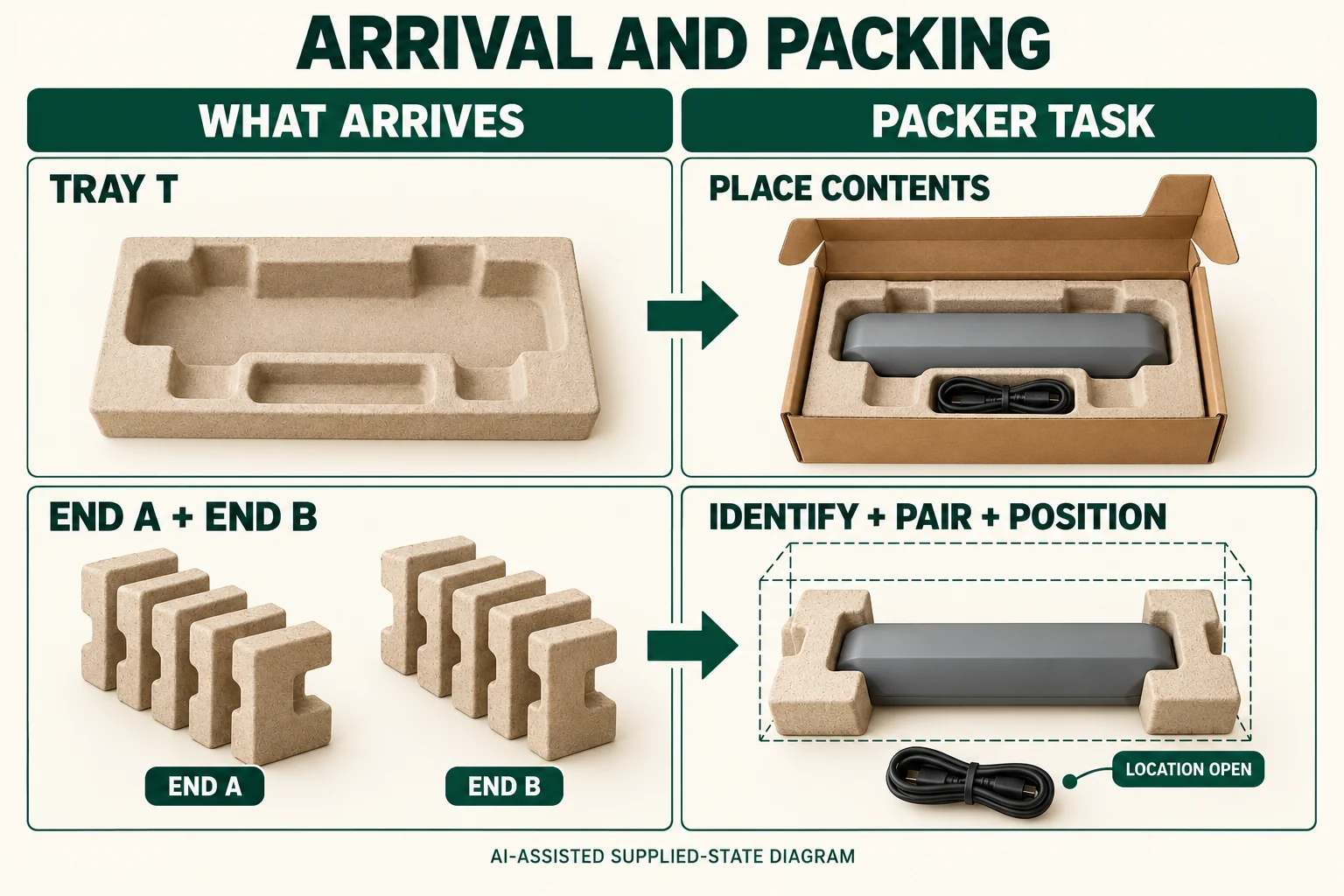
| Accessory location | Separate position shown in this assumed tray layout | Location not yet specified in this assumed end-support offer | E needs an accessory placement proposal |
| Supplied arrival state | Empty T components | Separate A and B components proposed; delivery as identified lots or matched pairs not yet confirmed. | Find out who identifies and pairs the supports |
| Outer-box relationship | Candidate B1 named for proposed layout | Final positions and compatibility with B1 unresolved | The same box cannot be inherited by assumption |
| Money and timing | Not supplied | Not supplied | Neither route can be ranked on cost or lead time |
Under these stated assumptions, Tray T offers the more complete physical layout for discussion: it identifies a location for the accessory and names the outer-box candidate. That is not evidence that the tray fits, protects the product or is faster to pack.
End A plus End B remains a legitimate construction direction, but proposal E is incomplete as described. It needs the A/B support identities, installed positions, accessory treatment, delivered pairing state and outer-box relationship before it can be compared as a full pack. Not all end-support designs omit accessories.
The useful buying outcome is therefore to shortlist T for a more developed layout discussion while returning E for one defined physical and supply proposal.
Check what your packing team will receive
The arrangement arriving at the packing bench can change which actions the buyer must organize. For T, the proposed supplier handover is a lot of empty formed trays. The packer would need to locate a tray in B1, place the actual product and accessory in their proposed positions, and finish the agreed pack.
If E arrives as separate A and B lots, somebody must identify the correct mate before installation. A supplier might offer clearly identified separate lots, matched pairs, or a more assembled presentation, but the proposal must actually state which. If the packer is expected to pair loose A and B, that work cannot be silently described as included supplier kitting.
Installation order matters to the arrangement. The product might enter B1 before the two supports are positioned, or the supports might be attached to the product before the assembly enters the outer box. An accessory could be placed before closing the end-support arrangement or at another expressly proposed location. Ask for the intended sequence that matches the proposed B1 layout, not a generic promise that packing is straightforward.
Nesting, labor speed and warehouse space remain unverified. Recipient removal is another task after packing; the pulp cavity release guide examines it without turning this buying decision into a removal study.
Send the matched configuration for a useful quote
A useful sourcing request names the physical choice first: “For the same product, accessory and outer-box candidate B1, compare an empty one-piece Tray T with a separately supplied End A/End B arrangement. Show both installed layouts, where the accessory goes, and whether the support pair arrives matched or in separate lots.”
Ask whether a proposed sample and its forming-tool scope are included or separate, but leave ownership and future reuse to the specialist tooling-scope guide. The ISTA guidance on retesting explains why changes to the product, package or packing process can affect earlier test evidence. Neither physical arrangement inherits a shipping result merely because its material is called molded pulp.
Packrivo coordinates questions with independent suppliers rather than operating a pulp factory. Its published starting minimum of 500 pieces per product/design does not prove feasibility at 500 complete packs, establish A/B design grouping or guarantee a combined kit offer. Actual materials, dimensions, samples, quantities, pricing and timing require supplier-specific confirmation.
Discuss the complete molded pulp arrangement with Packrivo, including the proposed outer box and packing handover.
Sources and scope
- MFT-CKF products and services
- Great Northern/Rollguard custom molded pulp sheet,2016
- ISTA retesting guidance
Sources were checked on 25 October 2026 (America/Los_Angeles). Their guidance applies only within the conditions described above. The worked example and planning images are hypothetical; they do not establish a supplier offer or tested result.