For bracelet gift boxes, shortlist a flat pad when a flexible bracelet should be shown extended. Consider curved support when the piece should be presented around a form. For a rigid bangle or cuff, keep its natural shape and request support around that shape. Decide the presentation before choosing a matching exterior.
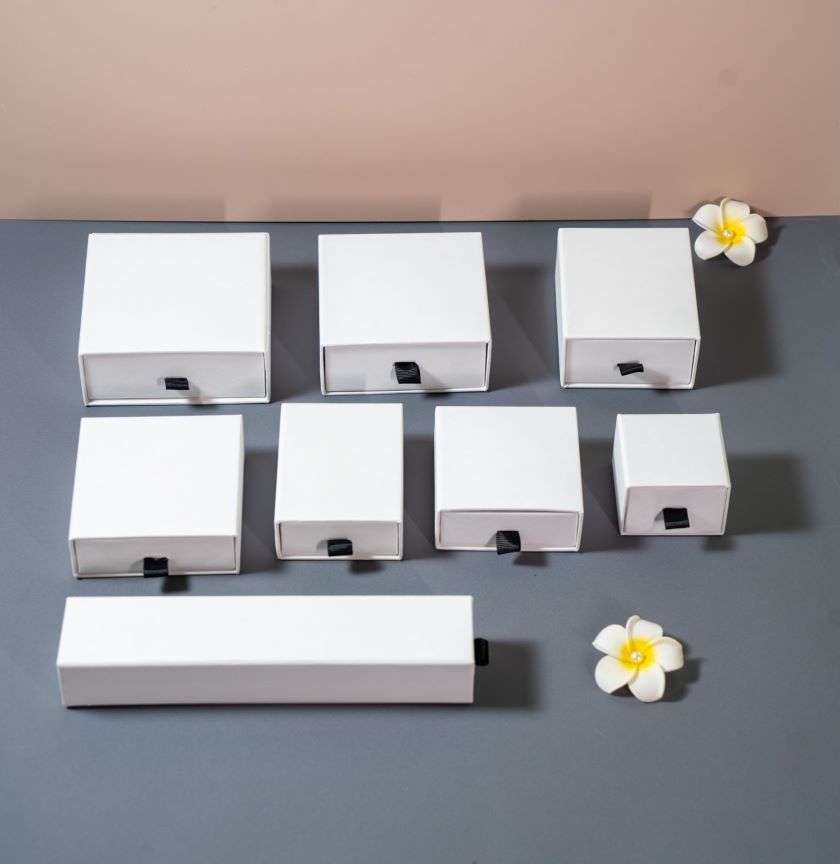
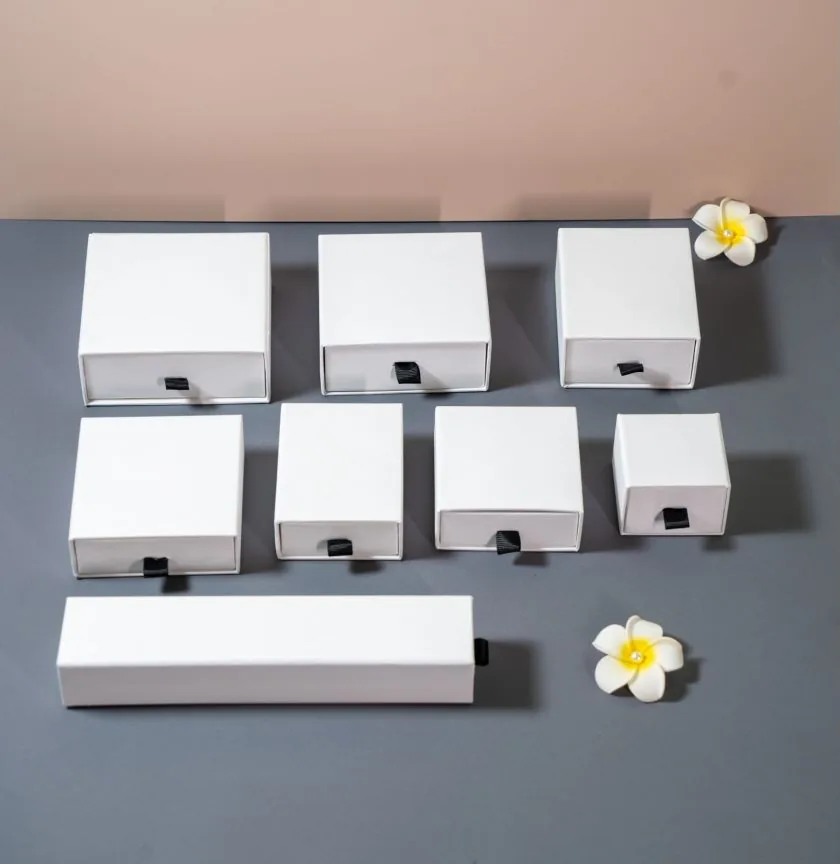
Authorized supplier reference photograph: elongated and compact outer formats. Interiors and bracelet fit are not demonstrated; not Packrivo samples.
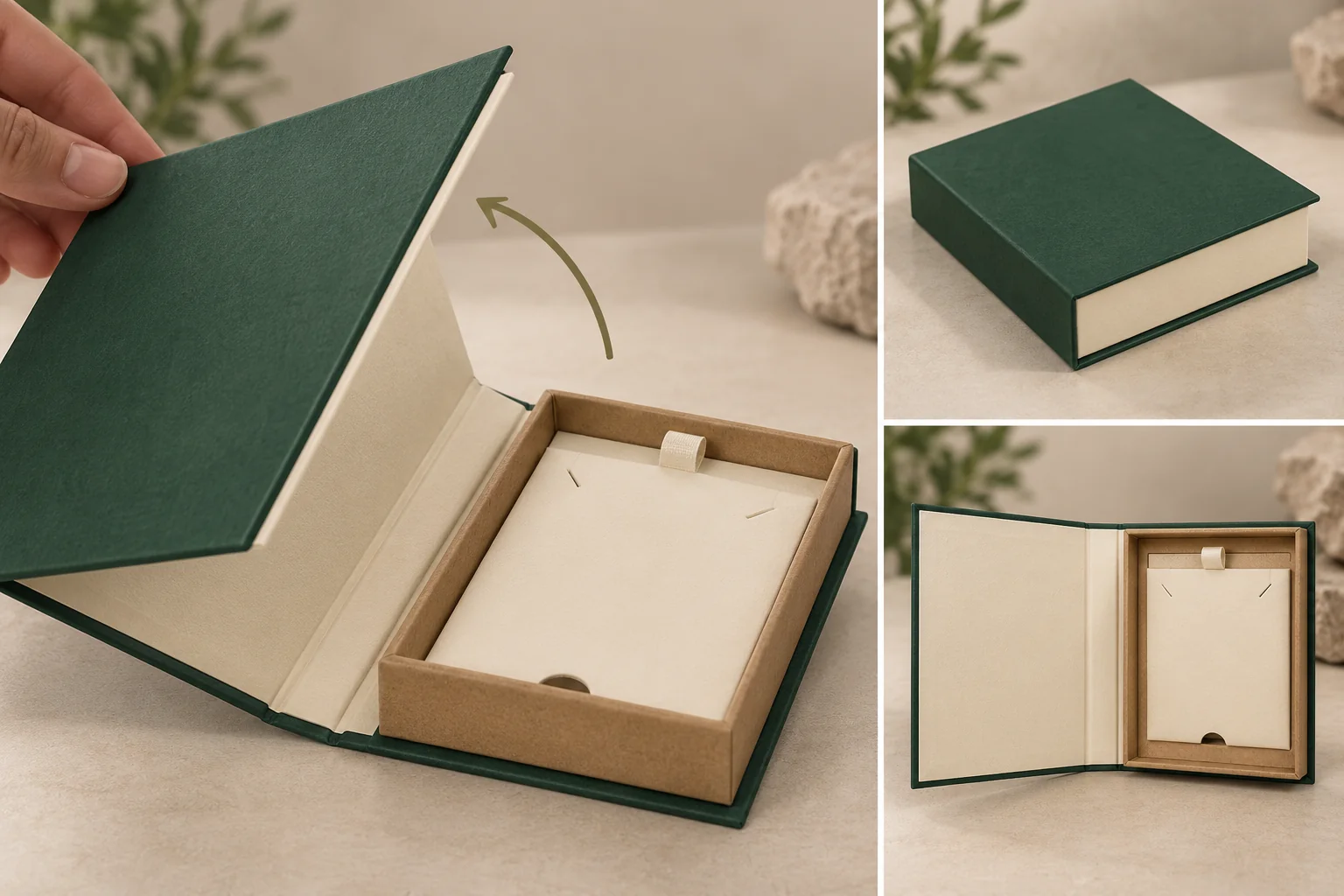
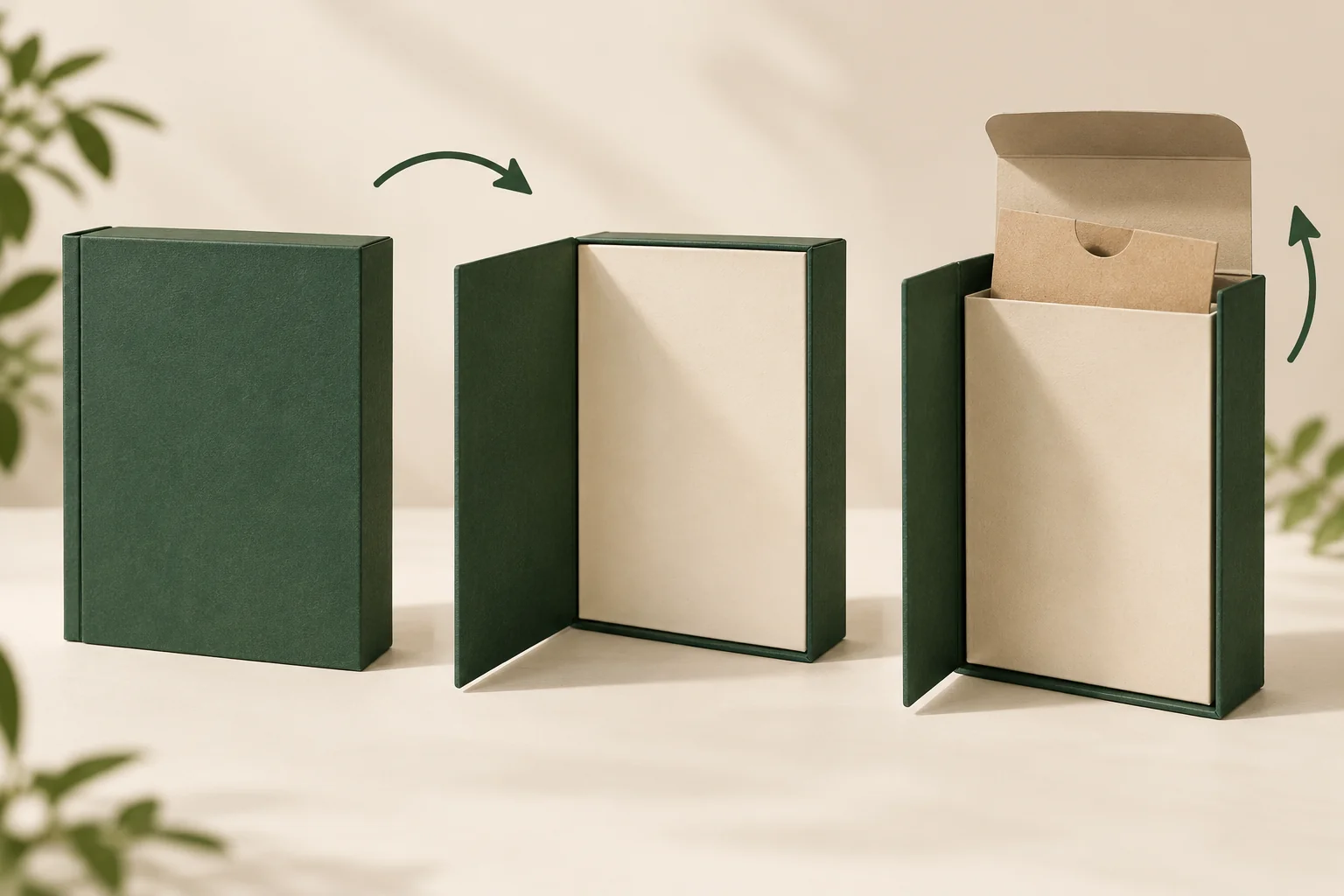
Full original reference photograph. Supplier and third-party photographs are references, not Packrivo samples; teaching concepts are visibly identified.
Decide what the customer should see
A bracelet is not one packaging shape. A fine chain can lie along a long display pad. A closed bangle has its own outline. A cuff has an opening whose position may be part of its appearance. Those differences remain important even when all three belong to the same collection.
Start with the jewelry as it will be sold, including the clasp and any charms. Ask the product owner which view best represents the piece. A clasp may be hidden deliberately for a clean front view, or shown because it is a selling detail. Write that choice down before asking a packaging supplier to interpret a photograph.
Do not bend a rigid piece or stretch a flexible bracelet around an unsuitable support just to preserve a preferred box silhouette. If the intended pose is uncertain, request two presentation proposals rather than describing an untried arrangement as accepted. Neither an attractive render nor a shared brand color settles the question.
The Westpack bracelet and bangle category lists both elongated bracelet boxes and wider bangle configurations. That is evidence that distinct purchasing options exist, not proof that any listed box fits your products. Its catalog descriptions belong to that supplier, and its external dimensions cannot be treated as available internal space.
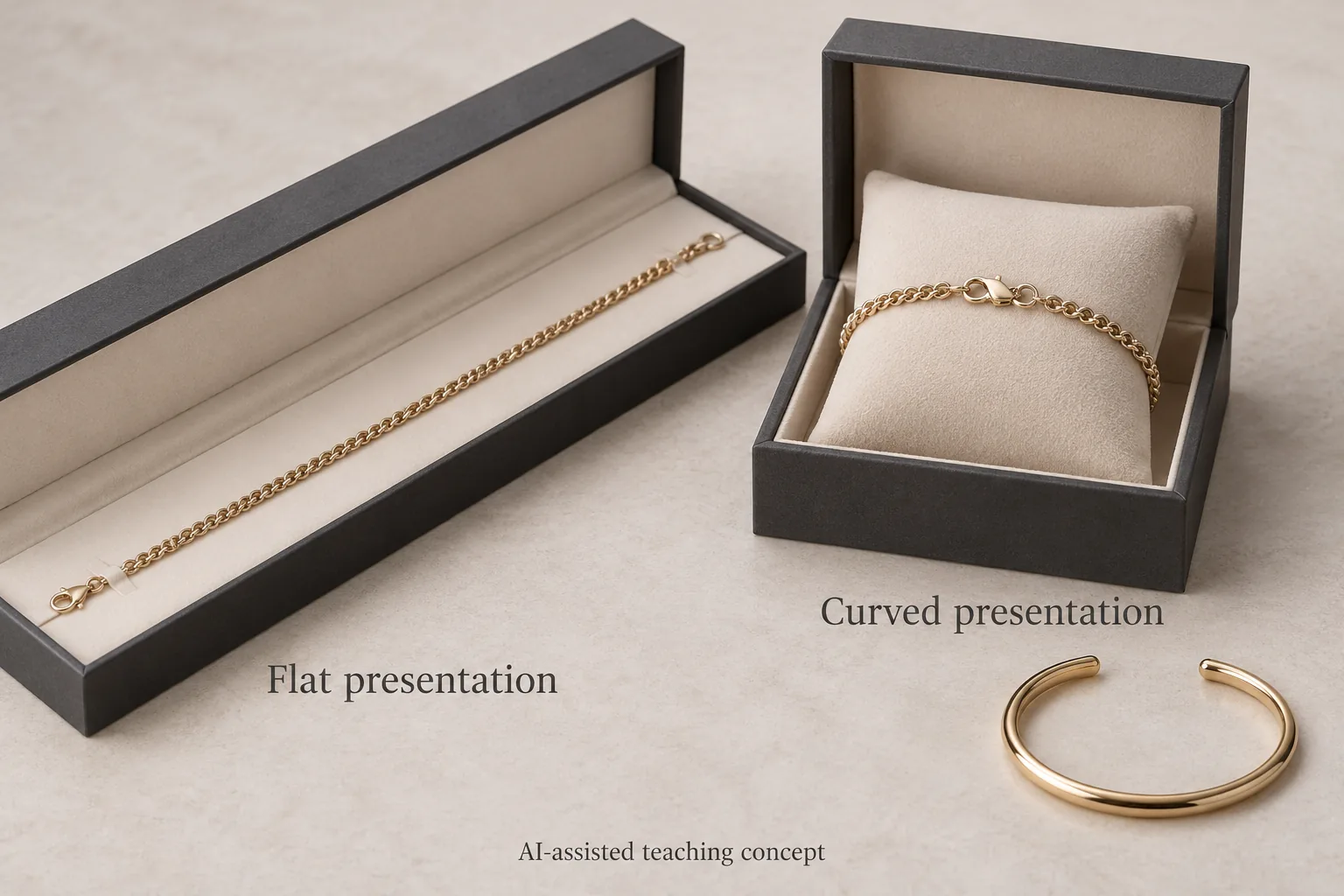
Compare flat display with a supported curve
A flat-pad proposal lets the buyer specify the visible length, the position of the clasp, and any retaining points. Ask whether the supplied pad already contains the proposed tabs or slots. A plain pad shown in a photograph is not the same offered component as a pad with a defined retention arrangement.
A curved-support proposal changes the view. The bracelet surrounds or rests against a shaped support instead of being displayed along a straight field. Ask whether the piece is loaded while open, closed around the support, or placed over it. The real jewelry's intended operation must determine the answer; packaging should not require an improvised way of fastening it.
For a rigid bangle, start with the actual closed outline. For a cuff, show the opening and any projecting ends. The support must be proposed against those features rather than selected by a generic label such as “bracelet pillow.” A larger square box does not, on its own, answer how the piece is located.
Use this table as a shortlist, not an approval record:
| Actual presentation requirement | Proposal worth examining | Question that decides the next step |
|---|---|---|
| Flexible chain displayed along its length | Long pad with identified retaining details | Can the intended length and clasp be presented without an improvised fold? |
| Flexible bracelet displayed as a closed loop | Curved support with a defined loading method | Does the actual fastening work with the proposed support? |
| Rigid closed bangle | Support shaped around the natural bangle outline | How is the piece located and then lifted out? |
| Open cuff with a visible decorative face | Support that preserves the cuff's intended orientation | Where are the opening and ends when the box opens? |
The HSN packaging manual, in its jewelry requirements, treats line or link bracelets separately from cuff or bangle styles and describes different arrangements. Those are one retailer's supply-chain instructions. They are not a general material specification for your brand or evidence that a foam roll is suitable for every bracelet.
Resolve the clasp before matching the box range
The clasp is part of the packed product, not a loose detail to hide after the box is chosen. On a flat presentation, locate it and show what keeps it from drifting into the visible field. On a curved presentation, explain when the clasp is opened and closed during packing.
A removable support can allow the customer to handle the bracelet away from the box. A fixed support requires a clear release method in the installed position. Keep those offers distinct. Ask the supplier to show the proposed customer action rather than assuming that an accessible clasp in a loose demonstration remains accessible inside the enclosure.
Contact materials also remain an open project question. A velvet-like appearance does not prove compatibility with plating, polished metal, stones, or a treated surface. Describe the actual jewelry finish and ask for the intended contacting construction. Do not turn a material's soft appearance into a scratch-free or tarnish-free promise.
Once the pose and loading method are clear, use the jewelry measurement guide to record the installed envelope and lid relationship. This article chooses the presentation direction; the measurement guide handles the dimensional references that follow.
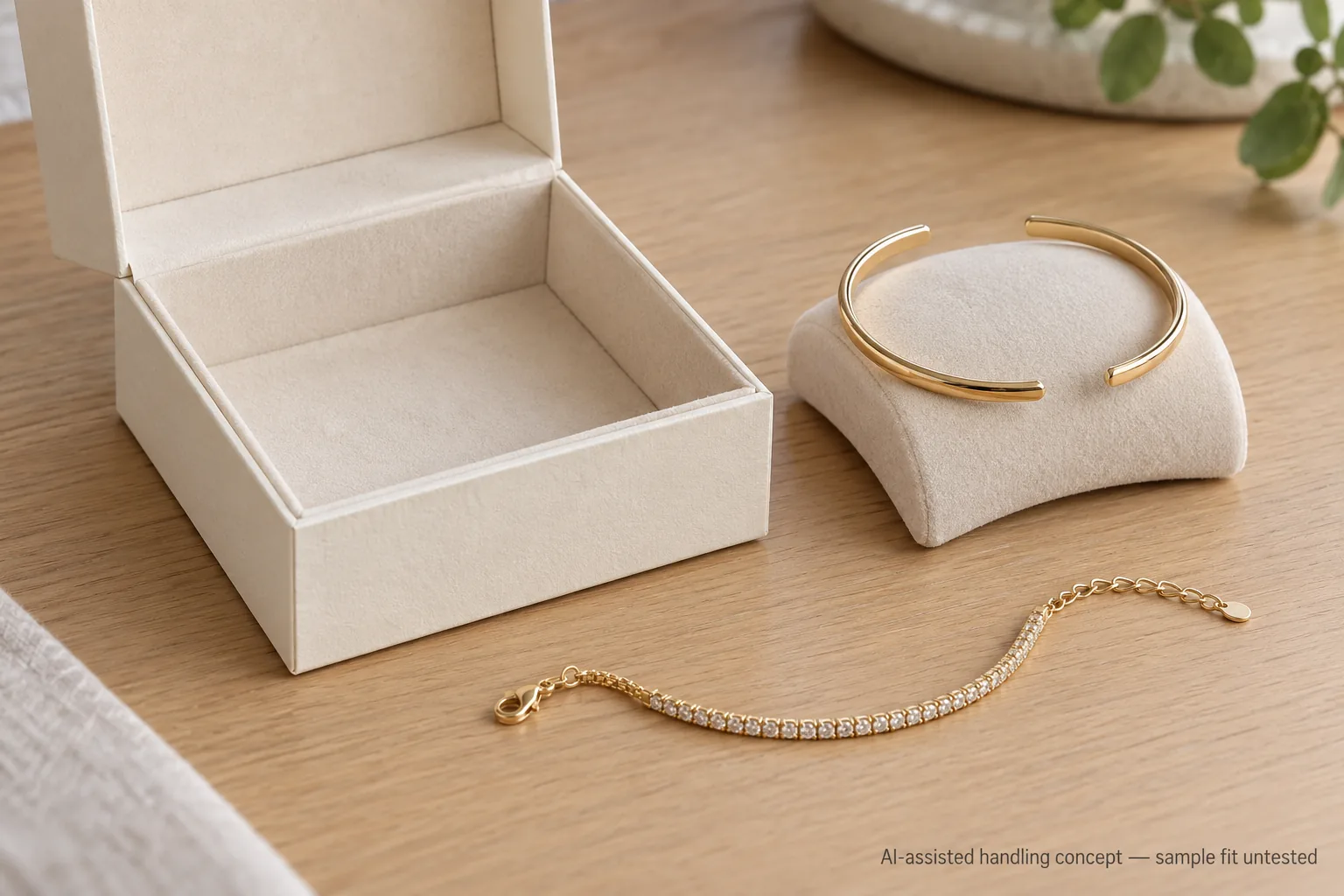
A mixed collection needs two explicit proposals
Consider a fictional jewelry brand selling a flexible chain bracelet and a rigid open cuff. It wants a coordinated dark exterior for both, but it has not accepted any packaging sample. These are invented planning conditions, not a customer project.
The chain bracelet's distinctive feature runs along its length, and the product owner wants that detail visible on opening. The cuff's decorative face should point toward the recipient while its open ends remain behind. A single curved pillow is initially suggested for both pieces because it looks consistent in a mockup.
That suggestion does not answer the two different presentation requirements. The buyer therefore requests a long flat-pad proposal for the chain and a separate natural-shape support for the cuff. Matching exterior paper remains a preference; identical internal construction is no longer a requirement.
The chain proposal must show its retaining details and clasp position. The cuff proposal must show orientation, support contacts, and the first removal action. Both are proposals awaiting physical review. The buyer has selected what to develop, without claiming that either arrangement already fits or protects the jewelry.
If the brand later considers a common outer box, the multi-SKU jewelry fit matrix can compare those specific configurations. There is no need to restart this decision as an inventory calculation or assume that shared appearance means shared purchase quantities.
Turn the choice into an answerable sourcing request
Send one image of the actual piece in its natural state and another showing the intended presentation. Identify the bracelet reference, clasp, charms or projecting ends, and the selected direction. Name the exterior requirement separately from the proposed internal support.
A useful request for the fictional chain would say: “Please develop a flat display that shows this bracelet along its length, with the clasp in the marked position. Identify the supplied retaining details and show how the customer releases the piece.” The cuff request would preserve its natural outline and identify the intended front face instead.
Ask what arrives with the box: support, pad, retaining parts, lining, and any assembly left to the packer. Include quantities by proposed design and destination. A change from a flat pad to a curved support is a change to the offered configuration, not a cosmetic substitution to accept without a revised scope.
The request should leave the supplier with an intended pose and a specific support question for each piece. A chain bracelet might need a flat display with its clasp retained at one end; a cuff might need a holder that preserves the decorative face and leaves a reachable lifting position. If one common outer box is still proposed, keep those two loaded arrangements visible in the sample request. Their shared exterior does not establish that the supports are interchangeable.
Separate any required parcel assessment from that presentation review. It concerns the actual jewelry, support, presentation box and outer shipping arrangement together, rather than the appearance of the gift box alone.
Packrivo coordinates packaging questions with independent suppliers. Material suitability, samples, quantities, prices and delivery terms need project confirmation. Bring the chosen presentation direction and the actual piece, rather than a universal request for the “best bracelet box.” Request a bracelet packaging sourcing review.